Twa kɔ nsɛm atitiriw so
Log in
Sign up for FREE
arrow_back
Laabri

Week 4.1: Special Secrets

star
star
star
star
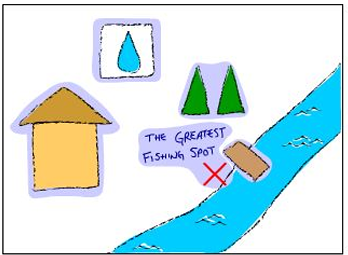
star
Last updated about 2 hours ago
42 Nsɛmmisa
Superstars of Slow
Mexican Bark Art
The Cook's Surprise
Useful Weeks of the Sea
Want to Send a Secret Message?
A Hidden Treasure

Click submit when finished with all questions and check your answers. You may not be able to make corrections at this time.

1
1
1
1
1
1
1

Mexican Bark Art

1 In 1900 a scientist named Frederick Starr was exploring a mountain in Mexico. Suddenly he heard soft pounding sounds. He listened carefully and followed the sounds coming through the trees. The sounds grew louder. Soon Starr came to a village. There he found something very interesting. The pounding came from people hitting rocks on bark. They were making paper that would be used to create art. Other scientists had thought people no longer knew how to make bark paper, but Starr found out differently. The villagers were making a very special kind of paper—amate (ah-MAH-tay).

2 Starr made his discovery more than 100 years ago. Since then scientists have learned much more about amate. The people of Mexico have been making this beautiful paper for hundreds of years.

Bark Paintings Now and Then

3 Today the paper is still handmade by people in Mexican villages. The paper is decorated with colorful paints to make paintings that might show interesting scenes from village life. Or the paintings might be pictures from nature. Rainbow-colored birds, animals, or flowers are common. These paintings are often used as decorations in homes.
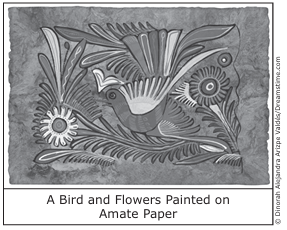
4 Amate paintings are popular in Mexico and around the world. Many visitors buy these special works of art. People appreciate having a piece of this important part of Mexican history.

5 Long ago bark paper had another purpose. It was used for books. The bark paper was folded into a book with several pages. Then small pictures were painted on the pages. These paintings tell stories of the past. They also give helpful information. For example, they show us how people made different medicines.
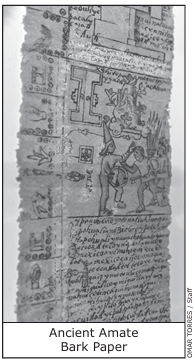
6 Many of these books were lost over time. Scientists treasure the books that are left. They are important because they tell what life in Mexico was like long ago.

Making Bark Paper

7 Amate is made from the bark of mulberry or fig trees. The mulberry bark makes light-colored paper, while the fig bark makes dark-colored paper.

8 The bark is stripped from the trees. Then it is washed. Next the bark is boiled in a pot of water and ashes for hours until it breaks apart into strips.

9 The strips of bark are placed on a flat, wooden drying board. Some strips are placed across in rows, while other strips are placed from top to bottom. Any long ends of the bark are cut off so that they do not hang over the edges of the board. After that the strips are flattened with rocks. Soon there is just one flat rectangle of paper. This paper is left to dry in the sun.

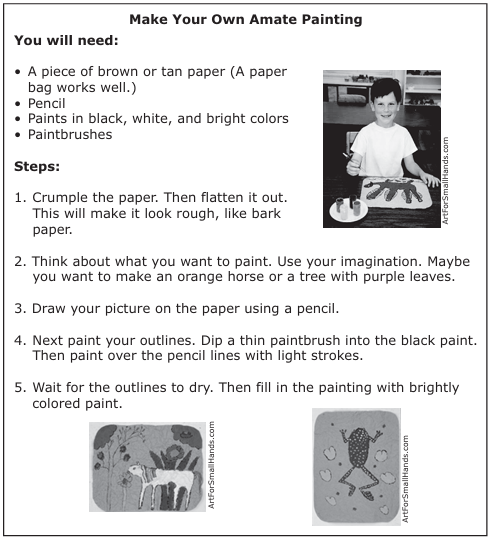
10 When the paper is dry, it is ready to paint. The artists make outlines of their drawings using black paint. Then they fill in the shapes with bright colors. Now the painted bark paper is ready to display and enjoy.

11 Amate has been around for hundreds of years, but it is still important today. This beautiful handmade paper teaches us much about Mexico and its people.
1
1
1
1
1
1
1

The Cook's Surprise

1 Danielle loved to cook delicious food on Saturdays. She enjoyed seeing her family members smile as they tasted a meal she made. Today Danielle had a surprise for her younger brother and sister. She had baked cupcakes early in the morning, while Martin and Madison were still asleep.

2 After lunch Danielle decided to take her brother and sister their surprises. Danielle carried the two cupcakes as she walked from room to room. She could not find Martin and Madison anywhere.

3 At last, Danielle entered the laundry room. There she noticed bits of yellow ribbon on the floor. Scraps of blue cloth lay next to the sewing machine, which had not been used in years. She thought it was an odd sight but decided to keep looking for her brother and sister.

4 On her way back to the kitchen, Danielle had a perfect idea. She set the cupcakes on the table and found a sheet of paper and marker. In large letters, she wrote, "For Martin and Madison," She imagined Martin and Madison grinning with delight when they discovered the surprise.

5 Suddenly, Danielle heard noises coming from her bedroom. She decided to find out what was happening.

6 "Surprise!" shouted two voices when Danielle opened her door.

7 Danielle's heart jumped. Martin and Madison were waiting for her, and they had a package in their hands.

8 "This is for you," said Martin.

9 "Open it," added Madison.

10 Danielle took the package. Her hands quickly ripped off the shiny paper, and she opened the box. There was a blue apron folded neatly inside.

11 "We wanted to make a surprise for you because you're such a nice sister, said Madison. "You are always thinking of us."

12 "I drew the apron pattern on the blue cloth and cut it out," Martin said.

13 "Mom helped me sew the apron, we attached the yellow ribbon," beamed Madison.

14 Danielle held the apron. She noticed the crooked lines of stitching along the edges, but she didn't mind the small sewing mistakes. To her, this was the most beautiful apron she had ever seen.

15 "Thank you, It's perfect," said Danielle.

16 As she put on the apron, Danielle suddenly remembered the cupcakes she left on the table.

17 "I have a surprise for you too!" Danielle said, as she began leading her brother and sister down the hall into the kitchen.

1
1
1
1
1
1
1

Useful Weeds of the Sea

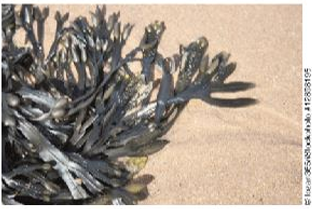
1 Seaweed may not be on many shopping lists, but it plays a big part in people's everyday lives. Seaweed is a plant that grows in the shallow waters near the shores of the world's oceans.

2 In some parts of the world, especially near the ocean, people eat seaweed all by itself. It has lots of vitamins and is a healthful treat. In places where seaweed is not served as a meal, people use goods that are made from these plants. Hundreds of everyday items have seaweed in them.
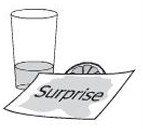
3 Seaweed helps many people keep their teeth clean. Toothpaste stays thick when it comes out of the tube because of a gel from a type of red seaweed. No one can see the seaweed in the toothpaste because it is mixed with the gel. This gel is in shampoo and makeup too.

4 Without seaweed, ice cream and yogurt would not be as thick or creamy but would seem rather lumpy and watery. Many people eat foods with seaweed without even knowing it.

5 Seaweed also helps plants grow. Many farmers around the world spray their fields with seaweed. They buy the seaweed after it has been made into a liquid. The seaweed becomes food for the plants. The vegetables on people's plates often come from these farms.

6 People cannot see seaweed in the food they eat or in the items they use to look their best. However, non of these things would be the same without this useful weed that comes from the sea.

1
1
1
1
1
1
1

Want to Send a Secret Message?

Here are three amazing ways to do it!

Secret messages have been around for hundreds of years. Spies used them to pass important information without being caught. The next time you want to send a secret message, try one of these fun ideas!

Lemony Letter

What You Will Need:

  • A lemon

  • A knife

  • A small cup

  • A think paintbrush

  • A piece of white paper

  • A lamp

  1. To have enough juice, gently roll the lemon back and forth against the table with your palm.

  2. Have a grownup cut the lemon in half.

  3. Squeeze the lemon so the juice drips into the cup.

  4. Dip the paintbrush into the juice and write a message on the paper. When the "ink" dries, the paper will appear blank.

  5. Give your secret message to a friend or family member.

  6. Have a the person who receives your message hold the paper near the light bulb. The heat will make the secret message appear! The lemon juice will turn a brown color.

Mirror Message

What You Will Need:

  • A potato

  • A potato peeler or knife

  • A bathroom mirror

  1. Ask a grownup to peel the skin from one end of the potato.

  2. Using the peeled end of the potato, write a message in big letters on the bathroom mirror.

  3. Your message will be invisible until you take a bath or shower. When you take a shower or bath, close the door so the steam stays in the bathroom. Steam from the hot water will appear on the mirror and make your message show.

Surprise someone else! Write a message on the bathroom mirror for a family member. See how long it takes for the person to discover your secret message.

Crazy Crayon

What You Will Need:

  • A piece of white paper

  • A white crayon

  • Dark-colored paint

  • A paintbrush

  1. Using the white crayon, write your message on the paper. It will be difficult to see the marking, so be careful.

  2. Give your secret message to a friend.

  3. Have your friend use the paintbrush to spread the paint over the paper. The message will appear on the paper as the person paints.

It's amazing! The paint does not stick to the waxy crayon, so the words will show through.

1
1
1
1
1
1
1

A Hidden Treasure

1 Evan and his 16-year-old brother, Mark liked spending time with their grandmother. Today, though, Grandma was busy painting.

2 "May I help you paint your kitchen, Grandma?" asked Evan.

3 "Your mom is helping me," Grandma replied with a smile. "Maybe you could play a game with Mark. I have some games in the attic."

4 The brothers nodded. They climbed the steps and opened the attic door to look for the games.

5 Instead of a game, Evan found an old journal in a dusty truck. He opened the pages and discovered a map! The drawing showed Grandma's house, a raindrop inside a square, two little triangles, and a dock. Best of all, a large "X" marked the "Greatest Fishing Spot," which was near the dock.

6 Excitedly, Evan asked Mark, "Do you think we can find this fishing spot?"

7 Mark took a closer look at the map. "Let's try," he said, and they thundered down the steps.

8 "Mom, we're going outside on a treasure hunt!" Evan shouted from the back door.

9 "Okay," Mom laughed, shaking her head.

10 "The square with the raindrop is behind Grandma's house," Mark said, narrowing his eyes as he examined the map.

11 When he looked up, Mark noticed a faded blue spot on the water tower nearby. "Look!" he exclaimed. "The water tower once had a raindrop painted on it. That must be it."

12 Next, the boys searched for the two small triangles near the tower. Before long, Evan patted the trunks of two pine trees.

13 "These trees must be the triangles on the map," he decided. 'They're in the right places."

14 "Now we just need to find the dock," Mark said. The two boys search the riverside near the trees, but they found only weeds.

15 Evan finally suggested that Grandma might remember the old dock.

16 The boys rushed into the kitchen with their question as Grandma and Mom were washing their paintbrushes.

17 "That dock was torn down a long time ago," Grandma explained. "How did you know about it?" she puzzled.

18 The boys presented the map, and Mom smiled. "That's my map I made when I was a young girl. Grandma and I loved fishing from the old dock."

19 "Wow! Could you take us to that place? The dock is no longer there, but maybe it's still a great fishing spot," Evan said hopefully.

20 Grandma smiled, remembering the time she spent with Mom. "Sure," she agreed. "Let's see fi the fish still like it there."

21 "I'll get our fishing poles," Evan offered. The map had certainly led to a treasure and a chance to spend time with Grandma.

1
1
1
1
1
1
1

Superstars of Slow

1 Many animals are superstars in their own ways. Some can jump very far. Others can run very fast. But one animal is a superstar for being s-l-o-w. The sloth is the slowest mammal on Earth. The sloth may seem like it is just lazy. But as scientists are discovering, this cute animal may actually be super smart. Its slow movements help make it go unnoticed by its enemies.
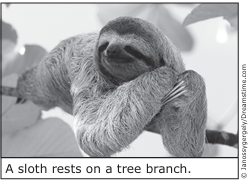
2 You might think it would be easy to learn about slow animals. If they cannot move fast, it must be easy to watch them. But sloths spend most of their time hanging upside down in trees. Because of this, scientists cannot see the sloths or follow them easily. Even today these animals are very mysterious. One thing that scientists do know is that sloths are very different from most other animals.

Sloth Style

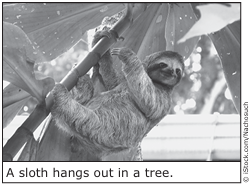
3 Sloths have longer arms than legs with curved claws on each hand and foot. The claws help these animals hang upside down. Their bodies are covered with long, gray-brown fur. Algae, which is plantlike matter that can grow on pond water, grow on their fur. This makes the sloths look green. Up in the tree, the colors and shape of the sloth blend in with the tree. If you were to stare at the sloth, you might think it was a branch.
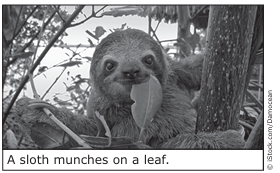
4 With gentle brown eyes and a flat little nose, the sloth might win the award for cutest animal. Its lips are always turned up as though it is smiling. Its mouth holds only 18 teeth, and its ears are very small. Sloths grow to be only about 25 inches long—around the size of a human baby.

Slow Movers

5 When sloths are awake, they move very slowly. They spend most of their time in trees. In fact, the animals come down only about once a week. While sloths are good climbers, they are not good walkers. Their back legs are weak. To walk the sloths must drag themselves using their front claws. Sloths are excellent swimmers. Sometimes they fall straight from their trees into rivers and go for a swim.

6 Most of the time sloths are sleeping. They snooze between 15 and 20 hours each day. Then, at night sloths wake up to eat. Sloth Snacks

7 Scientists are still learning about what sloths eat. They are known to eat twigs, leaves, and fruit. They get most of their water from the juicier parts of their food. Because sloths do not move much, they do not need to eat much. They also need to go to the bathroom only once a week. For this, they slowly climb down from their homes in the trees.
Staying Safe

8 Whether in trees or on the ground, sloths face dangers. The greatest danger comes from predators like jaguars, large birds, and snakes. It is difficult for a sloth to defend itself.

9 Sloths face other challenges too. The animals live high in the rain forest. When parts of the rain forest are cut down, sloths lose their homes. Fortunately, places like the Sloth Sanctuary of Costa Rica help sloths when they are in trouble.

Helping Sloths

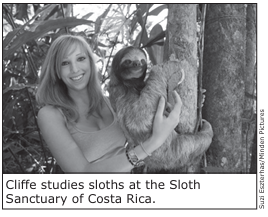
10 The Sloth Sanctuary of Costa Rica cares very much about sloths. The people there provide a home for sick or hurt sloths. The workers nurse them back to health. Then, they return them to the rain forest.

11 A scientist named Becky Cliffe works with the Sloth Sanctuary of Costa Rica to care for the sloths. Cliffe studies sloths and wants to learn more about their habits. She found a new way to study sloths in the wild by using a special sloth backpack. The tiny backpack contains a camera and a GPS tracker. The backpack records the sloth’s location and takes photographs. It allows Cliffe to collect a huge amount of important information about the daily life of a sloth.
12 Cliffe plans to keep studying sloths. “There is still so much we need to know about them,” she says. By learning more, scientists may be able to keep these slow superstars safe for years to come.

Asemmisa {{asɛmmisaAhyɛnsode}}
1.

The prefix un- helps the reader understand that unnoticed in paragraph 1 means —

Asemmisa {{asɛmmisaAhyɛnsode}}
2.

Which word means the opposite of curved in paragraph 3?

Asemmisa {{asɛmmisaAhyɛnsode}}
3.

Which section contains information about what sloths eat?

Asemmisa {{asɛmmisaAhyɛnsode}}
4.

What is the most likely reason the author includes the details in paragraph 1?

Asemmisa {{asɛmmisaAhyɛnsode}}
5.

Which idea from the selection does the author best support by including the first three photographs?

Asemmisa {{asɛmmisaAhyɛnsode}}
6.

Which sentence from the selection suggests that the author likes sloths?

Asemmisa {{asɛmmisaAhyɛnsode}}
7.

What is the most likely reason the author wrote this selection?

Asemmisa {{asɛmmisaAhyɛnsode}}
8.

Which sentence supports the conclusion that there are differences in the way bark paper looks even before it is painted?

Asemmisa {{asɛmmisaAhyɛnsode}}
9.

What is the most likely reason the author included paragraph 1 in the selection?

Asemmisa {{asɛmmisaAhyɛnsode}}
10.

How is the paper in the section titled “Make Your Own Amate Painting” different from the bark paper described in the rest of the selection?

Asemmisa {{asɛmmisaAhyɛnsode}}
11.

Which statement best explains why Starr’s discovery was important?

Asemmisa {{asɛmmisaAhyɛnsode}}
12.

Where should a reader look to find information about what happens after bark is stripped from trees?

Asemmisa {{asɛmmisaAhyɛnsode}}
13.

Amate paper is made from the bark of which trees?

Asemmisa {{asɛmmisaAhyɛnsode}}
14.

What do the old bark paper books teach scientists?

Asemmisa {{asɛmmisaAhyɛnsode}}
15.

Another good title for this story would be -

Asemmisa {{asɛmmisaAhyɛnsode}}
16.

Danielle keeps the cupcakes a secret by -

Asemmisa {{asɛmmisaAhyɛnsode}}
17.

Click an drag the correct answer to the box.

1) Danielle sees and apron inside the box.

2) Danielle thanks Martin and Madison.

3)

4) Danielle leads Martin and Madison to the cupcakes.

Mmuae Afoforo a Wobɛpaw:

Danielle sets the cupcakes on the table.

Danielle finds bits of cloth in the laundry room.
Danielle looks at the edges of the apron
Danielle walks into her bedroom.

Danielle tries on the apron.

Asemmisa {{asɛmmisaAhyɛnsode}}
18.

Danielle is pleased with the surprise most likely because she -

Asemmisa {{asɛmmisaAhyɛnsode}}
19.

What will Martin and Madison most likely do next?

Asemmisa {{asɛmmisaAhyɛnsode}}
20.

Which of these do the characters have in common?

Asemmisa {{asɛmmisaAhyɛnsode}}
21.

What is the root word in "discovered?"

Asemmisa {{asɛmmisaAhyɛnsode}}
22.

Some people eat seaweed all by itself because they most likely -

Asemmisa {{asɛmmisaAhyɛnsode}}
23.

Based on the article, seaweed makes ice cream and yogurt -

Asemmisa {{asɛmmisaAhyɛnsode}}
24.

Which question is answered in article?

Asemmisa {{asɛmmisaAhyɛnsode}}
25.

The author wrote this article most likely to -

Asemmisa {{asɛmmisaAhyɛnsode}}
26.

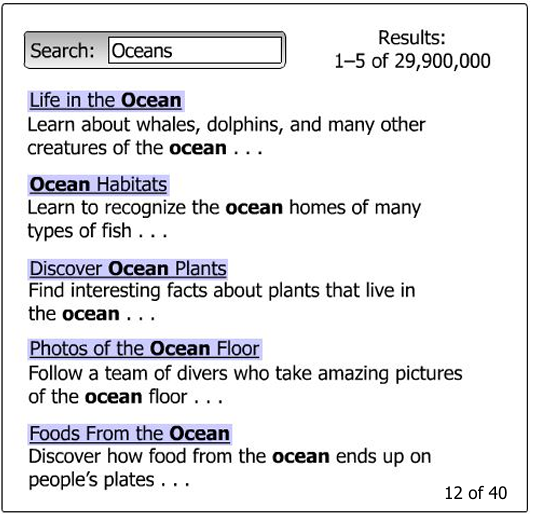
In an Internet search about oceans, which website would most likely have information about where red seaweed grows?

Asemmisa {{asɛmmisaAhyɛnsode}}
27.

What does seaweed help keep clean?

Asemmisa {{asɛmmisaAhyɛnsode}}
28.

What is one benefit of eating seaweed?

Asemmisa {{asɛmmisaAhyɛnsode}}
29.

What makes the secret message appear in "Lemony Letter?"

Asemmisa {{asɛmmisaAhyɛnsode}}
30.

In "Mirror Message" when the steam in the bathroom is gone, the message will most likely -

Asemmisa {{asɛmmisaAhyɛnsode}}
31.

In step 3 of "Mirror Message," what does the word invisible mean?

Asemmisa {{asɛmmisaAhyɛnsode}}
32.

"Lemony Letter" and "Mirror Message" are alike because -

Asemmisa {{asɛmmisaAhyɛnsode}}
33.

In "Crazy Crayon" it is hard to see the message before painting over it because the message -

Asemmisa {{asɛmmisaAhyɛnsode}}
34.

One reason to read this passage is to -

Asemmisa {{asɛmmisaAhyɛnsode}}
35.

The author puts numbers before some sentences in the passage to -

Asemmisa {{asɛmmisaAhyɛnsode}}
36.

The title tells reader that a character in the story will most likely -

Asemmisa {{asɛmmisaAhyɛnsode}}
37.

Paragraph 5 is important to the story because it -

Asemmisa {{asɛmmisaAhyɛnsode}}
38.

After Evan and Mark find the map, they both feel -

Asemmisa {{asɛmmisaAhyɛnsode}}
39.

Where does the story begin and end?

Asemmisa {{asɛmmisaAhyɛnsode}}
40.

Based on the story, where does the map first lead the boys?

Asemmisa {{asɛmmisaAhyɛnsode}}
41.

Which question is answered at the end of the story?

Asemmisa {{asɛmmisaAhyɛnsode}}
42.

Place these words in alphabetical order.

  1. spend

  2. smiled

  3. searched

  4. steps

  5. shouted