Which part of the image below best illustrates cohesion and adhesion occurring?
Which part of the image below best illustrates cohesion and adhesion occurring?
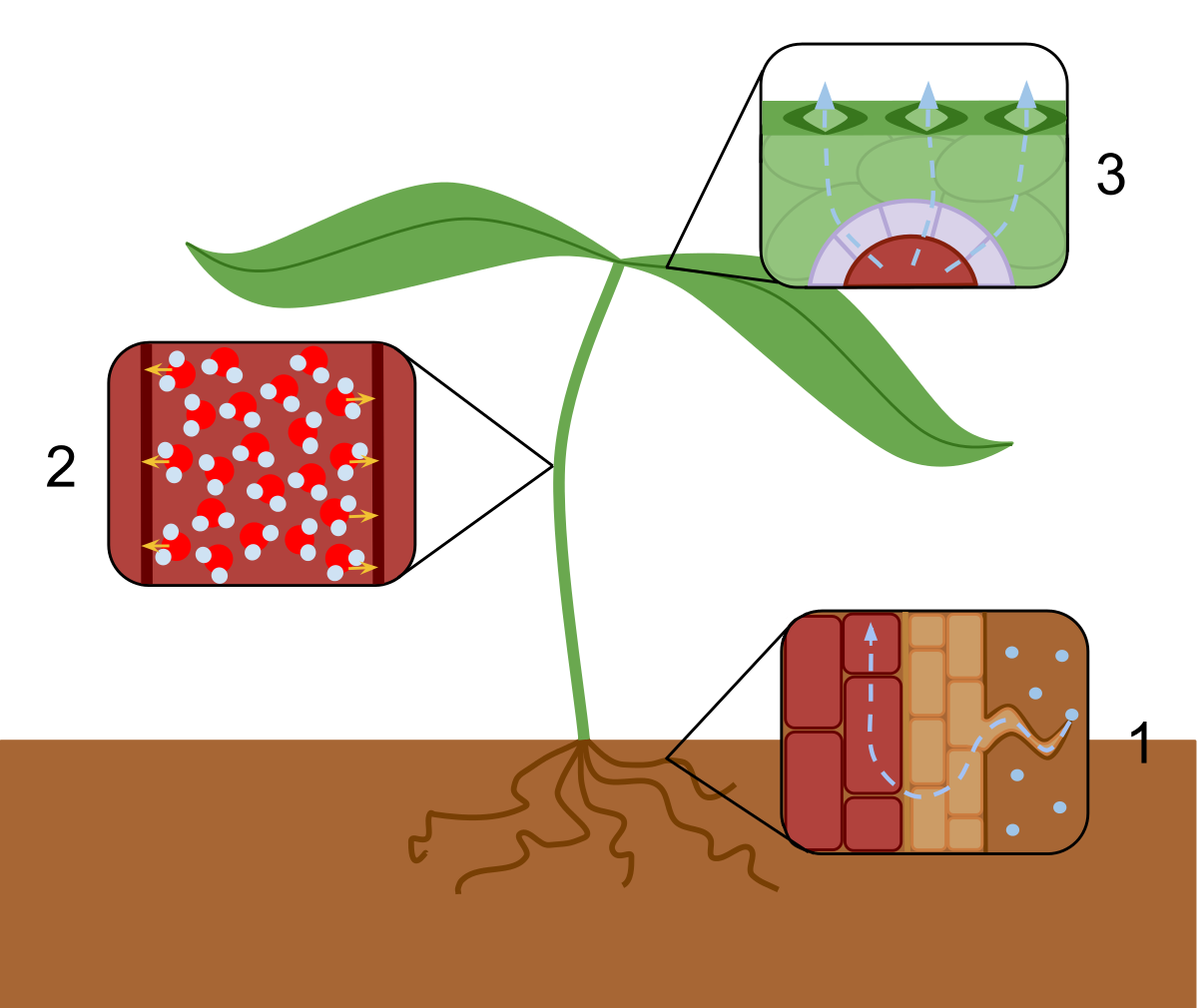
Which part of the image below best illustrates cohesion and adhesion occurring?
Determine whether each statement below most likely applies to dermal, vascular, and/or ground tissue in plants.
Terms can only be used once.
Often makes up most of the edible portions of plants, like potatoes or squash.
Two main responsibilities are to protect the plant from external factors and conduct photosynthesis.
Includes the phloem & xylem.
Transports materials around the plant.
Three main responsibilities are storage, photosynthesis, & support.
Includes the cuticle.
Conducts gas exchange.
Plant tissue that is not considered dermal or vascular tissue.
Dermal Tissue
Vascular Tissue
Ground Tissue
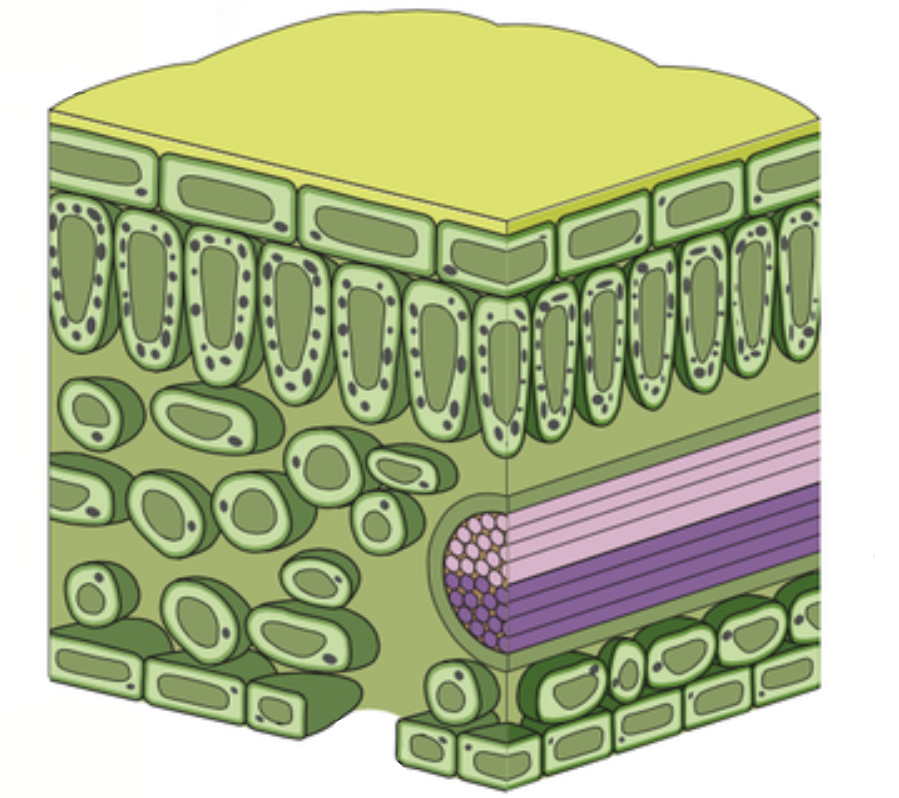
Identify where each structure is located on the leaf cross section below by dragging and dropping the name of the structure to its correct location.
Terms can only be used once.
If a particular plant's lateral meristems are very active but its apical meristems are not very active, you would expect the plant to likely grow but not grow .
You tend to find apical meristems .
A plant species that displays strong apical dominance would likely be than a similar plant species that shows very weak apical dominance.
[MARK ALL THAT APPLY!]
Which of the following factor(s) contribute to the upwards movement of water in plants?
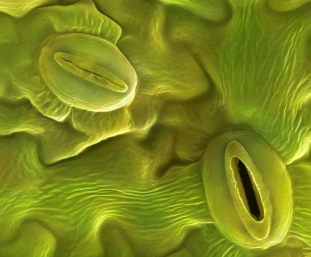
Below is a microscope image of the outer surface of a leaf:
Two similar structures are clearly shown in this image. What is the main difference between these two structures?
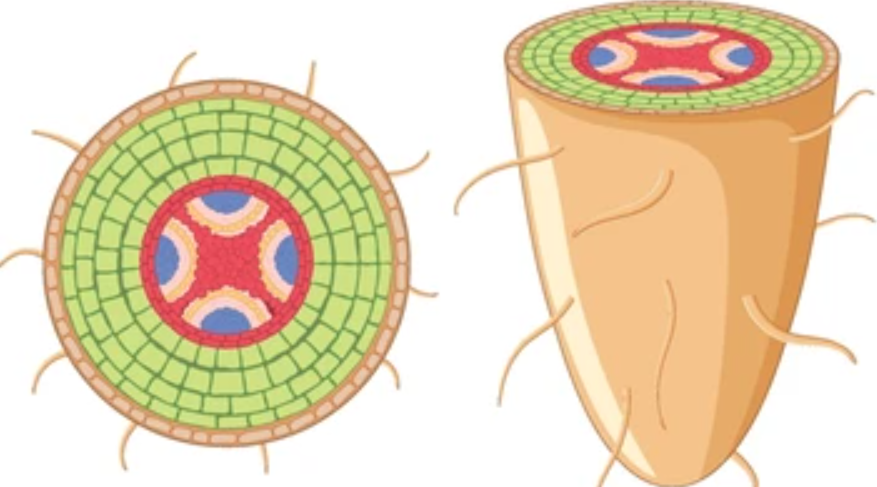
The images below are both of the roots from a plant. Use these images to fill in the blanks.
The wavy lines sticking off of the roots in this image are most likely . The structure of roots like the ones shown in this image include dermal tissue, include vascular tissue, and include ground tissue.
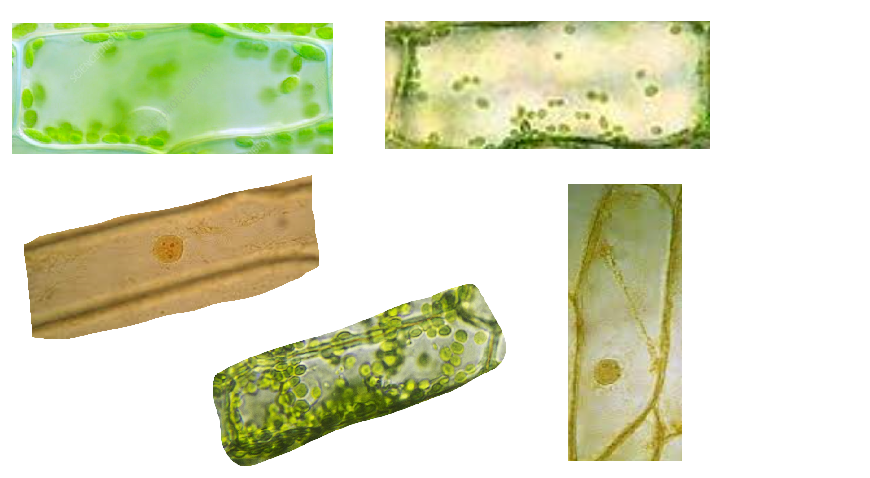
Each image below shows an individual cell from a plant. Based only on these images, which cell would you predict would be the MOST LIKELY out of these cells to be a MESOPHYLL cell?
Indicate your choice by clicking to select a cell.
Water leaves the in order to enter into the phloem. The main reason it moves into the phloem is due to the .
When water leaves the phloem, it goes into the .
Drag and drop each statement below to indicate whether it is true of the xylem and/or phloem.
Terms can only be used once.
only found in the stem of a plant, but not the leaves or roots
considered vascular tissue
has nutrients from the soil inside
considered ground tissue
connects the processes of root absorption to transpiration
has water inside
has sugars inside
BOTH the xylem & phloem
Xylem ONLY
Phloem ONLY
NEITHER the xylem nor phloem
Categorize each structure below as either a female or male reproductive part of a flower.
Each term must be used only once!
Style
Stamen
Pistil
Ovary
Anther
Stigma
Filament
Female Reproductive Parts
Male Reproductive Parts
Some flowers can pollinate themselves ("self-pollination"). How is this possible?
Plants are able to respond to their environment in a number of different ways. This often involves growing towards (positive) or away (negative) from a certain stimulus, called tropism. If a plant displays positive tropism, it is growing towards that stimulus. If a plant displays negative tropism, it is growing away from that stimulus.
Each answer can only be used once!
| Draggable item | arrow_right_alt | Corresponding Item |
|---|---|---|
Thigmotropism | arrow_right_alt | a plant will usually bend and grow towards a light source |
Hydrotropism | arrow_right_alt | a plants' shoots and leaves will usually grow away from the direction that gravity pulls them, while the roots will usually grow towards that pull |
Gravitropism | arrow_right_alt | some plants will curl around a fence, wall, or other solid structure, when they come into contact with it |
Phototropism | arrow_right_alt | the roots of a plant will usually grow towards a nearby water source |
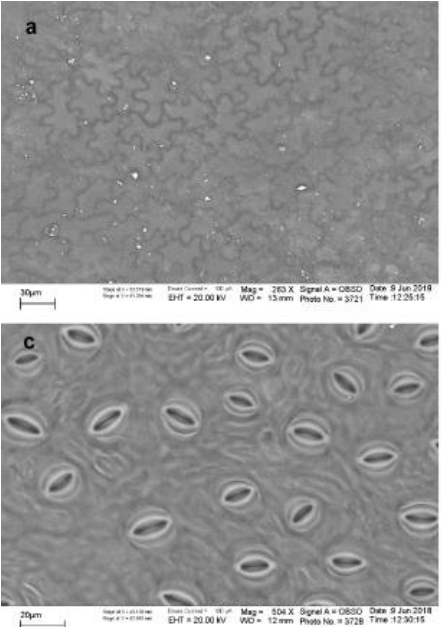
The microscope images below show the upper (a) and lower (c) surfaces of a leaf from a certain plant species.
Based on these microscope images only, which conclusion below makes the most sense?
[MARK ALL THAT APPLY!]
Which statement(s) below are TRUE?
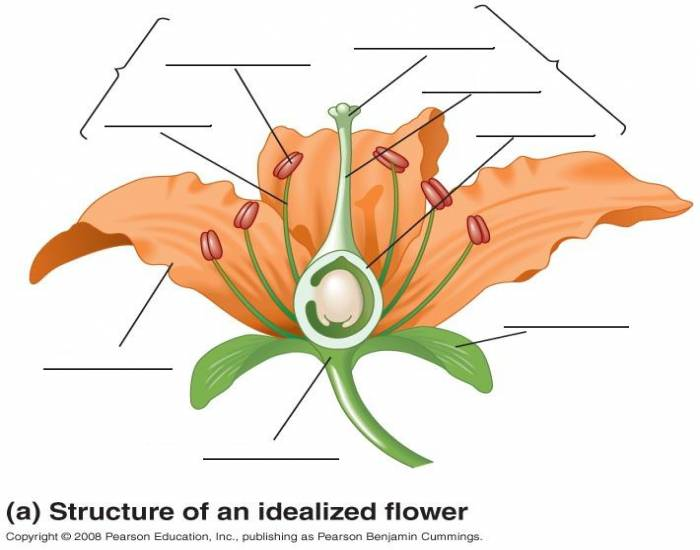
Identify the location for each structure on the diagram below.
Terms can only be used once.
Which of the following terms best explains why so many of the plants that humans eat have dramatically modified plant parts (such as modified stems, roots, or leaves)?
Reorder the events below so that they are listed from top (FIRST) to bottom (LAST), when you would expect them to occur during the reproduction processes of a certain flowering plant.
Pollen located on anther.
Downwards movement within the style.
Egg becomes fertilized.
Pollen located on stigma.
Seed and fruit are formed.
Release of pollen.
Fruit is eaten by an animal.
Seeds are released into the environment.
MARK ALL THAT APPLY
Which of these answer choices represents an edible modified root of a plant (based on our station activity)?
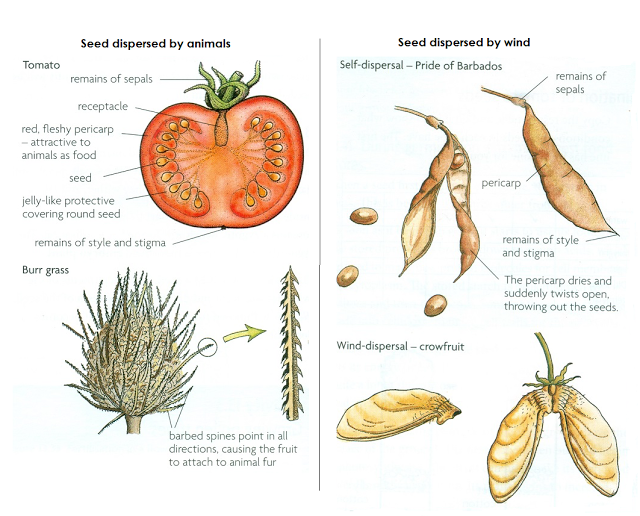
The image below shows different examples of seed dispersal adaptations by different types of plants.
The main difference between angiosperms and gymnosperms involves a particular adaptation by angiosperms to help better disperse their seeds in a particular way. Which of the following best explains this angiosperm adaptation for seed dispersal?
Tell me the one new thing you learned during the plant lab stations and/or these formative assignments that you thought was interesting/neat/cool in some way, and why you thought so!
If you really, truly knew 100% of the information covered in these activities and feel like you did not learn something new, then take a moment to look up a cool plant fact online and tell me the cool plant fact you found and why you thought it was cool!
Answer must be one complete sentence.