Choose all words that are incorrect about the chemical reactions of
CO2 dissolution in seawater.
If you are driving in a gas-powered vehicle, the carbon emissions from your vehicle contribute to global climate change. Scientists associate these carbon emissions with atmospheric warming. However, there are also other effects of carbon emissions on the global climate. For example, atmospheric carbon dioxide (CO2) that dissolves in seawater contributes to ocean acidification. Although there is naturally a higher percentage of CO2 in seawater than in the atmosphere, the dissolving of atmospheric CO2 impacts the ocean environment and marine life. Carbon Dioxide in the Oceans
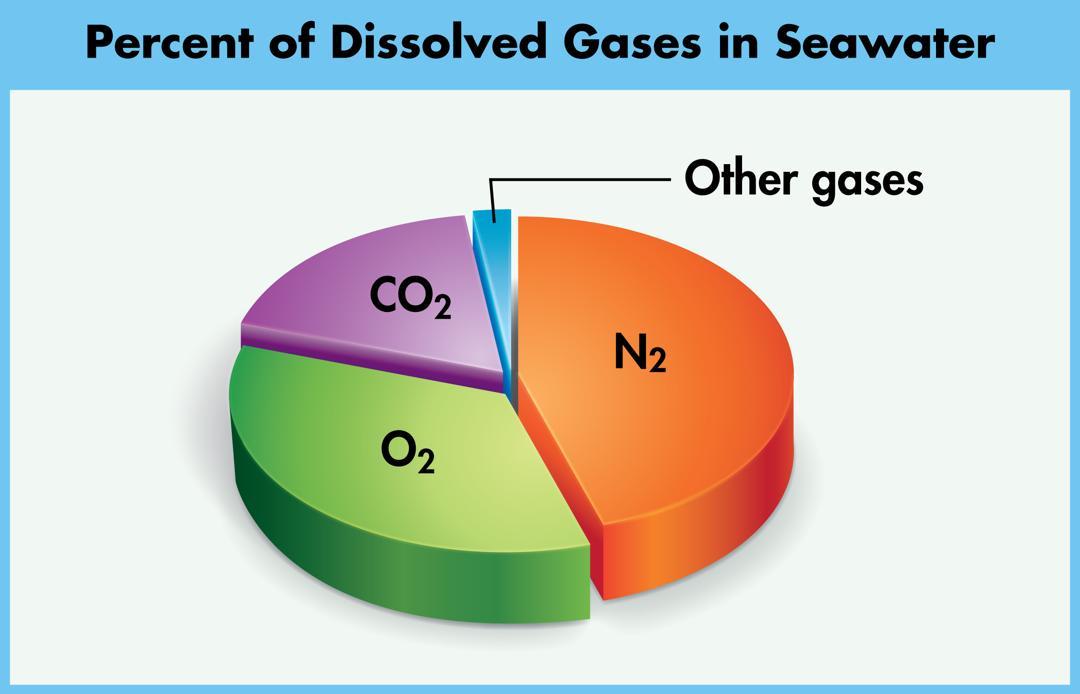
Unlike in the atmosphere, where there are only trace amounts of carbon dioxide, CO2 is one of the major gases dissolved in seawater.
To understand ocean acidification, first consider the elements carbon (C), hydrogen (H), and oxygen (O) and the chemical structures of CO2 and water (H2O).
The more molecules collide, the more bonds break and new bonds form, producing new molecules. Kinetic energy controls how fast molecules collide. Temperature is a measure of kinetic energy, and as it increases, the number of molecular collisions also increases. Consequently, higher temperatures yield greater instances of old bonds breaking and new bonds forming.
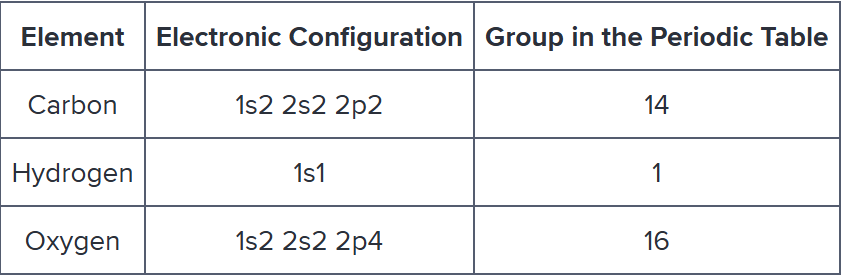
Electronegativity refers to the tendency of atoms to attract and bond with electrons. Electronegativity results from the electron configuration of atoms. Atoms prefer to have eight electrons in their valence (outer) shell. H only has one electron in its outer shell, whereas O has six and C has four. This facilitates bonds between atoms as they share or gain/lose electrons.
Covalent bonds occur when electron pairs are shared between elements. In each CO2 molecule, the C has four covalent bonds with two O atoms. In each H2O molecule, there are two covalent bonds, one between O and each H atom.
When reactions occur, multiple reactants creating one product is called a combination reaction. Alternatively, one reactant producing multiple products is called a decomposition reaction. Substitution reactions also occur when elements of the reactants are exchanged. Consider the types of reactions that occur when CO2 undergoes chemical reactions in seawater. Carbon Dioxide
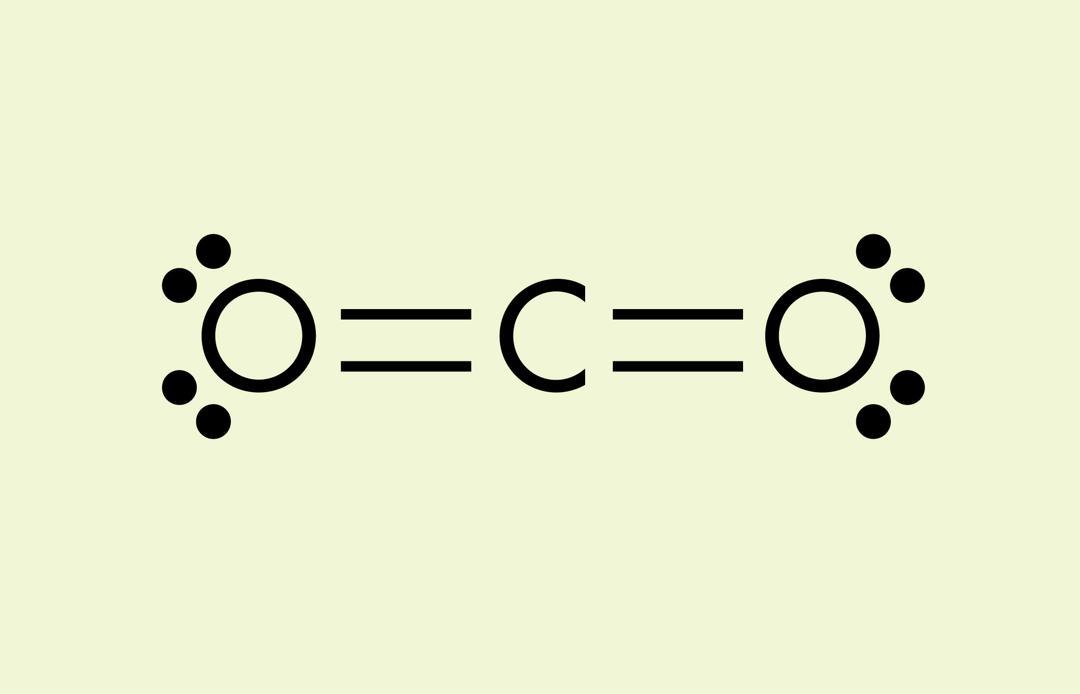
A molecule of carbon dioxide consists of a central carbon atom bonded to two oxygen atoms.
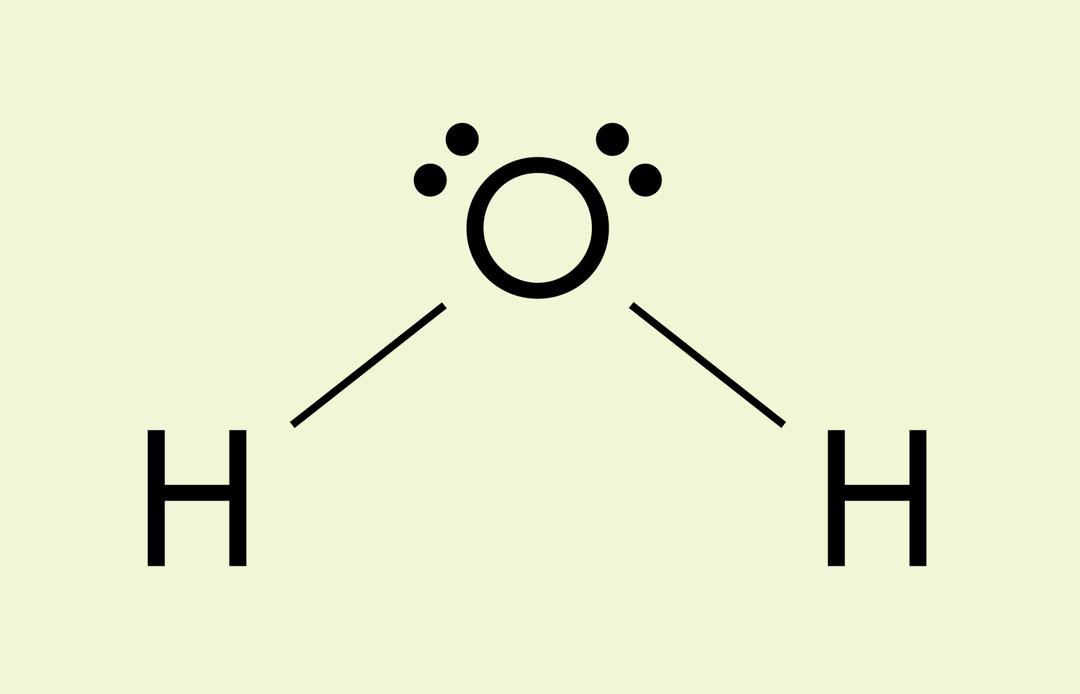
Water
A molecule of water consists of a central oxygen atom bonded to two hydrogen atoms.
If H loses its electron to a more electronegative element, it becomes an H+ ion. Dissolution of CO2 in seawater results in the production of a weak acid, carbonic acid (H2CO3). H2CO3 then rapidly dissolves. Consequently, excess H+ ions as well as bicarbonate (HCO3-1) and carbonate (CO3-2) salts are produced.
Seawater is naturally basic. Prior to the Industrial Revolution, seawater had an average pH of approximately 8.2. Today, the average pH of seawater is approximately 8.1. Ocean acidification occurs because seawater pH is reduced by excess H+ ions that are produced from the dissolution of CO2 in seawater.
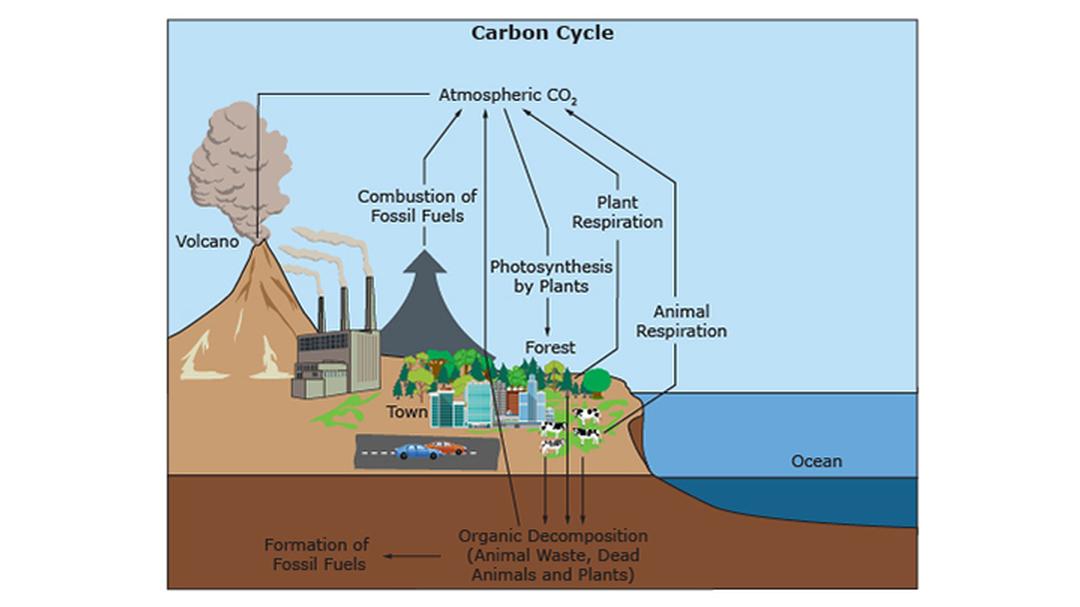
The ocean represents one part of the carbon cycle. The carbon cycle involves chemical reactions across various systems of Earth (atmosphere, hydrosphere, biosphere, and geosphere). Increased atmospheric CO2 leads to increased ocean acidification. However, all of Earth’s systems are interconnected, and atmospheric CO2 concentrations can change and be changed by other parts of the environment where carbon is stored. Carbon Cycle
The exchange of carbon dioxide between atmosphere and ocean, where large quantities of carbon are stored, is (a small) part of the complex carbon cycle.
Include the correct balanced chemical reactions for the designated parts of the carbon cycle model.


Combustion of Fossil Fuels
Plant Respiration
Animal Respiration
Photosynthesis by Plants
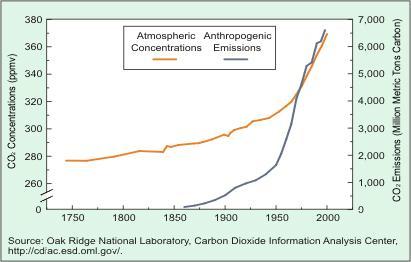
Many chemical reactions in the environment are associated with human-mediated (or anthropogenic) factors. Such anthropogenic activities include, for example, combustion of fossil fuels and deforestation. Atmospheric greenhouse gases (such as CO2, the most influential greenhouse gas) trap heat. Therefore, increased greenhouse gas concentrations are strongly associated with increased temperatures. Atmospheric Carbon Dioxide Is Rising
The technological, industrial, and economic changes of the last century have sharply increased the amount of CO2 emitted by human activities.
With increasing concentrations of greenhouse gases in the atmosphere, there are direct impacts on other components of the carbon cycle. As there are stresses on a system, the equilibrium of greenhouse gases shifts accordingly, which follows Le Chatelier’s Principle.
For example, atmospheric CO2 and dissolved aqueous CO2 are in equilibrium. Consider what happens when there is increased atmospheric CO2. Dissolved CO2 may be rapidly released into the atmosphere by various components of the carbon cycle. Consequently, more atmospheric CO2 dissolves in water. The equilibrium is therefore maintained, but shifted so that there is both increased atmospheric and dissolved CO2.
Because there is more atmospheric CO2 dissolved in water, there are more molecules in a given volume of seawater. Increased atmospheric CO2 causes temperatures to rise. This change in temperature, in addition to increased molecular density, affects the rate of molecular collisions in seawater.
These processes also affect other parts of the carbon cycle. Increased CO2 dissolution in seawater and increased carbonic acid (H2CO3) concentrations produce excess H+ ions that react with minerals, such as those in rocks. The interaction of H+ ions and minerals can result in chemical weathering of these rocks.
Select the descriptions that best describe the outcomes of changes in atmospheric carbon concentration and temperature based on Le Chatelier's Principle.
Coral reefs are home to more than 25 percent of life in the oceans and provide food to people worldwide. Corals are symbiotic with photosynthetic algae. The corals provide shelter to the algae, and the algae are an important food source for corals.
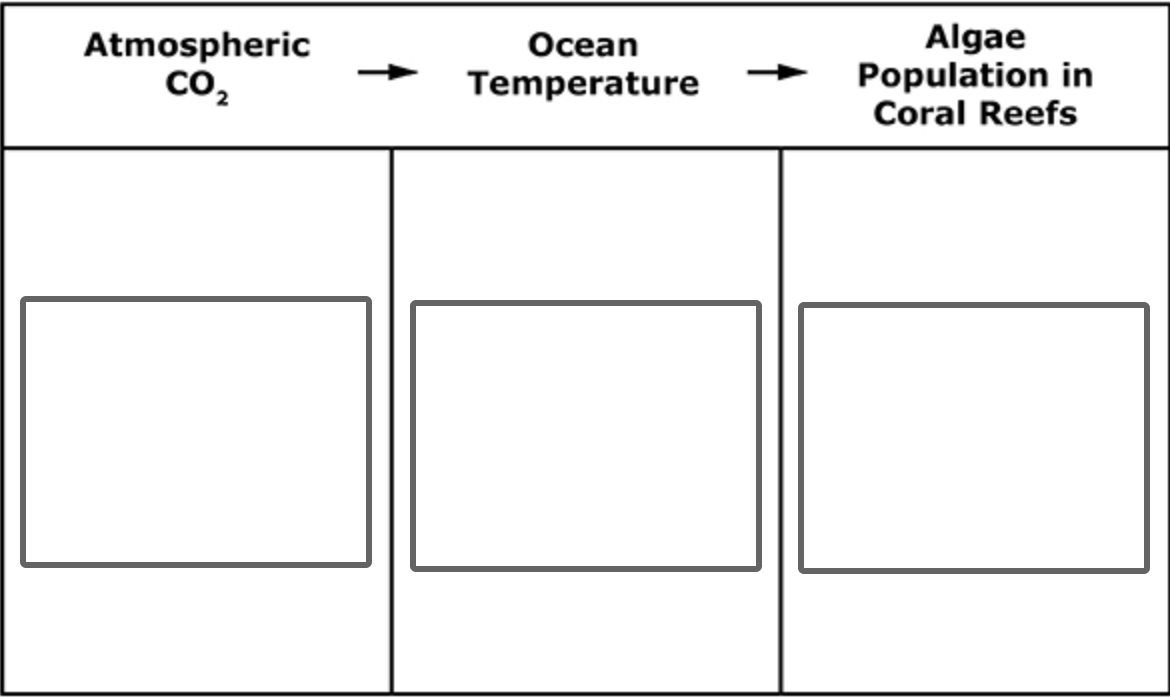
Greenhouse gas emissions can have two devastating effects on coral reefs. With increased ocean temperatures, the symbiotic algae leave, which causes coral bleaching. Corals cannot survive for long without their algal food source, and thus can die as a result. Ocean acidification can also weaken coral skeletons and inhibit growth. Corals use carbonate (CO3-2) and calcium (Ca+2) ions for growth and skeletal integrity. Increased CO2 in oceans produces an increase in available bicarbonate ions (HCO3-1) but a decrease in available CO3-2 ions. Therefore, corals and other calcium carbonate shell-building organisms are at great risk from increased ocean temperatures.
Healthy Oceans: Coral Reefs and Climate ChangeOrganisms living in the ocean significantly participate in the carbon cycle. Coral reefs are a principal actor, but they are extremely delicate when it comes to temperature and pH.
Place the arrows to correctly represent how the relationship between the hydrosphere and biosphere is modified based on the effects on ocean pH and temperature caused by increased CO2 emissions.


Although greenhouse gases are known to increase Earth’s temperatures, there are also molecules that can help reduce global temperatures. For example, atmospheric sulfur dioxide (SO2) can reflect heat away from Earth’s surface. This reflection helps cool the Earth’s surface. Although there are several sources of atmospheric sulfur, such as volcanic eruptions and the burning of coal, marine biogenic sulfur is the largest source.
The Effects of Eruptions on Global ClimateSulfur dioxide has the opposite effect of the greenhouse gases: It reduces the solar radiation reaching Earth’s surface and results in a cooling effect. It is released by volcanic eruptions, but atmospheric sulfur is mainly produced by marine organisms.
Arrange these statements about the cascade effects of increased CO2 on atmospheric sulfur in logical order.
Atmospheric sulfur is reduced as a consequence of decreased marine biogenic sulfur production.
Increased CO2 in seawater yields decreased biogenic sulfur production.
Temperatures further increase when there is less atmospheric sulfur.
Increased atmospheric CO2 is absorbed by seawater
Both CO2 and SO2 naturally occur in the atmosphere.
All of Earth’s systems are interconnected. Therefore, all of Earth’s systems are affected by increased CO2 from human activity. In the ocean, increased CO2 has effects on both the hydrosphere (especially seawater) and geosphere (especially the seafloor) with respect to carbon storage. Over time, some carbon is taken up by organisms in the marine food web. When organisms die, they fall to the seafloor, where the carbon is transferred back to the geosphere. Consequently, the seafloor stores carbon.
Explain the effects of changing greenhouse gas concentrations on the rate at which reactions occur in the carbon cycle with emphasis on the collisions at the molecular level and based on Le Chatelier’s Principle, and provide an example of a reaction that would occur at a different rate.
Match the different effects that ocean acidification can have on the geosphere with the best way to investigate each effect.
Chemical analysis | Mechanical tetsting | Specimen sampling | Genome sequencing | |
|---|---|---|---|---|
Coral reef deaths | ||||
Change in stored carbon compounds | ||||
Shell-building organism abundance | ||||
Seafloor sediment density |