CO2 and Greenhouse Effect
Figure 1.
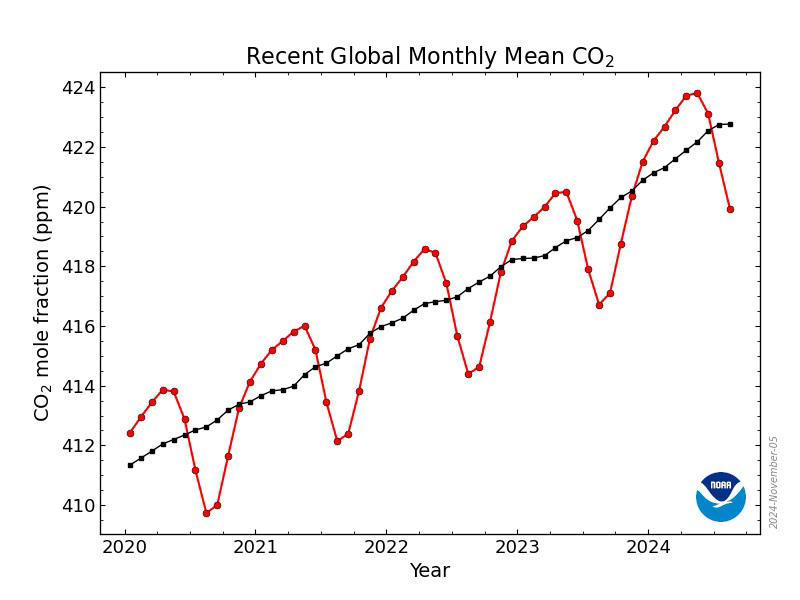
The graphs show monthly mean carbon dioxide globally averaged over marine surface sites. The Global Monitoring Laboratory has measured carbon dioxide and other greenhouse gases for several decades at a globally distributed network of air sampling sites [Conway, 1994]. The last four complete years plus the current year are shown.
The dashed red line with diamond symbols represents the monthly mean values, centered on the middle of each month. The black line with the square symbols represents the same, after correction for the average seasonal cycle. The black line is determined as a moving average of SEVEN adjacent seasonal cycles centered on the month to be corrected, except for the first and last THREE and one-half years of the record, where the seasonal cycle has been averaged over the first and last SEVEN years, respectively.
Figure 2.
Carbon Dioxide
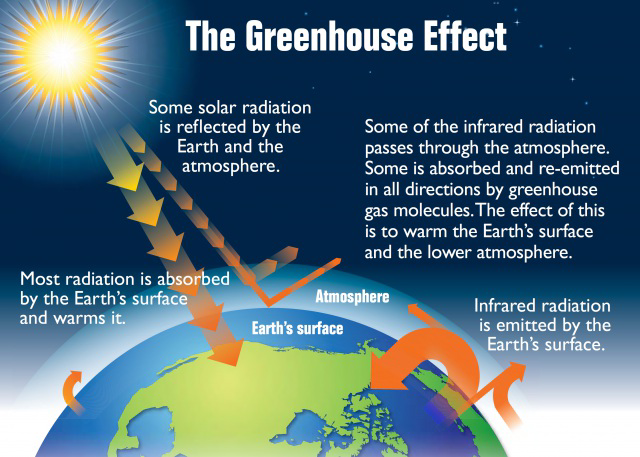
Carbon dioxide is the primary greenhouse gas contributing to recent climate change. Carbon dioxide enters the atmosphere through burning fossil fuels, solid waste, trees, and other biological materials, and as a result of certain chemical reactions, such as cement manufacturing. Carbon dioxide is absorbed and emitted naturally as part of the carbon cycle, through plant and animal respiration, volcanic eruptions, and ocean-atmosphere exchange.
The Carbon Cycle
The carbon cycle is the process by which carbon continually moves from the atmosphere to the earth and then back to the atmosphere. On the earth, carbon is stored in rocks, sediments, the ocean, and in living organisms. Carbon is released back into the atmosphere when plants and animals die, as well as when fires burn, volcanoes erupt, and fossil fuels (such as coal, natural gas, and oil) are combusted. The carbon cycle ensures there is a balanced concentration of carbon in the different reservoirs on the planet. But a change in the amount of carbon in one reservoir affects all the others. Today, people are disturbing the carbon cycle by burning fossil fuels, which release large amounts of carbon dioxide into the atmosphere, and through land use changes that remove plants, which absorb carbon from the atmosphere.