Energy Flow and Climate Changes
Using a model to describe how variations in the flow of energy into and out of Earth's systems illustrates how these changes affect climate. Fluctuations in energy input, such as changes in solar radiation or greenhouse gas concentrations, and energy output, including heat radiated back into space, can lead to alterations in Earth's climate. The model helps to show how these energy imbalances drive shifts in temperature, weather patterns, and overall climate conditions. The main concepts include:
Climate change is a term used to describe long-term changes in temperature, precipitation, and other weather patterns that occur over several decades or longer. Scientists have been studying climate change for many years, and they have identified various factors that contribute to this phenomenon. One of the most important factors is the flow of energy into and out of Earth's systems, which can be influenced by many different things.
Short-term changes in climate can be caused by volcanic eruptions or changes in solar radiation, while long-term changes can be caused by processes such as plate tectonic movement or variations in Earth's orbit. Human activities such as burning fossil fuels and deforestation are also contributing to climate change by increasing the concentration of greenhouse gases in the atmosphere. These gases trap heat from the sun and cause the Earth's temperature to rise.
Models are used to understand the complex relationships between Earth's systems and how they contribute to climate change. These models incorporate data from many different sources, including atmospheric measurements, oceanic measurements, and ice core records. By simulating the interactions between these systems, scientists can gain insights into the processes that contribute to climate change and develop strategies to mitigate its effects.
In addition to its impact on the natural environment, climate change also has significant implications for human societies. Changes in temperature and precipitation patterns can lead to changes in agricultural productivity, water availability, and disease prevalence. Rising sea levels, more frequent heat waves and extreme weather events, and changes in the distribution of plant and animal species are all examples of the many ways in which climate change is affecting the world we live in.
Earth’s Climate:
Earth’s climate is the result of energy interacting with the substances and surfaces that make up Earth’s spheres.
While Earth’s spheres have different properties and characteristics, they are not isolated from each other.
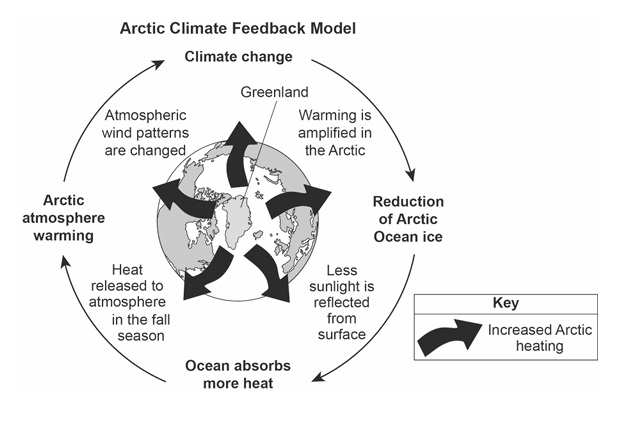
Interactions between these spheres have caused feedbacks that have changed Earth’s climate over decades. The
model below shows information about the Arctic climate.
Figure 1.