Twa kɔ nsɛm atitiriw so
Log in
Sign up for FREE
arrow_back
Laabri

Ecosystem Resilience Test_25.26

star
star
star
star
star
Last updated about 1 month ago
15 Nsɛmmisa
1
1
1
1
1
1
1
1
1
1
Asemmisa {{asɛmmisaAhyɛnsode}}
1.

What type of organism always starts the food chain in an ecosystem?

Asemmisa {{asɛmmisaAhyɛnsode}}
2.

Which of these ecosystems would be most likely to recover?

Asemmisa {{asɛmmisaAhyɛnsode}}
3.

If an invasive species (a species from a different place) is brought into a new ecosystem and reproduces rapidly, how would that likely affect the ecosystem?

Asemmisa {{asɛmmisaAhyɛnsode}}
4.

Deforestation means cutting down many trees in an area. How does deforestation affect an ecosystem?

Asemmisa {{asɛmmisaAhyɛnsode}}
5.

What could happen if all of the sharks were gone from a marine ecosystem?

Asemmisa {{asɛmmisaAhyɛnsode}}
6.

An event, such as a storm, fire, flood, drought, overgrazing, or human activity, that changes an ecosystem and alters resource availability is called a...

Asemmisa {{asɛmmisaAhyɛnsode}}
7.

Some damaged ecosystems can recover after a disturbance. Is this statement true or false?

Asemmisa {{asɛmmisaAhyɛnsode}}
8.

How is biodiversity beneficial to an ecosystem?

Asemmisa {{asɛmmisaAhyɛnsode}}
9.

Humans are part of the ecosystem and therefore impact it. Which of the following events in an ecosystem may produce a negative effect?

Asemmisa {{asɛmmisaAhyɛnsode}}
10.

Which is not a human impact on an ecosystem?

Climate change can make different environmental stresses stronger, sometimes pushing a species past the point where it can survive. From 2000 to 2003, a mix of extreme drought (little rain) and unusually high temperatures caused many piñon pines in the Four Corners region of the Southwest to die. Piñon pines are normally very good at surviving dry conditions, but the extra heat made the drought even worse. This weakened the trees and made them more vulnerable to attacks from pine bark beetles. In some areas, more than 90% of the piñon pines died, which led to big changes in the ecosystem.

Warmer winters are also causing more bark beetle outbreaks. Because the winters aren’t as cold, more beetles survive through the season and are able to reproduce, increasing their numbers and the damage they cause.
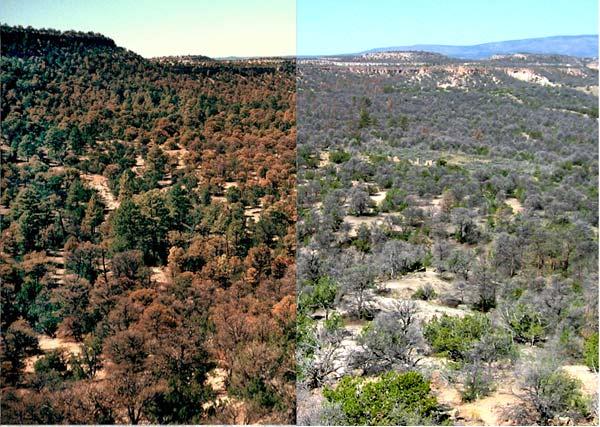
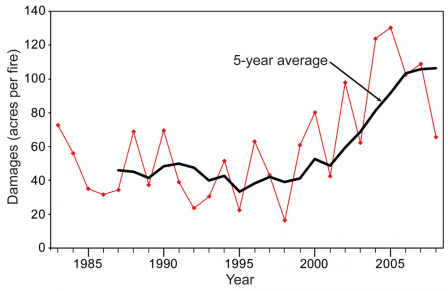
Two side by side photographs of a forested region. The photo on the left shows a combination of green and reddish trees. The photograph on the right shows many leafless grey trees.Line graph shows that the damages, measured in acres per fire, has increased from 1985 to 2009. Annual data varies, but the five year average line shows an increase from approximately 50 acres per fire in 1985 to over 100 acres per fire in 2009.This graph shows the area burned by wildfires every year from 1983 to 2008.

1
1
1
1
1
Asemmisa {{asɛmmisaAhyɛnsode}}
11.

Look at the graph. What has happened to the ecosystem disturbances over time?

Asemmisa {{asɛmmisaAhyɛnsode}}
12.

Which of the following ecosystem disturbances affected piñon pines? (Select all that apply.)

Asemmisa {{asɛmmisaAhyɛnsode}}
13.

Which statement best describes the resilience of the ecosystem in the Four Corners region?

Asemmisa {{asɛmmisaAhyɛnsode}}
14.

Deer eat the nuts of piñon pine trees. After repeated wildfires in the Four Corners ecosystem, what most likely happened to the population of deer?

Asemmisa {{asɛmmisaAhyɛnsode}}
15.

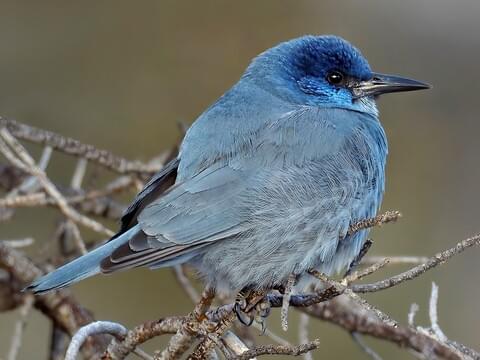
The piñon jay has a symbiotic relationship with the piñon pine. It helps to spread piñon pine seeds so new trees can grow. If humans take steps to conserve (protect) piñon jays in the ecosystem, how will that likely affect the resilience of the ecosystem?

Pinyon Jay Identification, All About Birds, Cornell Lab of Ornithology