1
Asemmisa {{asɛmmisaAhyɛnsode}}
8.
1
1
1
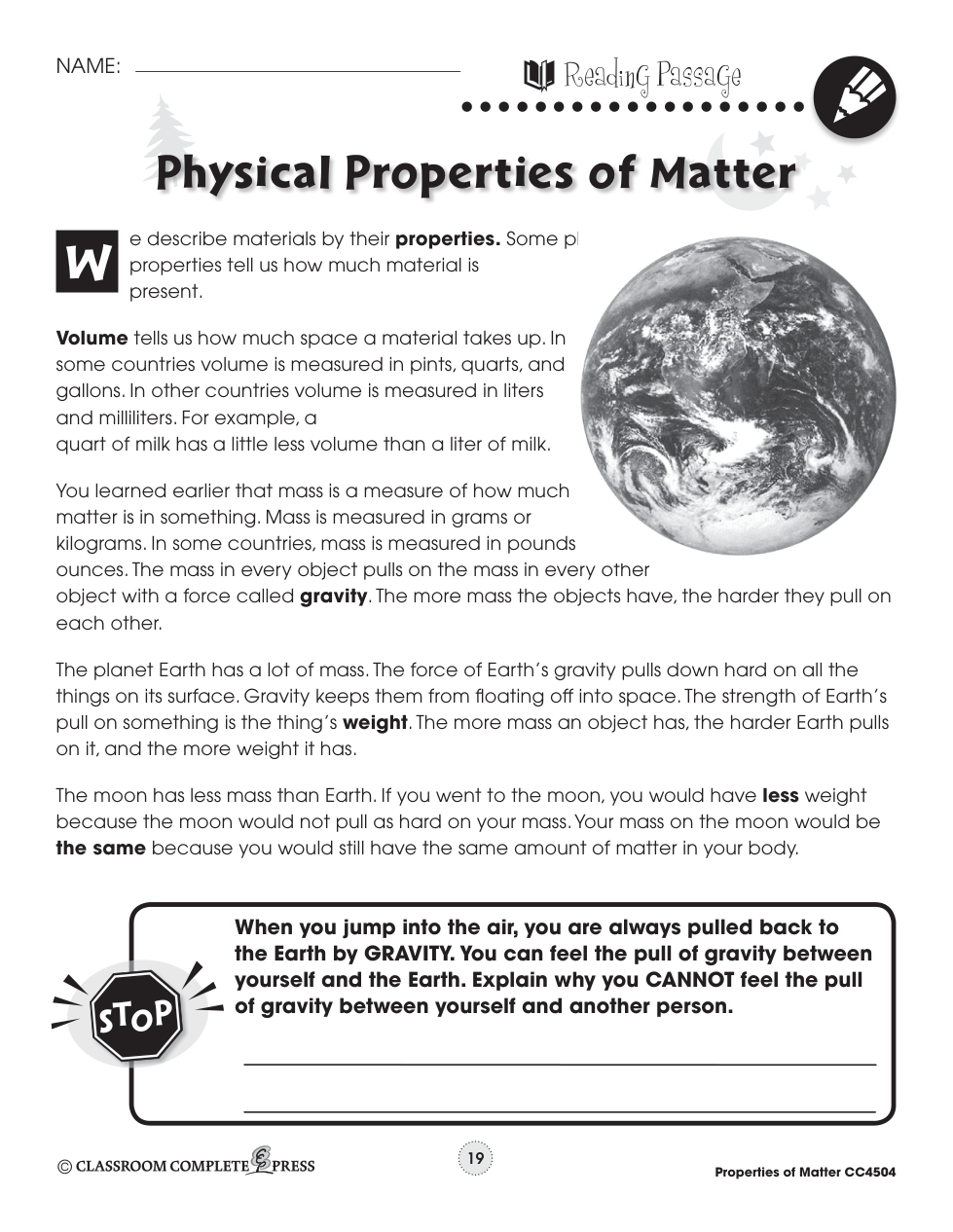
When you jump into the air, you are always pulled back to the Earth by GRAVITY. You can feel the pull of gravity between yourself and the Earth. Explain why you CANNOT feel the pull of gravity between yourself and another person.
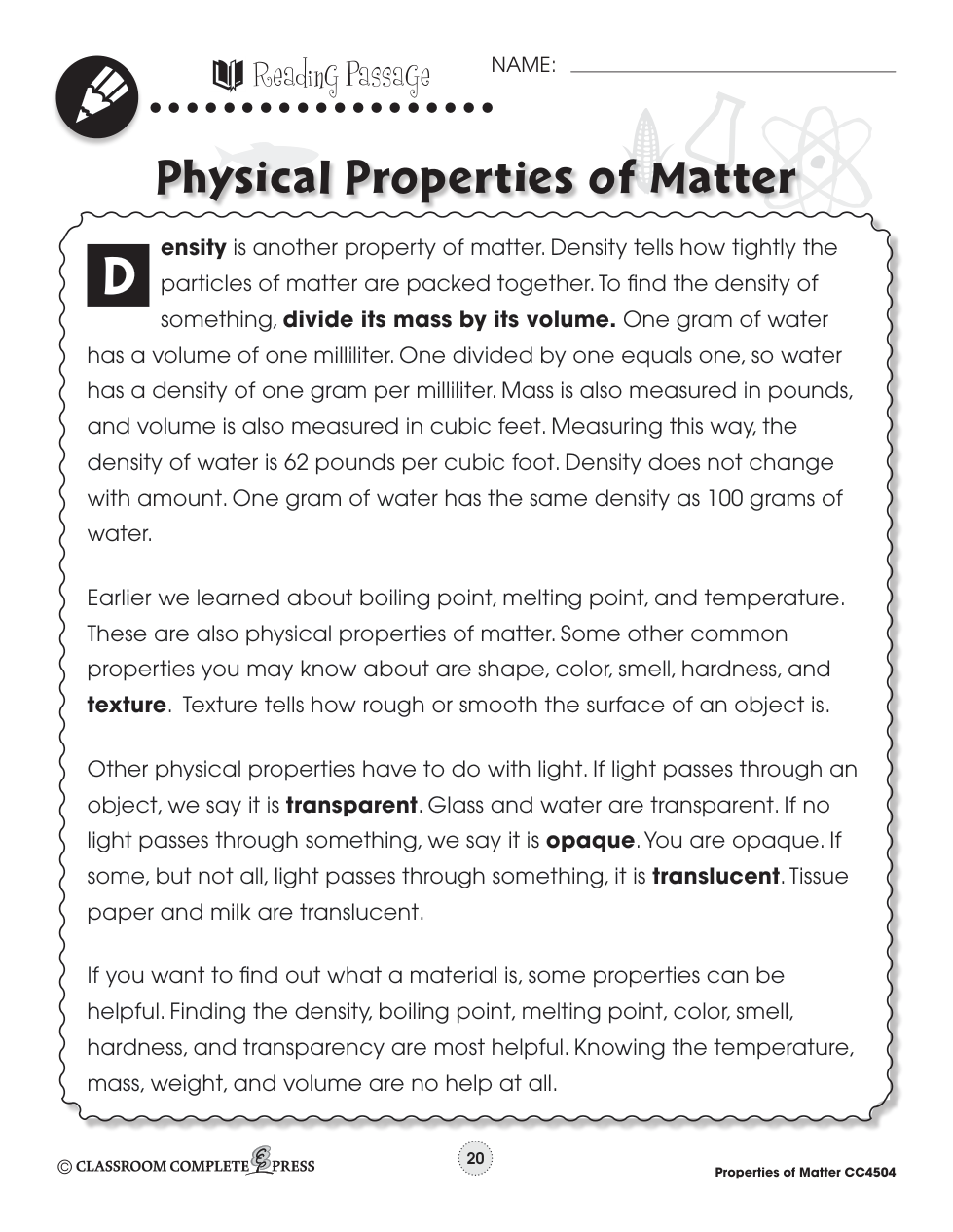
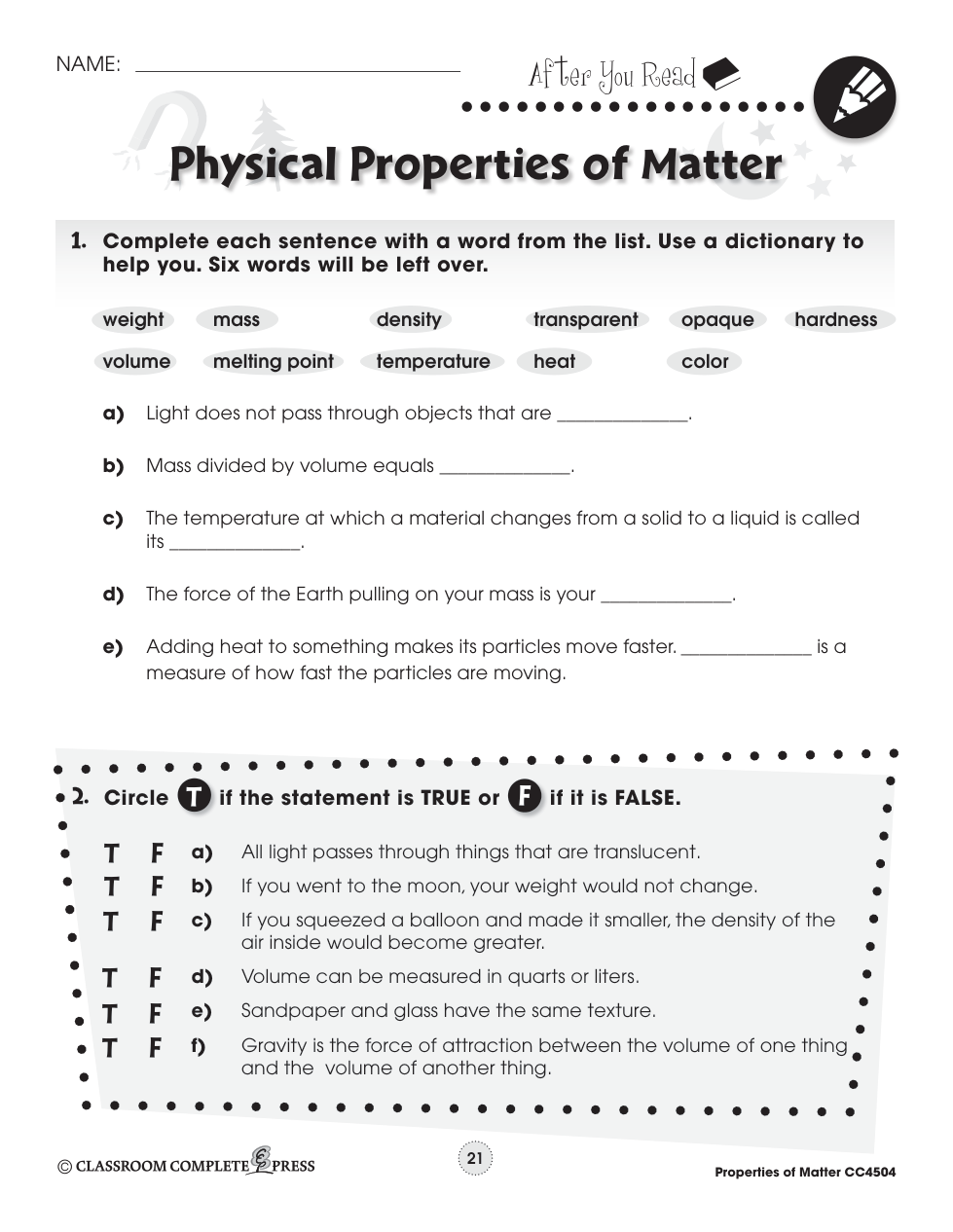
What does the word opaque mean? Click all that apply.
Explain what the density of an object tells us about the particles the object is made of.
Decide whether the following physical properties of matter can be observed with the 5 senses or measured with a scale, a ruler, a thermometer, or a measuring cup.
length
volume
odor
weight
Texture
shape
mass
Decide whether the following physical properties of matter can be observed with the 5 senses or measured with a scale, a ruler, a thermometer, or a measuring cup.
magnetic
sink/float
volume
temperature
state
density
Can the mass of an object change?
Which of the following objects would be malleable?
Density is how much matter (mass) is packed into a certain space (volume). Density tells us if something will float or sink in a liquid. The more matter that is tightly packed in a given volume, the denser the object is.
Examples of density:
Oil and Water: Oil is less dense than water, so it floats on top.
A rock: A rock is denser than water, so it sinks.
A balloon filled with air: The balloon is less dense than the same amount of air outside the balloon, so it floats.
A piece of wood: Some wood is less dense than water, so it floats, while other wood is denser and sinks.
Which of the following items are denser than water?
| Draggable item | arrow_right_alt | Corresponding Item |
|---|---|---|
Electrical Conductor | arrow_right_alt | A material that does not let electricity flow through it. It's like a barrier that keeps electricity from passing through. Examples include rubber, plastic, and wood. |
Electrical Insulator | arrow_right_alt | A material that allows electricity to flow through it easily. Metals like copper and aluminum are good conductors, which is why they're used in wires. |
What does the term "solubility" mean?
Which of the following is not a physical property of matter?
Match the word with its correct definition
| Draggable item | arrow_right_alt | Corresponding Item |
|---|---|---|
Volume | arrow_right_alt | How tightly particles are packed in the volume of a given material |
density | arrow_right_alt | How much matter is in something |
mass | arrow_right_alt | How rough or smooth the surface of something is |
Texture | arrow_right_alt | something you can see through |
Transparent | arrow_right_alt | How much space something takes up |