Fossil Fuel Combustion, Urban Emissions, and Carbon Storage in Rocks
Carbon moves continuously among Earth’s systems - the atmosphere, hydrosphere, biosphere, and geosphere. Human activities have dramatically accelerated one part of this cycle: the release of carbon dioxide $CO_2$ into the atmosphere from fossil fuel combustion. Gasoline engines, power plants, industrial processes, and heating systems all burn carbon-rich fuels, producing $CO_2$ as a by-product. As a result, atmospheric carbon concentrations have been rising steadily for the past century, and urban regions show some of the highest concentrations because of transportation emissions, energy use, and concentrated human activity.
Diagram 1.
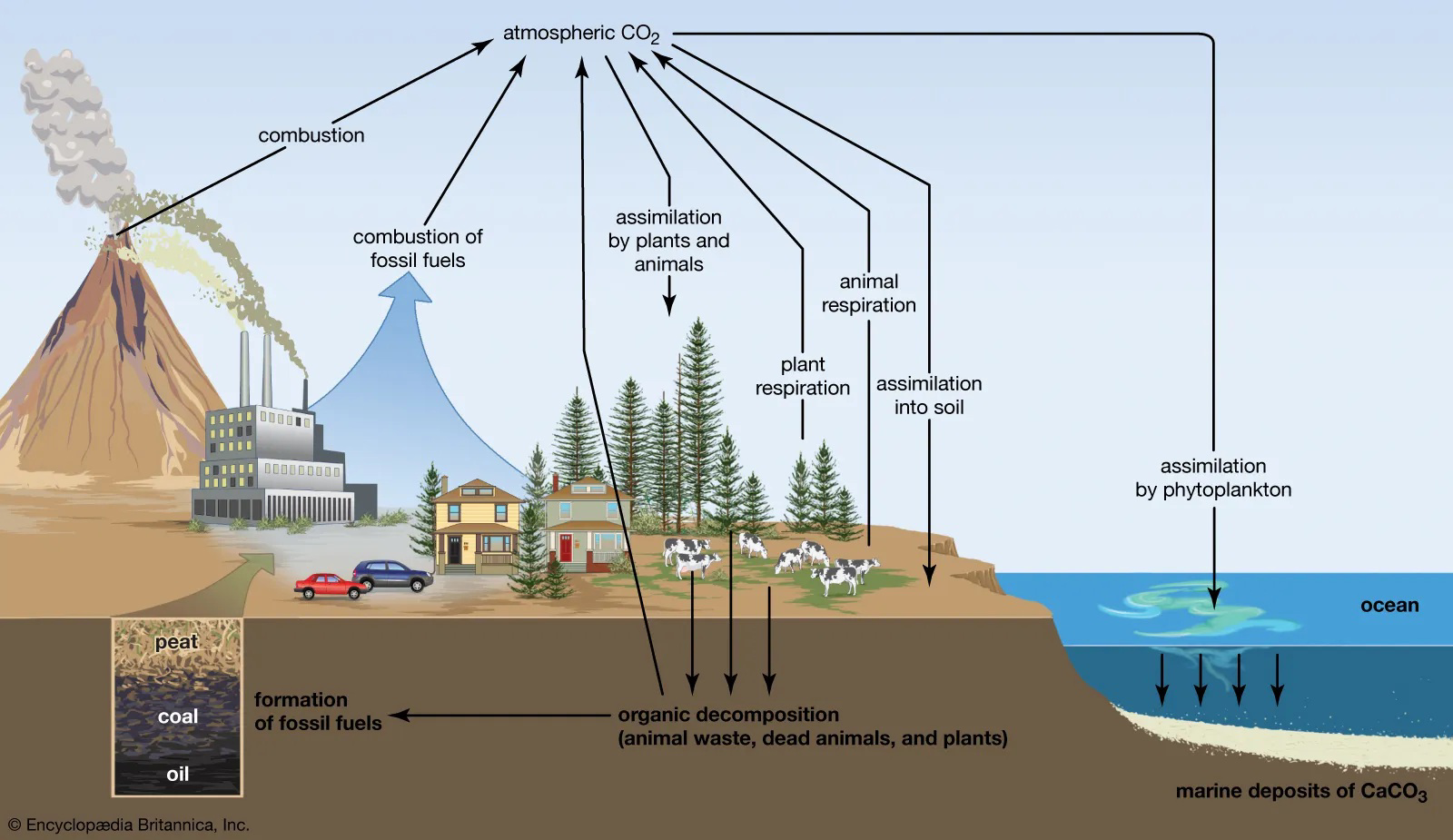 Source: https://www.britannica.com/facts/fossil-fuel
Urban $CO_2$ levels can be measured directly by air-sampling towers and satellite instruments. These measurements show a strong trend: large cities typically have $CO_2$ levels 20–60 ppm higher than nearby rural areas. This increase correlates closely with global fossil fuel emissions data collected by agencies such as the Global Carbon Project and NOAA. As fossil fuel emissions rise, urban atmospheric $CO_2$ increases as well.
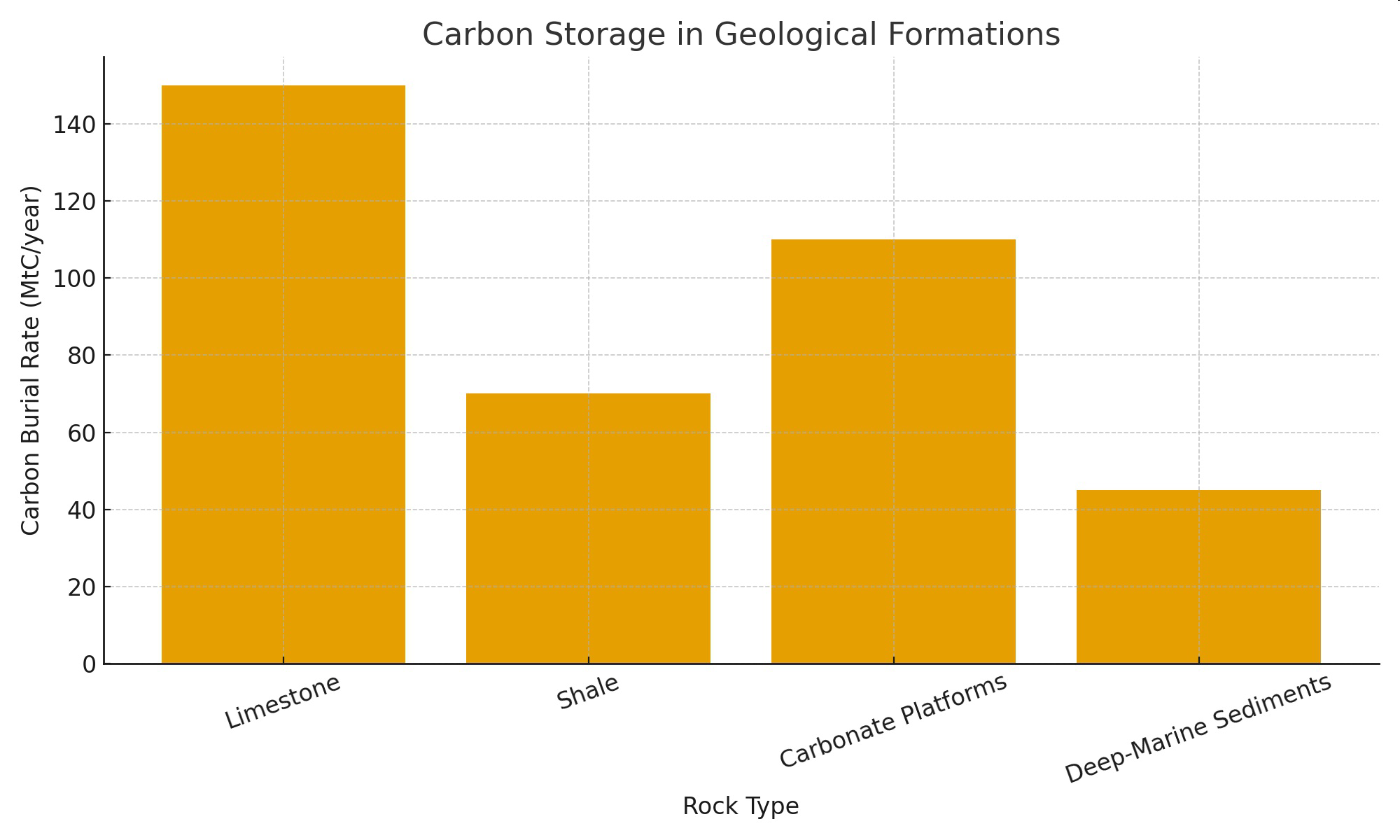
But not all carbon remains in the atmosphere. On long timescales - tens of thousands to millions of years - some carbon becomes stored in rocks through geological processes. When organisms such as shell-forming marine life die, their calcium carbonate shells accumulate on the seafloor. Over time, heat and pressure lithify these sediments into limestone, locking carbon away for millions of years. Organic matter that settles into low-oxygen environments can become part of shale or deep-marine sediments, also contributing to long-term carbon burial.
The rate at which carbon is buried in rocks is far slower (tens to hundreds of megatons per year) than today’s fossil fuel emissions (over 9 gigatons per year). However, this geological burial is still an important part of the global carbon cycle because it acts as a long-term sink, gradually removing CO$_2$ from the active short-term cycle.
Diagram 2.
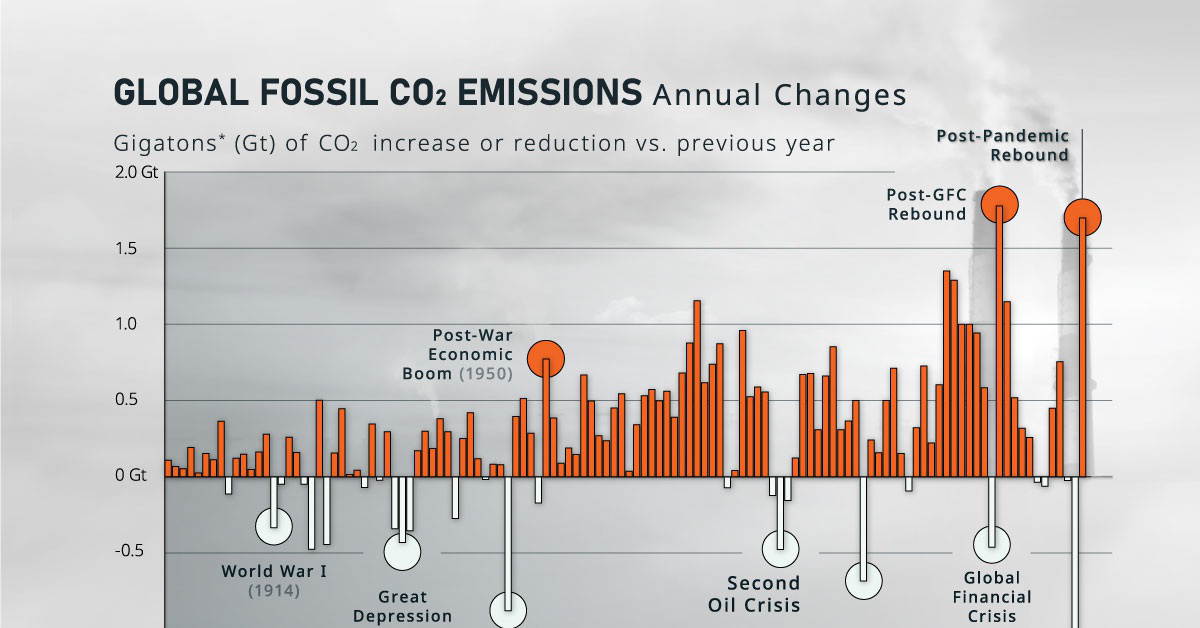
Source: https://ar.inspiredpencil.com/pictures-2023/fossil-fuels-pollution-statistics
Comparing fossil fuel emissions, urban CO$_2$ concentration trends, and carbon burial rates allows scientists to build quantitative models showing how carbon moves between the atmosphere and the geosphere. By analyzing multiple lines of evidence - emissions records, atmospheric measurements, and geological carbon storage data - students can better understand how carbon cycling connects human activity to long-term planetary processes.
Table 1.
Year | Global Fossil Fuel CO$_2$ Emissions (GtC/year) | Urban CO$_2$ Concentration (ppm) |
|---|
1980 | 5.2 | 360 |
1990 | 6.3 | 378 |
2000 | 7 | 395 |
2010 | 8.4 | 420 |
2020 | 9.8 | 448 |
Graph of Information - Figure 1.
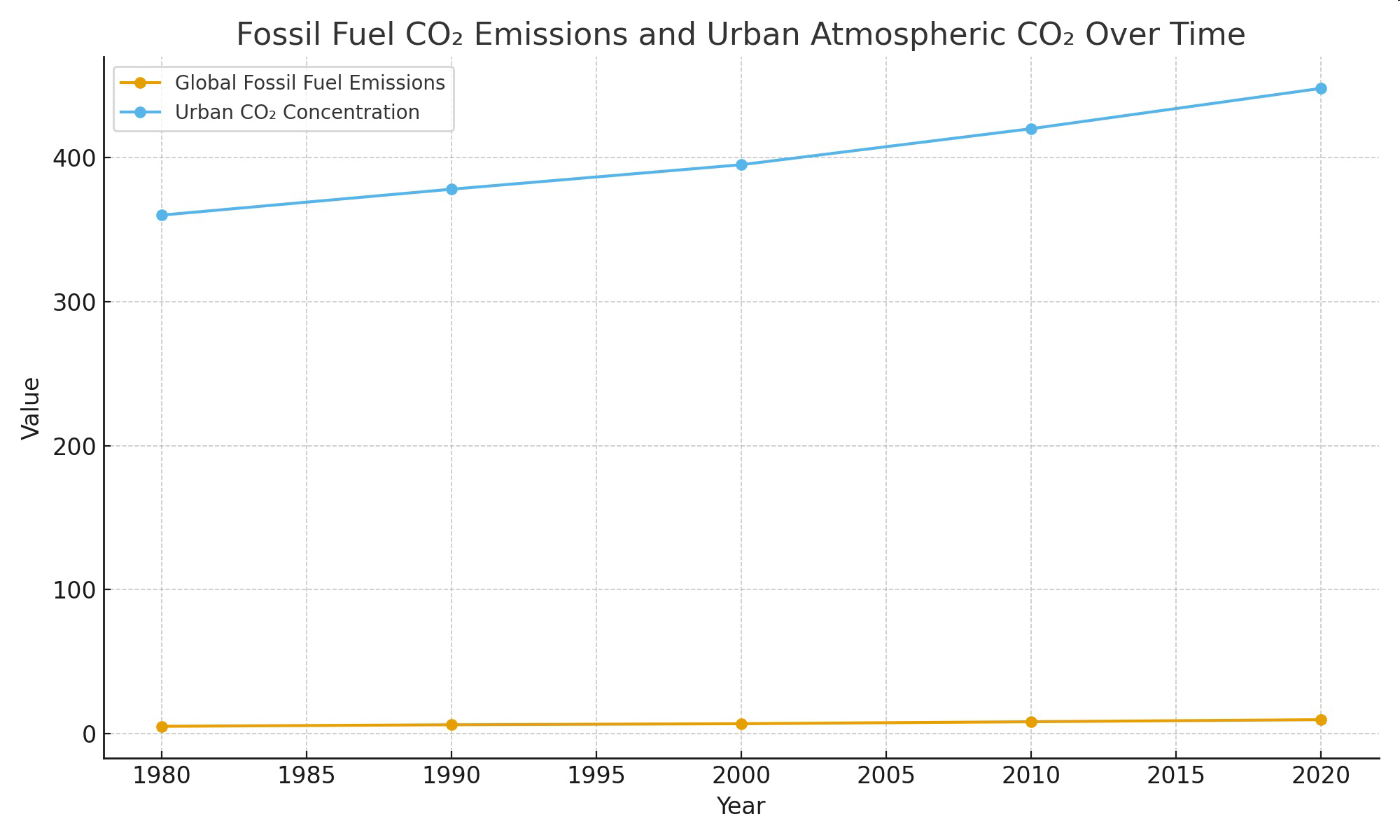
Table 2.
Rock Type | Carbon Burial Rate (MtC/year) |
|---|
Limestone | 150 |
Shale | 70 |
Carbonate Platforms | 110 |
Deep-Marine Sediments | 45 |
Graph of Information - Figure 2.