Ocean Uptake of CO2 and Ocean Acidification
Diagram 1.
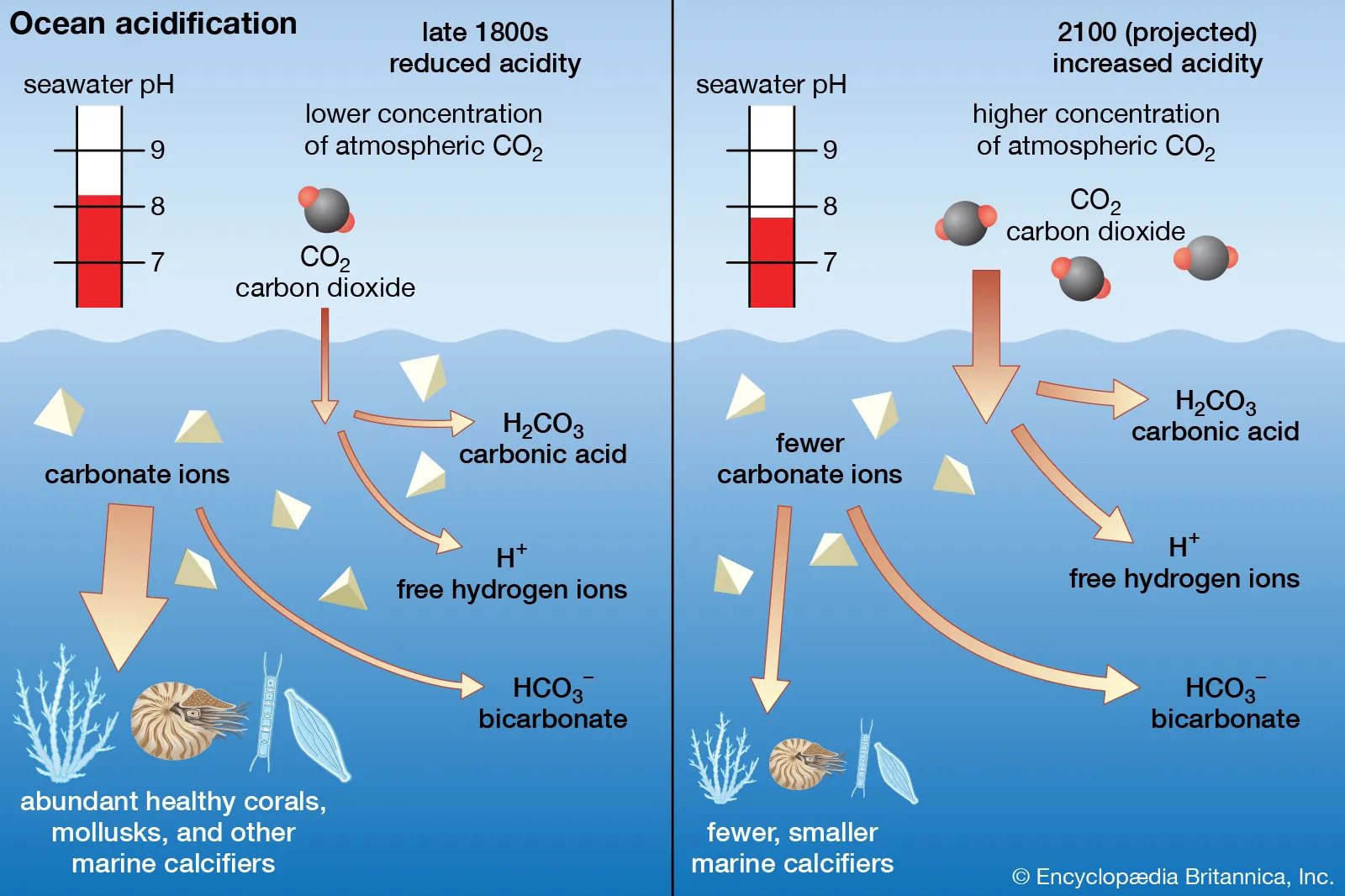
Source: https://www.britannica.com/story/ocean-acidification-how-carbon-dioxide-is-hurting-the-seas
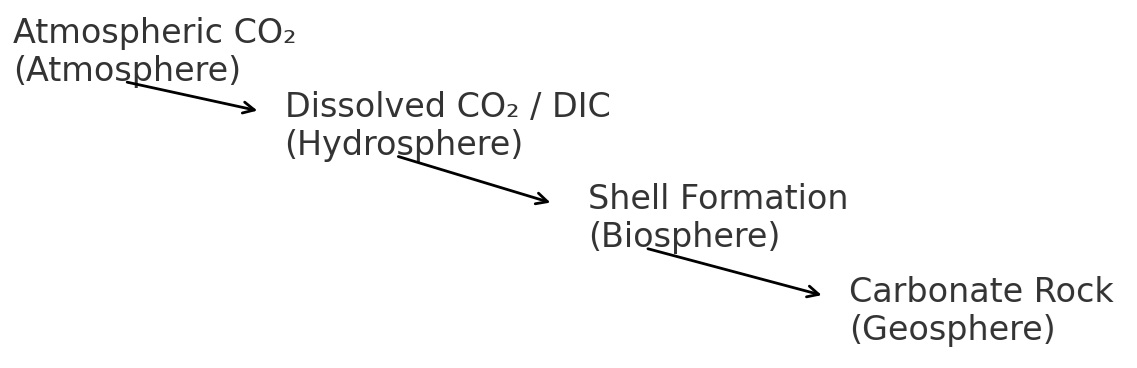
Diagram 2.
Earth’s oceans absorb nearly one-third of the carbon dioxide (CO2) released into the atmosphere each year from fossil fuel combustion, deforestation, and industry. This enormous exchange between the atmosphere and hydrosphere plays a critical role in regulating global climate and the cycling of carbon among Earth’s spheres. However, rising atmospheric CO2 is changing the chemistry of seawater, causing ocean acidification. This process provides a powerful, real-world example of carbon movement among the atmosphere, hydrosphere, biosphere, and geosphere.
When atmospheric CO2 increases, more gas dissolves into the ocean’s surface waters. Once in seawater, CO2 reacts with water molecules to form carbonic acid, which lowers ocean pH. At the same time, the concentration of dissolved inorganic carbon (DIC) increases. These processes alter the availability of carbonate
ions - essential building blocks for marine organisms such as corals, oysters, clams, and many plankton species.
These organisms use calcium and carbonate to form calcium carbonate (CaCO3) shells and skeletons, linking
ocean chemistry to the biosphere.
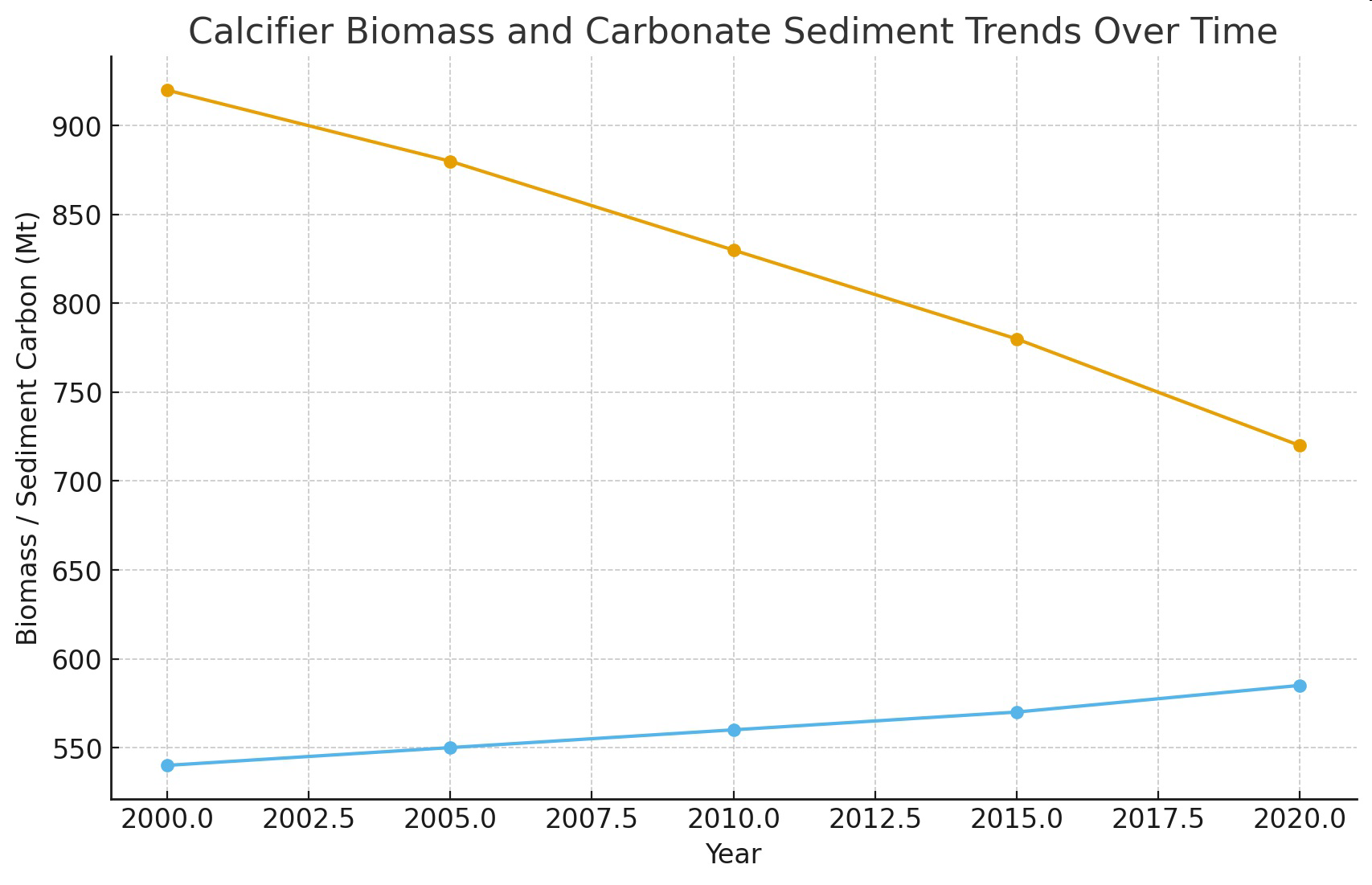
As carbonate ion availability decreases, calcifying organisms struggle to build or maintain their shells. Over time, this reduces the total biomass of shell-forming species. Because many calcifiers form the base of food webs or create essential habitat (e.g., coral reefs), reductions in their populations ripple across marine
ecosystems.
This biological decline also affects the geosphere. When healthy calcifying organisms die, their shells accumulate on the seafloor, eventually becoming part of carbonate sediment layers. Over millions of years, these sediments can turn into limestone and other carbonate rocks. However, reduced calcification means less carbon being transferred from the hydrosphere to the geosphere in the form of solid CaCO3. At the same time, increased
CO2 in surface waters changes how efficiently oceans can store carbon in dissolved form.
These linked processes demonstrate how carbon moves through Earth’s spheres:
Atmosphere - Hydrosphere: CO2 dissolves into ocean water.
Hydrosphere - Biosphere: Marine organisms incorporate carbon into shells.
Biosphere - Geosphere: Shells accumulate as sediments and rock.
Hydrosphere - Atmosphere: CO2 freely exchanges at the surface, controlled by temperature and concentration gradients.
Ocean acidification is therefore a dynamic, measurable example of how human activities affect the cycling of carbon at a planetary scale.
Table 1.
Atmospheric CO2 (ppm) | Ocean Surface DIC (mmol/kg) | Ocean pH |
|---|
350 | 1.95 | 8.17 |
380 | 2.02 | 8.11 |
410 | 2.10 | 8.06 |
440 | 2.18 | 8.01 |
Graph of Information - Figure 1.
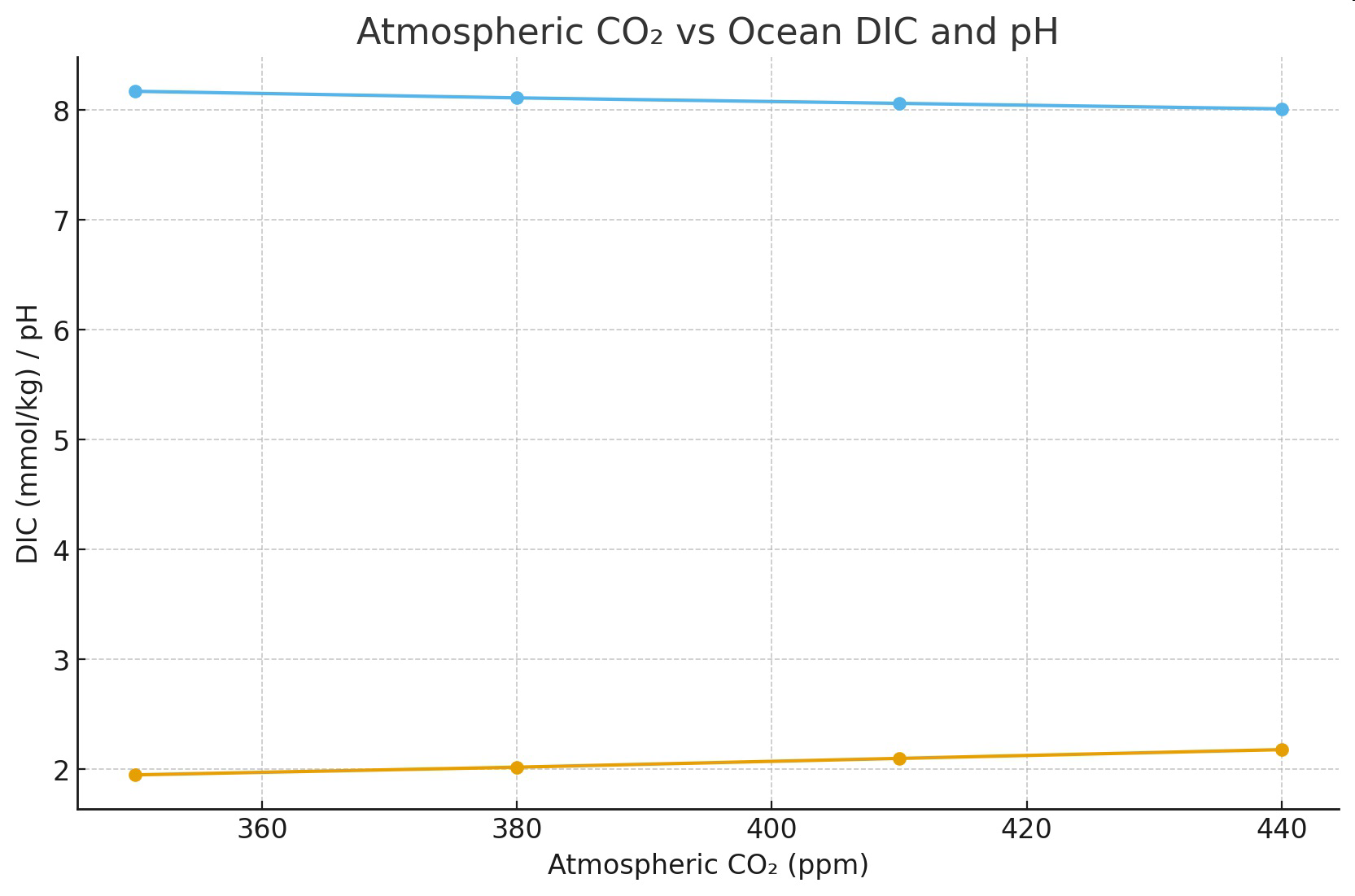
Table 2.
Year | Calcifier Biomass Mt | Carbonate Sediments Mt |
|---|
2000 | 920 | 540 |
2005 | 880 | 550 |
2010 | 830 | 560 |
2015 | 780 | 570 |
2020 | 720 | 585 |
Graph of Information - Figure 2.