Coat Color Variation in Mice Under Selective Predation
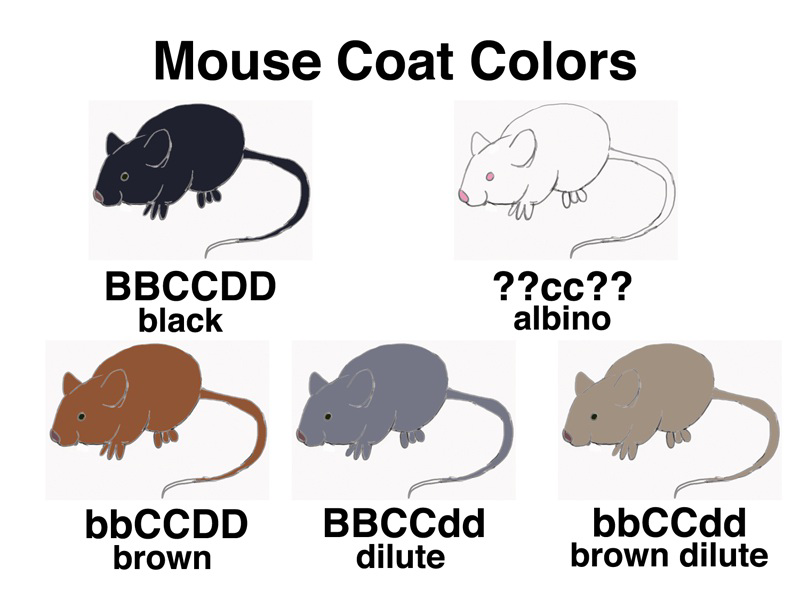
Coat color in wild mouse populations provides a clear example of how trait variation and distribution can be analyzed using statistics and probability. Many mouse species exhibit coloration ranging from very light tan to nearly black. These differences in coat color arise from genetic variation in pigmentation genes, including those that control production of eumelanin (dark pigment) and pheomelanin (light pigment. Because predators such as hawks or owls spot mice more easily when their coloration does not match the surrounding environment, selective predation influences the distribution of coat-color traits over time.
Diagram 1.
 Source: https://www.discoveryandinnovation.com/BIOL202/notes/lecture5.html
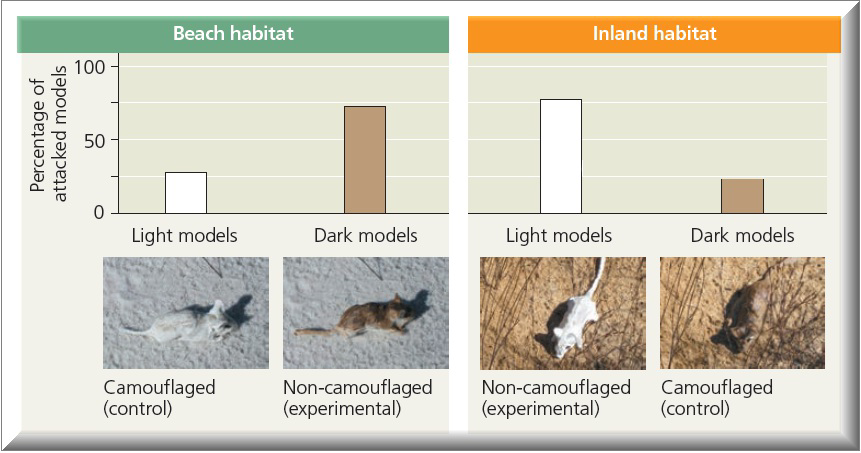
In mixed environments - such as areas with both dark volcanic soil and patches of light sand - mice with coat colors closer to the background tend to survive at higher rates. Researchers often measure the frequencies of different coat-color phenotypes in populations living in various microhabitats. Because coat color is genetically controlled but influenced by selective pressure, these populations show changing distributions that can be quantified using statistical tools.
Diagram 2.
 Source:
https://plengdut.blogspot.com/2019/09/study-nature-in-models-observations-an-to-related-hypothesis-a-is-how.html#google_vignette
For example, if researchers track dark, medium, and light coat-color phenotypes across several generations, they often observe that the proportion of mice with a favored coat color increases when predation is high. To describe and explain these patterns, scientists compute statistics such as phenotype frequency, proportion surviving, mean shade value, and variance. These measurements help determine whether differences among populations occur due to random chance or directional selection.
Probability plays a key role as well. If coat color is controlled by one gene with dominant and recessive alleles, expected ratios of phenotypes can be calculated using Punnett squares. However, when selective predation acts on certain phenotypes, the observed ratios in the wild often differ from genetic expectations. Statistical tests – such as chi-square analysis – help determine whether the difference between expected and observed values is significant. This allows scientists to evaluate how environmental pressures shape trait distributions.
By comparing populations in different habitats or across generations, students can observe how the distribution of a trait shifts in response to selective forces. These shifts provide strong evidence that environmental conditions alter the probability of survival for different phenotypes, causing measurable changes in trait frequencies.
Table 1.
Habitat | Light (%) | Medium (%) | Dark (%) |
|---|
Sand | 70 | 20 | 10 |
Dark Soil | 10 | 20 | 70 |
Graph of Information - Figure 1.
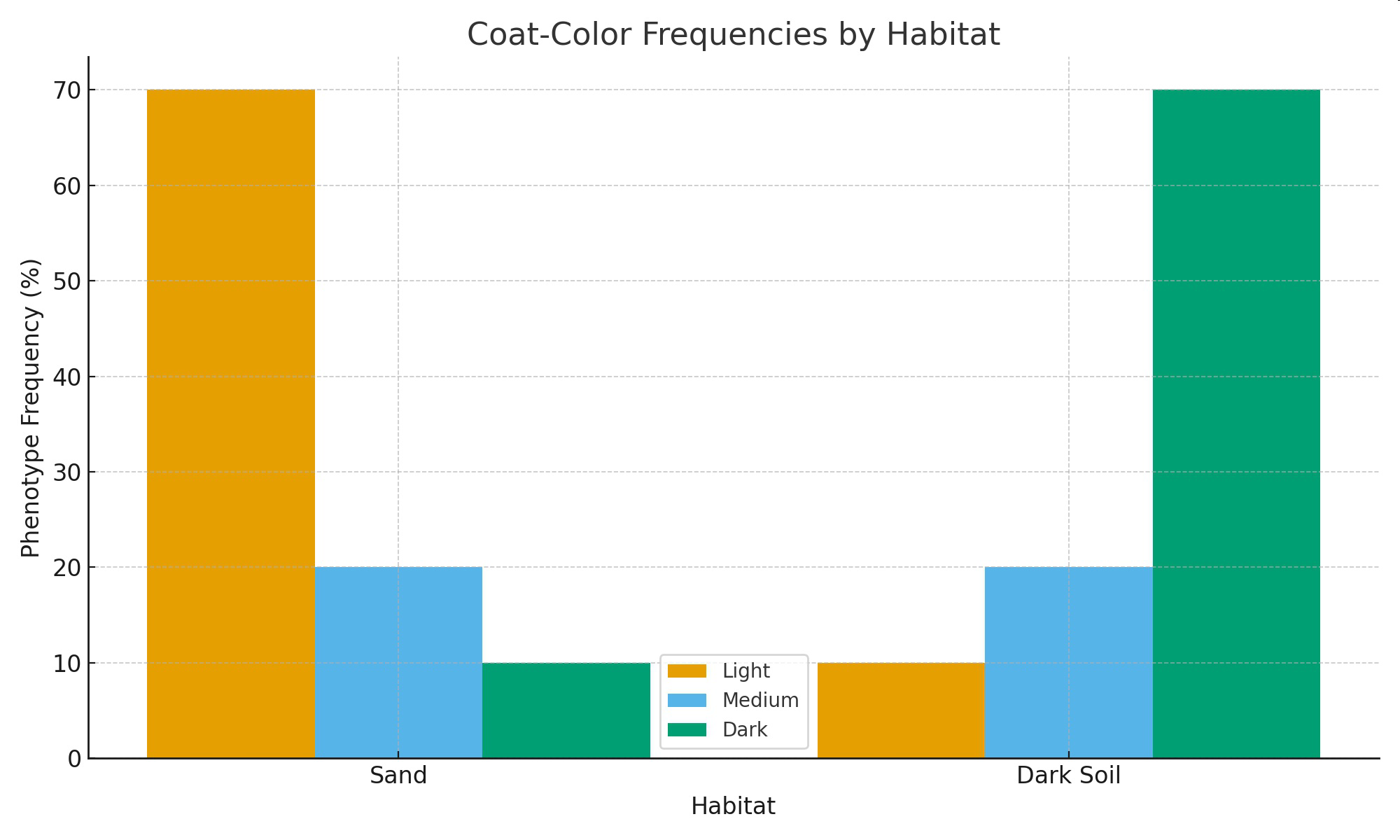
Table 2.
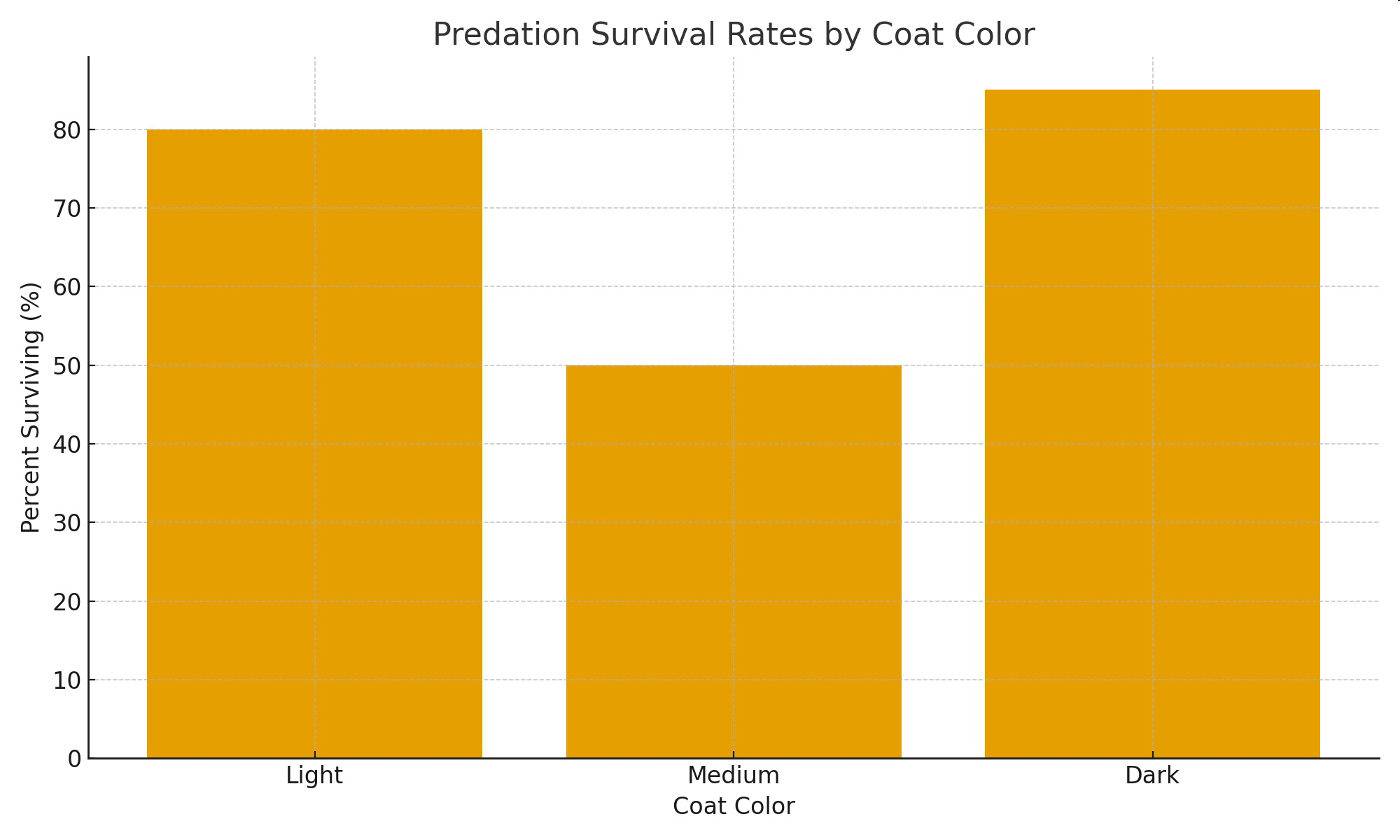
Coat Color | Percent Surviving (%) |
|---|
Light | 80 |
Medium | 50 |
Dark | 85 |
Graph of Information - Figure 2.