Flower Color Variation in Snapdragons
Snapdragons (Antirrhinum majus) exhibit a well-known pattern of flower-color inheritance that provides a clear model for applying statistics and probability to explain trait variation in populations. Unlike simple dominant–recessive inheritance, snapdragon flower color shows incomplete dominance. In this system, the heterozygous genotype produces an intermediate phenotype, which leads to predictable and visually striking population distributions.
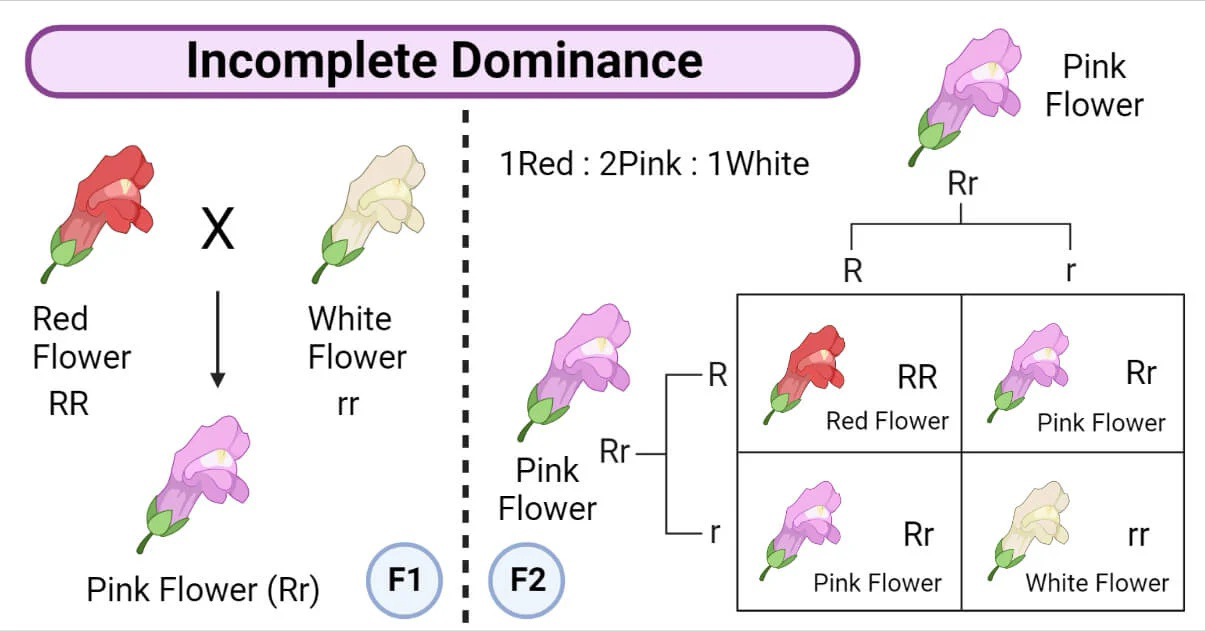
Flower color in snapdragons is controlled by a single gene with two alleles: R (red pigment) and r (no pigment). Homozygous RR plants produce red flowers, homozygous rr plants produce white flowers, and heterozygous Rr plants produce pink flowers due to partial pigment production. Because all three genotypes have different phenotypes, the trait produces three distinct categories, making snapdragons an ideal model for statistical analysis of phenotypic ratios.
Diagram 1.
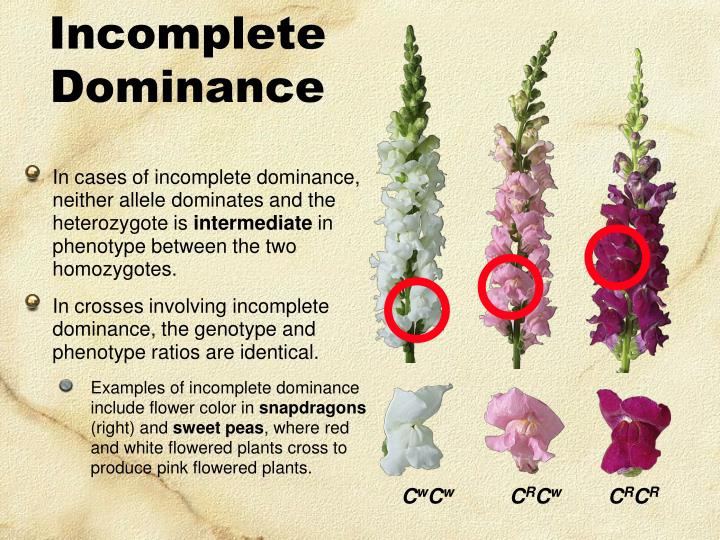 Source: https://www.slideserve.com/nami/gene-interactions
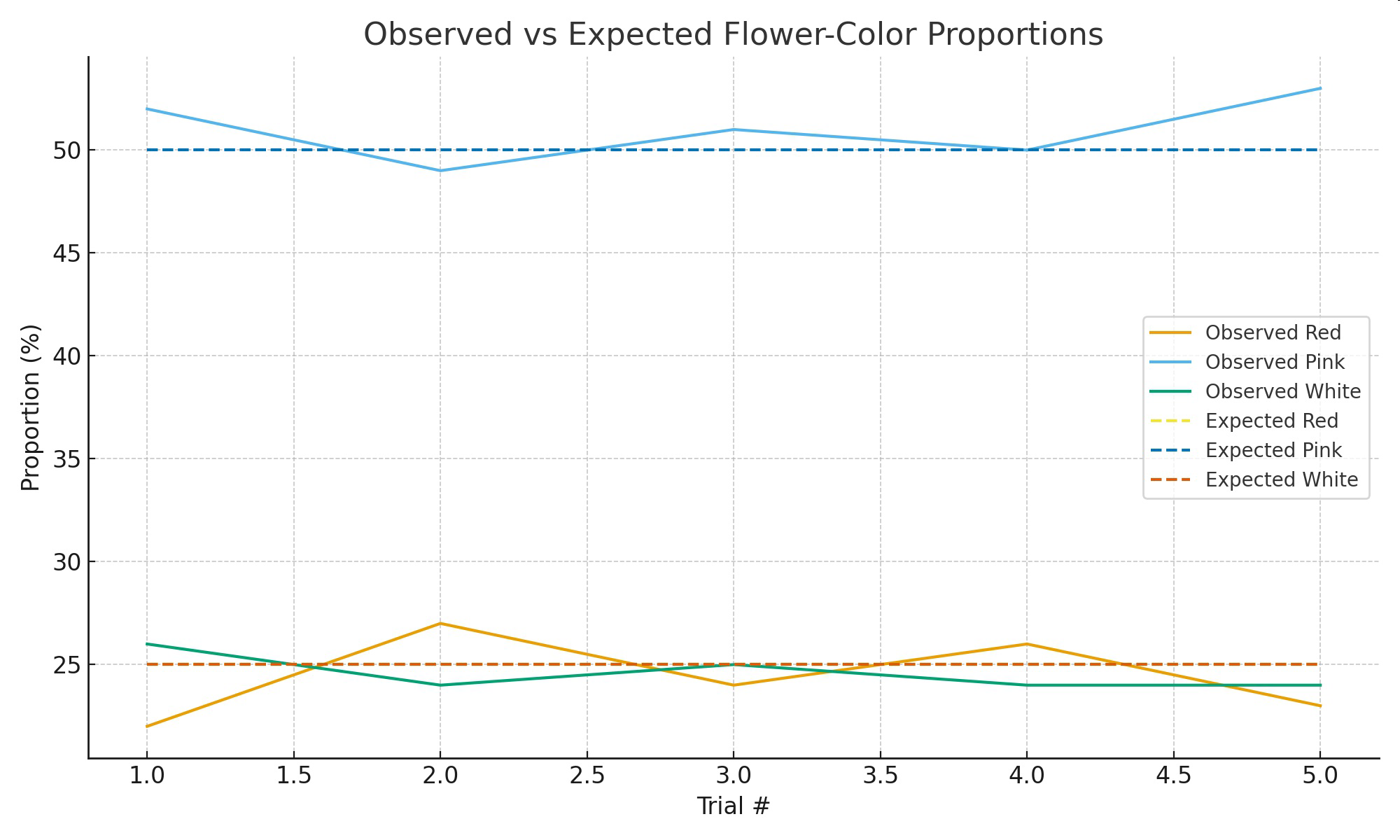
When two pink (Rr) snapdragons are crossed, classical probability predicts a 1:2:1 genotypic ratio (RR : Rr : rr). This leads to a phenotypic distribution of 25% red, 50% pink, and 25% white flowers when sample sizes are large enough. However, real populations rarely match these exact ratios perfectly. Small population sizes, sampling variation, and environmental influences can cause observed distributions to deviate from expected values.
Diagram 2.
 Source:
https://microbenotes.com/alleles/
Scientists use statistics to determine whether these deviations are within reasonable limits or if other factors are influencing the traits. Tools such as frequency tables, percent distributions, and chi-square tests help evaluate whether observed ratios differ significantly from expected Mendelian predictions. For example, a researcher may grow a field of snapdragons, record the number of red, pink, and white flowers, and analyze whether the distribution fits the expected 1:2:1 pattern.
Because flower color in snapdragons is easy to observe and categorize, large datasets can be collected across seasons or between different environments. Comparing the mean proportion of each phenotype, the variance in those proportions, and the probability that observed values match Mendelian expectations helps students understand how genetics and chance contribute to variation in a population.
Table 1.
Phenotype | Number of Plants |
|---|
Red | 48 |
Pink | 102 |
White | 50 |
Graph of Information - Figure 1.
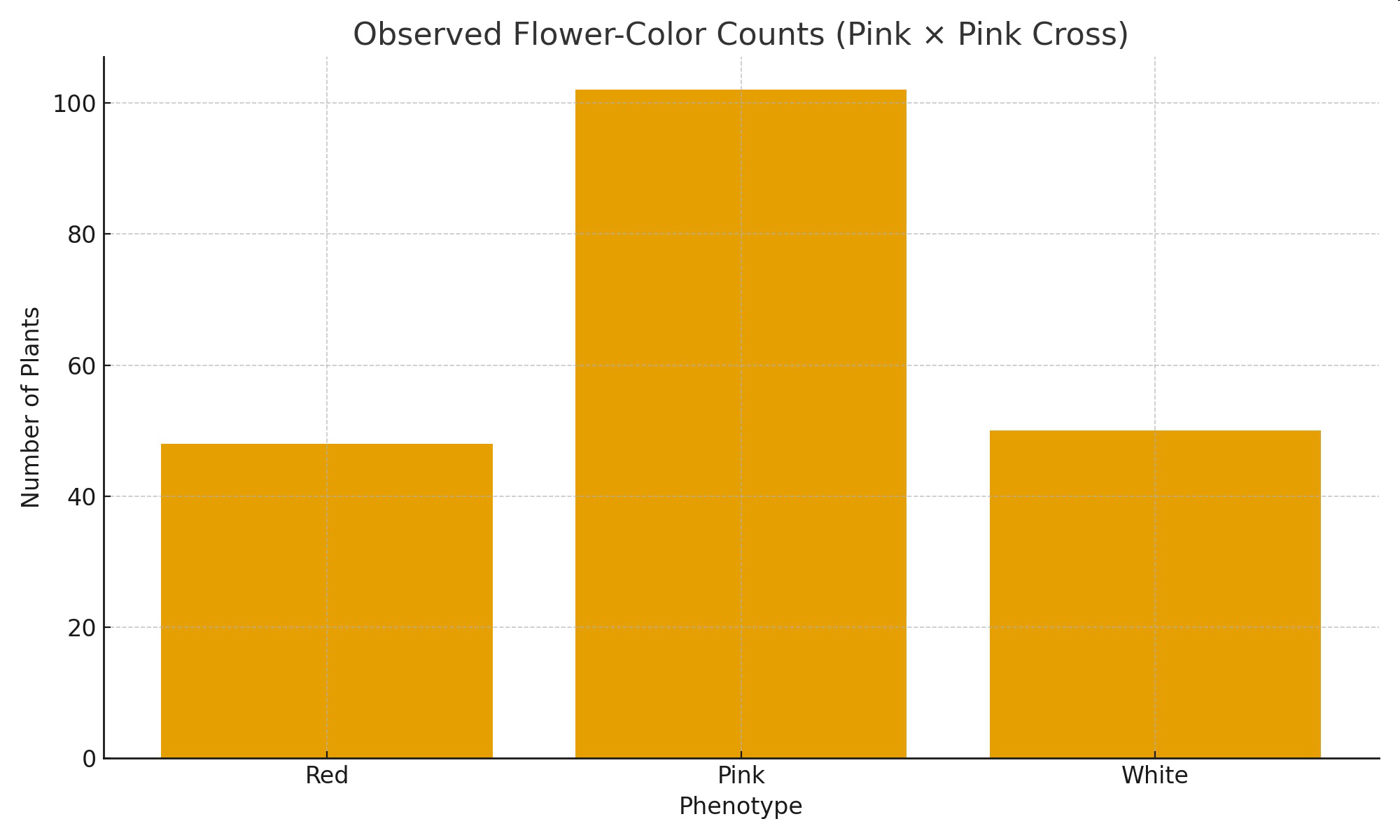
Table 2.
Trial # | Observed Red (%) | Observed Pink (%) | Observed White (%) | Expected Red (%) | Expected Pink (%) | Expected White (%) |
|---|
1 | 22 | 52 | 26 | 25 | 50 | 25 |
2 | 27 | 49 | 24 | 25 | 50 | 25 |
3 | 24 | 51 | 25 | 25 | 50 | 25 |
4 | 26 | 50 | 24 | 25 | 50 | 25 |
5 | 23 | 53 | 24 | 25 | 50 | 25 |
Graph of Information - Figure 2.