Folate Deficiency and Neural Tube Development
During the earliest stages of human development, a fertilized egg undergoes rapid cell division, forming a multicellular embryo within just a few days. One of the first major structures to form is the neural tube, the precursor to the brain and spinal cord. This structure must close properly during weeks 3 - 4 of development. If the neural tube does not close, serious conditions such as spina bifida or anencephaly can occur. Because these events happen very early in pregnancy, long before many people know they are pregnant, factors that influence early development play a crucial role in maintaining the continuity of life.
One essential factor is the vitamin folate (vitamin B9), widely studied for its role in DNA synthesis, cell division, and embryonic development. Folate is required for producing nucleotides - components of DNA - and for regulating gene expression during differentiation. When folate levels are too low, rapidly dividing cells in the developing embryo cannot properly complete DNA replication. This can disrupt the coordinated growth of embryonic tissues, including those that later form the neural tube.
Public health data show that when countries implement folic acid fortification in foods, rates of neural tube defects drop significantly. This improvement occurs because higher folate availability supports healthier cell proliferation and differentiation during early development. Folate also contributes to forming the placenta, the temporary organ that supplies nutrients and removes waste for the growing embryo. Healthy placental development supports embryo growth, enabling normal development and maintaining continuity from one generation to the next.
Diagram 1.
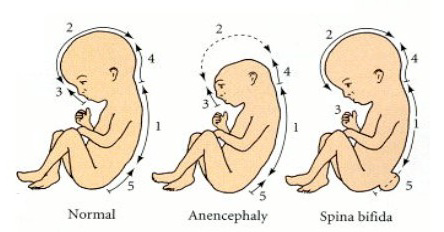
Although genetics also play a role in neural tube defects, many cases are preventable with adequate folate intake. Medical and public health organizations recommend folic acid supplements for people who may become pregnant. Because embryonic development depends on predictable patterns of cellular growth and differentiation, disruptions in these processes - such as insufficient folate for DNA synthesis - can have lasting consequences.
Diagram 2.
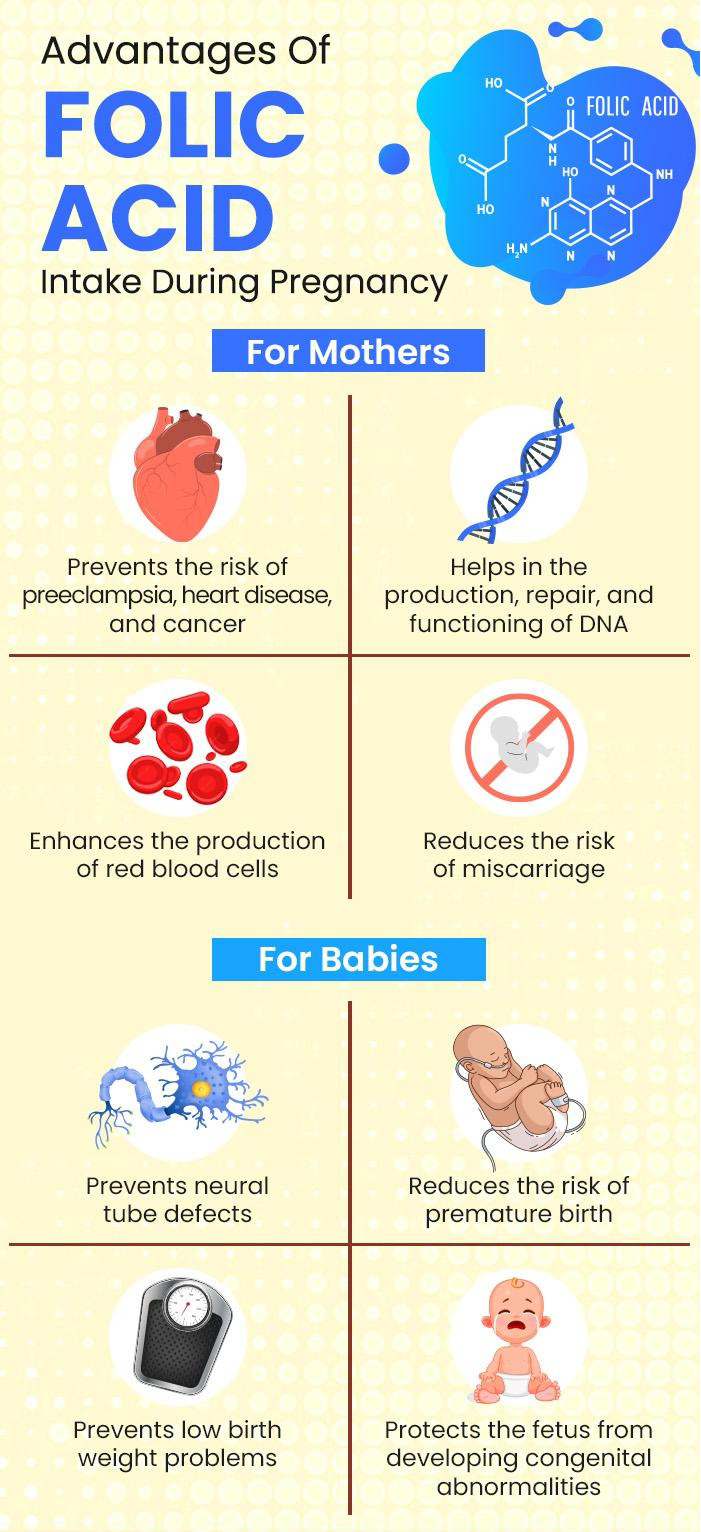 Source:
https://vamosarema.com/
Table 1.
Year | Average Folate Intake (mg/day) | NTD Rate per 10,000 Births |
|---|
2000 | 0.28 | 10.5 |
2005 | 0.32 | 9 |
2010 | 0.36 | 7.2 |
2015 | 0.40 | 6 |
2020 | 0.44 | 4.8 |
Graph of Information - Figure 1.
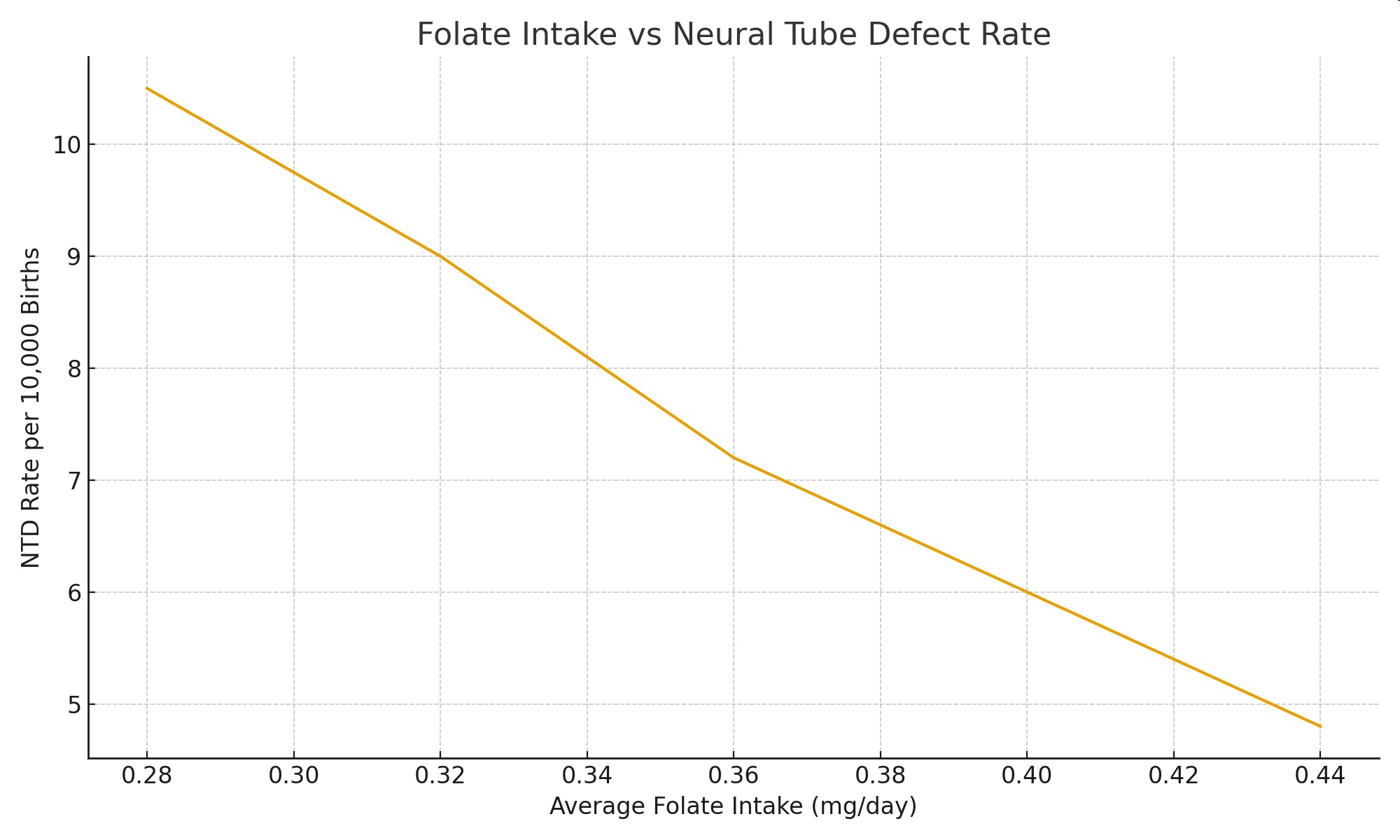
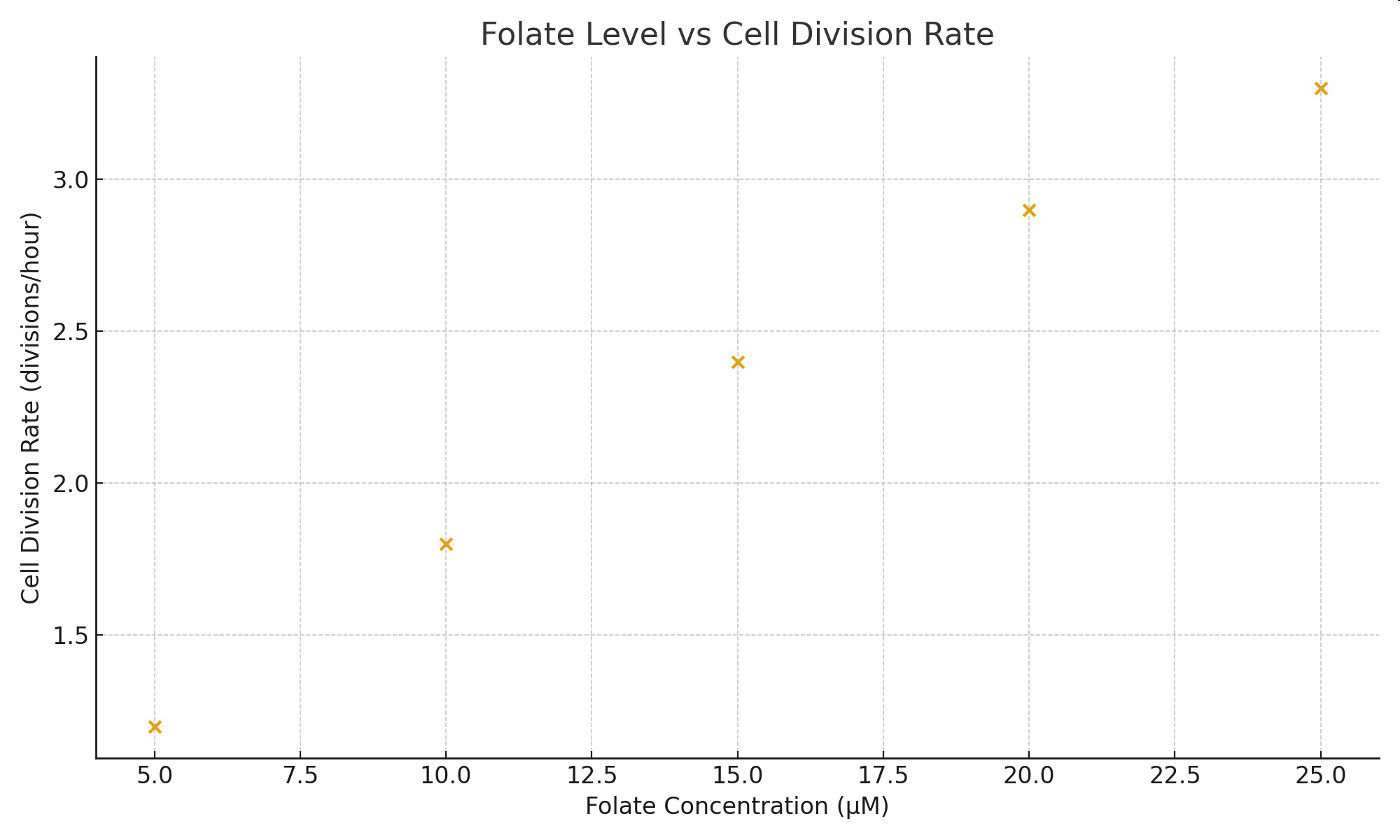
Table 2.
Folate Concentration ($\mu M$) | Cell Division Rate (divisions/hour) |
|---|
5 | 1.2 |
10 | 1.8 |
15 | 2.4 |
20 | 2.9 |
25 | 3.3 |
Graph of Information - Figure 2.