Hormone Regulation During the Menstrual Cycle and Ovulation Timing
Human reproduction depends on a precisely coordinated cycle of hormonal signals that prepare the body for potential fertilization and early development. The menstrual cycle is typically about 28 days long and governed by interactions among the hypothalamus, pituitary gland, and ovaries. These interactions regulate follicle development, ovulation, and the preparation of the uterine lining. Because successful reproduction requires timely release of an egg and proper hormonal conditions for implantation, these processes play a major role in maintaining the continuity of life.
Diagram 1.
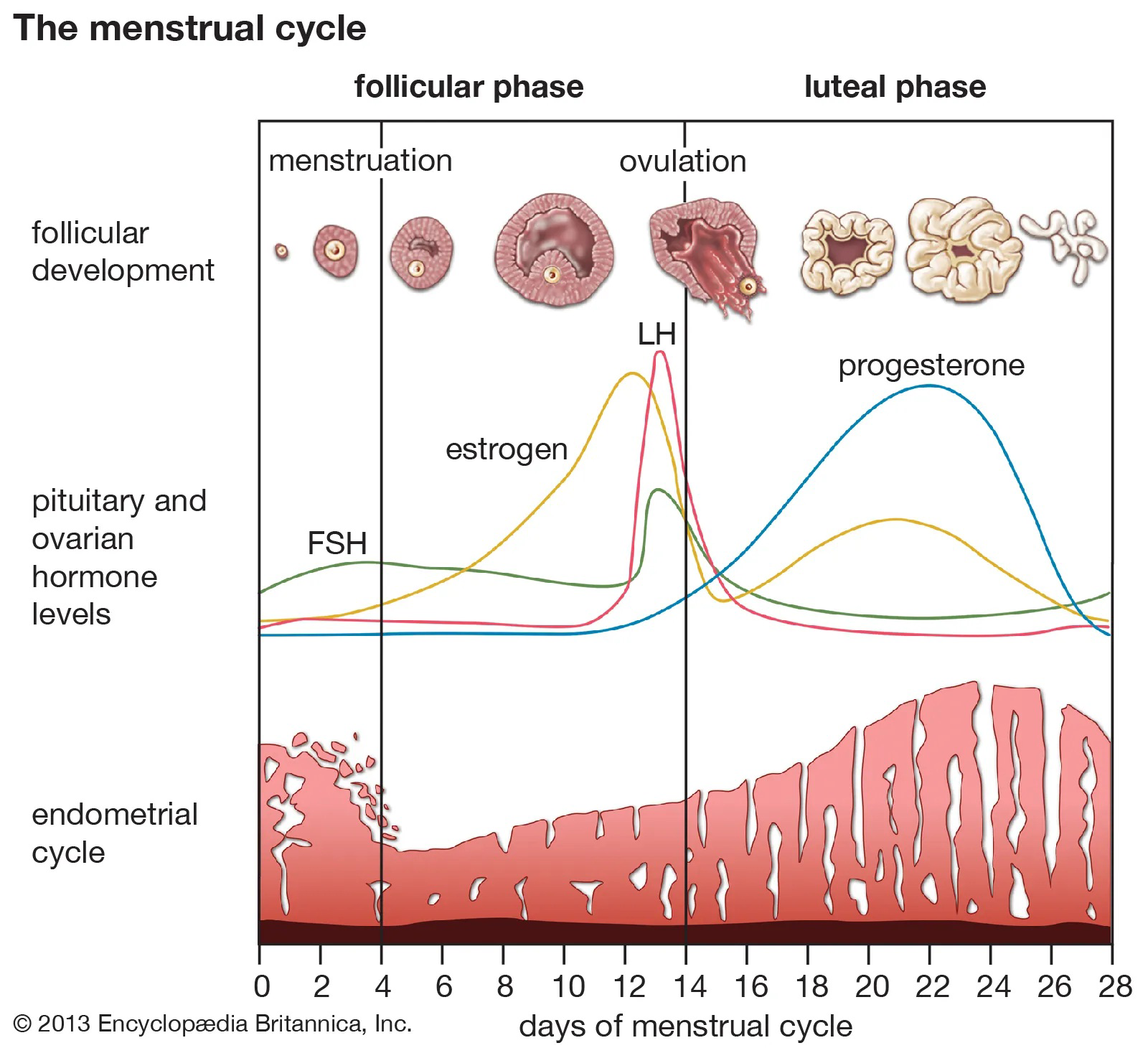
Source: https://www.britannica.com/science/menstrual-cycle
At the beginning of the cycle, the pituitary gland releases follicle-stimulating hormone (FSH), which stimulates several ovarian follicles to begin maturing. As these follicles grow, they produce increasing levels of estrogen. When estrogen levels climb high enough, they trigger a sudden surge of luteinizing hormone (LH). This LH surge is the signal that causes ovulation - the release of a mature egg from the ovary. Ovulation generally occurs about 14 days before the next menstrual period, although timing varies from person to person.
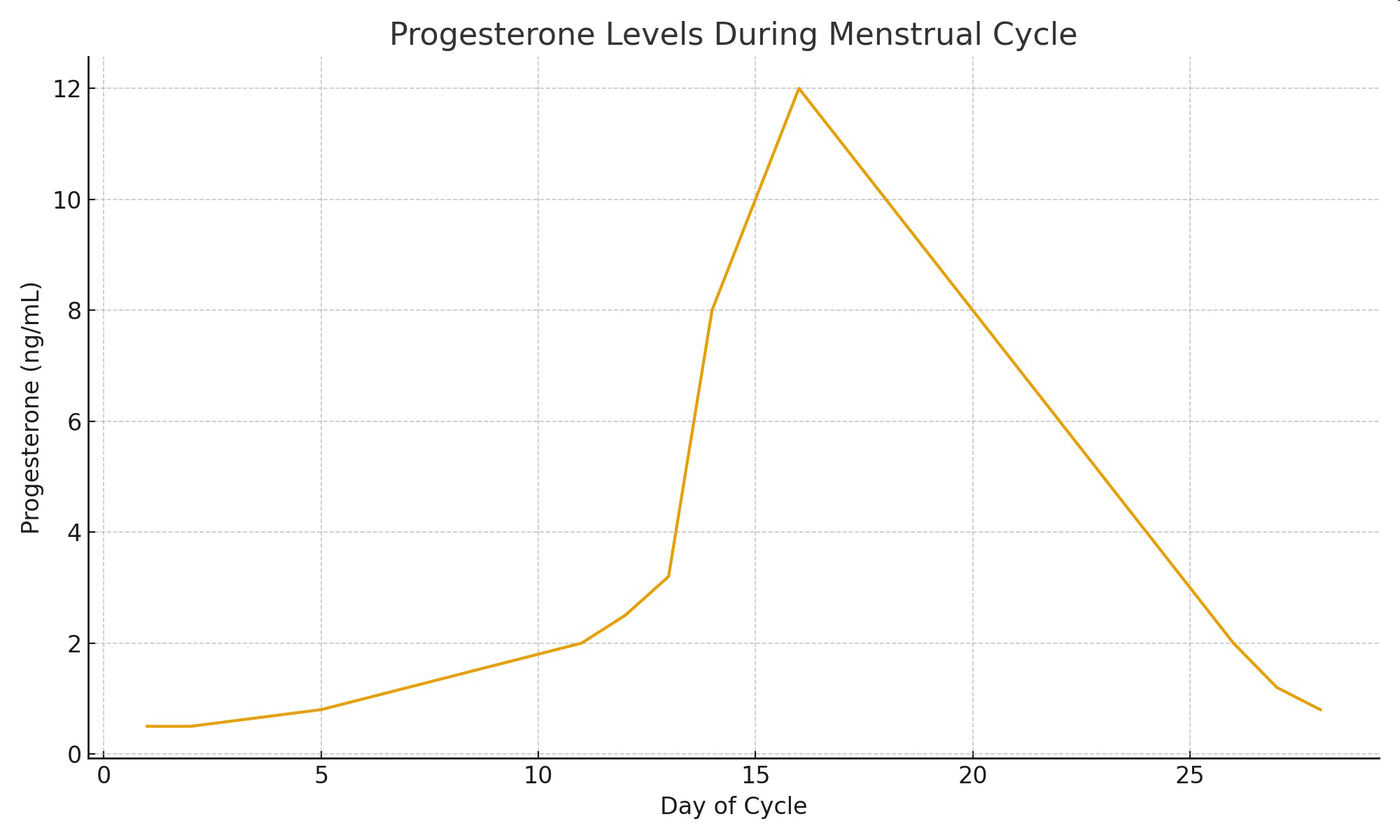
After ovulation, the empty follicle transforms into the corpus luteum, which releases progesterone. Progesterone thickens and stabilizes the uterine lining, creating conditions necessary for implantation if fertilization occurs. If the egg is not fertilized, progesterone and estrogen levels fall, the uterine lining sheds, and the cycle begins again. If fertilization and implantation do occur, hormone release changes dramatically to support early embryonic development.
Hormone-level datasets collected from clinical studies reveal clear patterns that can be modeled and analyzed. For example, estrogen gradually increases during the follicular phase, followed by a sharp LH peak that predicts ovulation. Progesterone then rises in the luteal phase. These hormonal shifts align with measurable physical events, such as basal body temperature changes and ultrasound-detected follicle development.
Because fertilization can only occur after ovulation, and implantation requires an appropriately prepared uterine lining, the timing and coordination of hormonal signals are essential for reproductive success. Disruptions - such as insufficient hormone levels or irregular cycle timing - can interfere with ovulation or implantation, reducing the likelihood of pregnancy.
Diagram 2.
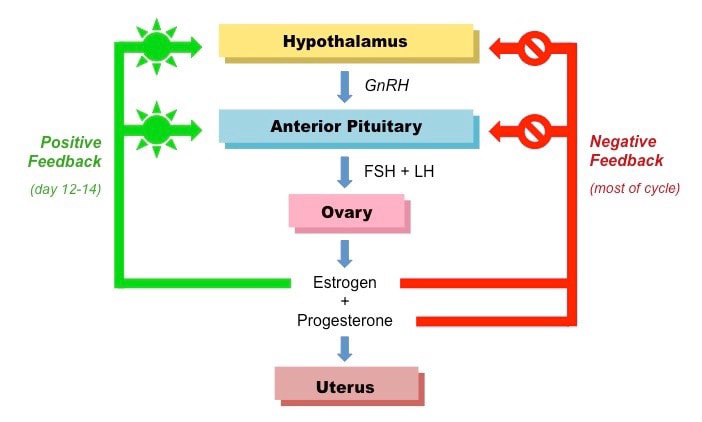 Source: https://mysciencesquad.weebly.com/66-hormones-homeostasis-reproduction.html
Table 1.
Day of Cycle | Estrogen (pg/mL) | LH (mIU/mL) | Day of Cycle | Estrogen (pg/mL) | LH (mIU/mL) |
|---|
1 | 40 | 5 | 15 | 180 | 20 |
2 | 45 | 5 | 16 | 160 | 10 |
3 | 50 | 6 | 17 | 140 | 8 |
4 | 55 | 6 | 18 | 120 | 7 |
5 | 60 | 7 | 19 | 100 | 6 |
6 | 70 | 8 | 20 | 90 | 6 |
7 | 80 | 10 | 21 | 80 | 6 |
8 | 90 | 12 | 22 | 70 | 6 |
9 | 100 | 14 | 23 | 60 | 6 |
10 | 110 | 16 | 24 | 55 | 5 |
11 | 130 | 20 | 25 | 50 | 5 |
12 | 150 | 25 | 26 | 48 | 5 |
13 | 170 | 35 | 27 | 46 | 5 |
14 | 200 | 55 | 28 | 44 | 5 |
Graph of Information - Figure 1.
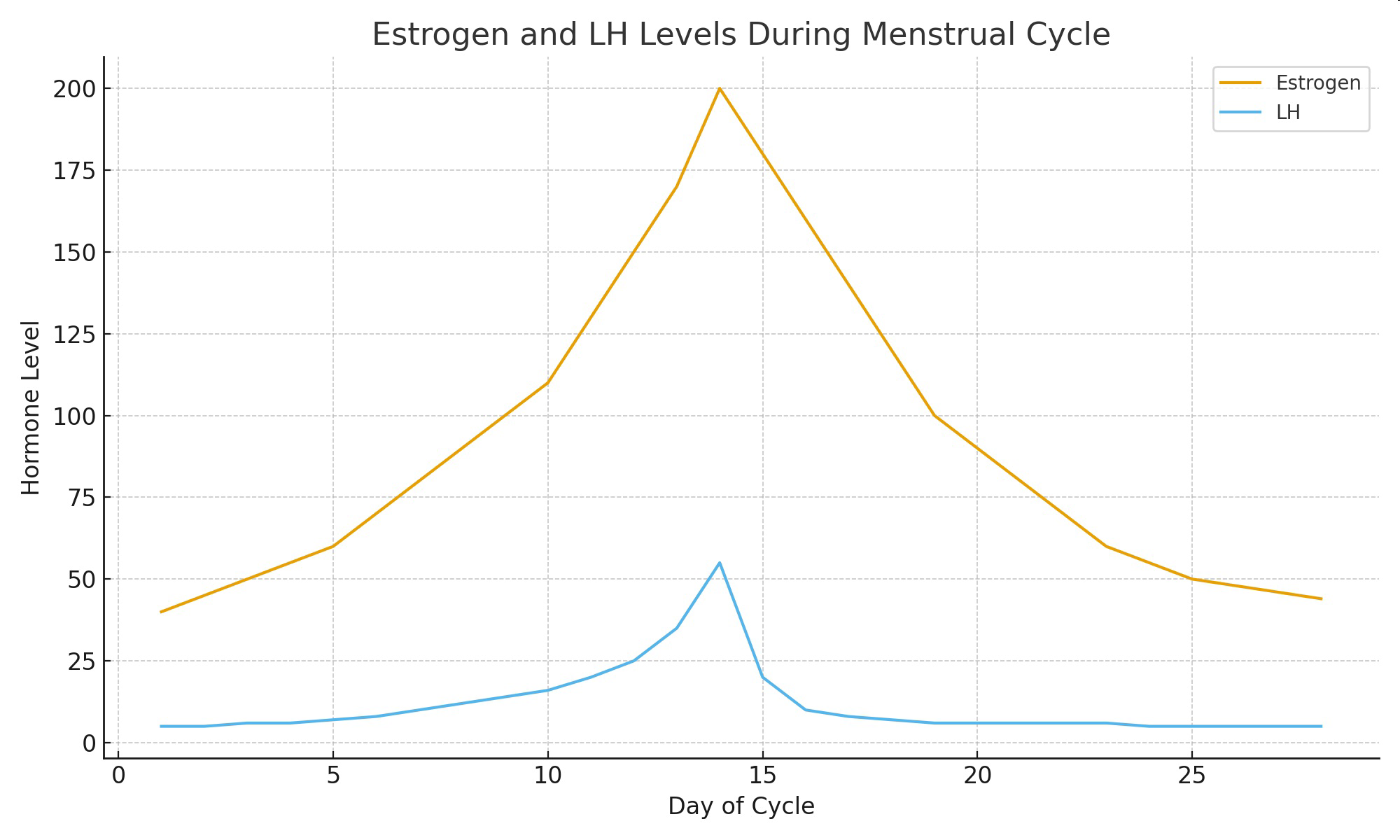
Table 2.
Day of Cycle | Progesterone (ng/mL) | Day of Cycle | Progesterone (ng/mL) |
|---|
1 | 0.5 | 15 | 10 |
2 | 0.5 | 16 | 12 |
3 | 0.6 | 17 | 11 |
4 | 0.7 | 18 | 10 |
5 | 0.8 | 19 | 9 |
6 | 1 | 20 | 8 |
7 | 1.2 | 21 | 7 |
8 | 1.4 | 22 | 6 |
9 | 1.6 | 23 | 5 |
10 | 1.8 | 24 | 4 |
11 | 2 | 25 | 3 |
12 | 2.5 | 26 | 2 |
13 | 3.2 | 27 | 1.2 |
14 | 8 | 28 | 0.8 |
Graph of Information - Figure 2.