Human Height Distribution Across Generations
Human height is one of the most familiar examples of a trait that varies widely in a population. Although height is influenced by hundreds of genes, it is also strongly affected by environmental factors such as nutrition, childhood health, stress, and access to medical care. When measured across large groups of people, height forms a pattern known as a normal distribution, or “bell curve.” Most people fall near the middle height range, while fewer individuals fall at the very short or very tall extremes. This real-world pattern allows scientists to apply statistical tools to understand variation and distribution of expressed traits.
Diagram 1.
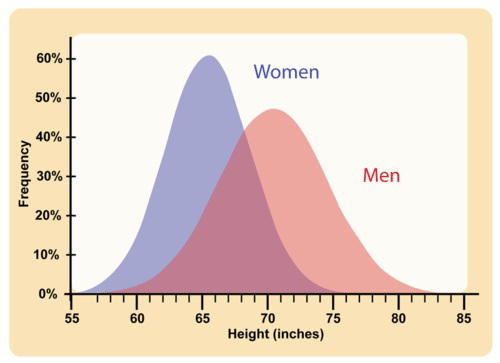
Source: https://bio.libretexts.org/Bookshelves/Introductory_and_General_Biology/Introductory_Biology_(CK12)/03%3A_Genetics/3.07%3A_Non-Mendelian_Inheritance
The normal distribution of height arises from the combined effect of many genes, each contributing a small amount to the final value. Because multiple genes influence the trait, height is considered a polygenic trait. Polygenic traits naturally produce continuous variation rather than discrete categories. Environmental factors add even more variation, making height an ideal model for understanding how genetics and environmental influences interact to shape population-level traits.
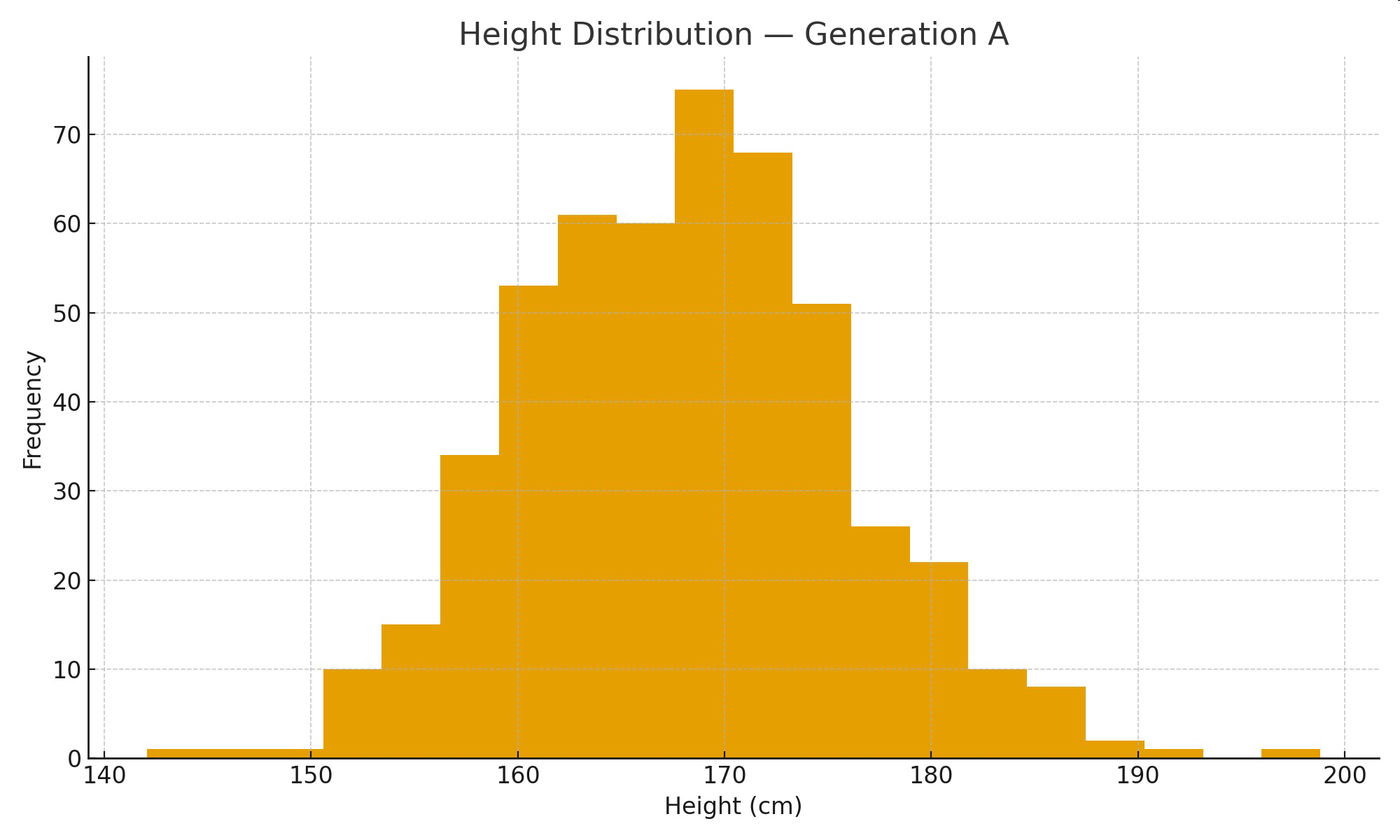
Over time, average heights within populations have changed due to improved nutrition, health care, and living conditions. For example, many countries experienced increases in average height over the past century as childhood nutrition improved. When scientists compare height data between generations, they use statistical concepts such as mean, median, standard deviation, and variance to describe how the population distribution shifts. Standard deviation helps quantify how spread out the values are, while the mean indicates the central tendency.
Diagram 2.
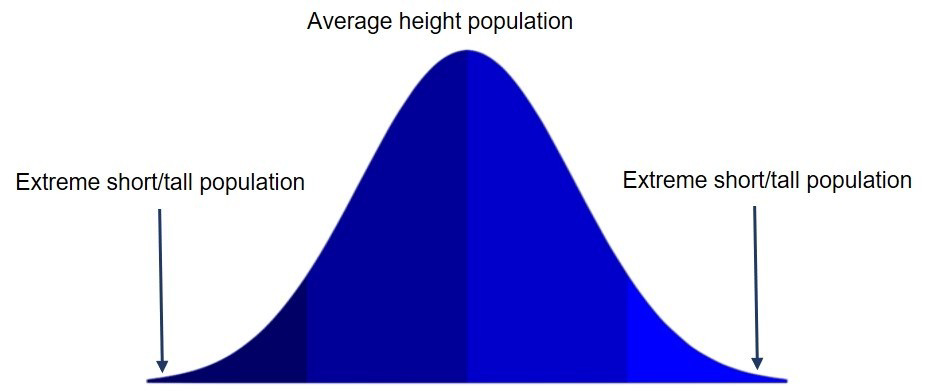
Source: https://ar.inspiredpencil.com/pictures-2023/polygenic-inheritance-examples
Probability concepts also help predict the likelihood of certain height ranges within a population. For example, if height follows a normal distribution with a known mean and standard deviation, scientists can calculate the probability that an individual falls within one standard deviation of the mean or is above the 90th percentile. These statistical tools help explain why some traits appear more frequently than others and how variation persists in a population.
Studies comparing different populations provide additional insight. Populations may differ in average height due to genetic ancestry, local diet, socioeconomic status, or developmental conditions. By analyzing these differences statistically, scientists can explain patterns of variation without attributing them solely to genetics or environment.
Graph of Information - Figure 1.
Graph of Information - Figure 2.
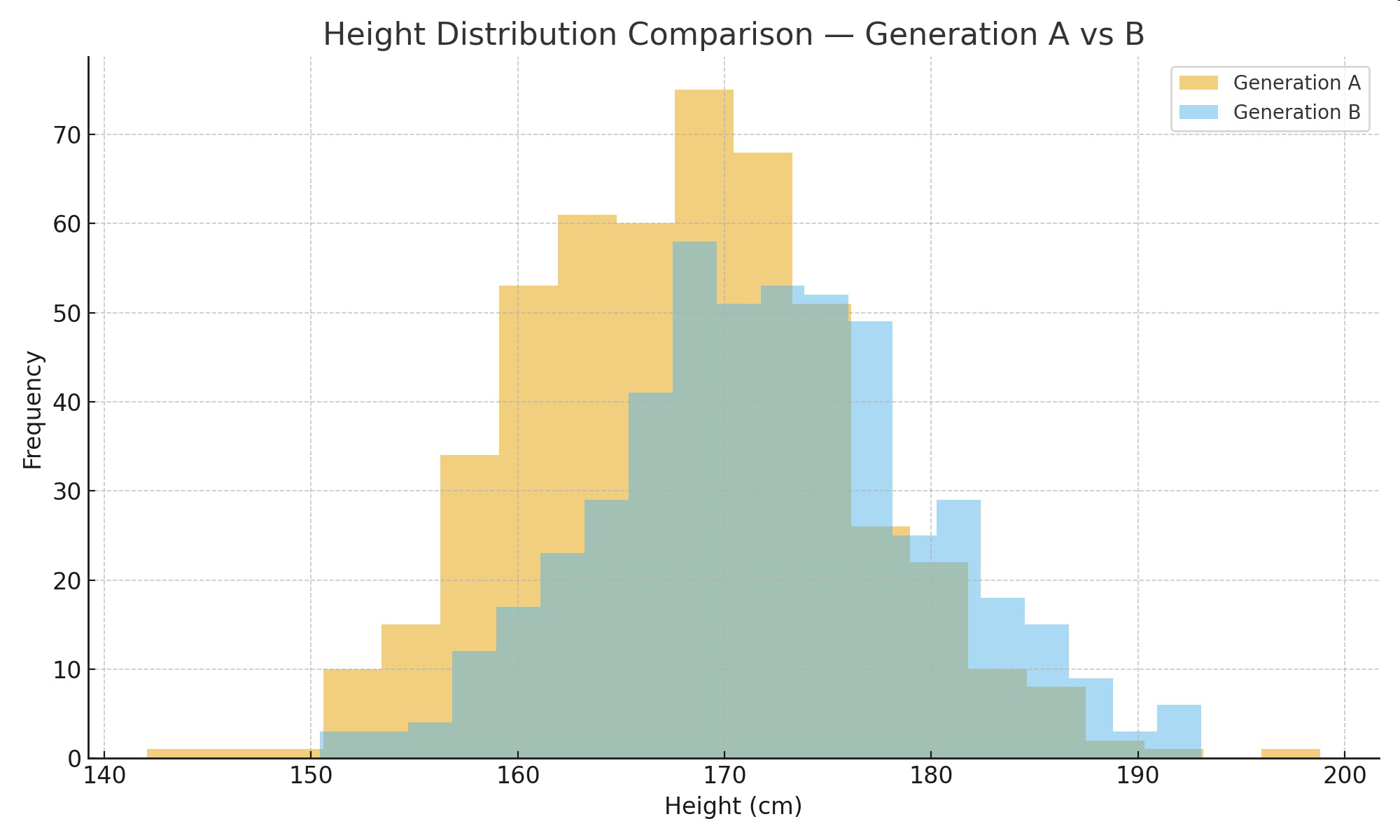
Diagram 3.
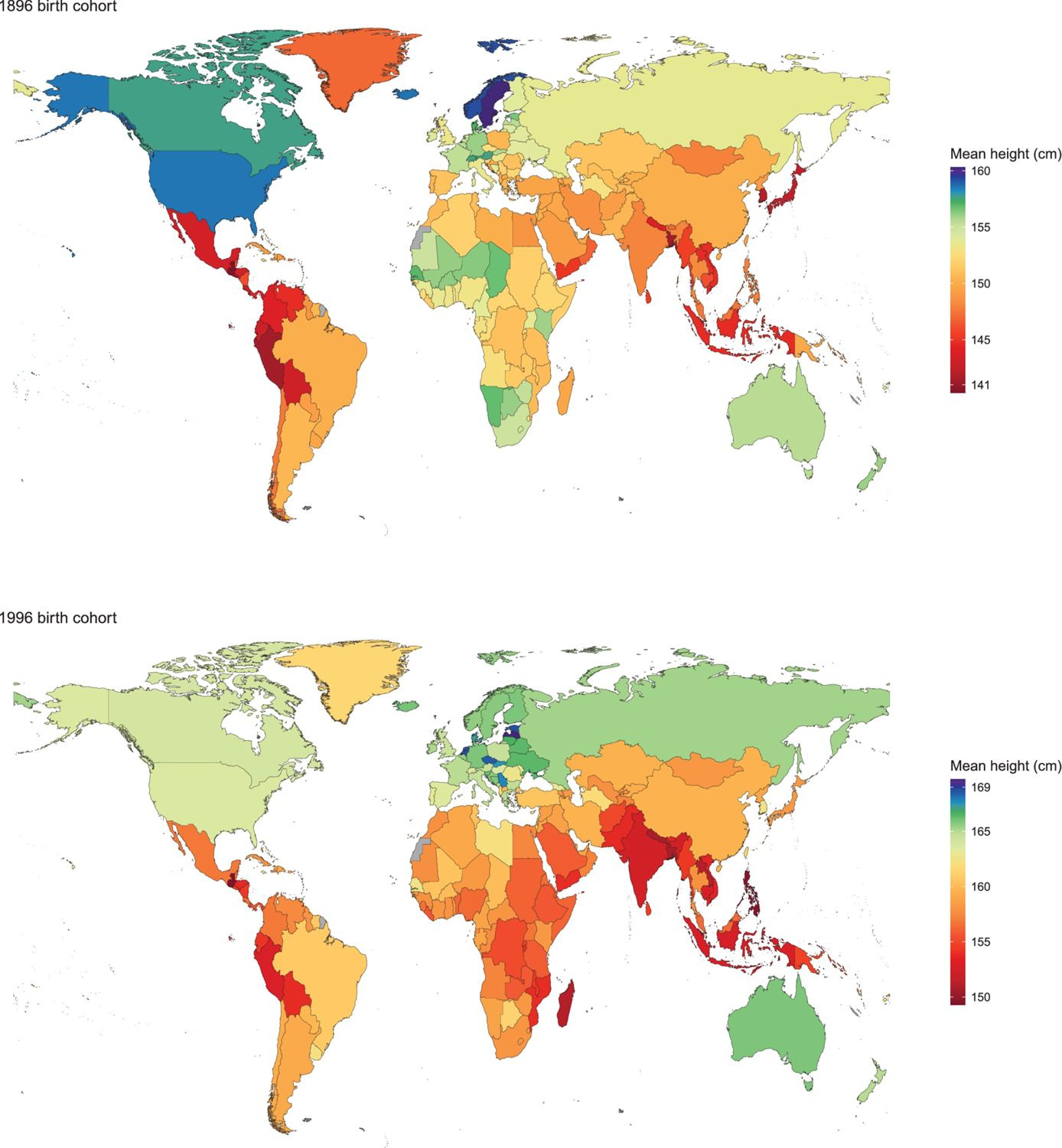
Source: https://elifesciences.org/articles/13410/figures