Lactase Persistence
Lactase persistence - the ability to digest lactose, the sugar in milk, into adulthood - is one of the clearest examples of how changes in DNA regulate protein production and influence human physiology. In most mammals, including most humans historically, the LCT gene, which codes for the lactase enzyme, becomes largely inactive after early childhood. This decline reflects an evolutionarily conserved pattern: once an organism stops nursing, it no longer needs to produce lactase.
However, in several human populations, adults continue producing high levels of lactase. This trait, called lactase persistence, is not caused by changes in the structure of the lactase protein itself. Instead, it results from mutations in a nearby regulatory region of DNA that controls when the LCT gene is turned “on” or “off.” In people with lactase persistence, mutations in this regulatory DNA segment allow the LCT gene to remain active long after infancy. This means the gene continues producing the lactase protein, enabling adults to digest dairy products without discomfort.
The role of regulatory DNA is essential. While protein-coding regions specify the amino acid sequence of a protein, regulatory regions determine how much, when, and where that protein is made. A mutation in regulatory DNA can significantly influence a protein’s function - even if the protein’s structure remains unchanged - because it alters the amount of protein available for cellular processes.
Lactase persistence illustrates a direct connection between DNA regulation, enzyme levels, and human physiology. Adults with the persistence trait maintain high lactase activity across their lifespan, breaking down lactose efficiently in the small intestine. Adults without the trait experience a large drop in lactase activity after childhood, often leading to lactose intolerance - symptoms like bloating, gas, and stomach discomfort - when undigested lactose reaches the large intestine.
This case provides a powerful example: changes in DNA influence protein production, which in turn affects cell function and impacts entire body systems. The lactase persistence mutation doesn’t change the structure of the enzyme but instead affects the regulation of the gene that produces it. This demonstrates that DNA influences protein function not only through coding changes but also through regulatory control, linking molecular mechanisms to population-level patterns in human evolution.
Table 1.
Population Group | Lactase Persistence Rate (%) | LCT Gene Regulatory Mutation Frequency (%) |
|---|
Northern Europe | 90 | 85 |
East Africa | 70 | 65 |
East Asia | 5 | 3 |
Indigenous Americas | 10 | 8 |
Graph of Information - Figure 1.
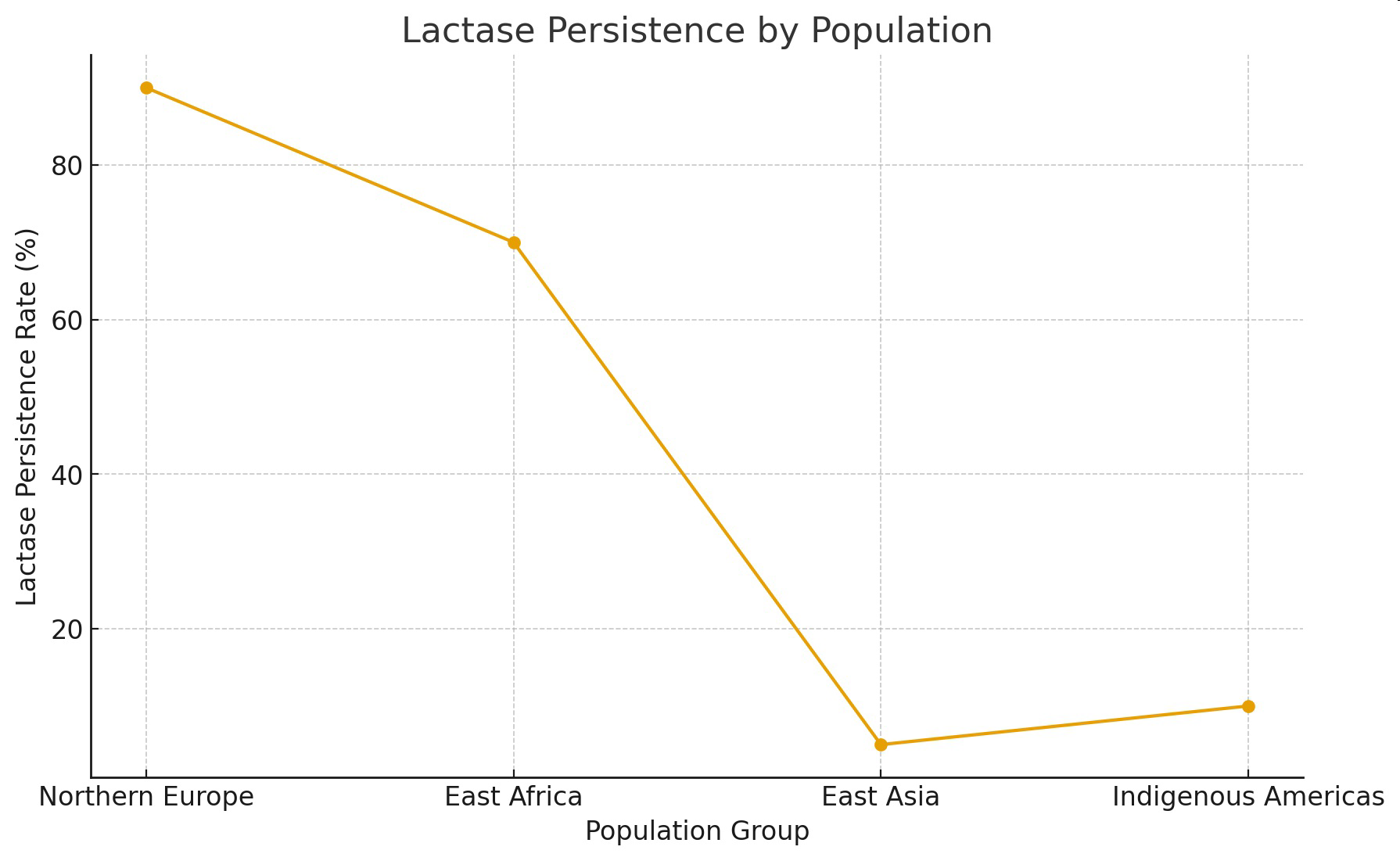
Table 2.
Age (years) | Lactase Activity Persistent (%) | Lactase Activity NonPersistent (%) |
|---|
5 | 95 | 95 |
10 | 90 | 60 |
15 | 88 | 20 |
20 | 85 | 10 |
30 | 80 | 5 |
Graph of Information - Figure 2.
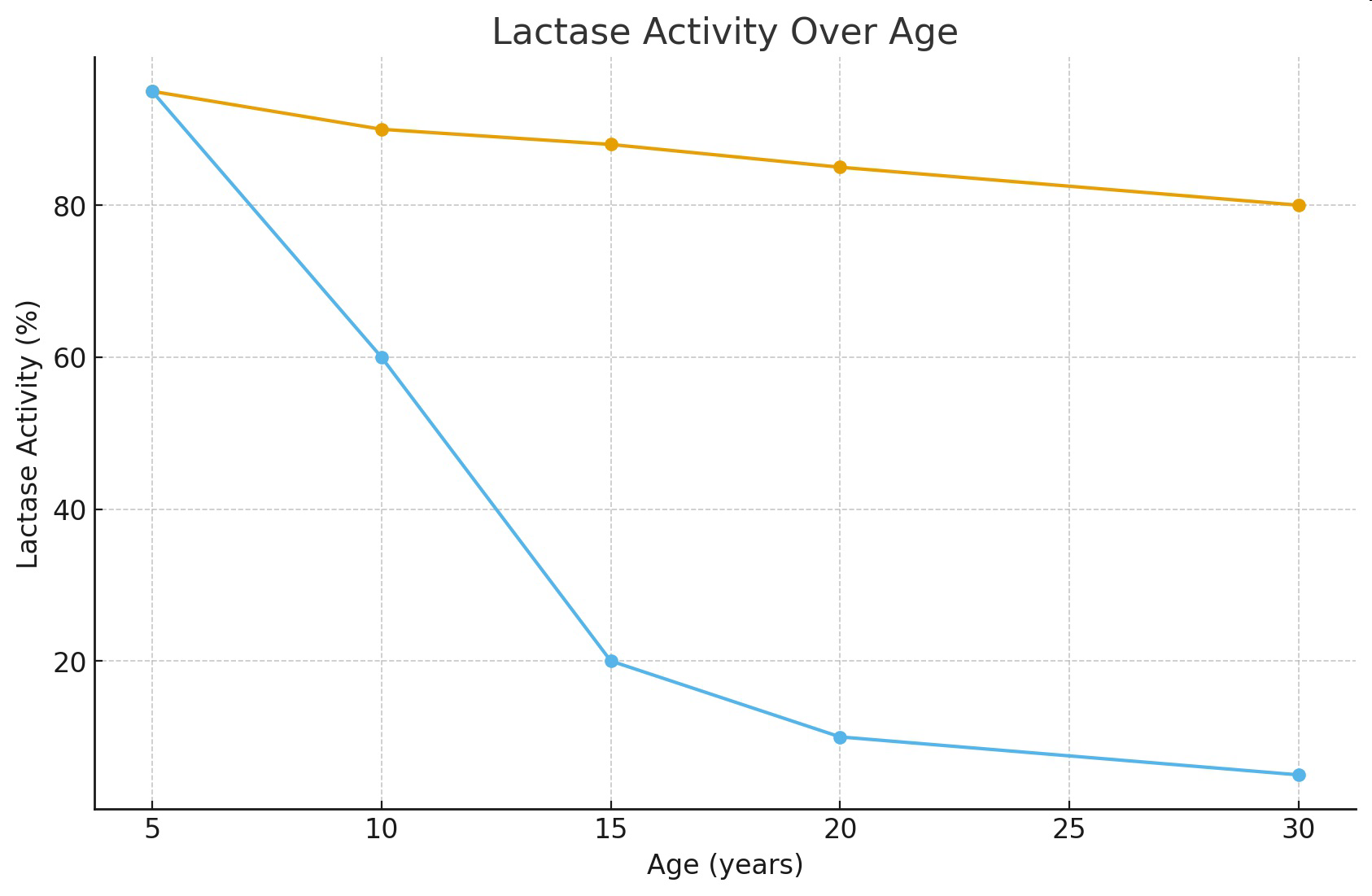
Figure 3.
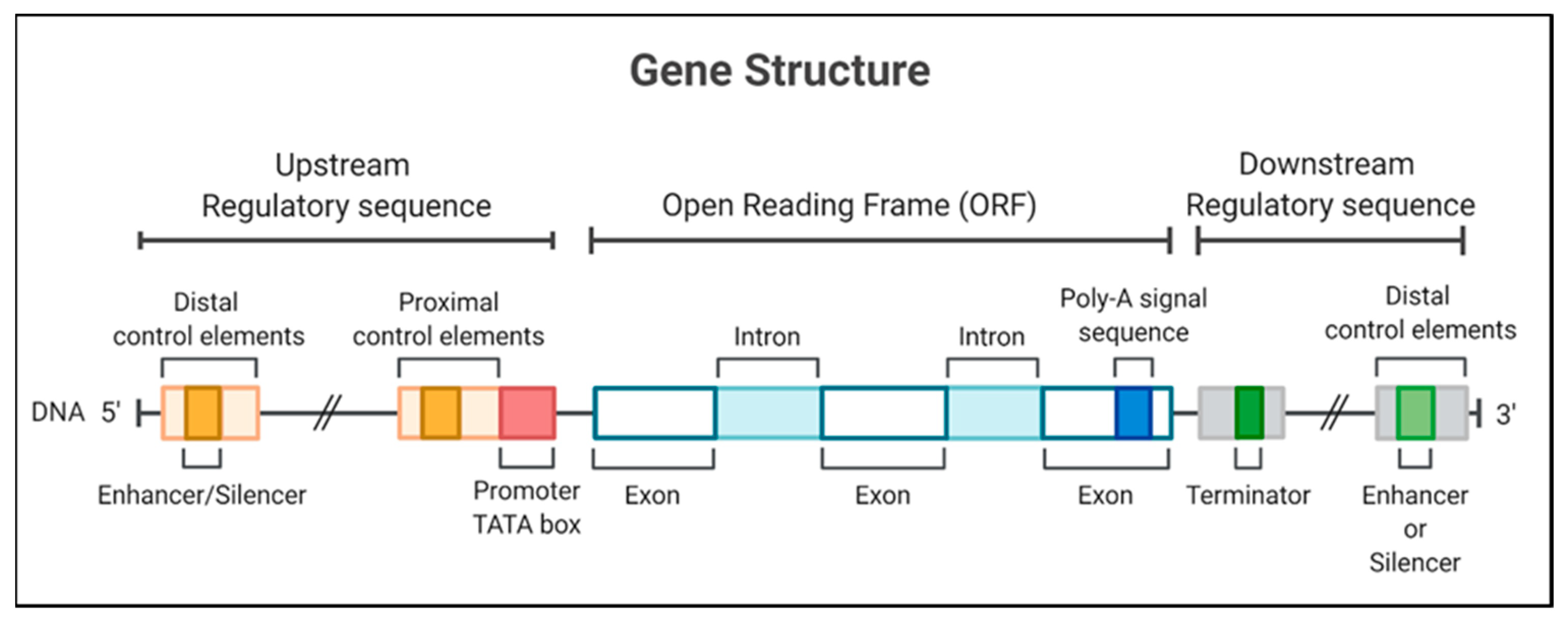
Figure 4.