Lactase Persistence and Lactose Intolerance Across Global Populations
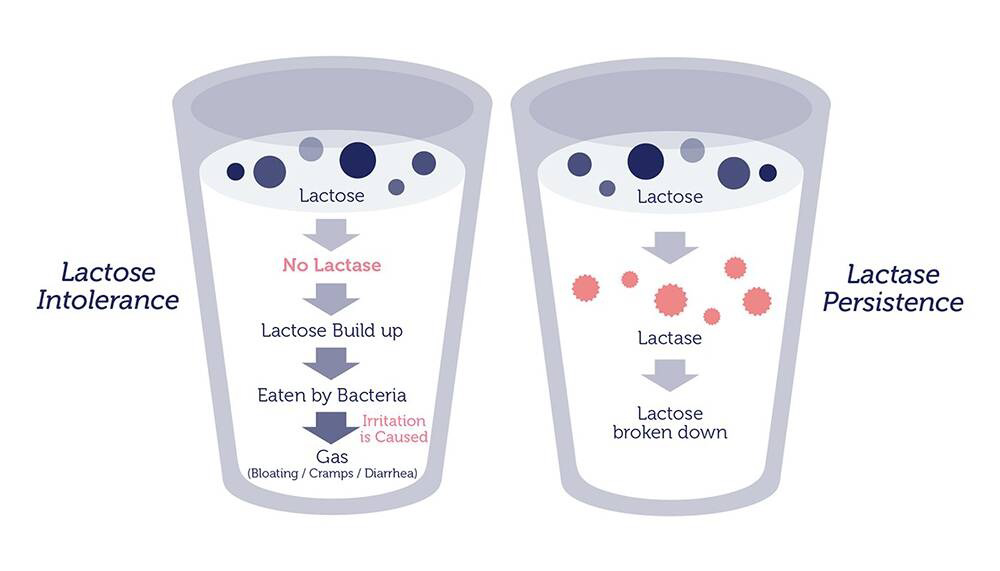
Human populations show remarkable variation in the ability to digest lactose, the sugar found in milk. While most mammals stop producing the enzyme lactase after infancy, some human populations retain high levels of lactase activity throughout adulthood. This condition, called lactase persistence, allows individuals to digest lactose without discomfort. In contrast, people with lactose intolerance produce little lactase after childhood, leading to cramping, bloating, and other symptoms when they consume dairy products. The genetic basis of this difference provides a clear example of how DNA sequences and chromosome regions influence inherited traits.
The gene responsible for lactase production, LCT, is located on chromosome 2. In early life, the LCT gene is active in almost everyone because digesting breast milk is essential for infant survival. In most individuals worldwide, the LCT gene is gradually switched off during childhood as part of normal developmental gene regulation. However, in several populations - especially those with long histories of dairy farming - mutations in a nearby regulatory region allow the LCT gene to remain active into adulthood.
Diagram 1.
 Source: https://www.genovate.com/product/lactose-intolerance-dna-test/
These regulatory mutations do not alter the lactase protein itself. Instead, they change the activity of DNA sequences called enhancers, which affect how strongly the LCT gene is expressed. Individuals who inherit at least one copy of a lactase-persistence variant typically continue producing lactase throughout adulthood. Those without the variant experience reduced lactase expression and lactose intolerance. This is a powerful example of how DNA sequences and chromosomal organization work together to produce characteristic traits.
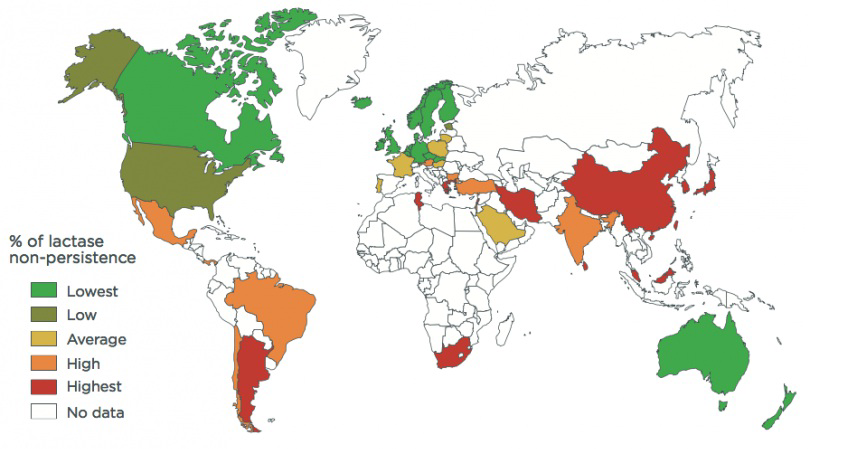
Global datasets show striking patterns: northern European populations have very high frequencies of lactase persistence, while many East Asian, Native American, and West African populations show low frequencies. These patterns reflect historical interactions between cultural practices – such as dairy farming – and natural selection acting on DNA variants.
Diagram 2.
Source: https://www.yogurtnutrition.com/lactase-activity/
On the molecular level, lactase persistence demonstrates how genes contain the instructions for proteins, while nearby DNA regions control when those instructions are used. Because these regulatory DNA sequences are inherited, the trait persists across generations.
Table 1.
Population | Lactase Persistence Frequency (%) |
|---|
Northern Europe | 90 |
East Asia | 10 |
West Africa | 25 |
Middle East | 60 |
North America | 40 |
South Asia | 30 |
Graph of Information - Figure 1.
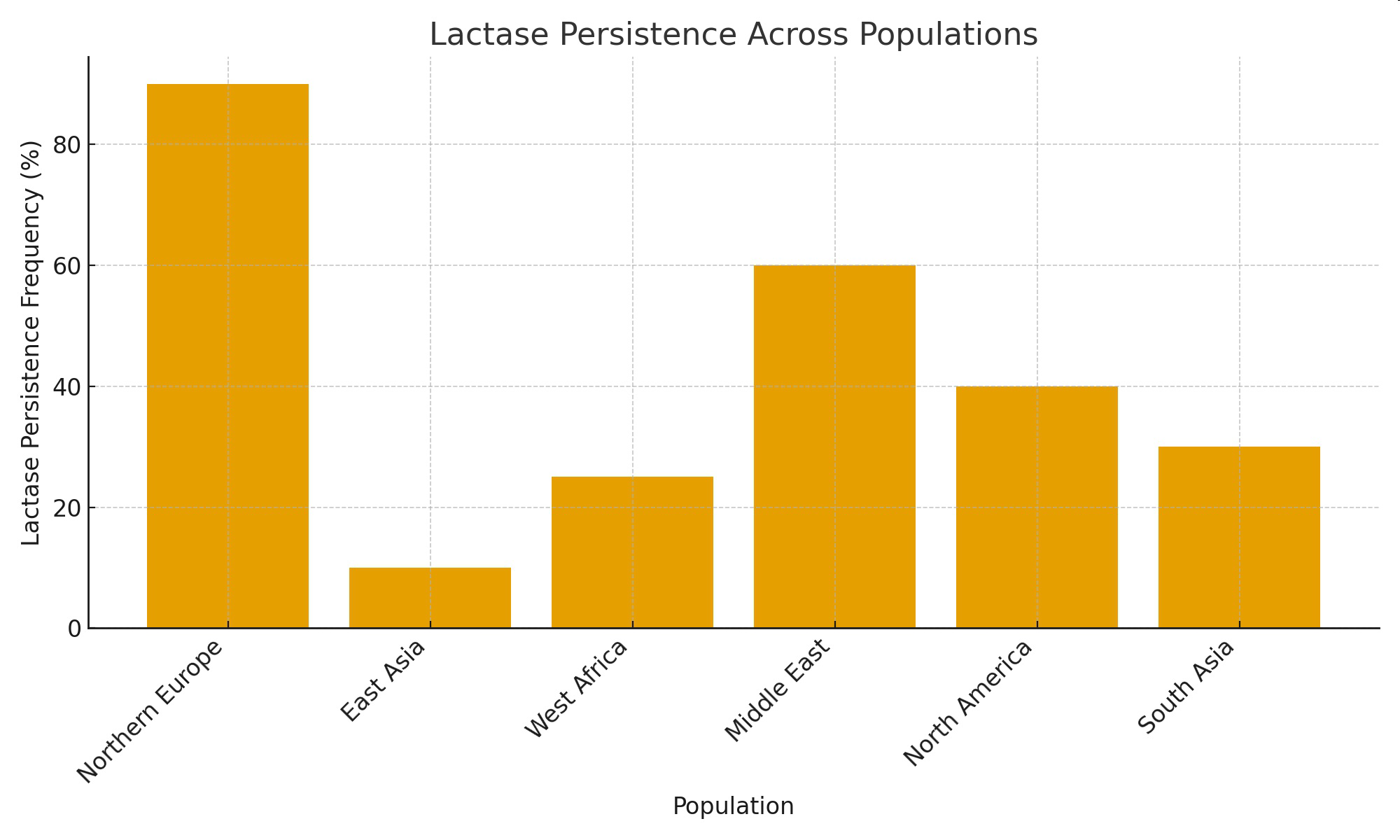
Table 2.
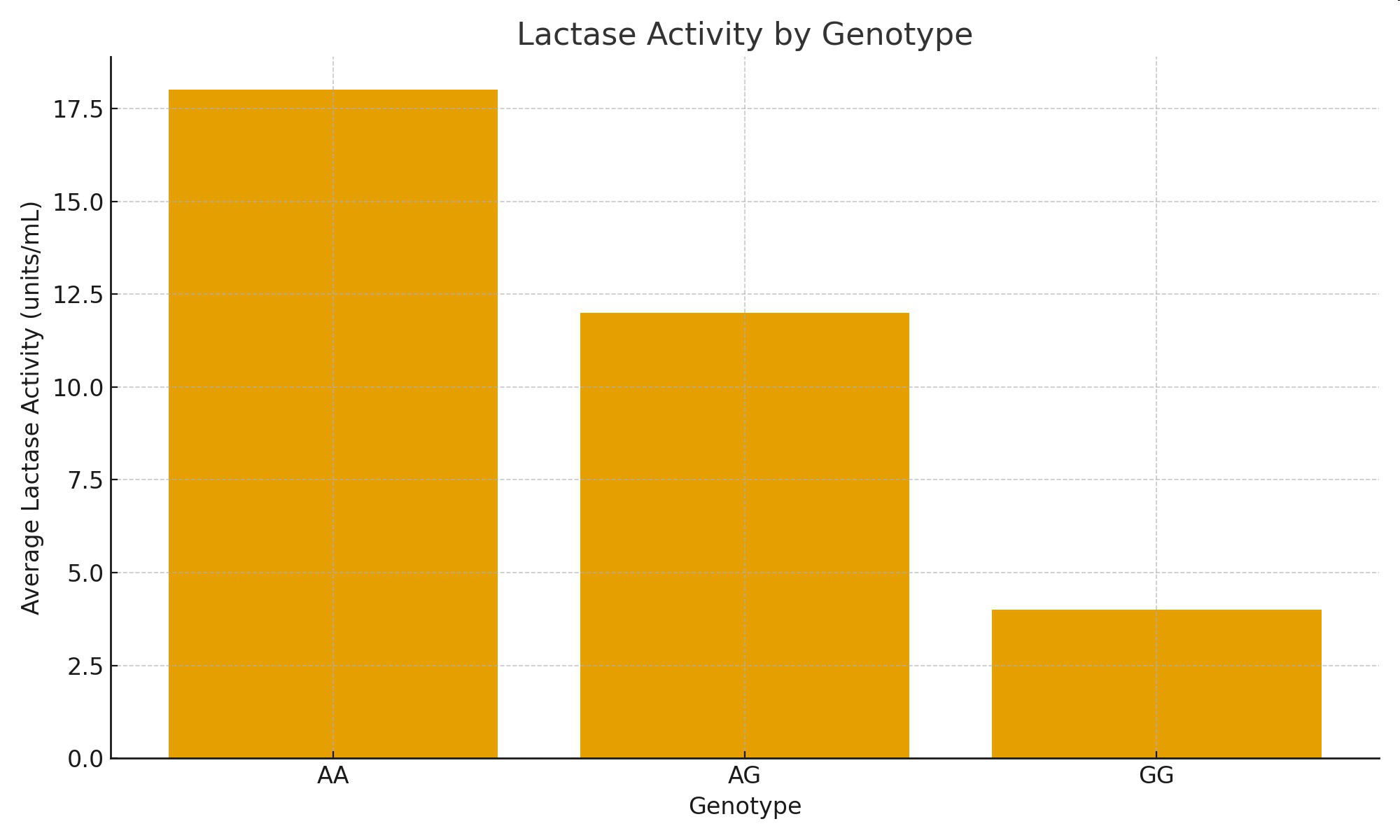
Genotype | Average Lactase Activity (units/mL) |
|---|
AA | 18 |
AG | 12 |
GG | 4 |
Graph of Information - Figure 2.