Log in
Sign up for FREE
arrow_back
Library

7.10A Evidence Plate Tectonics

star
star
star
star
star
Last updated about 6 hours ago
20 questions
1
0
1
SCI.8.9a
0
SCI.8.9a
0
SCI.8.9a
0
SCI.8.9a
0
SCI.8.9a
5
SCI.6.10a
3
SCI.6.10a
2
SCI.6.10a
4
SCI.6.10a
2
SCI.6.10a
2
SCI.6.10a
0
SCI.8.9a
0
SCI.8.9a
0
SCI.8.9a
1
SCI.8.9a
1
SCI.8.9a
0
0
SCI.8.9a
Question 1
1.

Select all that apply. What evidence is given for plate movement?

Question 2
2.

What is the law of superposition?

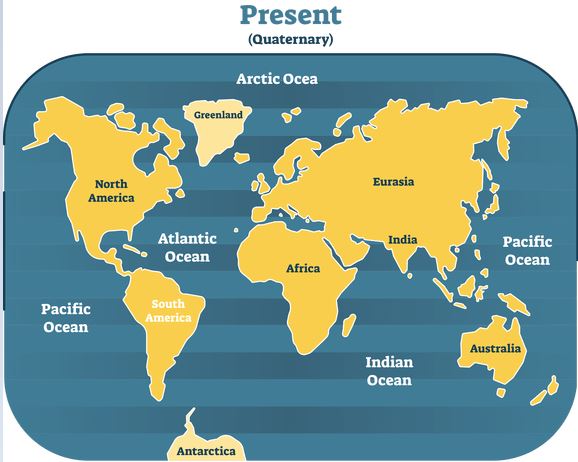
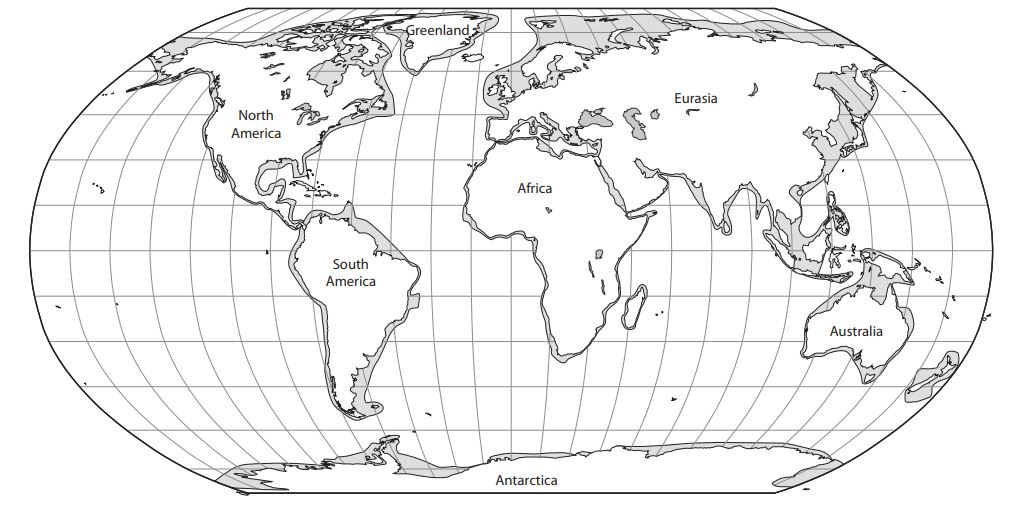
The map below shows the continents as they appear today. Most of the continental land masses lie above sea level, but the true edges of the continents are not at the shoreline. The gray areas on this map show the relatively shallow water that covers the fringes of the continents. These sea-covered borders are known as CONTINENTAL SHELVES (gray areas). The margins of the continental shelves mark the true edges of the continents.
Question 3
3.

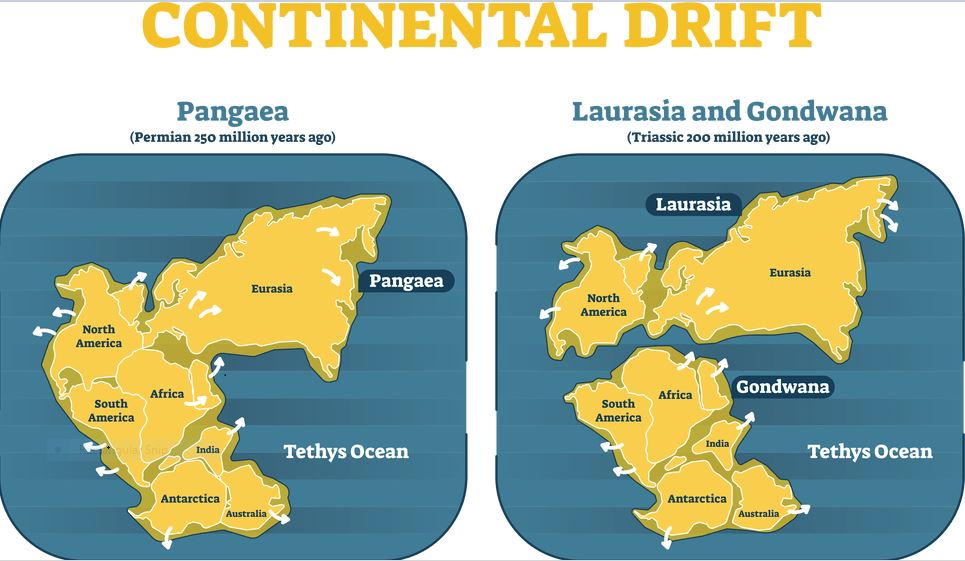
What two continents fit together like pieces of a puzzle?

*By about 300 million years ago, a unique community of plants had evolved known as the European flora. Fossils of these plants are found in Europe and other areas.
*Fossils of the fern Glossopteris have been found in several locations. Glossopteris had very heavy seeds that could not move by wind. Glossopteris, like all ferns, grew in wet, warm areas.
*Fossil remains of the half meter-long fresh water reptile called Mesosaurus have been found in several locations. Mesosaurs had limbs for swimming, but could also walk on land. Other evidence suggests that although they lived in water at times, they were not strong swimmers.
*Fossil remains of Cynognathus, a land reptile approximately 3 meters long that lived during the Early Mesozoic Era, about 230 million years ago were found in several areas. It was a weak swimmer.
*Fossil evidence of the Early Mesozoic, land-dwelling reptile Lystrosaurus was found in several areas. They reproduced by laying eggs on land. In addition, their anatomy suggests that these animals were probably very poor swimmers.
Question 4
4.

Based on the information you were given about each of the plants and animals, how does the location of their fossils support the idea that the continents were once connected as one landmass?

Question 5
5.

Which fossil occurs on the most landmasses?

Question 6
6.

Why do you think the continents don't fit together perfectly? What processes have occurred over the past 200 million years?

Question 7
7.

In your own words, describe what you think "continental drift" means.

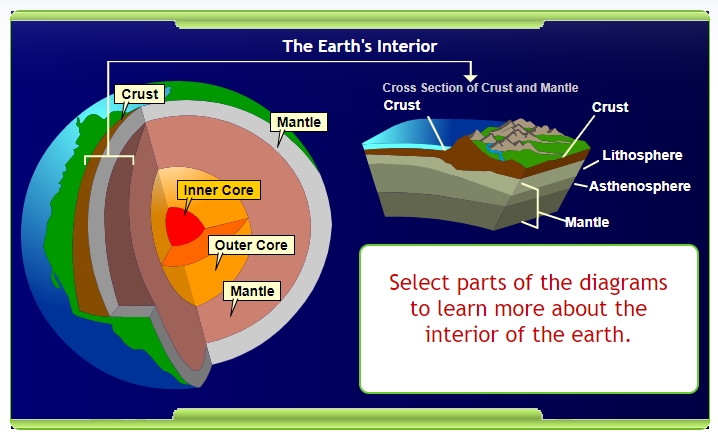
Part 1: Use this link- Earth's Structure

1. Click Start.
2. Click on each label, read the paragraph and then answer the questions below.
Question 8
8.

Question 9
9.

Question 10
10.

Question 11
11.

Question 12
12.

Which statements describe the ASTHENOSPHERE? Select 2

Question 13
13.

Which statements describe the LITHOSPHERE? Select 2

Click Next Chapter on the website. Part 2: Plate Tectonics Make sure to click on one of the map and then click on the "How Do We Know This?"

Question 14
14.

What did Alfred Wegener notice that the coastlines of Africa and South America?

Question 15
15.

What else did Alfred Wegener discover along the coasts of these continents?

Question 16
16.

What did Alfred Wegener notice about the geologic formations, like mountain ranges, on the two continents?

Question 17
17.

What was the original landmass called?

Question 18
18.

The earth's outer layer, or lithosphere, is broken into several large slabs. What are the slabs called?

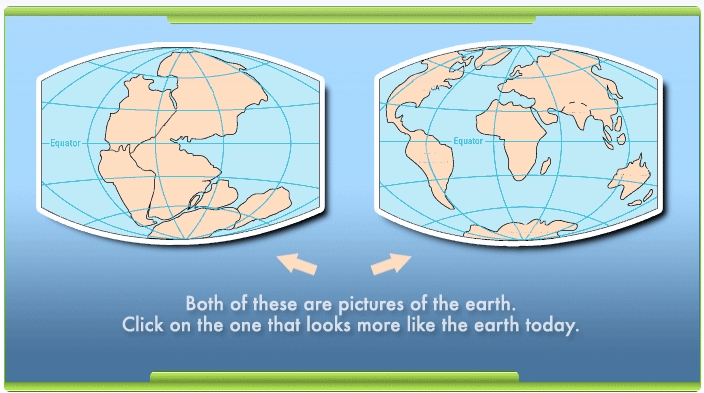
Click Continents Over Time on the website. Part 3: Plate Tectonic Timeline

Question 19
19.

What helped you the most in putting the picture in the right order?

Question 20
20.

What did you notice about the landmasses?

Fossil remains
Continents fit together like a puzzle
Data from rocks
Paleoclimate data
Superposition
Plate boundary movement- sea floor spreading
Which of the following characteristics describe the CRUST? Select 5.
This is where you live
About 1,800 miles thick
Only true liquid layer
Hard and rigid
Made of iron and nickel
Outermost layer
Innermost layer
Center of the Earth
Located below the crust
Made of hot, semisolid rock
Only a few mile thick
Made of solid rock
Extremely hot, solid sphere
Made of liquid iron and nickel
Which of the following characteristics describe the MANTLE? Select 3
Located below the crust
Made of liquid iron and nickel
Hard and rigid
Made of hot, semisolid rock
This is where you live
Innermost layer
Extremely hot, solid sphere
Outermost layer
Made of solid rock
Only a few mile thick
Center of the Earth
Only true liquid layer
Made of iron and nickel
About 1,800 miles thick
Which of the following characteristics describe the OUTER CORE? Select 2
Center of the Earth
Located below the crust
Only a few mile thick
About 1,800 miles thick
Extremely hot, solid sphere
Hard and rigid
Only true liquid layer
This is where you live
Outermost layer
Made of hot, semisolid rock
Made of iron and nickel
Made of liquid iron and nickel
Made of solid rock
Innermost layer
Which of the following characteristics describe the INNER CORE? Select 4
Outermost layer
Made of solid rock
About 1,800 miles thick
Innermost layer
Extremely hot, solid sphere
Located below the crust
Made of iron and nickel
Center of the Earth
This is where you live
Only a few mile thick
Only true liquid layer
Made of liquid iron and nickel
Made of hot, semisolid rock
Hard and rigid