Root Growth in Plants
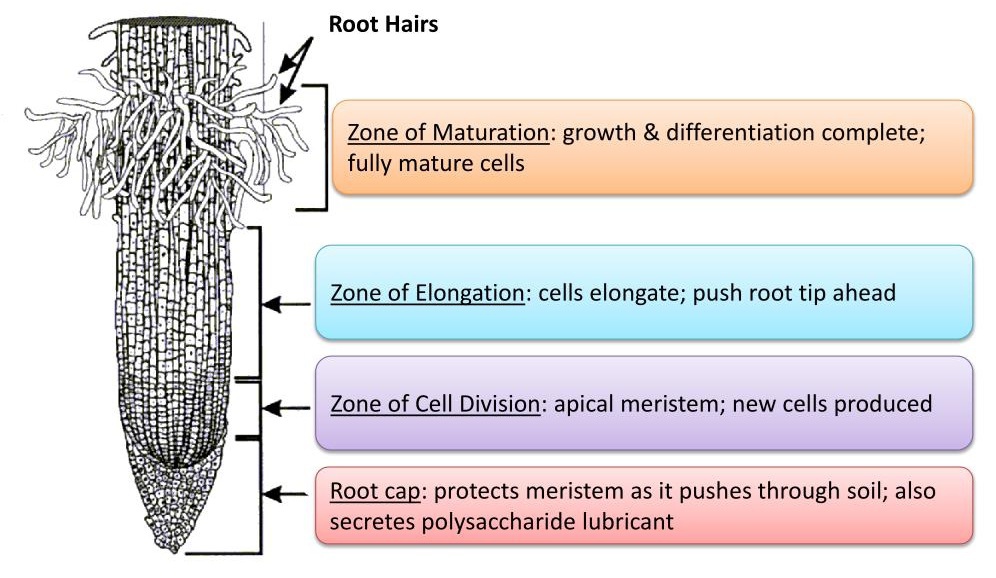
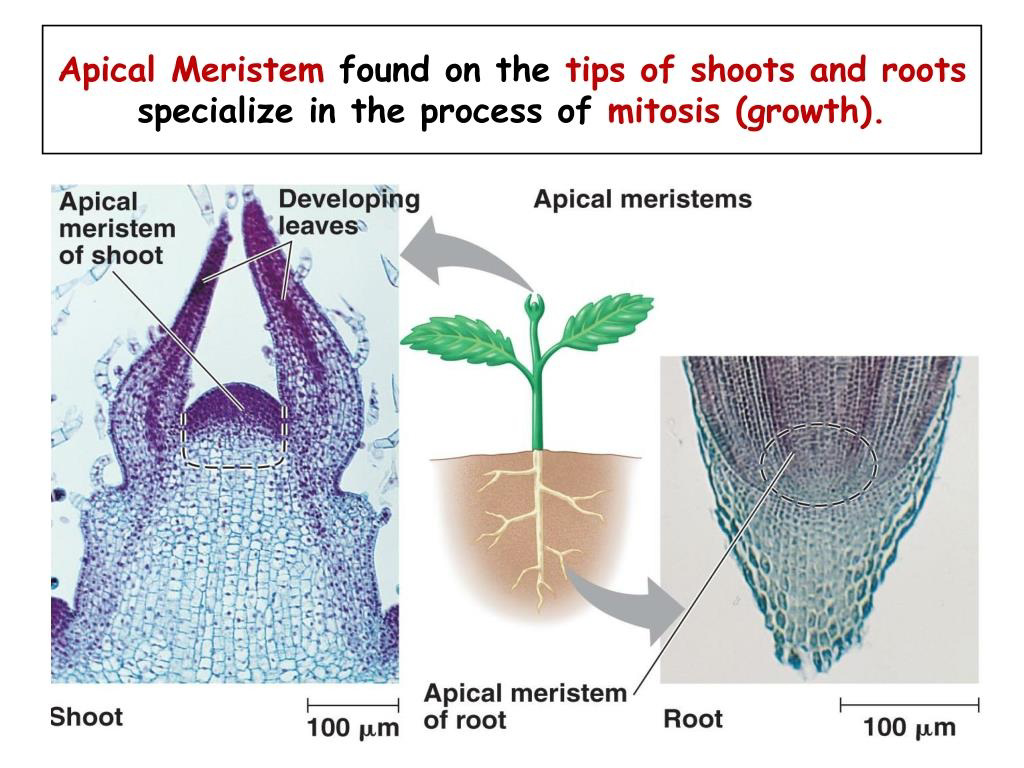
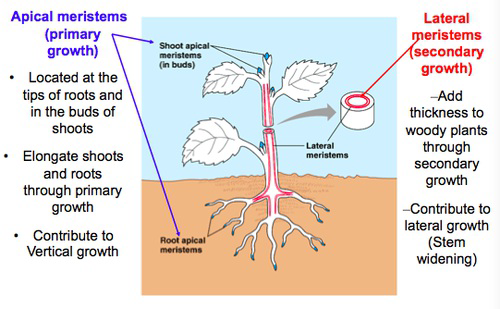
Plant roots grow continuously throughout a plant’s life, allowing the organism to absorb water, nutrients, and minerals from the soil. This growth is driven by specialized tissues located at the very tip of each root, known as the apical meristem. The apical meristem contains undifferentiated cells that divide rapidly through mitosis, producing new cells that contribute to root elongation. As these new cells move away from the meristem, they undergo differentiation, forming the specialized structures needed for root function.
The zone of cell division, located just behind the root cap, is where mitosis is most active. Here, meristematic cells divide rapidly, increasing the number of cells available for root growth. These newly formed cells are small, densely packed, and contain large nuclei – key indicators of active mitosis. Scientists measure mitotic activity using a metric known as the mitotic index, which represents the percentage of cells in a population that are actively undergoing mitosis.
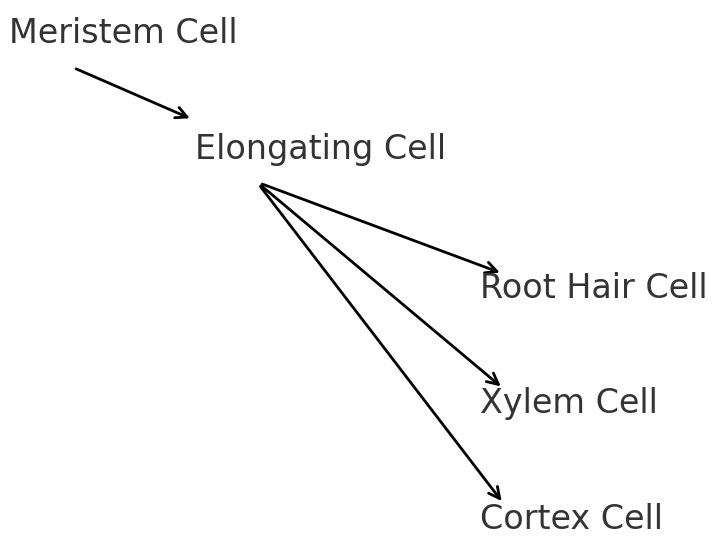
Moving upward from the meristem, cells enter the zone of elongation, where they grow longer but do not divide. After elongation, cells transition into the zone of differentiation, where they transform into specialized cell types. Some become root hair cells, which increase surface area for water absorption; others become xylem or phloem cells, forming the vascular tissue that transports nutrients; and others become cortex or epidermal cells, which provide protection and structure.
Environmental conditions strongly influence mitosis and differentiation. Root growth increases under high nutrient availability and slows under drought or cold temperatures. Scientists studying root development commonly compare mitotic index, root length, and the proportions of differentiated cell types under different environmental conditions.
Diagram 1.
Source: https://www.slideserve.com/tameka/introduction-to-plants
Diagram 2.
 Source: https://www.slideserve.com/tameka/introduction-to-plants https://www.slideserve.com/drago/kingdom-plantae
Diagram 3.
 Source: https://quizlet.com/744187787/biology-plant-anatomy-flash-cards/
Table 1.
Condition | Mitotic Index % | Avg Root Length cm |
|---|
Low Nutrients | 6 | 1.8 |
Moderate Nutrients | 12 | 3.4 |
High Nutrients | 19 | 5.7 |
Cold Stress | 4 | 1.2 |
Graph of Information - Figure 1.
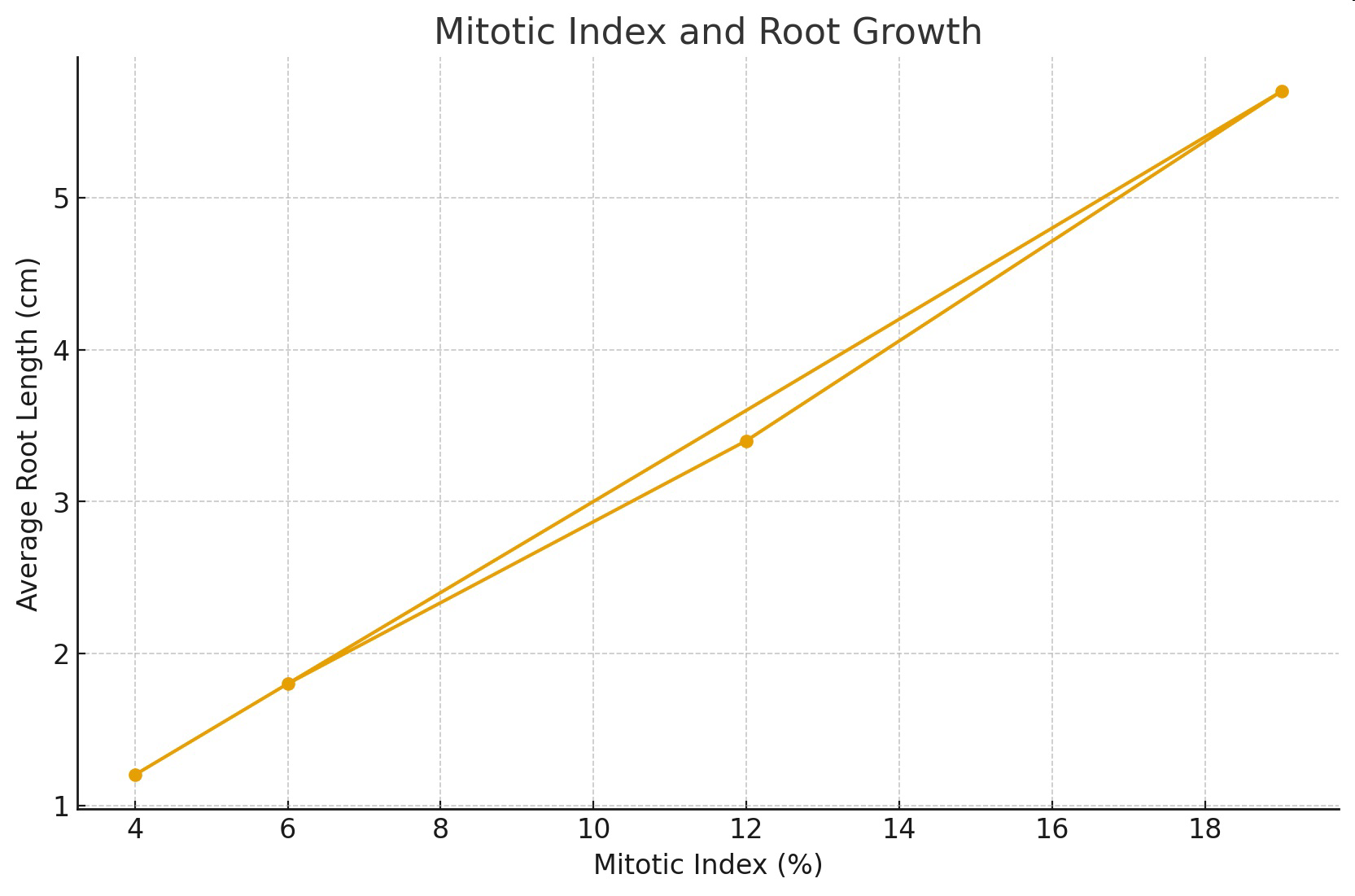
Table 2.
Region | Root_Hair_pct | Xylem_pct | Cortex_pct |
|---|
Zone of Division | 1 | 3 | 7 |
Zone of Elongation | 4 | 7 | 14 |
Zone of Differentiation | 32 | 18 | 29 |
Graph of Information - Figure 2.
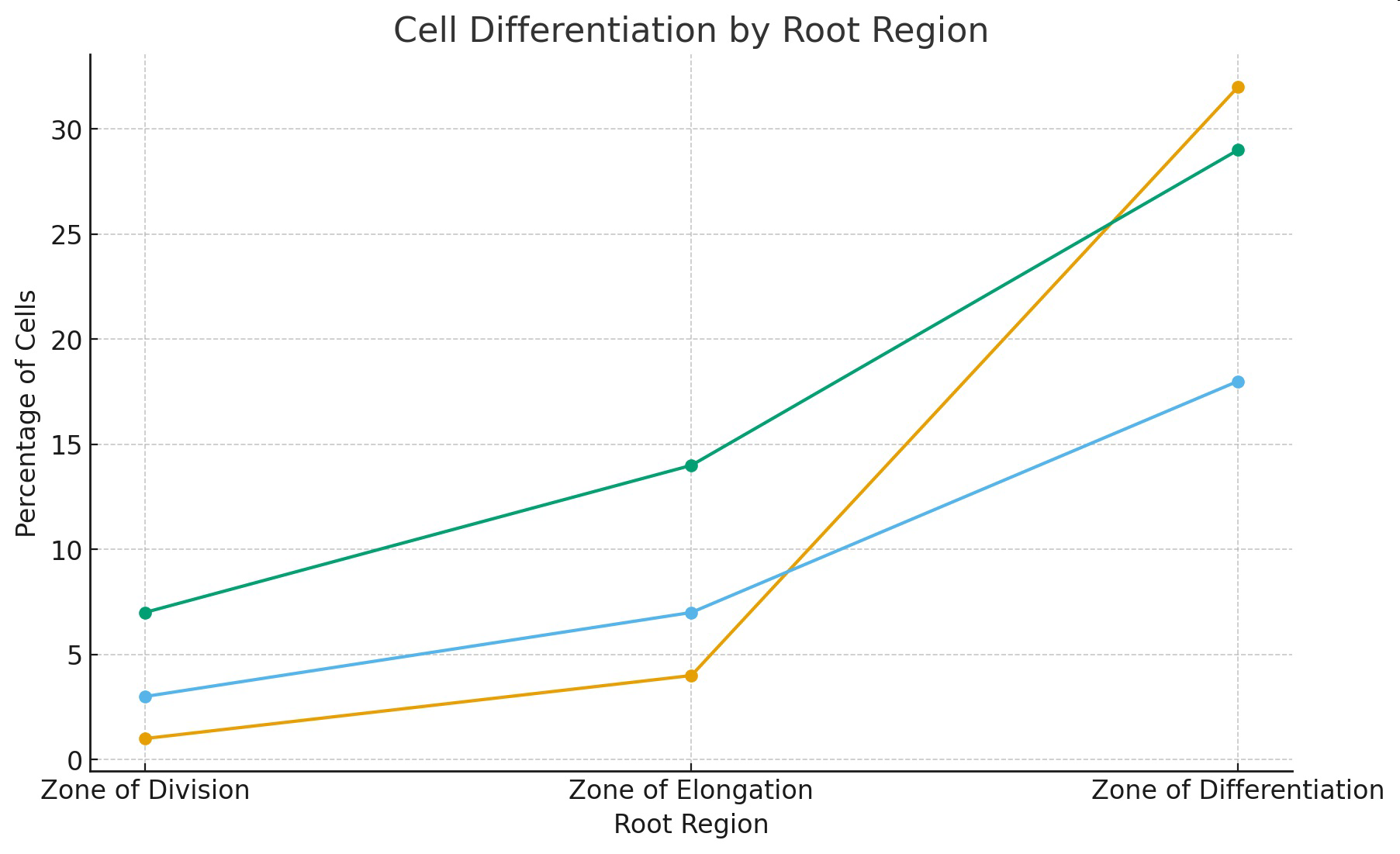
Diagram 4.