Sickle-Cell Trait and the Hemoglobin Gene Mutation
Sickle-cell disease is a well-known example of how a change in DNA can alter a protein and produce a distinct inherited trait. Normally, red blood cells are flexible, disk-shaped cells that move easily through blood vessels and carry oxygen using the protein hemoglobin. In people with sickle-cell disease, many red blood cells become rigid and “sickle” shaped, which can block blood flow and cause pain, organ damage, and other serious health problems. This difference in cell shape is caused by a specific mutation in the DNA that codes for one part of the hemoglobin protein.
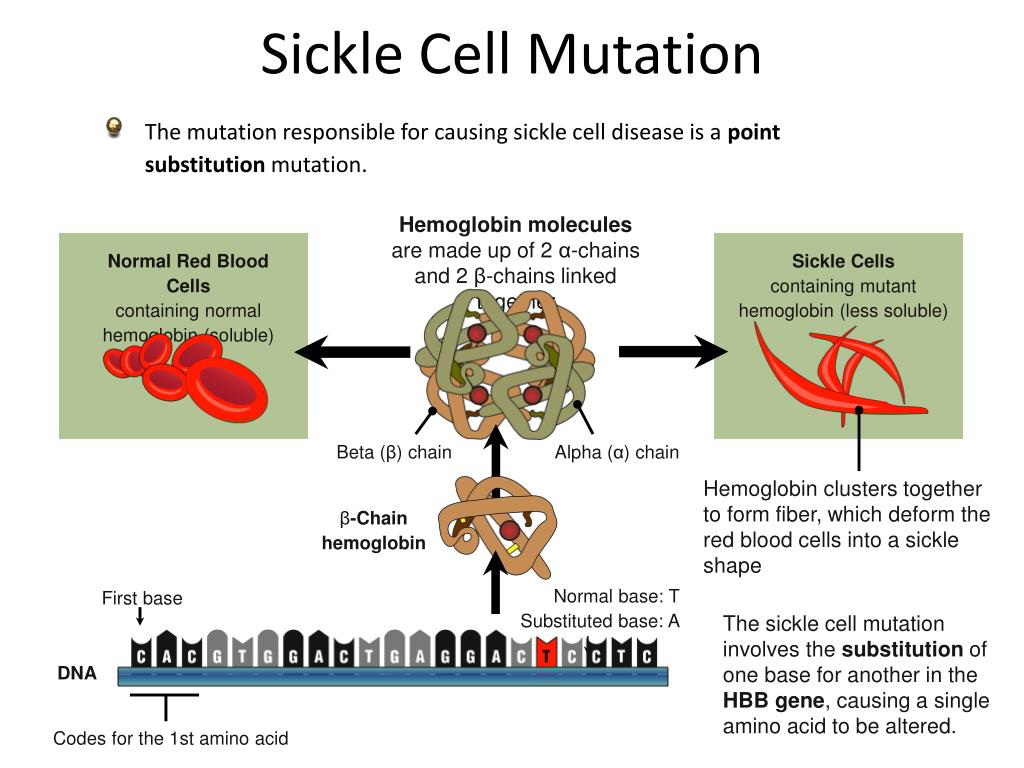
The gene that codes for the beta chain of hemoglobin is called HBB and is located on chromosome 11. A single base substitution in this gene changes one amino acid in the beta chain: from glutamic acid to valine. This small change in the protein’s primary structure affects how hemoglobin molecules interact with each other, especially when oxygen levels are low. In people who inherit two copies of the mutated allele (one from each parent), the altered hemoglobin molecules stick together and cause red blood cells to form the characteristic sickle shape.
Diagram 1.
Source:
https://asktheman.xyz/
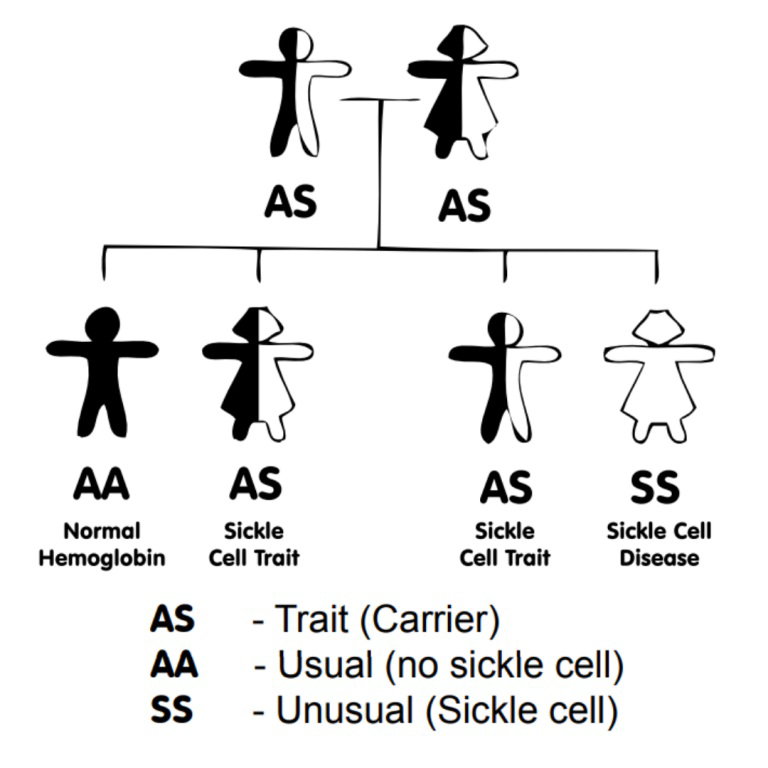
People who inherit one normal allele and one mutated allele have what is called the sickle-cell trait. Their genotype produces both normal and mutated hemoglobin, so most of their red blood cells function normally. These individuals usually do not have severe symptoms, but under extreme conditions (such as very low oxygen), some cells may sickle. Interestingly, in regions where malaria is common, people with the sickle-cell trait are more likely to survive malaria infections than people with two normal alleles. As a result, the mutated allele remains relatively common in these populations.
Diagram 2.
 Source: https://www.sicklecellsociety.org/resource/inheritance-sickle-cell-anaemia/
By comparing individuals with different HBB genotypes - normal, trait, and sickle-cell disease - scientists can see how a single DNA change leads to different protein structures, cell behaviors, and health outcomes. The HBB gene sequence, its location on chromosome 11, and the specific base substitution all help clarify how chromosomes carry instructions for traits. When these instructions change, the resulting proteins and characteristics can also change.
Table 1.
Genotype | Frequency (%) |
|---|
AA | 70 |
AS | 25 |
SS | 5 |
Graph of Information - Figure 1.
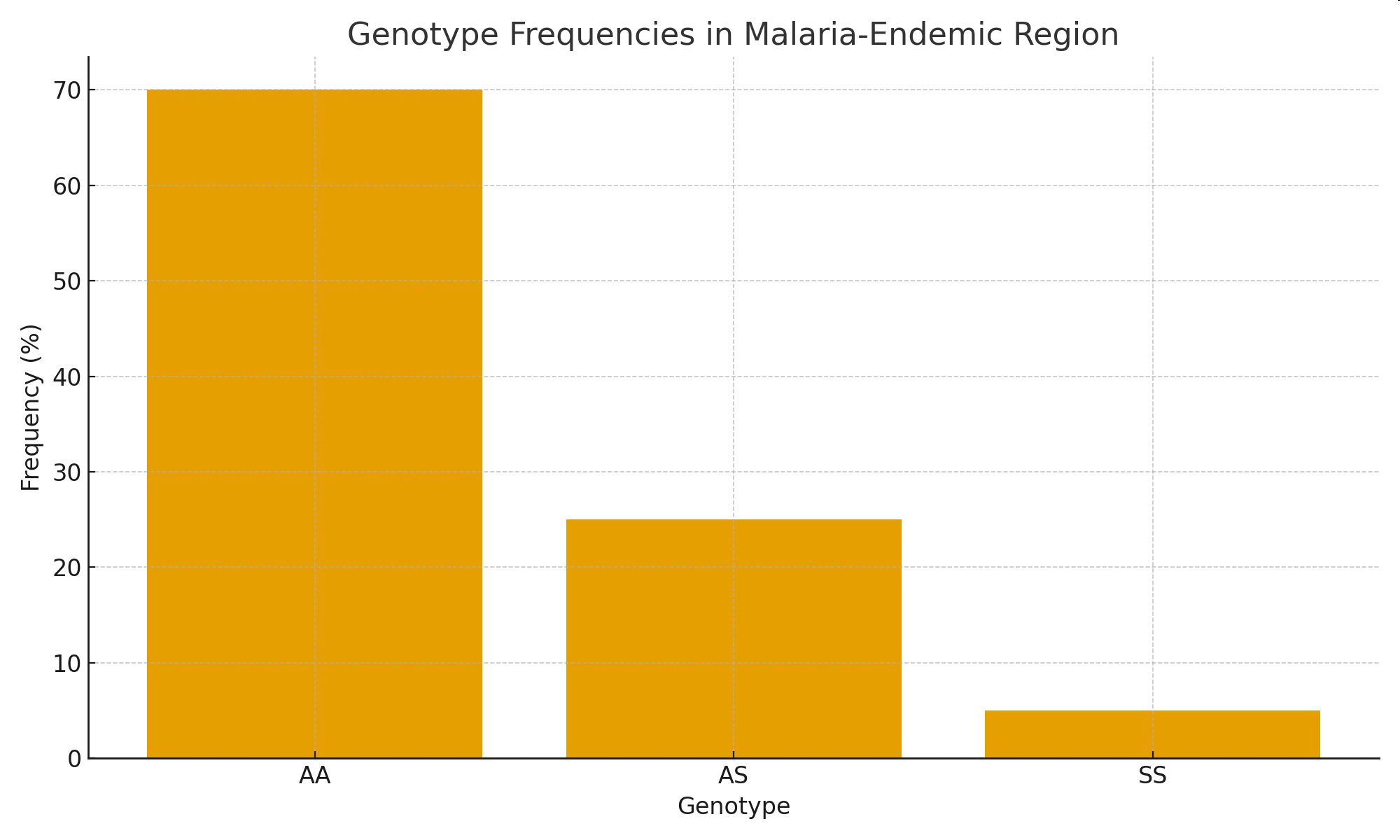
Table 2.
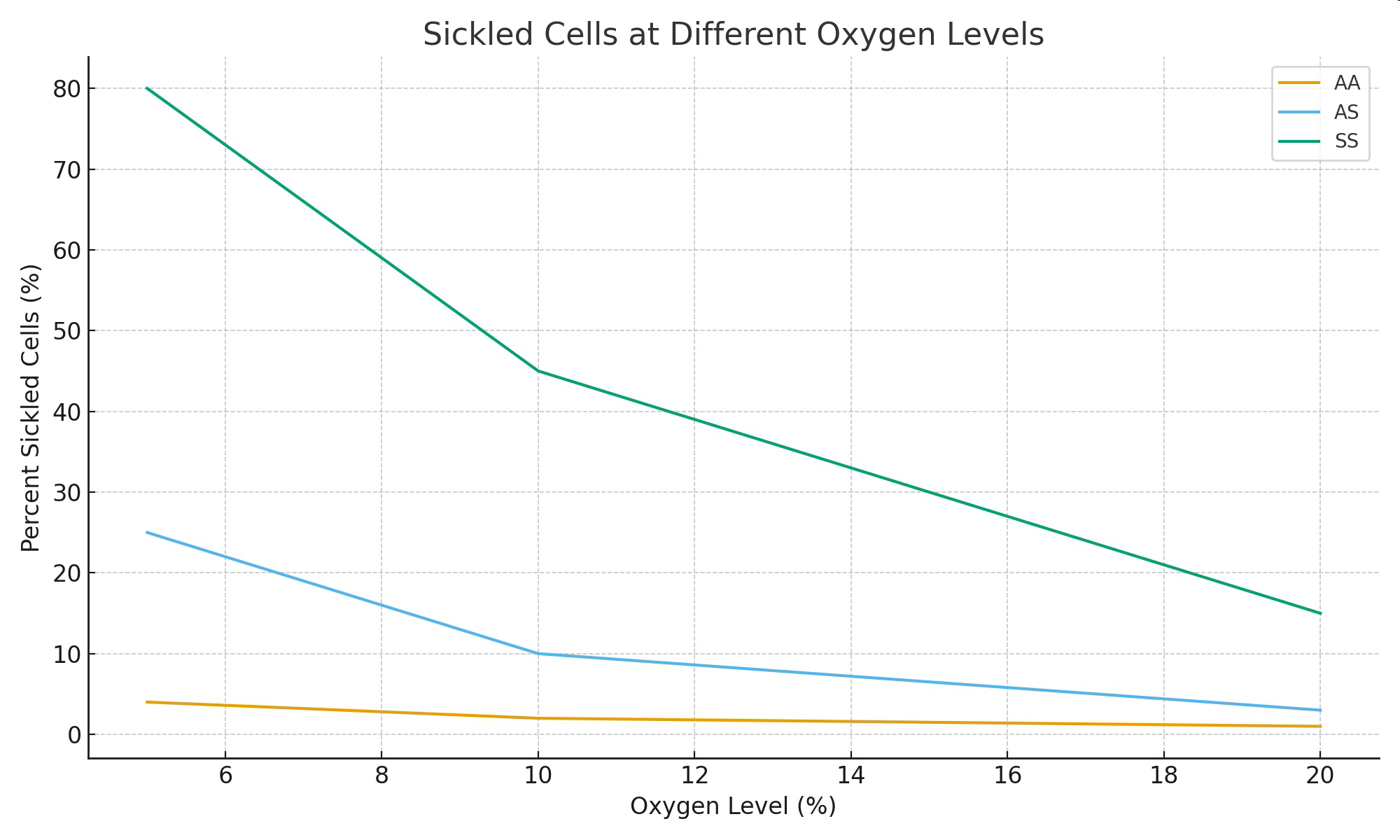
Genotype | Oxygen Level (%) | Percent Sickled Cells (%) |
|---|
AA | 20 | 1 |
AA | 10 | 2 |
AA | 5 | 4 |
AS | 20 | 3 |
AS | 10 | 10 |
AS | 5 | 25 |
SS | 20 | 15 |
SS | 10 | 45 |
SS | 5 | 80 |
Graph of Information - Figure 2.