Skin Repair After Injury
Diagram 1.
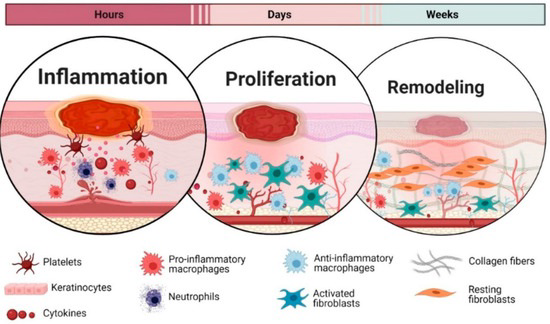 Source:
https://www.mdpi.com/1422-0067/24/23/16657
Diagram 2.
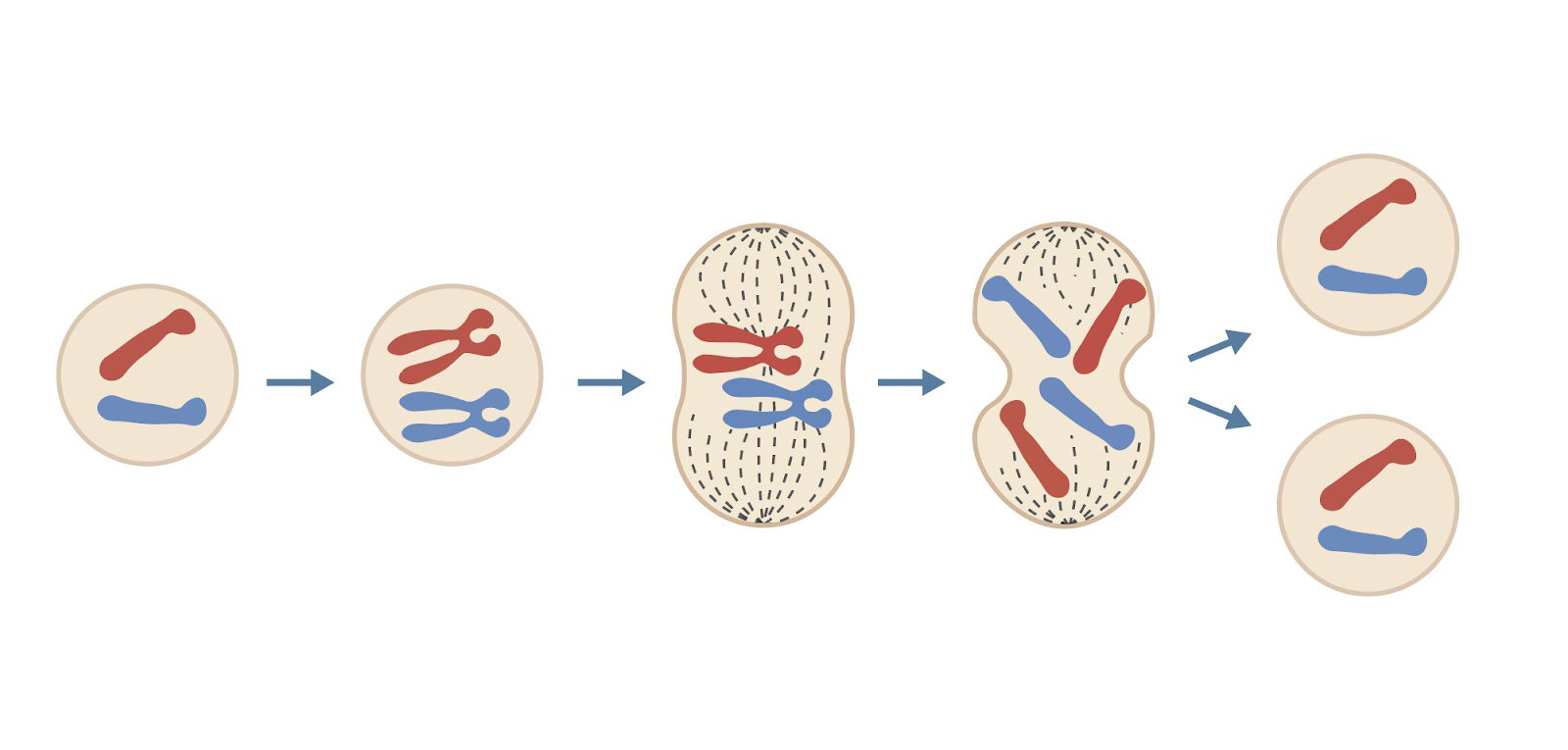 Source:
https://igcse-biology-2017.blogspot.com/2017/06/328-understand-how-division-of-diploid.html
Human skin is the largest organ in the body, acting as the first barrier against the external environment. When the skin is injured - whether from a scrape, cut, or burn - it triggers a rapid and coordinated healing process that depends heavily on mitosis and cell differentiation. The outer layer of the skin, the epidermis, is constantly renewed through cell division, but during wound repair, mitosis accelerates dramatically as the body works to restore structure and function.
Immediately after an injury, damaged cells release chemical signals that recruit immune cells to remove pathogens and debris. Beneath the wound surface, basal stem cells in the epidermis begin dividing rapidly through mitosis. These new daughter cells migrate upward, eventually differentiating into the specialized keratinocytes that rebuild the protective outer layer. In deeper wounds that reach the dermis, fibroblasts divide and differentiate into cells that produce collagen to rebuild connective tissue.
Mitosis plays a critical role in increasing the number of replacement cells, but the healing process would not succeed without differentiation, the process by which unspecialized cells become specialized for specific tasks. Keratinocytes harden and form new skin layers, fibroblasts produce extracellular matrix, and endothelial cells create new blood vessels during angiogenesis. Together, this coordinated sequence restores both the structure and function of the skin.
Scientists measure wound healing using metrics such as mitotic index (percentage of dividing cells), wound closure time, changes in cell type proportions, and collagen production rates. Data consistently show that wounds with higher early mitotic activity close faster and form more functional tissue. Environmental factors - such as temperature, hydration, and infection - can alter mitosis and differentiation, affecting overall healing success.
Without rapid mitosis and precisely regulated differentiation, the body could not replace lost skin, defend against pathogens, or maintain homeostasis. Wound healing demonstrates how these processes work together to ensure survival.
Table 1.
Days After Injury | Mitotic Index % | Wound Closure % |
|---|
1 | 4 | 5 |
3 | 12 | 28 |
5 | 19 | 56 |
7 | 11 | 82 |
10 | 6 | 97 |
Graph of Information - Figure 1.
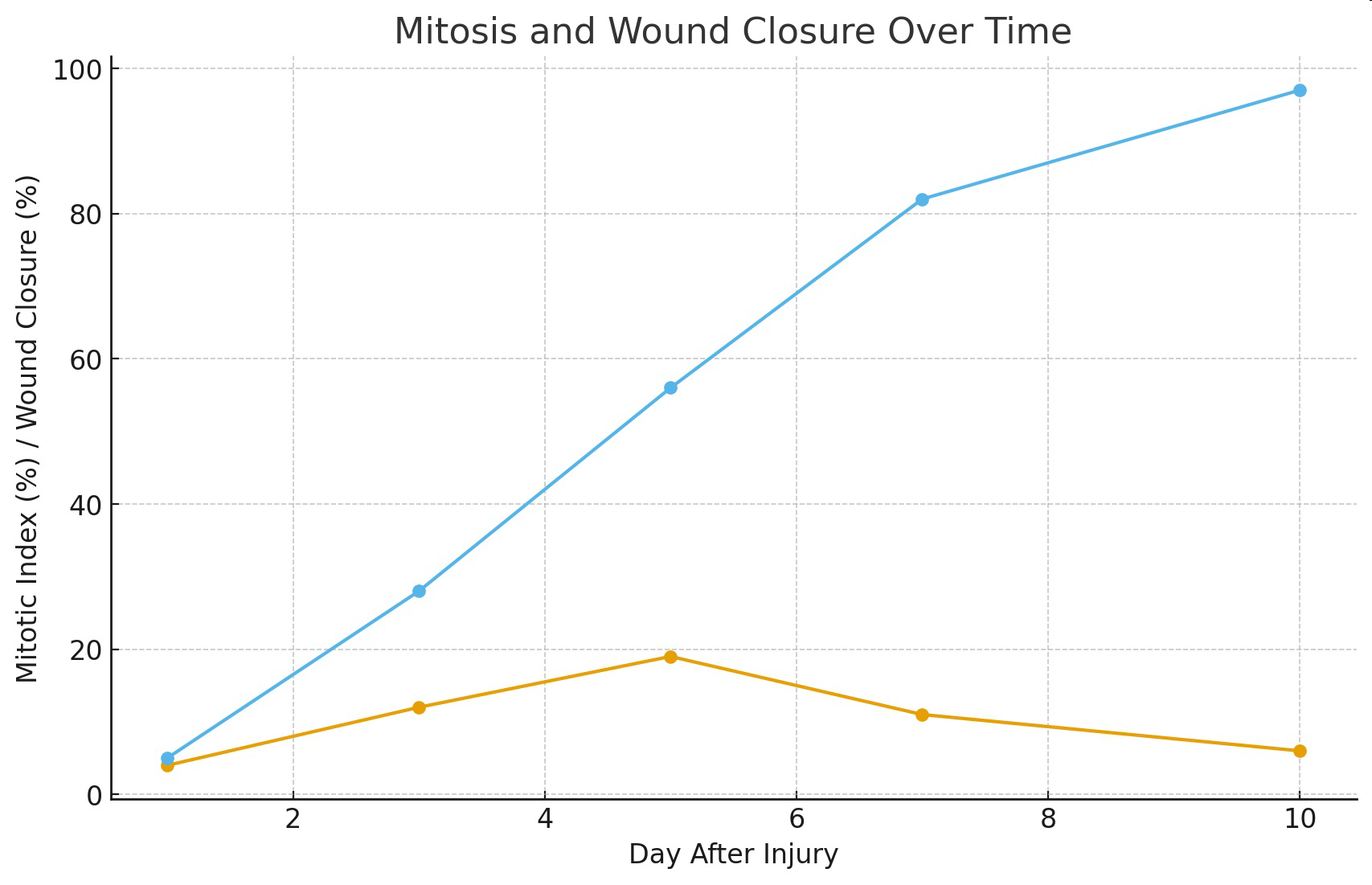
Table 2.
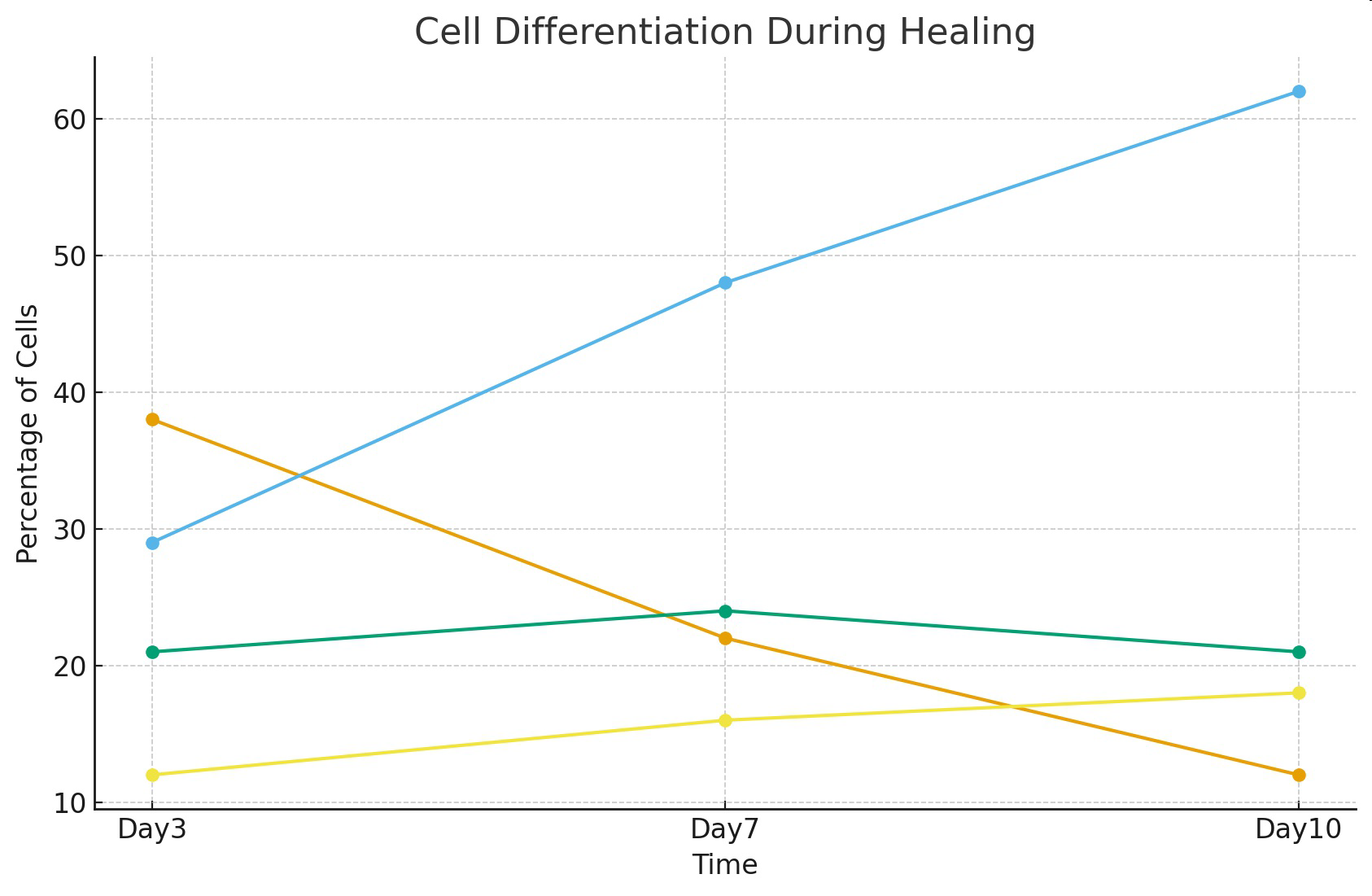
Cell Type | Day 3 % | Day 7 % | Day 10 % |
|---|
Basal Stem Cells | 38 | 22 | 12 |
Keratinocytes | 29 | 48 | 62 |
Fibroblasts | 21 | 24 | 21 |
Endothelial Cells | 12 | 16 | 18 |
Graph of Information - Figure 2.