UV Radiation Exposure and DNA Mutation Rates
Mutations are changes in DNA sequence that can be inherited if they occur in cells that give rise to gametes. Although many mutations occur spontaneously during DNA replication, environmental factors can also increase mutation rates. One of the most common sources of environmentally induced mutations is ultraviolet (UV) radiation from sunlight. UV light interacts directly with DNA molecules, causing structural changes that interfere with accurate replication.
UV radiation primarily induces mutations by forming thymine dimers, in which two adjacent thymine bases bond together. These dimers distort the DNA molecule and disrupt normal replication. If the cell’s DNA repair systems successfully correct the damage, the mutations are avoided. But if repair mechanisms fail or become overwhelmed by excessive UV exposure, permanent changes to the DNA sequence may occur. If these mutations occur in skin cells, they can contribute to skin cancer. If they occur in germline cells, they may be passed on to offspring.
Diagram 1.
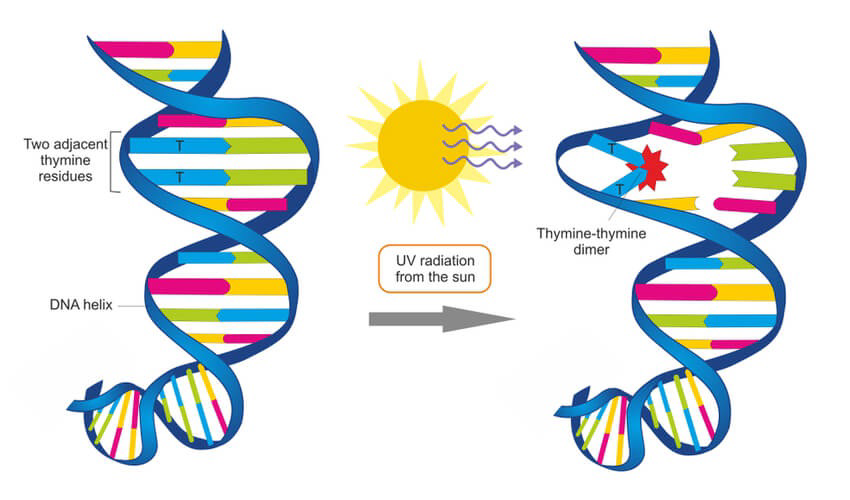 Source:
https://biologydictionary.net/dna-replication/
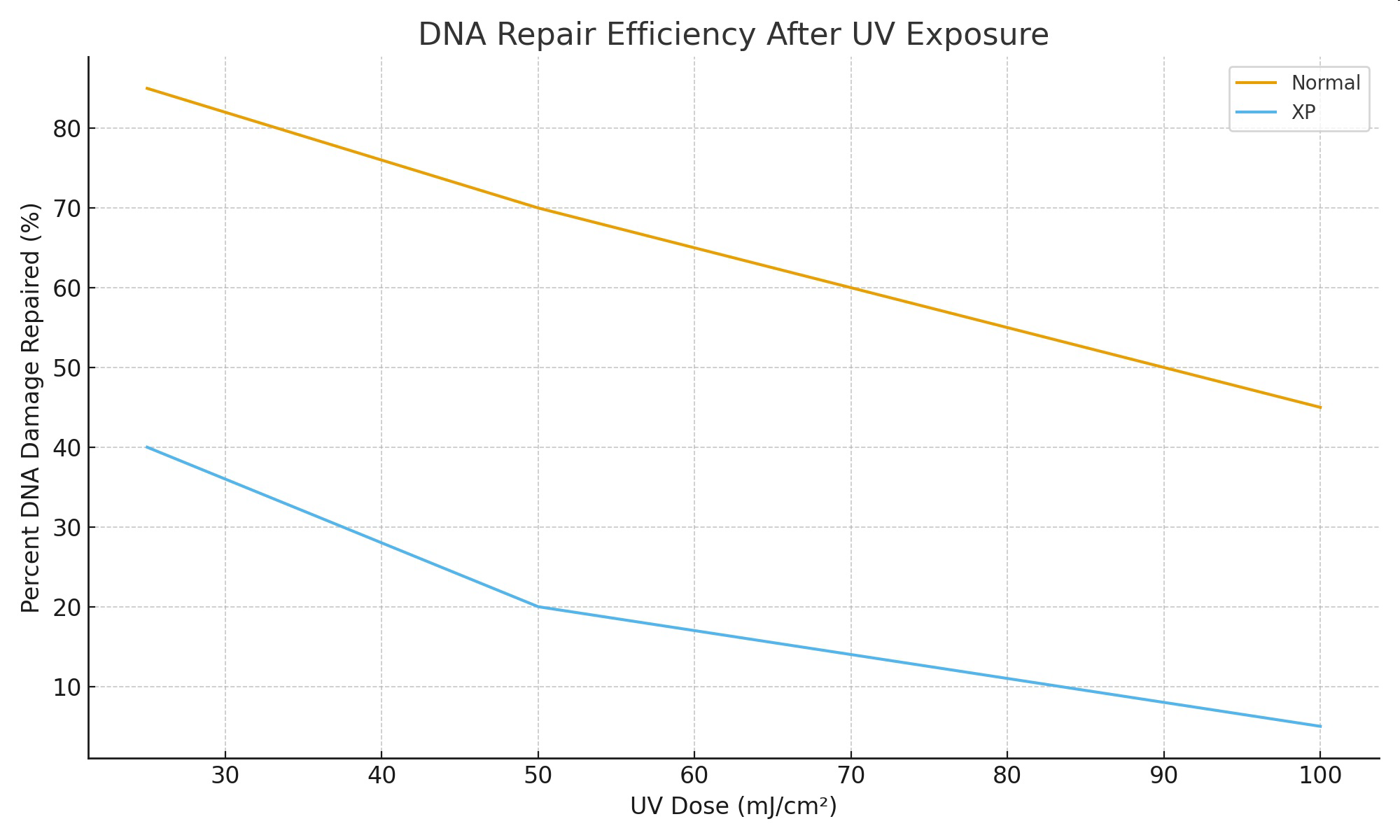
Genetic disorders such as xeroderma pigmentosum (XP) illustrate how critical DNA repair is. Individuals with XP have mutations that impair the proteins responsible for repairing UV-induced DNA damage. As a result, even minimal UV exposure leads to extremely high mutation rates and dramatically elevated cancer risk. Families affected by XP provide real data for studying how environmental factors and DNA repair interact to shape inherited variation.
Laboratory studies often measure mutation rates in cells exposed to different levels of UV radiation. These experiments consistently show a dose-dependent trend: as UV exposure increases, mutation rates rise sharply. This provides clear evidence that environmental factors can generate new genetic variations.
Although most UV-induced mutations occur in somatic cells and are not passed to offspring, mutations in germline cells - although rarer - demonstrate the principle that environmental agents can alter DNA sequences in ways that become inheritable. These mechanisms illustrate one of the pathways through which genetic variation enters populations.
Diagram 2.
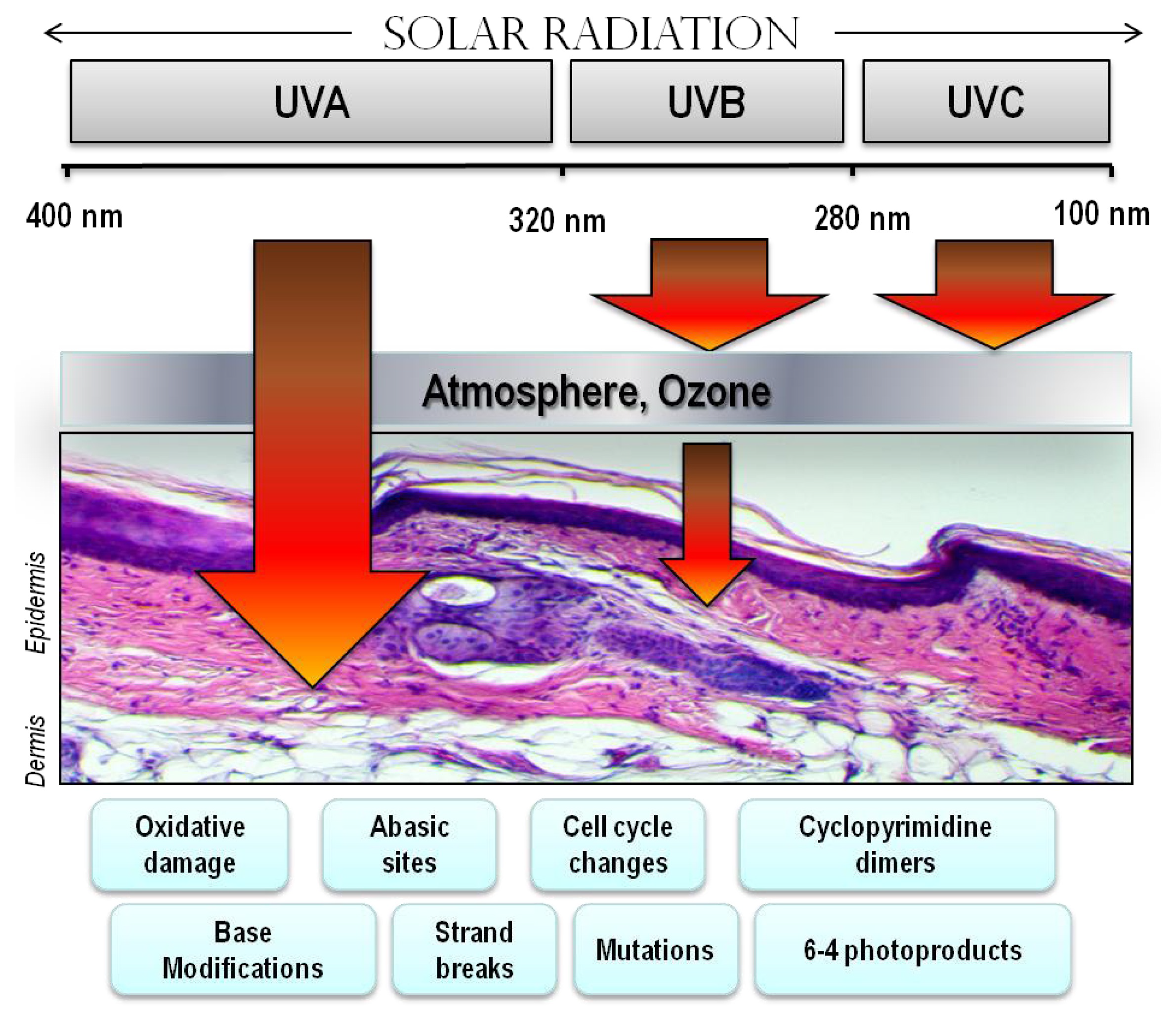 Source:
https://www.mdpi.com/1422-0067/14/6/12222
Table 1.
UV Dose (mJ/cm) | Mutation Rate (mutations per million cells) |
|---|
0 | 5 |
25 | 20 |
50 | 55 |
75 | 110 |
100 | 200 |
150 | 350 |
Graph of Information - Figure 1.
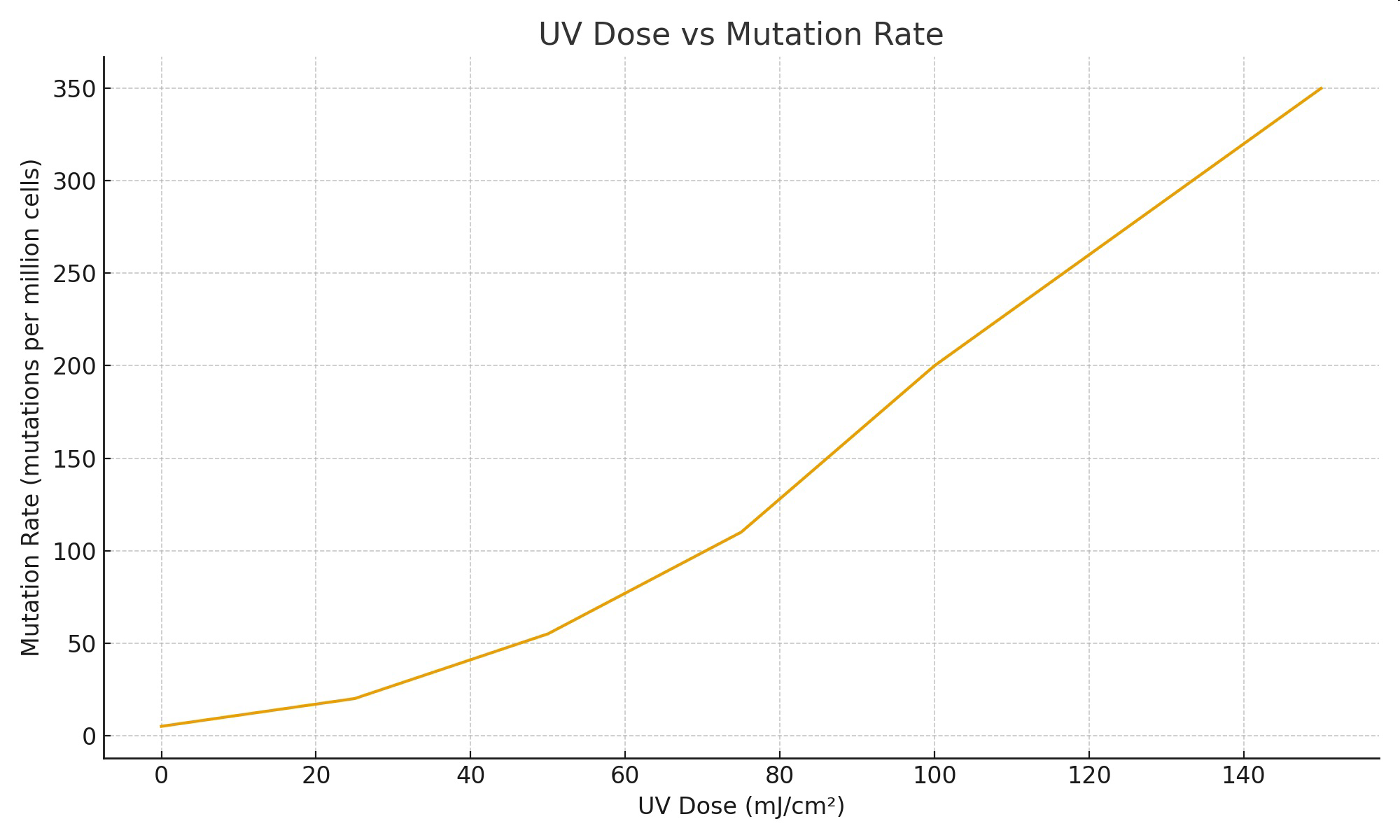
Table 2.
Cell Type | UV Dose (mJ/cm) | Percent DNA Damage Repaired (%) |
|---|
Normal | 25 | 85 |
Normal | 50 | 70 |
Normal | 100 | 45 |
XP | 25 | 40 |
XP | 50 | 20 |
XP | 100 | 5 |
Graph of Information - Figure 2.