Atmospheric CO2 Uptake and Release in the Global Carbon Cycle
Diagram 1.
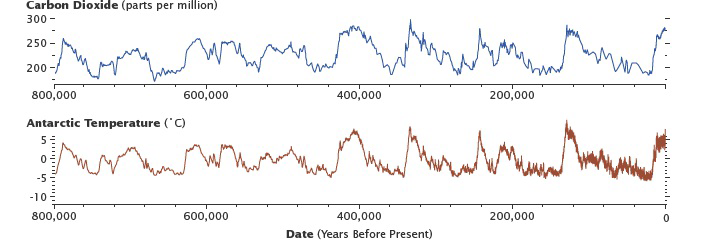
Source: https://www.earthobservatory.nasa.gov/features/CarbonCycle
Carbon continuously cycles among Earth’s major spheres - the atmosphere, hydrosphere, biosphere, and geosphere - through a combination of biological, chemical, and geologic processes. This global carbon cycle maintains relatively stable temperatures by regulating how much heat-trapping carbon dioxide (CO2) remains in the atmosphere. Human activities over the last 150 years have dramatically altered this balance.
In the atmosphere, carbon exists mainly as CO2 and methane. These gases naturally fluctuate due to seasonal plant activity and long-term geologic cycles, but combustion of fossil fuels now adds over 9 gigatons of carbon per year. This CO2 does not remain in the atmosphere permanently. Roughly 25–30% dissolves into the hydrosphere, especially the surface ocean. Cold ocean water absorbs CO2 more effectively than warm water, which is why high-latitude oceans serve as major carbon sinks. Once CO2 dissolves, it forms carbonic acid, bicarbonate ions, and carbonate ions - chemical changes that increase ocean acidity. This process supports the quantitative relationship between atmospheric CO2 increases and declining ocean pH.
The biosphere also exchanges large amounts of carbon. Through photosynthesis, plants remove about 120 gigatons of carbon from the atmosphere each year, incorporating it into biomass. However, cellular respiration, decomposition, and disturbances (such as wildfire) return nearly the same amount. The balance between these processes controls whether the biosphere acts as a carbon sink or a source.
In the geosphere, carbon is stored long-term in rocks, sediments, and fossil fuels. Weathering of silicate rocks removes carbon from the atmosphere over millions of years, while volcanic eruptions return it slowly. Human extraction and combustion of fossil fuels rapidly transfer carbon that was stored for millions of years back to the atmosphere in a matter of decades. This fundamentally disrupts the natural timescales of the carbon cycle.
Diagram 2.
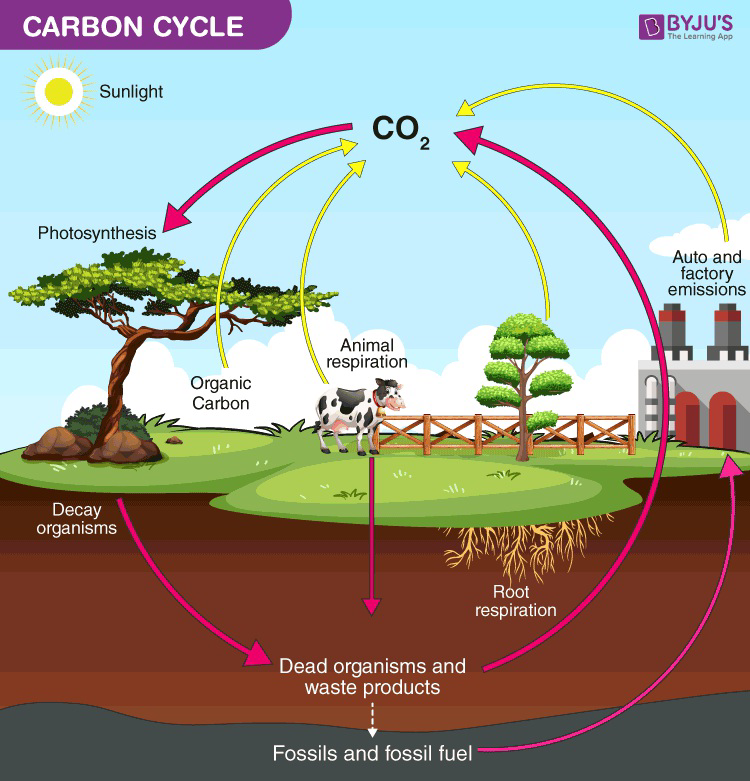 Source:
https://byjus.com/biology/carbon-cycle/
Because carbon fluxes among spheres can be measured in gigatons per year, scientists develop quantitative models that account for inputs, outputs, and net storage. These models allow us to predict how carbon concentrations will change under different scenarios. The evidence overwhelmingly shows that human emissions exceed the combined natural absorption capacity of oceans and land, causing atmospheric $CO_2$ levels to rise steadily. Understanding these quantitative relationships helps explain how carbon moves through Earth systems - and how human activity is altering that movement.
Table 1.
Flux Pathway | Carbon Flux (GtC/year) |
|---|
Atmosphere to Ocean | 90 |
Ocean to Atmosphere | 88 |
Atmosphere to Terrestrial Plants | 120 |
Plants to Atmosphere (Respiration) | 119 |
Fossil Fuel Combustion to Atmosphere | 9 |
Geosphere to Atmosphere (Volcanic CO$_2$) | 0.3 |
Graph of Information - Figure 1.
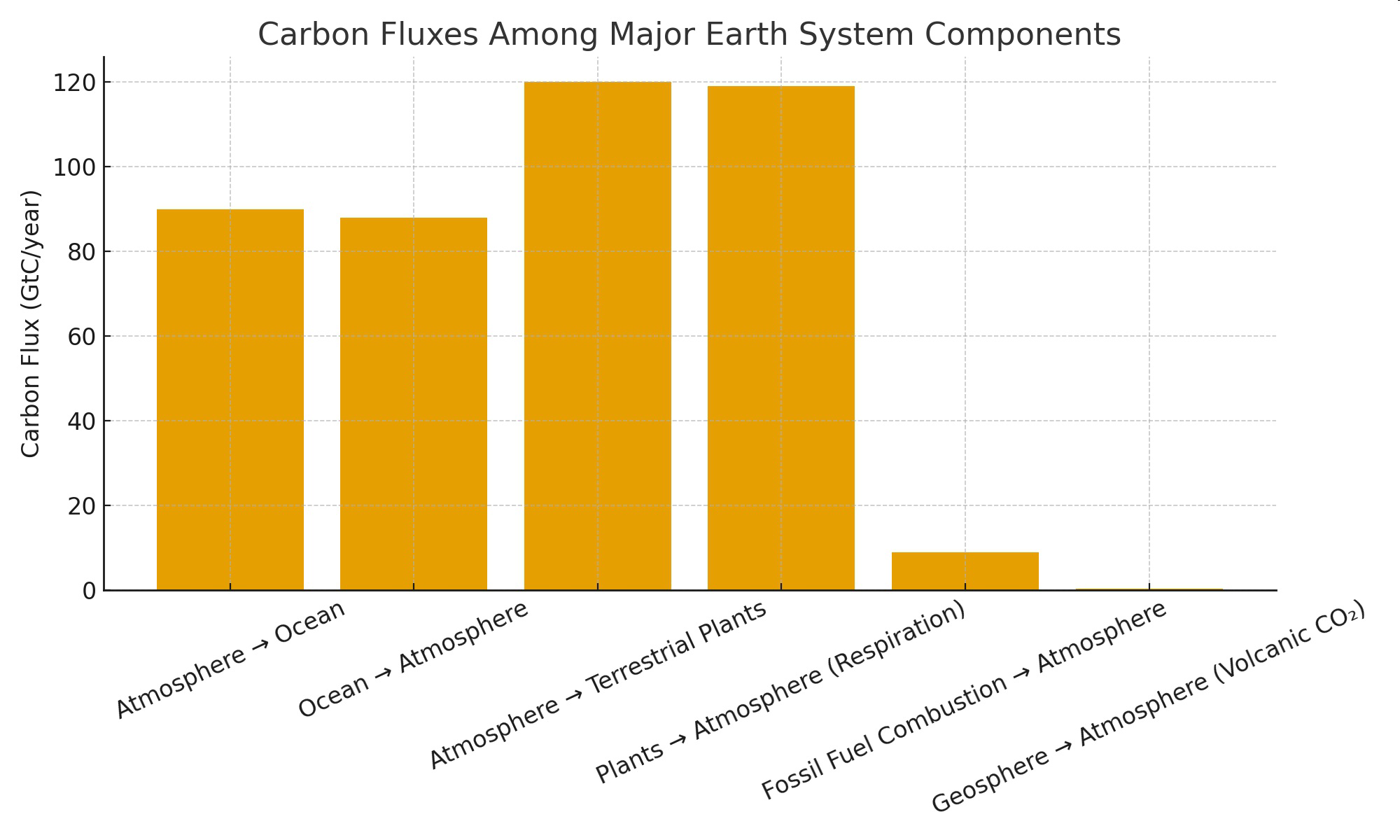
Table 2.
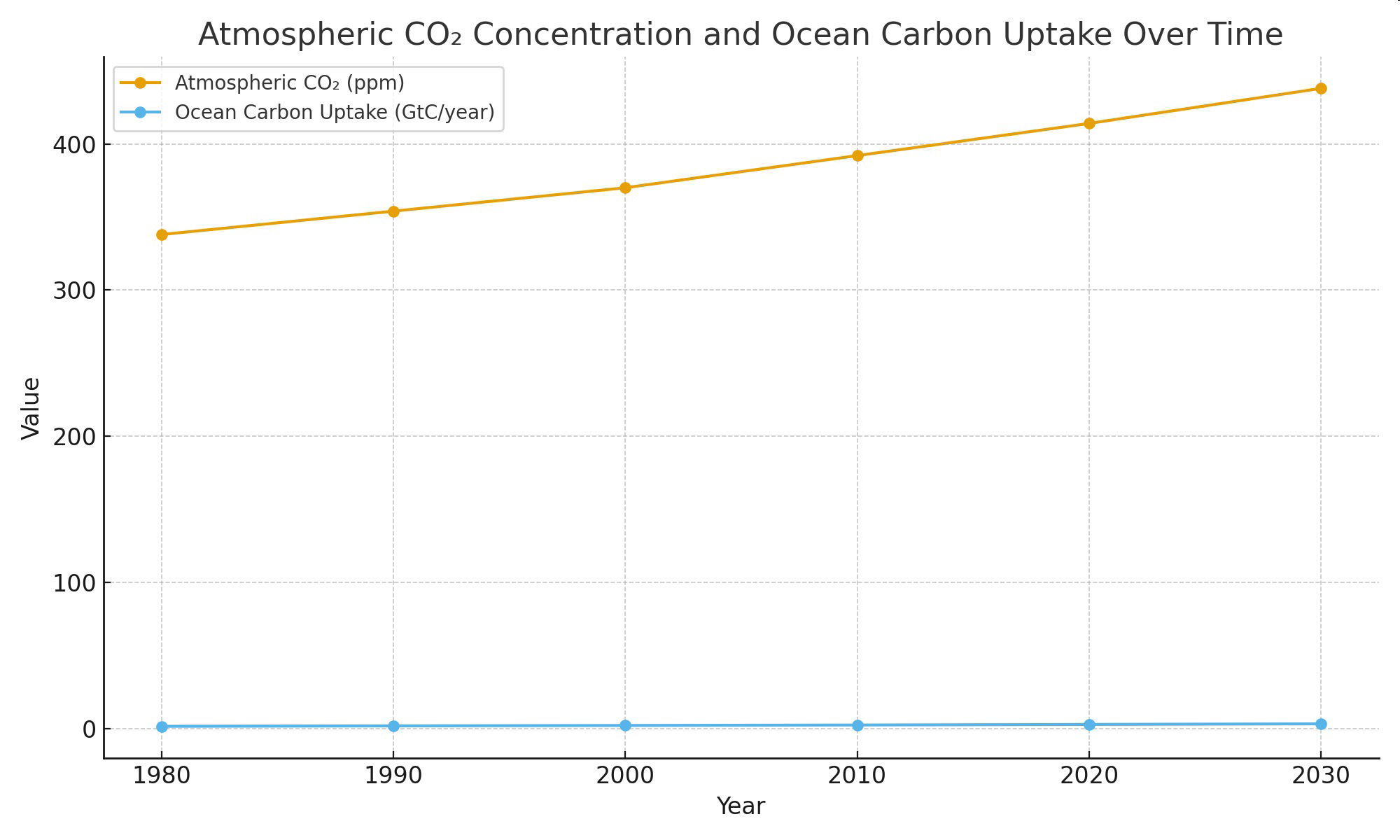
Year | Atmospheric CO$_2$ (ppm) | Ocean Carbon Uptake (GtC/year) |
|---|
1980 | 338 | 1.6 |
1990 | 354 | 1.9 |
2000 | 370 | 2.2 |
2010 | 392 | 2.5 |
2020 | 414 | 2.9 |
2030 | 438 | 3.3 |
Graph of Information - Figure 2.