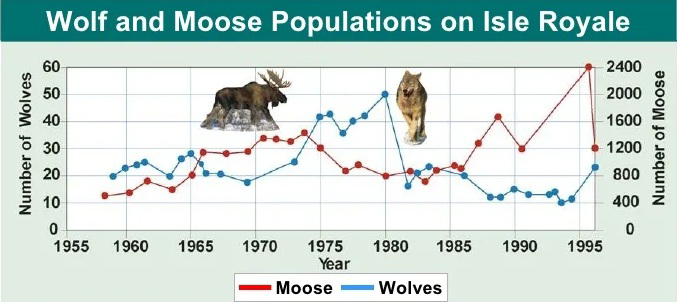
Carrying Capacity on Isle Royale
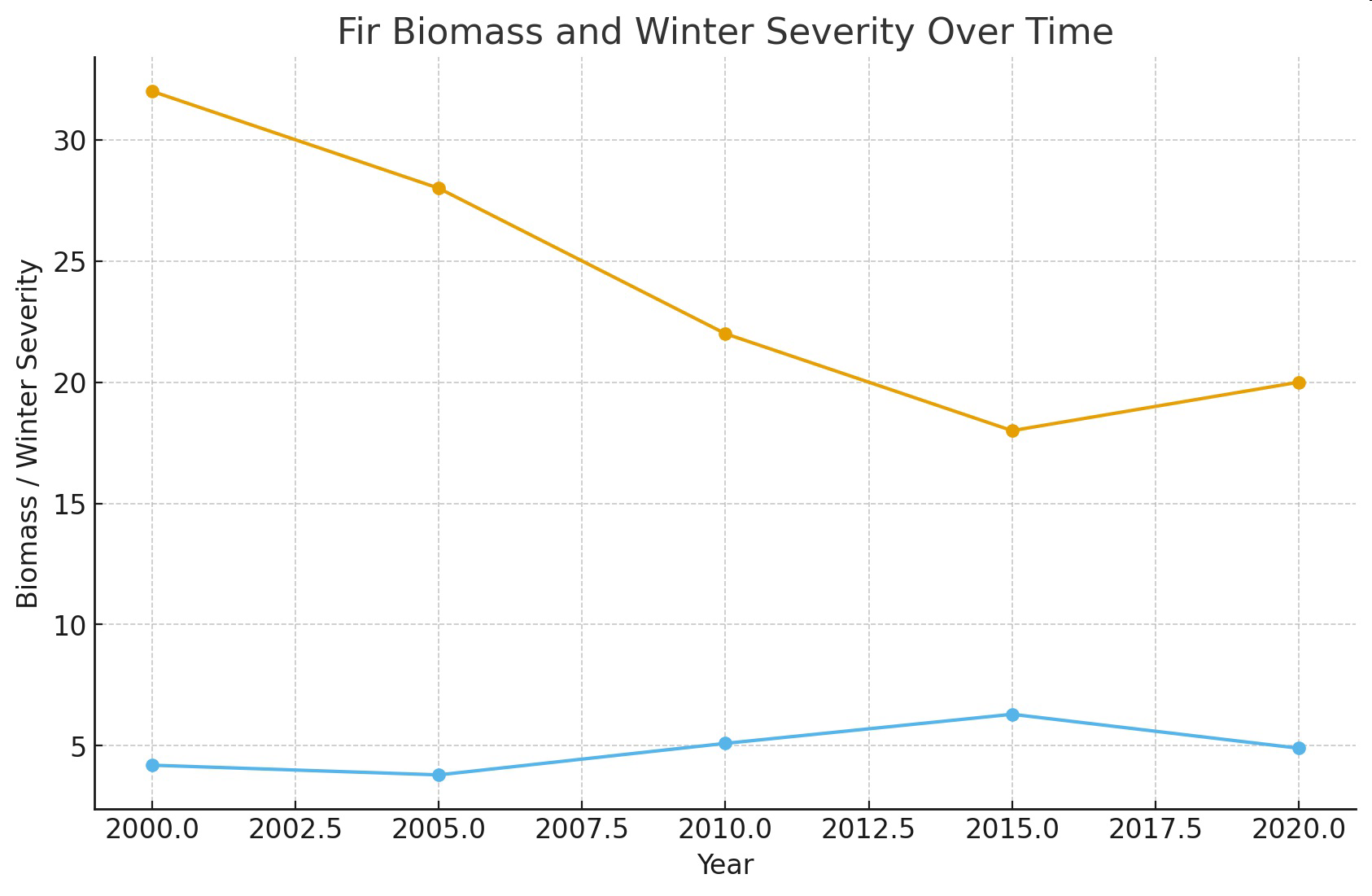
Diagram 1.
 Source: https://www.slideshare.net/slideshow/chapter-3-5-lecture-ecology-population-growth/1224549
Isle Royale, a remote island in Lake Superior, provides one of the world’s best long-term case studies on how biotic and abiotic factors interact to determine an ecosystem’s carrying capacity. The island has only a few large mammals - primarily moose and wolves - and a relatively simple food web dominated by balsam fir forests. Because human influence is limited, ecological data from Isle Royale reveal clear mathematical patterns linking population size to food resources, predators, and weather conditions.
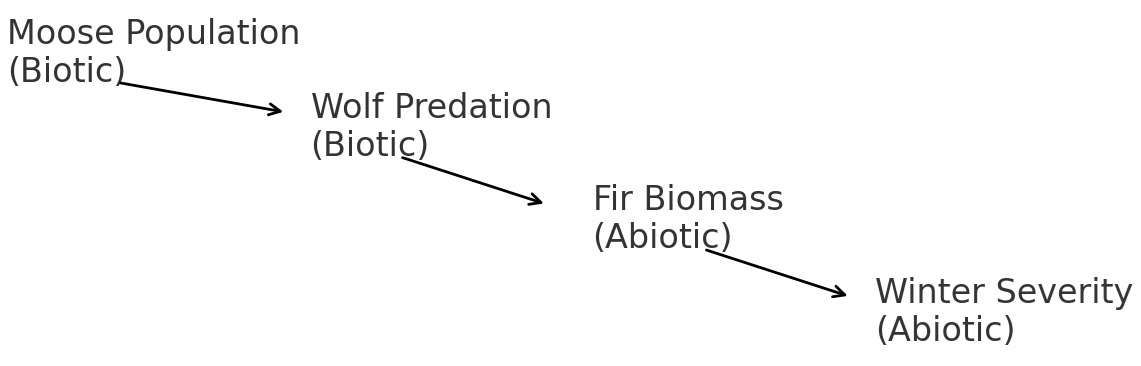
Moose depend heavily on balsam fir as their primary winter food source. When balsam fir biomass is high, moose have abundant resources, and their population grows rapidly. However, as the moose population rises, they consume more fir than the trees can regrow. Overbrowsing reduces fir biomass, lowering food availability. This reduction in the abiotic resource base decreases the island’s carrying capacity for moose, causing the population to decline in following years.
Wolves introduce a major biotic limiting factor. As predators, they reduce moose population size and help prevent extreme overbrowsing. When wolf numbers are healthy, they stabilize the moose population by removing weaker individuals and slowing population expansion. But when wolf numbers fall - due to disease, inbreeding, or severe winters - the moose population can grow beyond sustainable levels. This leads to vegetation collapse, which in turn causes sharp moose population declines.
Abiotic factors also play a significant role. Winter severity determines how much energy moose must expend to survive and affects their access to food. Harsh winters increase mortality and reduce calf survival. Climate conditions also influence tree growth and regeneration, altering the ecosystem’s ability to support herbivores. These weather-driven fluctuations cause the carrying capacity of the island to change from decade to decade.
Table 1.
Year | Moose Population | Wolf Population |
|---|
2000 | 900 | 20 |
2005 | 1100 | 25 |
2010 | 700 | 10 |
2015 | 1400 | 3 |
2020 | 1000 | 15 |
Diagram 2.
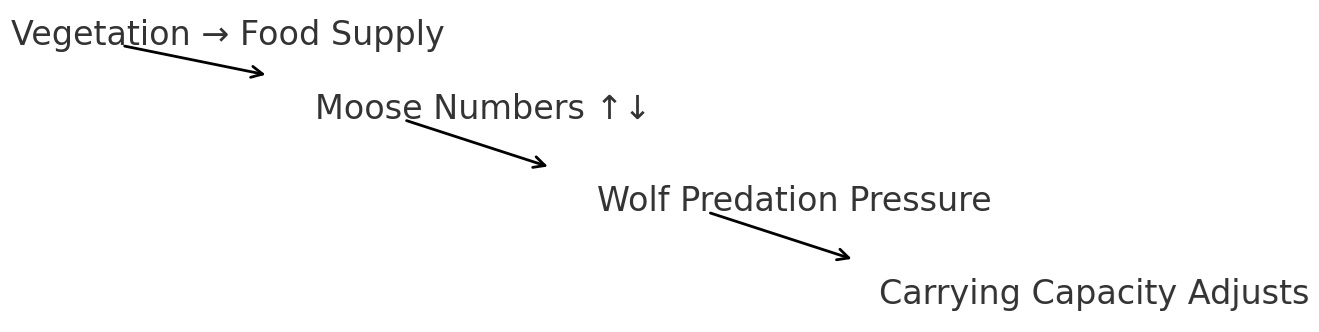
Graph of Information - Figure 1.
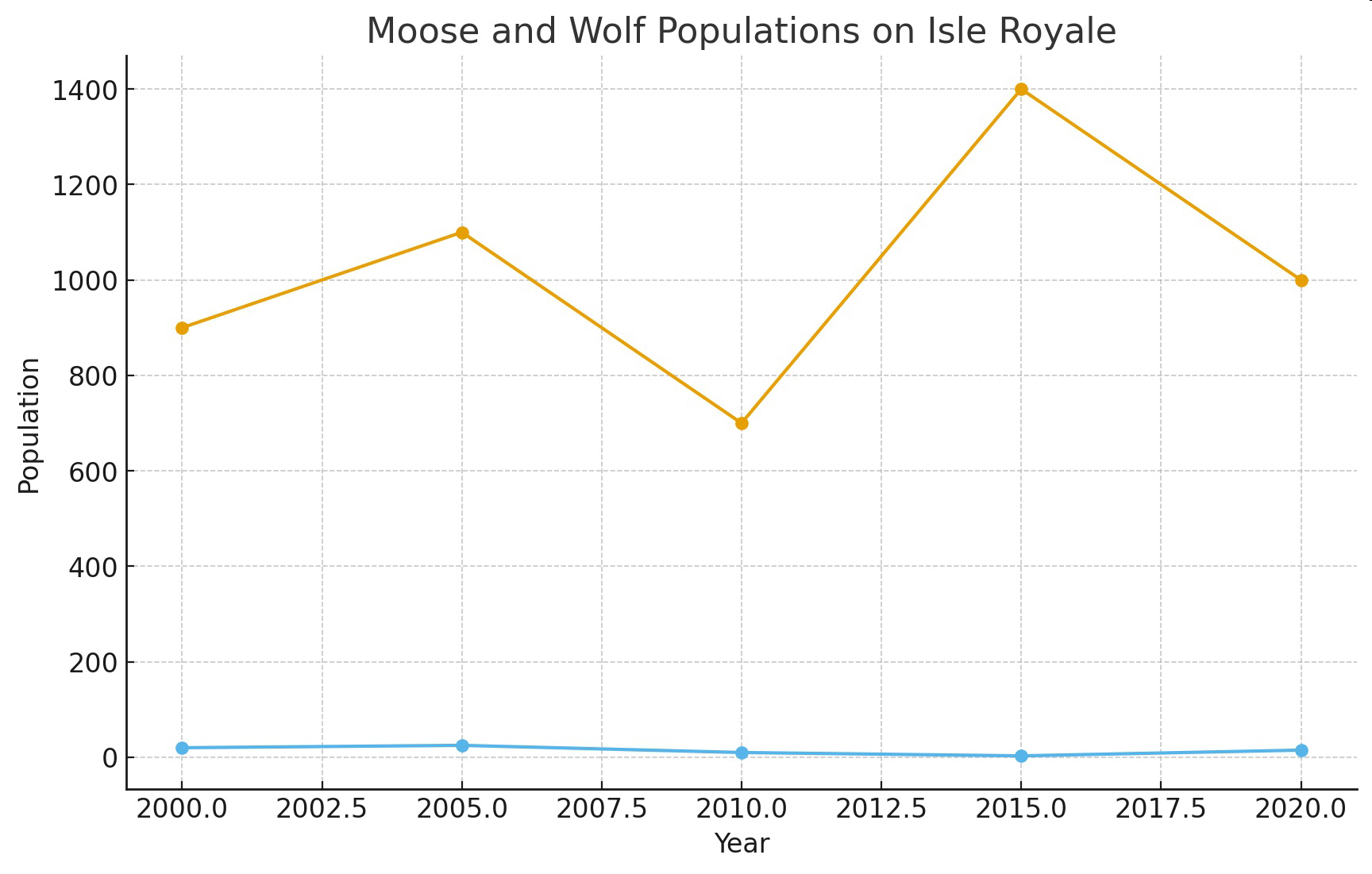
Table 2.
Year | Fir Biomass t/ha | Winter Severity Index |
|---|
2000 | 32 | 4.2 |
2005 | 28 | 3.8 |
2010 | 22 | 5.1 |
2015 | 18 | 6.3 |
2020 | 20 | 4.9 |
Diagram 3.
Graph of Information - Figure 2.