Coevolution of Land Plants and Atmospheric CO2 Drawdown
When plants first appeared on land about 470 million years ago during the Ordovician Period, Earth’s atmosphere contained far higher levels of carbon dioxide (CO$_2$) than today - possibly more than 10 times modern concentrations. Early land plants were small, rootless organisms, but even these early species began altering the carbon cycle. They absorbed CO$_2$ for photosynthesis and released oxygen, but their largest impact came from the way they changed Earth’s surface.
Diagram 1.
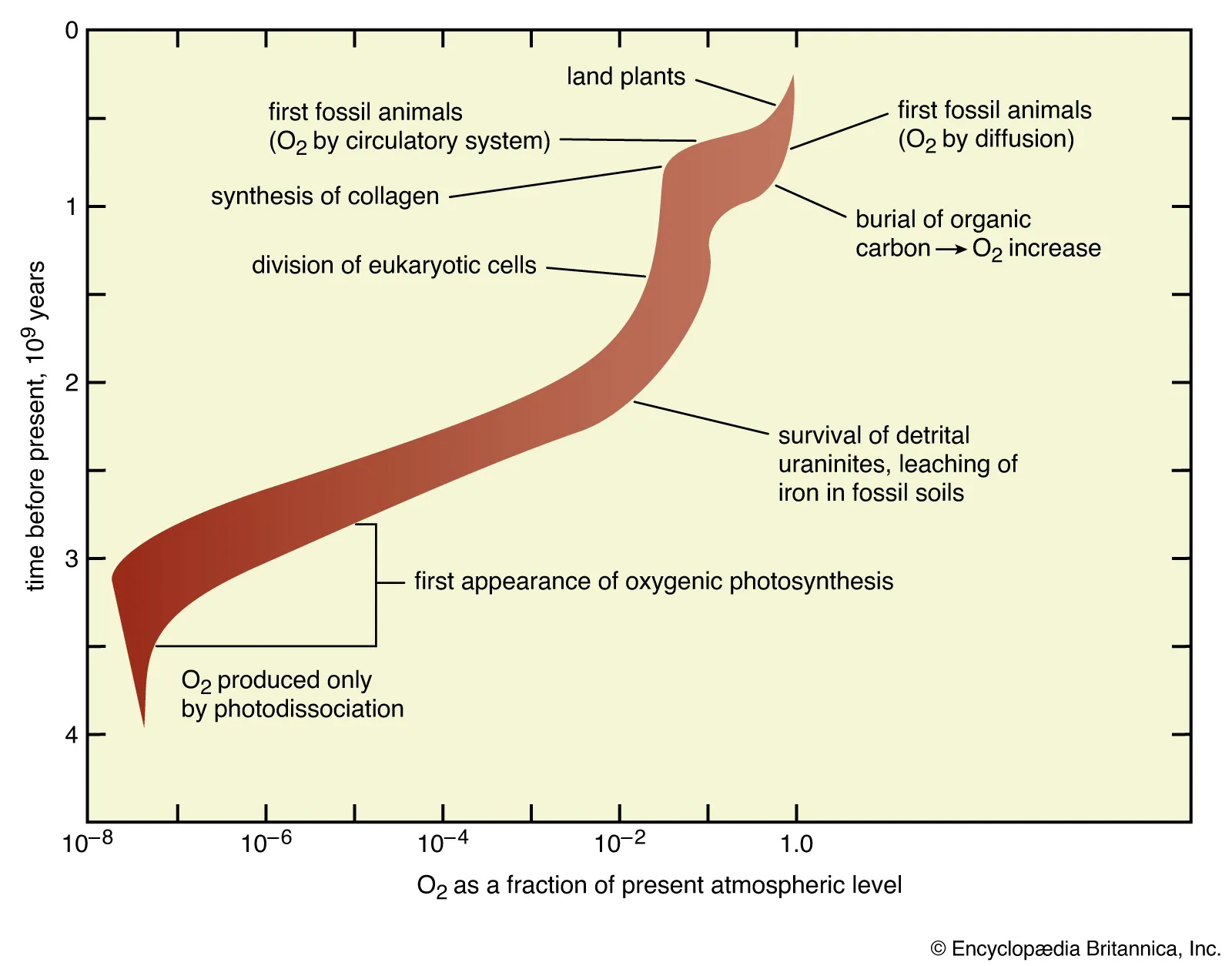 Source: https://www.britannica.com/science/degassing
Once plants evolved true roots, they began to physically and chemically break down rock minerals in a process known as biological weathering. Root systems released organic acids that dissolved minerals such as calcium and magnesium silicates. When these minerals combined with dissolved CO$_2$, they formed carbonate compounds that were eventually transported to the ocean and buried in marine sediments. This process removed CO$_2$ from the atmosphere over long timescales, storing it in Earth’s geosphere.
As land plants diversified, the development of vascular tissues allowed plants to grow larger and colonize more environments. Forest ecosystems expanded dramatically during the Devonian and Carboniferous Periods. Vast swamp forests stored massive amounts of carbon in plant tissues. Much of this organic carbon was buried in low-oxygen environments, forming today’s coal deposits. This high rate of carbon burial contributed to steep declines in atmospheric CO$_2$ and helped cause long-term global cooling events.
Fossil leaf stomata provide evidence of past atmospheric CO$_2$ levels. Plants adjust the number of stomata (tiny leaf pores) based on CO$_2$ concentration - fewer stomata form when CO$_2$ is high, and more develop when CO$_2$ is low. Fossil stomatal density data show a steady decline in CO$_2$ from the Devonian through the late Paleozoic, corresponding to major expansions of forest ecosystems.
At the same time, climate models show that global temperatures decreased as atmospheric CO$_2$ fell, supporting the idea that plant evolution contributed to large-scale climate regulation. In turn, cooler climates influenced the types of plants that evolved, demonstrating a feedback loop: plants changed the climate, and climate changes shaped plant evolution.
Together, these lines of evidence show that the carbon cycle and plant evolution are deeply interconnected. Land plants were not simply responding to Earth’s environment - they were major drivers of long-term atmospheric CO$_2$ drawdown and played a crucial role in coevolving with Earth’s climate systems.
Diagram 2.
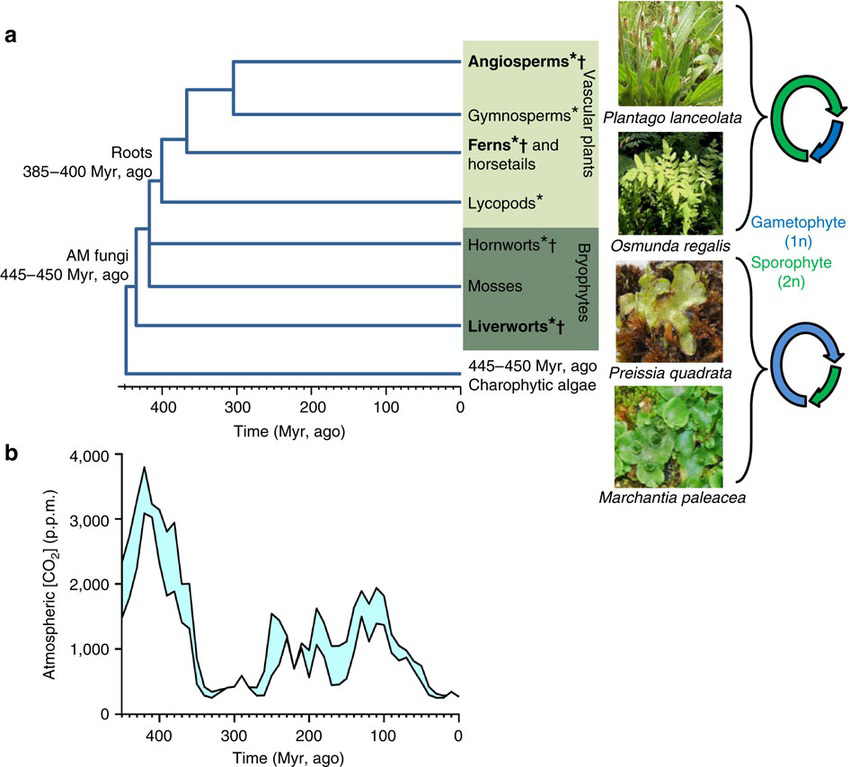
Source: https://www.researchgate.net/figure/Co-evolution-of-land-plant-lifecycles-and-atmospheric-CO2-concentrations-a-depicts
Table 1.
Time (million years ago) | Atmospheric CO2 (ppm) | Land Plant Biomass Index |
|---|
480 | 4200 | 5 |
450 | 3800 | 20 |
420 | 3200 | 45 |
390 | 2600 | 70 |
360 | 1800 | 85 |
330 | 1200 | 95 |
Graph of Information - Figure 1.
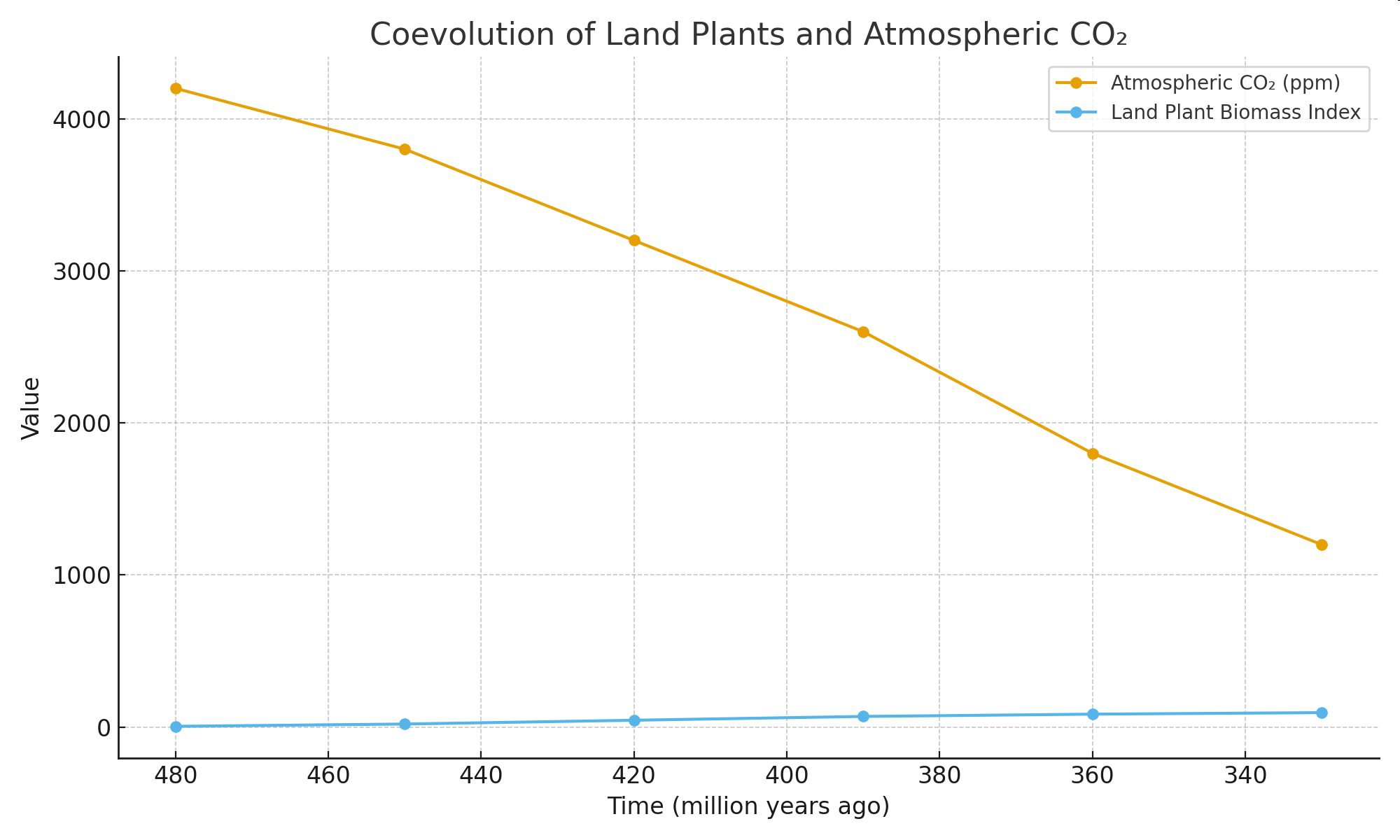
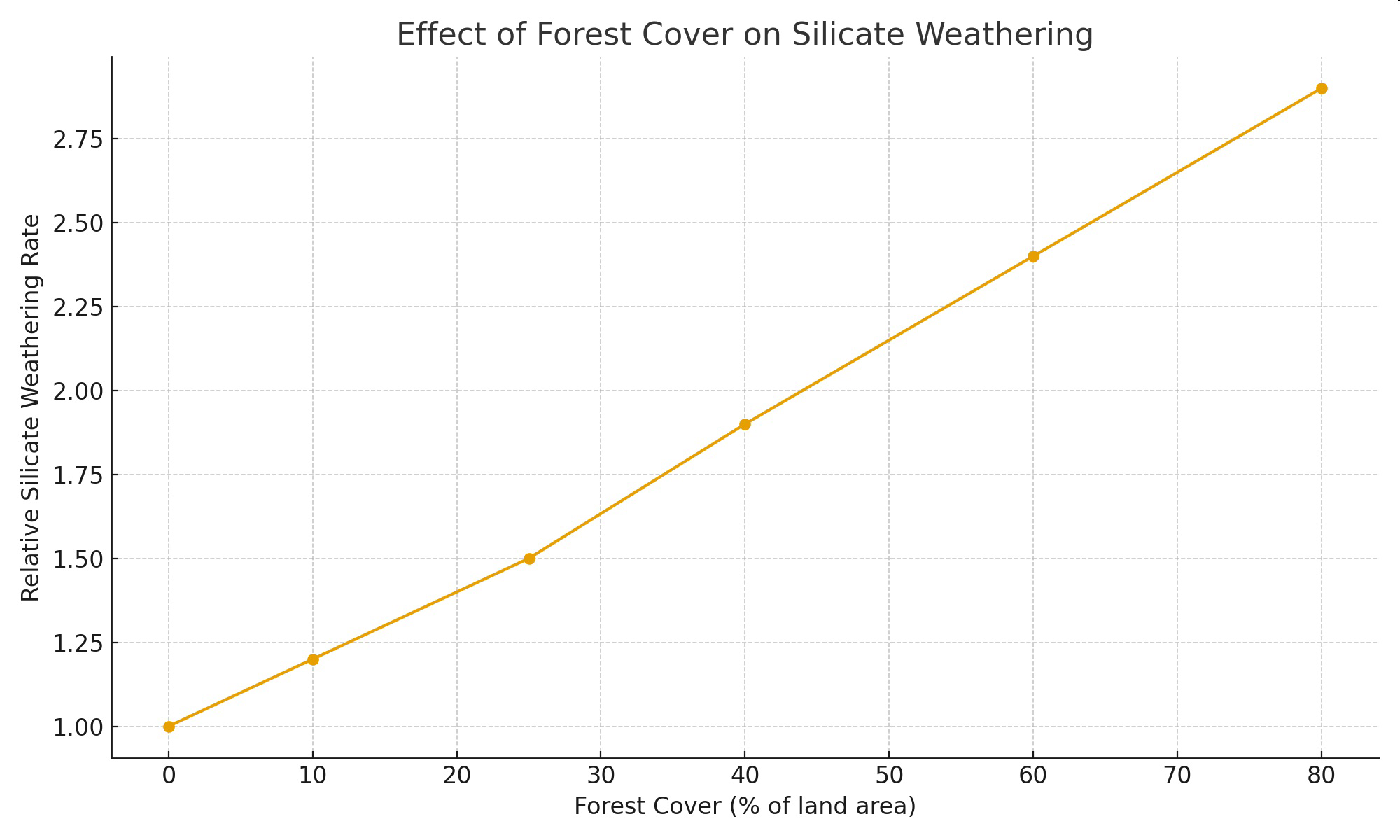
Table 2.
Forest Cover (% of land area) | Relative Silicate Weathering Rate |
|---|
0 | 1 |
10 | 1.2 |
25 | 1.5 |
40 | 1.9 |
60 | 2.4 |
80 | 2.9 |
Graph of Information - Figure 2.