Cold-Related Deaths
Key Points
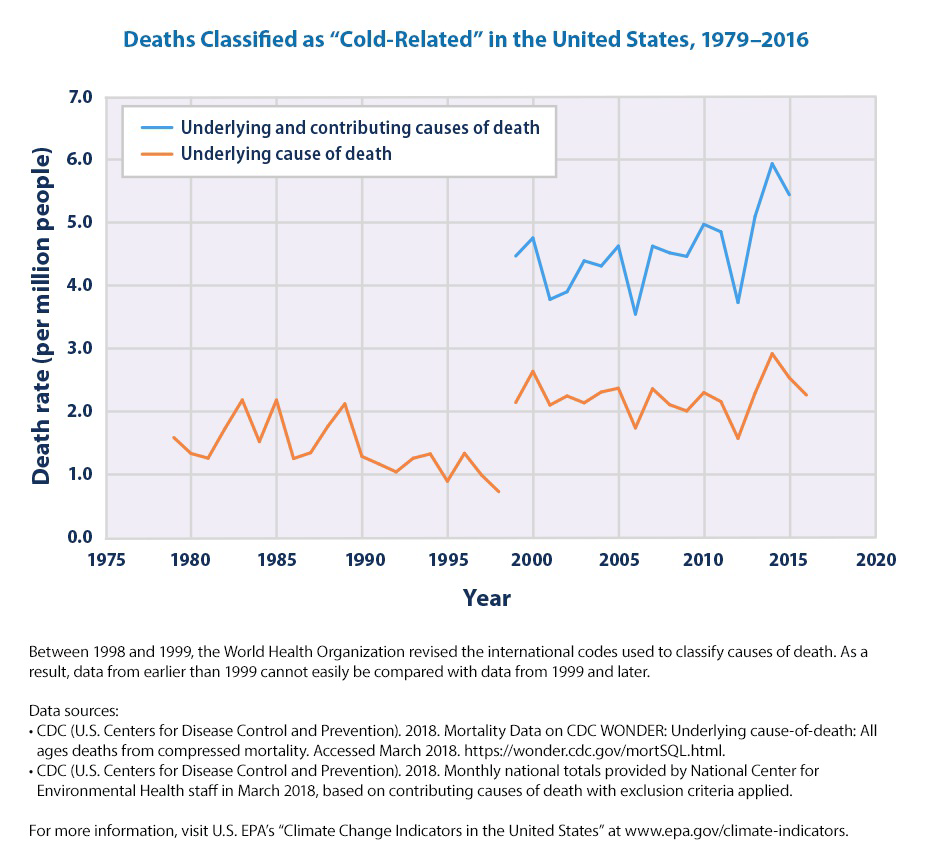
Between 1979 and 2016, the death rate as a direct result of exposure to cold (underlying cause of death) generally ranged from 1 to 2.5 deaths per million people, with year-to-year fluctuations (see Figure 1). Overall, a total of more than 19,000 Americans have died from cold-related causes since 1979, according to death certificates.
For years in which the two records overlap (1999–2015), accounting for those additional deaths in which cold was listed as a contributing factor results in a higher death rate - more than double for most years - compared with the estimate that only includes deaths where cold was listed as the underlying cause (see Figure 1).
While increases in deaths are generally associated with colder temperatures, some winter deaths are due to factors other than exposure to cold conditions. For example, winter is typically flu season. In other cases, even if cold exposure contributes to a death, it may not be reported as “cold-related” on a death certificate. These limitations, as well as year-to-year variability in the data and a change in classification codes in the late 1990s, make it difficult to determine whether the United States has experienced a meaningful increase or decrease in deaths classified as “cold-related” over time.
Background
In recent years, U.S. death rates in winter months have been 8 to 12 percent higher than in non-winter months. Much of this increase relates to seasonal changes in behavior and the human body, as well as increased exposure to respiratory diseases. Cold temperatures can also worsen pre-existing medical conditions such as cardiovascular and respiratory diseases. For example, death rates from heart attacks increase as temperatures drop, likely due to the way cold affects blood circulation, blood vessels, and other factors. Even moderately cold days can increase the risk of death for many people. People exposed to extremely cold conditions can also suffer from direct effects such as frostbite and potentially deadly hypothermia, especially in places where people are not accustomed to cold temperatures.
Certain population groups face higher risks of cold-related illness or death. For example, occupational groups that work outdoors during winter months, such as agricultural workers, construction workers, and electricity and pipeline utility workers, face higher risks of exposure to cold. Others at risk include older adults, infants, people with pre-existing medical conditions, people taking medications or using drugs (especially alcohol) that make them more susceptible to cold effects, homeless people, and those with inadequate winter clothing or home heating.
Unusually cold winter temperatures have become less common across the contiguous 48 states in recent decades, particularly very cold nights (see the High and Low Temperatures indicator). Extreme cold waves are likely to continue to decrease as winter temperatures increase in the future. This winter warming is expected to reduce the number of direct cold-related deaths, but the decrease is projected to be smaller than increases in heat-related deaths (see the Heat-Related Deaths indicator) in most regions. This is because some of the factors that lead to higher death rates in the winter are not particularly sensitive to climate change, because extreme heat has a more immediate and direct effect on death rates than extreme cold, and because the solutions to protect against cold exposure (such as staying indoors, wearing more clothing, turning on the heat) are more widely accessible than protection against extreme heat. Cold-related death rates can change as communities strengthen their cold weather plans and take other steps to protect vulnerable people during cold winter months.
Graph of Information - Figure 1
This figure shows the annual rates for deaths classified as “cold-related” by medical professionals in the 50 states and the District of Columbia. The orange line shows deaths for which cold was listed as the main
(underlying) cause.* The blue line shows deaths for which cold was listed as either the underlying or contributing cause of death, based on a broader set of data that became available in 1999.