Cooperative Hunting in Wolf Packs and Reproductive Success
Gray wolves ($Canis lupus$) are highly social carnivores that depend on pack cooperation for survival. Living in coordinated packs allows wolves to hunt prey much larger than any individual wolf could capture alone - such as elk, moose, and bison. Cooperative hunting is a key example of group behavior that improves both individual survival and reproductive success.
Wolves use complex strategies when hunting large prey. A pack may track an elk herd, identify weak or isolated individuals, and then split into specialized roles. Some wolves perform flanking maneuvers, others chase and exhaust the prey, and dominant individuals often deliver the final bite. This cooperative division of labor dramatically increases success: while solitary wolves rarely bring down large prey, packs have much higher kill rates.
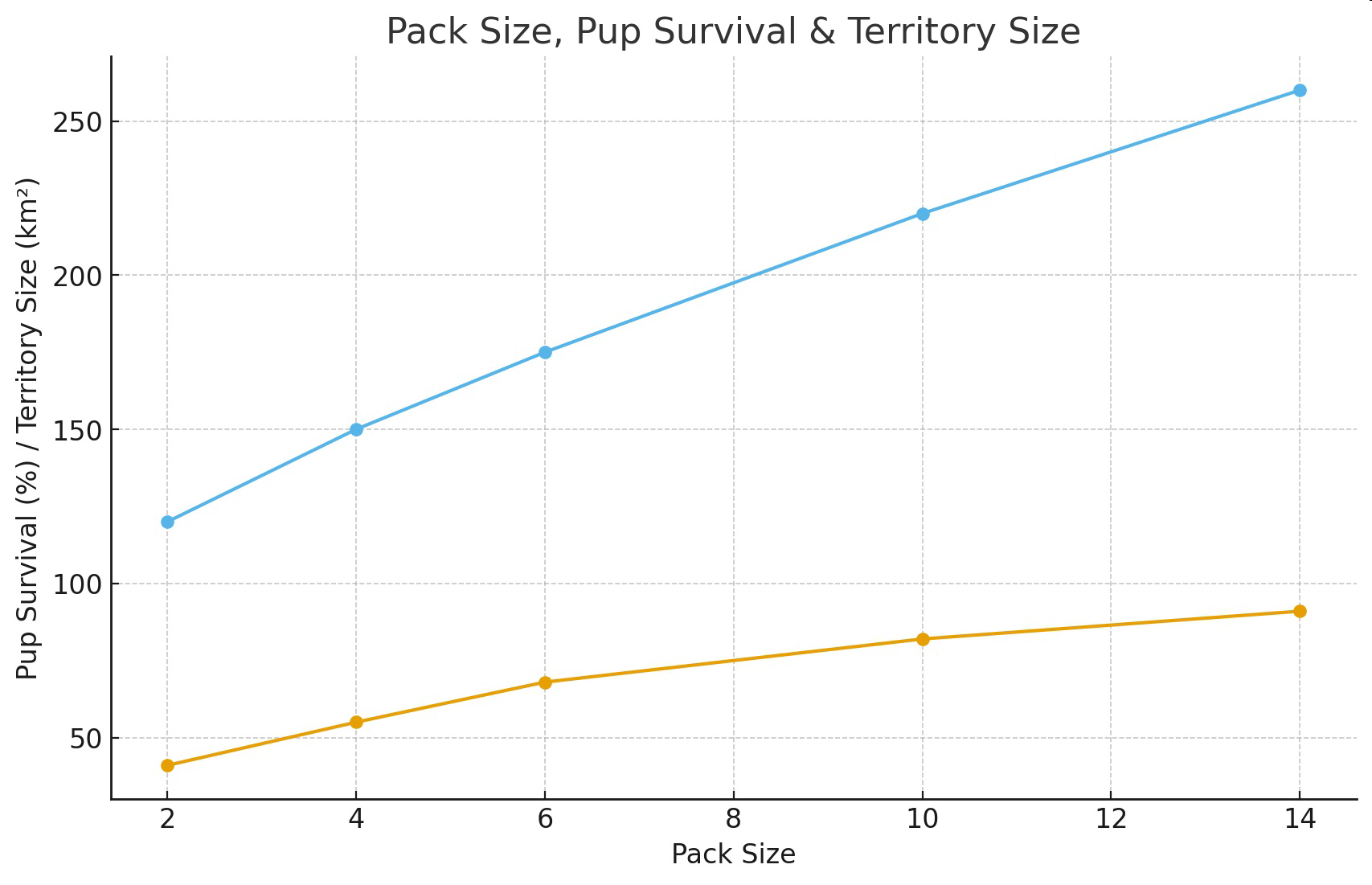
The benefits extend beyond successful hunts. Increased food availability leads to stronger adults, higher pup provisioning, and greater reproductive output. Well-fed wolves maintain larger territories, defend dens more effectively, and raise larger litters. Pup survival is tightly linked to pack size—larger packs deliver more food and offer more protection from predators or rival wolf groups.
Researchers quantify these relationships using metrics such as pack size, hunt success rate, territory size, and pup survival percentages. Mathematical data show that as pack size increases, hunting success rises steeply, and survival of pups increases in parallel. These data demonstrate clear evidence that cooperative hunting is an evolved behavioral strategy that enhances fitness at both individual and population levels.
By hunting together, wolves maintain population stability, regulate prey populations, and contribute to overall ecosystem balance. Group hunting behavior is therefore essential not only for wolf survival but also for maintaining biodiversity in the ecosystems they inhabit.
Diagram 1.
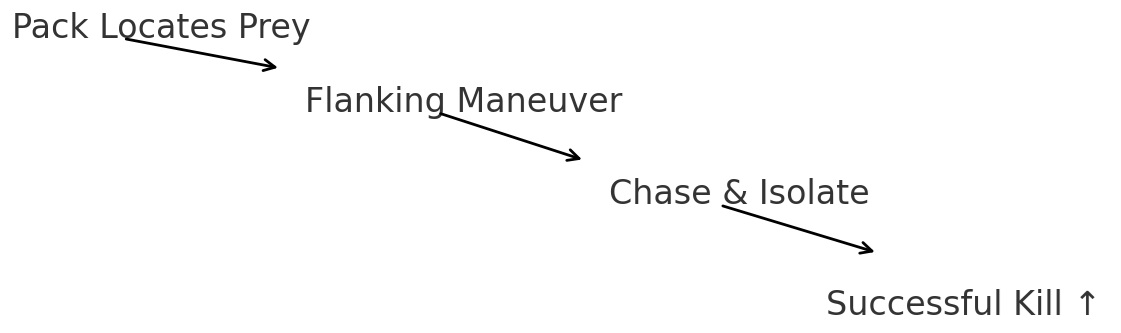
Table 1.
Pack Size | Hunts Attempted | Successful Hunts |
|---|
1 | 20 | 3 |
3 | 20 | 7 |
5 | 20 | 12 |
8 | 20 | 15 |
12 | 20 | 17 |
Graph of Information - Figure 1.
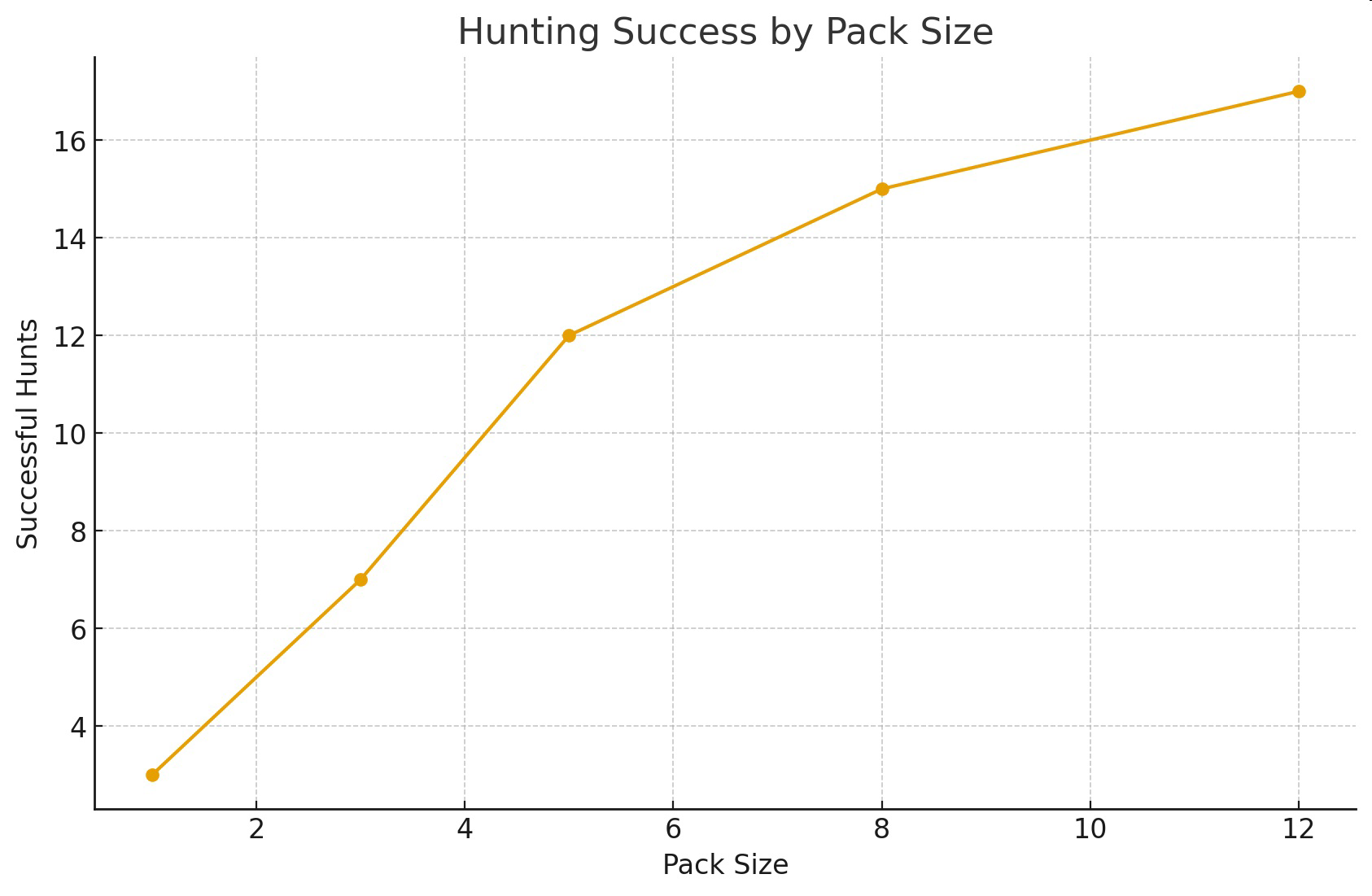
Diagram 2.
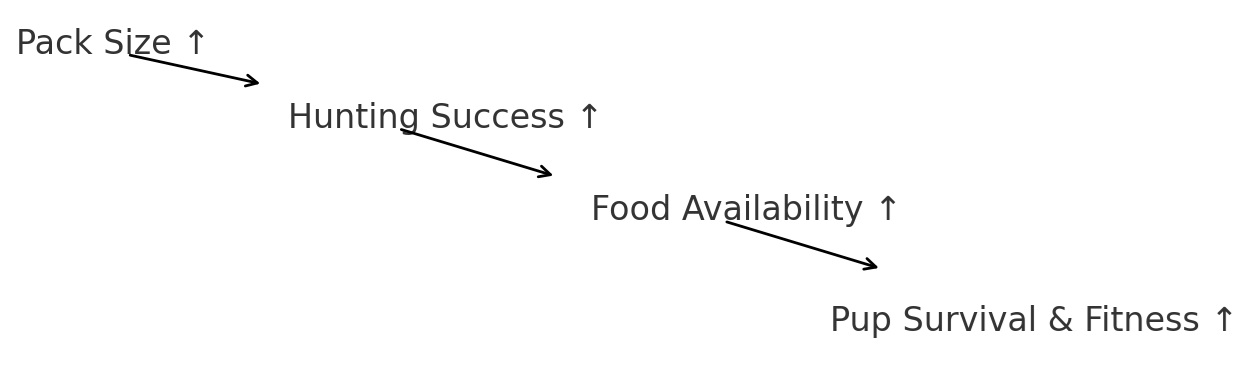
Table 2.
Pack Size | Pup Survival % | Territory Size km$^2$ |
|---|
2 | 41 | 120 |
4 | 55 | 150 |
6 | 68 | 175 |
10 | 82 | 220 |
14 | 91 | 260 |
Graph of Information - Figure 2.