Coral Reef Biodiversity Under Multiple Stressors
Coral reefs are among the most biodiverse ecosystems on Earth, but they are increasingly threatened by multiple interacting stressors. Changes in ocean temperature, pH, bleaching frequency, and herbivore abundance all influence biodiversity patterns across coral reef systems. Because biodiversity responds to both biotic and abiotic factors, reefs offer a clear real-world example of how mathematical representations can be used to support or revise explanations about population and diversity changes at different scales.
Corals live in a narrow temperature range, and even small increases in ocean temperature cause physiological stress. When temperatures spike, corals expel their symbiotic algae, resulting in bleaching. Bleached corals have reduced growth, lower reproductive success, and higher mortality. As bleaching events become more frequent, coral cover declines. Mathematical datasets show declines from over 40% cover to under 15% within two decades in some regions, correlating with rising temperature anomalies.
Ocean acidification provides another abiotic stressor. As atmospheric CO$_2$ dissolves into seawater, ocean pH decreases. Lower pH reduces calcification rates, making it harder for corals to build skeletons. Long-term pH decline corresponds with reduced coral recruitment and lower overall reef complexity. This decline in habitat structure affects biodiversity at multiple scales - shallow reef flats, mid-reef slopes, and deeper zones all lose species richness as coral architecture deteriorates.
Biotic factors also play crucial roles. Herbivorous fish, such as parrotfish and surgeonfish, help control algae that compete with corals for space. When herbivore populations decline - due to overfishing or coastal development - algae grow unchecked. Algal overgrowth prevents coral larvae from settling, slows recovery after bleaching events, and reduces habitat availability for reef fish. In datasets, herbivore density declines align with increased algal cover and reduced fish species richness.
As coral cover declines and algae expand, fish biodiversity falls. Species that rely on branching corals for shelter and feeding lose essential habitat. Larger predators decline as prey fish become less abundant. Diversity indices show strong declines as environmental conditions worsen.
Mathematical models, trend graphs, and long-term monitoring data allow scientists to connect rising temperature anomalies, falling pH, declining herbivore density, and increasing bleaching severity to measurable losses of biodiversity. By examining coral reefs at multiple scales - from small patch reefs to entire reef systems - students can observe how different factors drive changes in species richness and population distribution.
Diagram 1.
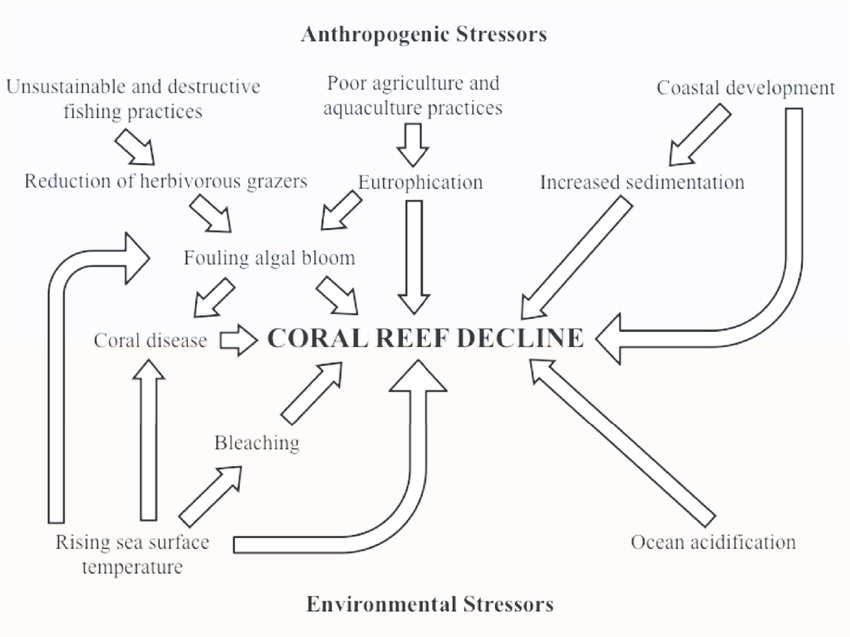 Source:
https://www.researchgate.net/figure/The-impacts-of-environmental-and-anthropogenic-stressors-on-coral-reefs
Diagram 2.
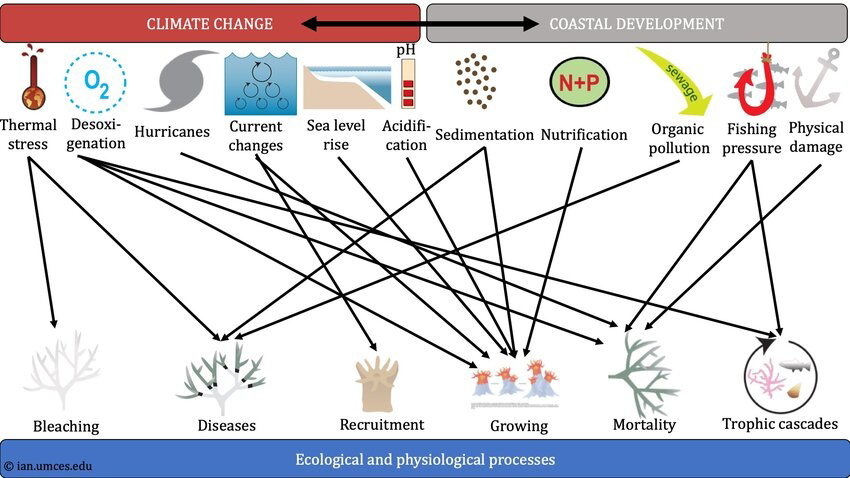
Table 1.
Year | Coral Cover % | Temp Anomaly | Fish Species Richness |
|---|
2000 | 42 | 0.3 | 58 |
2005 | 38 | 0.5 | 55 |
2010 | 29 | 0.7 | 47 |
2015 | 21 | 1 | 39 |
2020 | 14 | 1.3 | 32 |
Graph of Information - Figure 1.
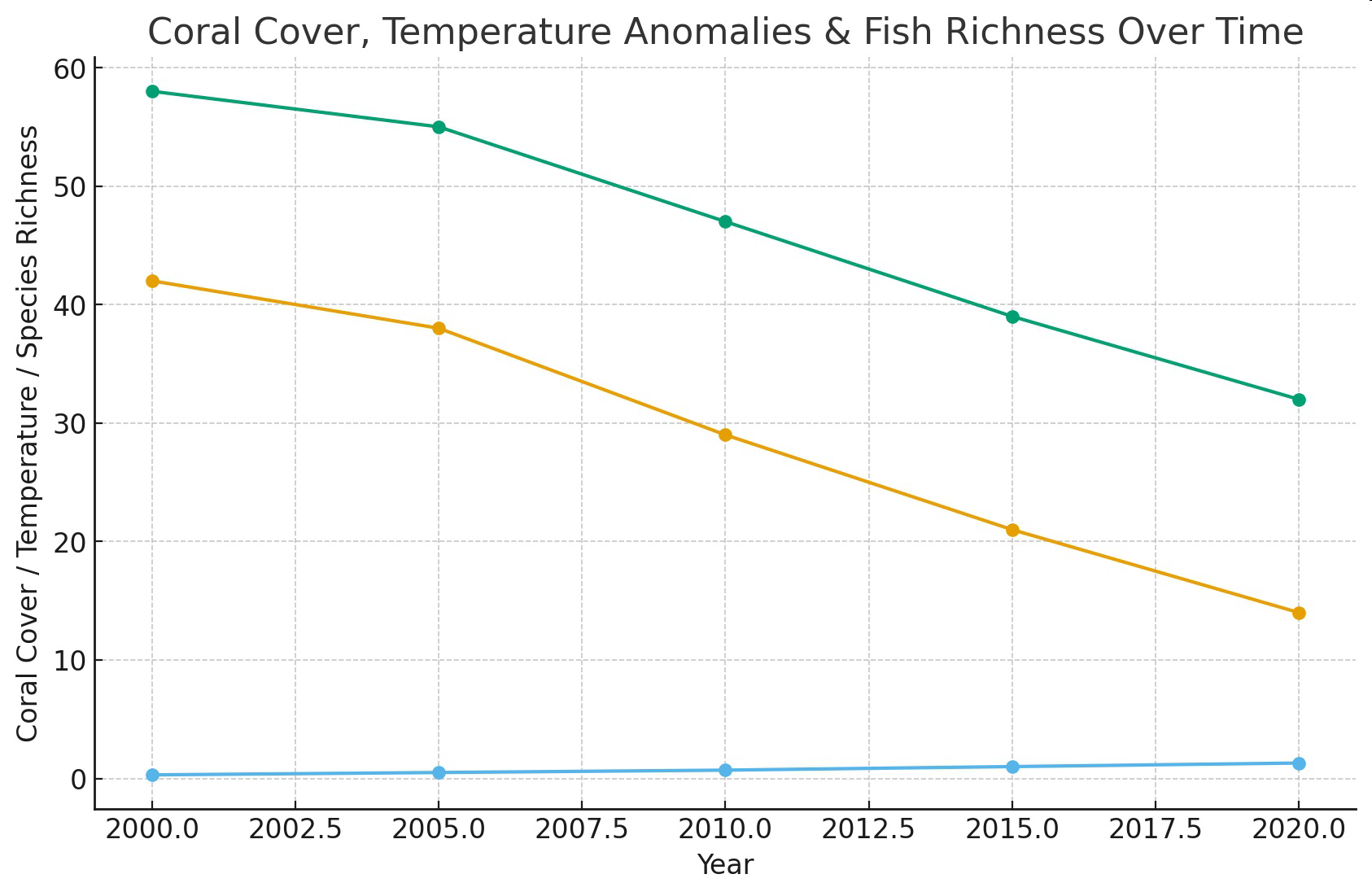
Table 2.
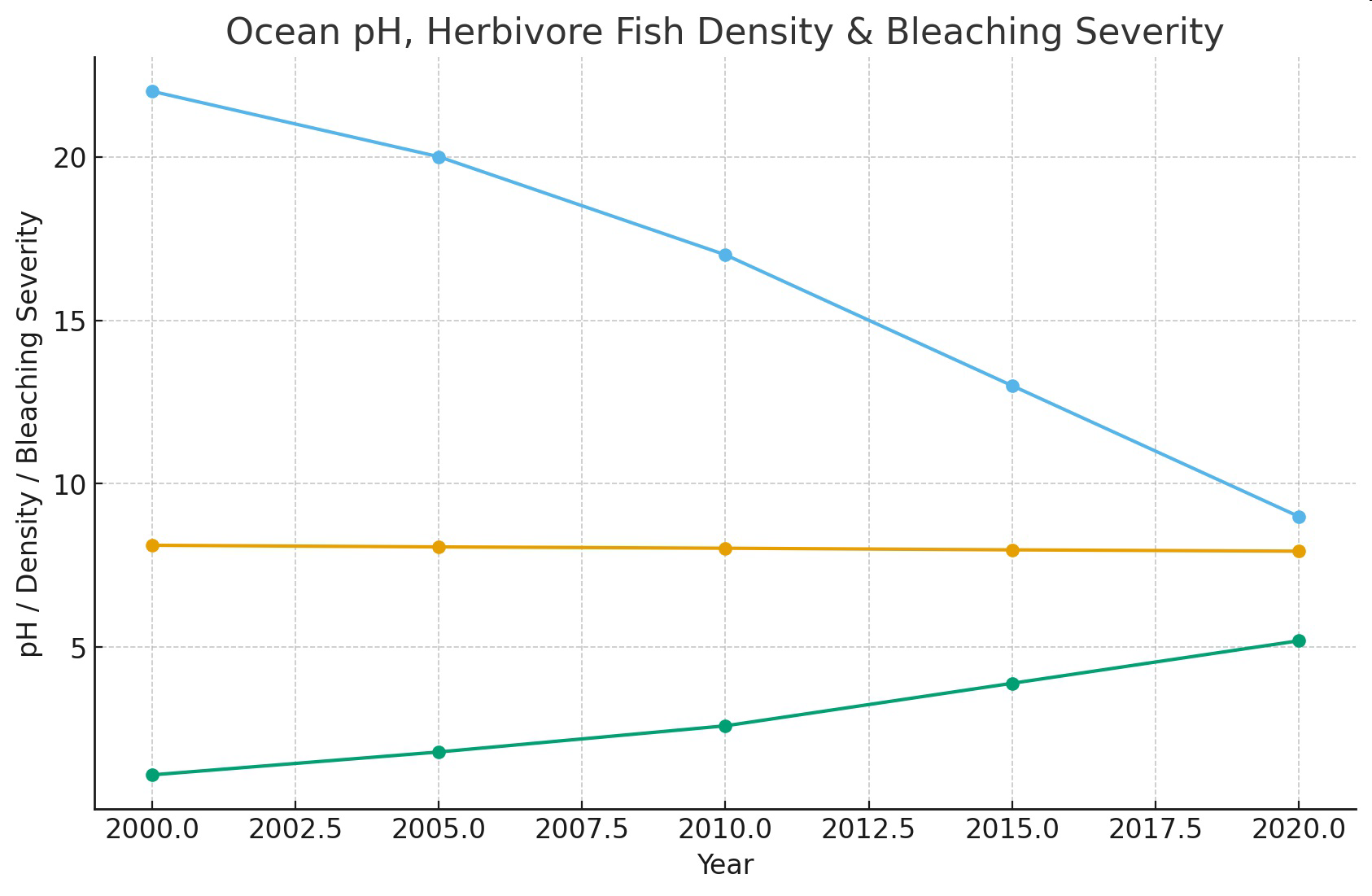
Year | Ocean pH | Herbivore Density fish100/m | Bleaching Severity Index |
|---|
2000 | 8.12 | 22 | 1.1 |
2005 | 8.07 | 20 | 1.8 |
2010 | 8.03 | 17 | 2.6 |
2015 | 7.98 | 13 | 3.9 |
2020 | 7.94 | 9 | 5.2 |
Graph of Information - Figure 2.