Coral Reef Shift to Algal-Dominated Systems After Repeated Bleaching
Coral reefs are among the most diverse ecosystems on the planet, supporting thousands of species of fish, invertebrates, and algae. Their stability depends on a balance of biotic interactions - such as herbivory, coral recruitment, and predator–prey relationships - and abiotic conditions, including light, temperature, and water chemistry. For decades, many reefs maintained relatively stable levels of coral cover. However, repeated thermal stress events linked to climate change have pushed some coral reef ecosystems into entirely new, less diverse ecological states dominated by algae.
Corals depend on symbiotic algae called zooxanthellae for energy. When ocean temperatures rise above normal seasonal highs, corals expel these algae, leading to bleaching. Although corals can survive brief bleaching events, repeated or severe thermal stress causes widespread coral mortality. Data from many reefs show steady declines in coral cover over the last 20 years as warming events have intensified. As corals die, there is less three-dimensional habitat to support reef fishes and invertebrates, and the entire structure of the community begins to shift.
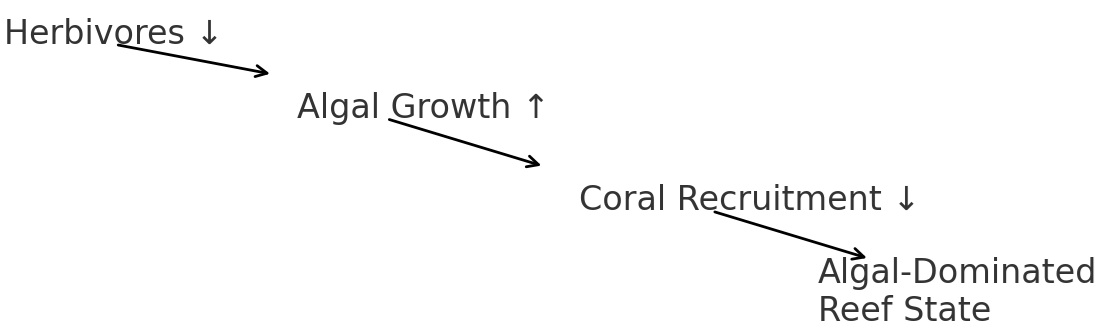
Biotic interactions also contribute to ecosystem change. Herbivorous fish and sea urchins graze algae that compete with corals for space and light. When herbivore biomass declines due to overfishing, disease, or habitat loss, algae can grow unchecked. This decrease in herbivory - combined with declining coral recruitment after bleaching - creates a feedback loop in which algae become increasingly dominant. Once algal cover rises, coral larvae find it difficult to settle and grow, further reducing the likelihood of reef recovery.
These combined stressors can push a coral-dominated reef into a persistent algal-dominated state. Mathematical trends show coral cover decreasing while algal cover increases, and herbivore biomass often declines simultaneously. Bleaching severity and temperature anomalies tend to rise in parallel, while coral recruitment falls. Once the shift occurs, the new ecosystem tends to remain stable because the factors that allowed coral dominance - healthy temperatures, abundant herbivores, robust coral recruitment - have been disrupted.
The shift from coral to algae provides a strong example of how ecosystems can transition to new stable states when environmental conditions change. These changes highlight the importance of understanding complex interactions within ecosystems and evaluating the evidence that supports claims about ecosystem stability and change.
Table 1.
Year | Coral Cover % | Algal Cover % | Herbivore Biomass kg/ha |
|---|
2000 | 45 | 22 | 820 |
2005 | 38 | 30 | 760 |
2010 | 29 | 41 | 610 |
2015 | 18 | 55 | 460 |
2020 | 10 | 68 | 390 |
Graph of Information - Figure 1.
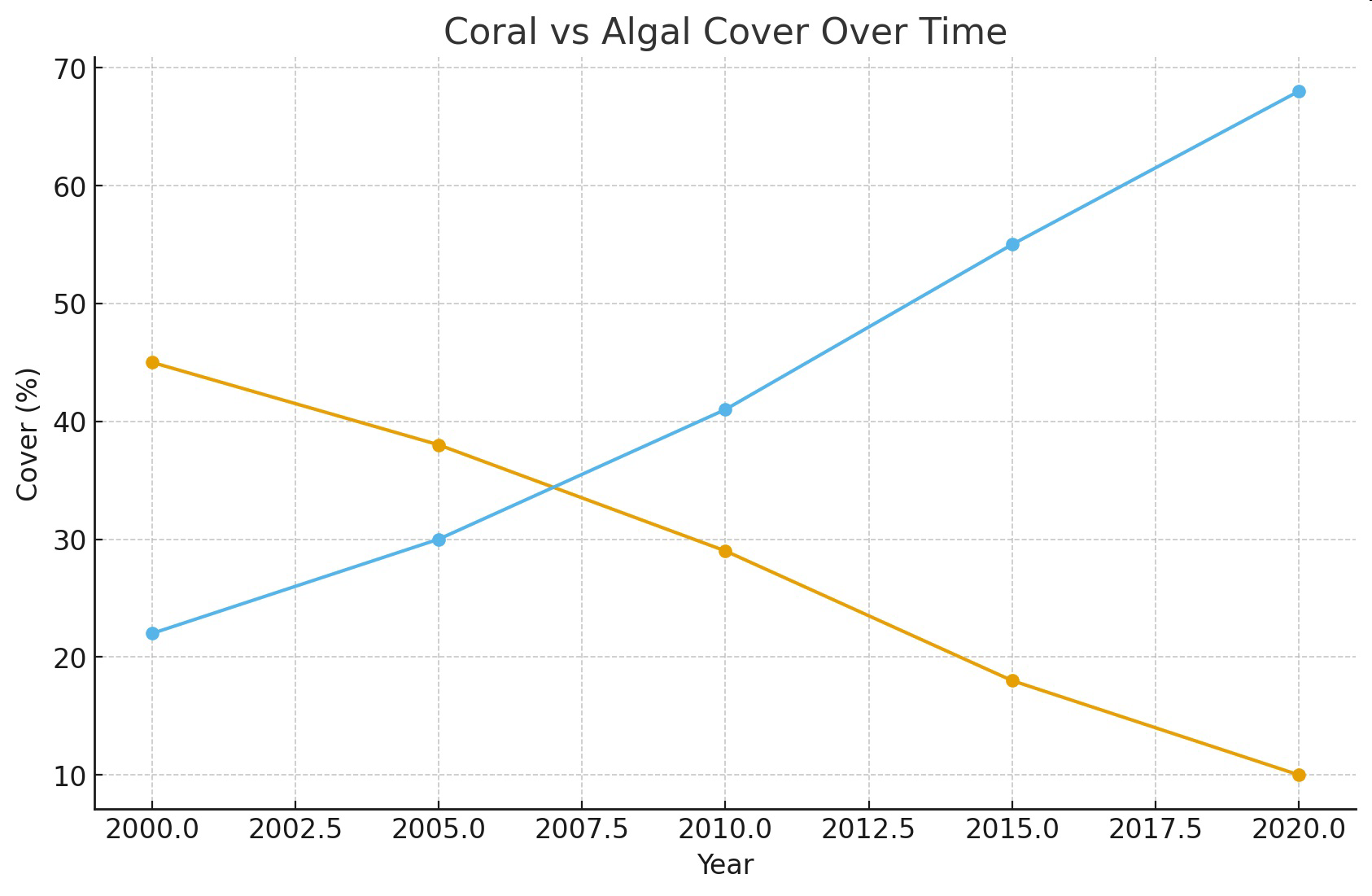
Diagram 1.
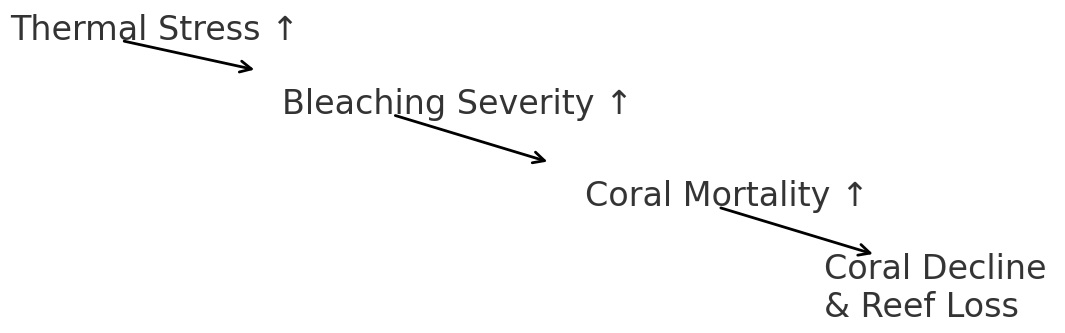
Table 2.
Year | Bleaching Severity Index | Coral Recruitment per/m | Temp Anomaly |
|---|
2000 | 1.2 | 12 | 0.2 |
2005 | 1.8 | 10 | 0.4 |
2010 | 2.6 | 7 | 0.7 |
2015 | 3.8 | 4 | 1.1 |
2020 | 4.5 | 2 | 1.4 |
Graph of Information - Figure 2.
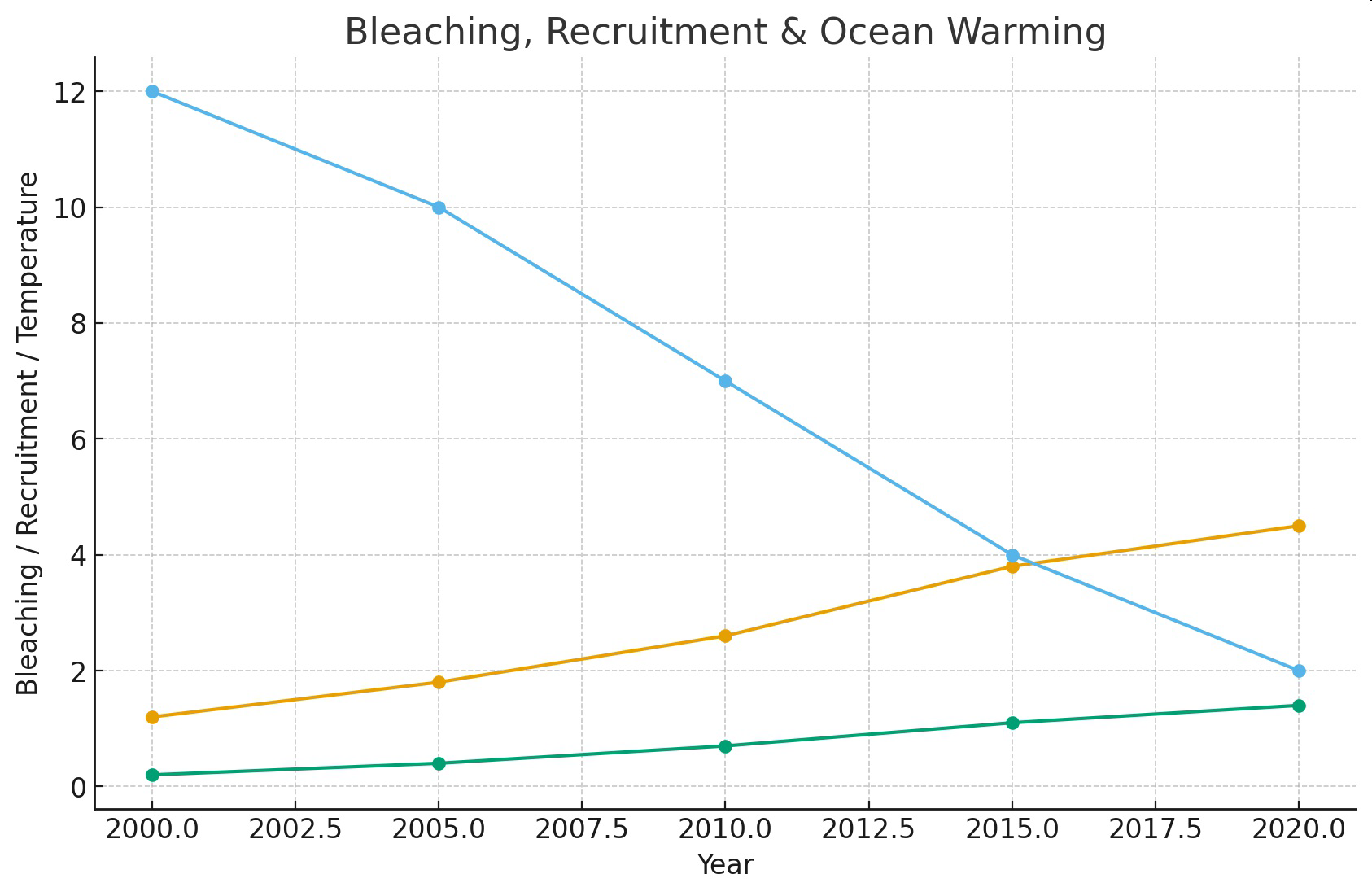
Diagram 2.