Elephants and Carrying Capacity in African Savannas
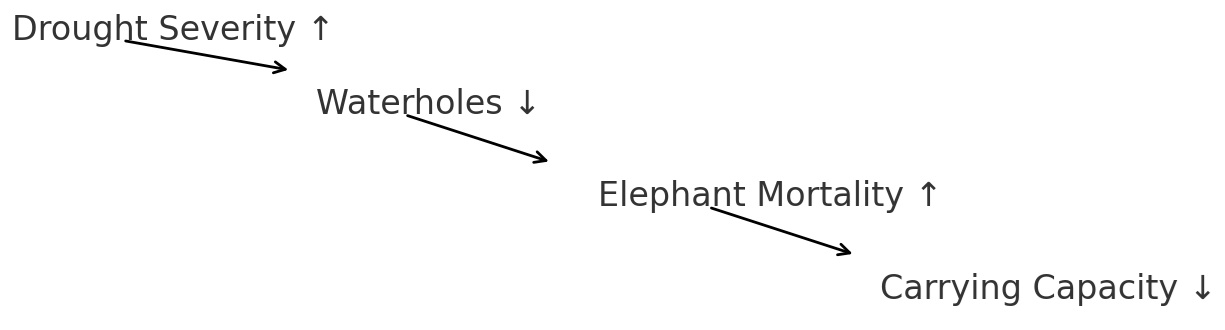
Diagram 1.
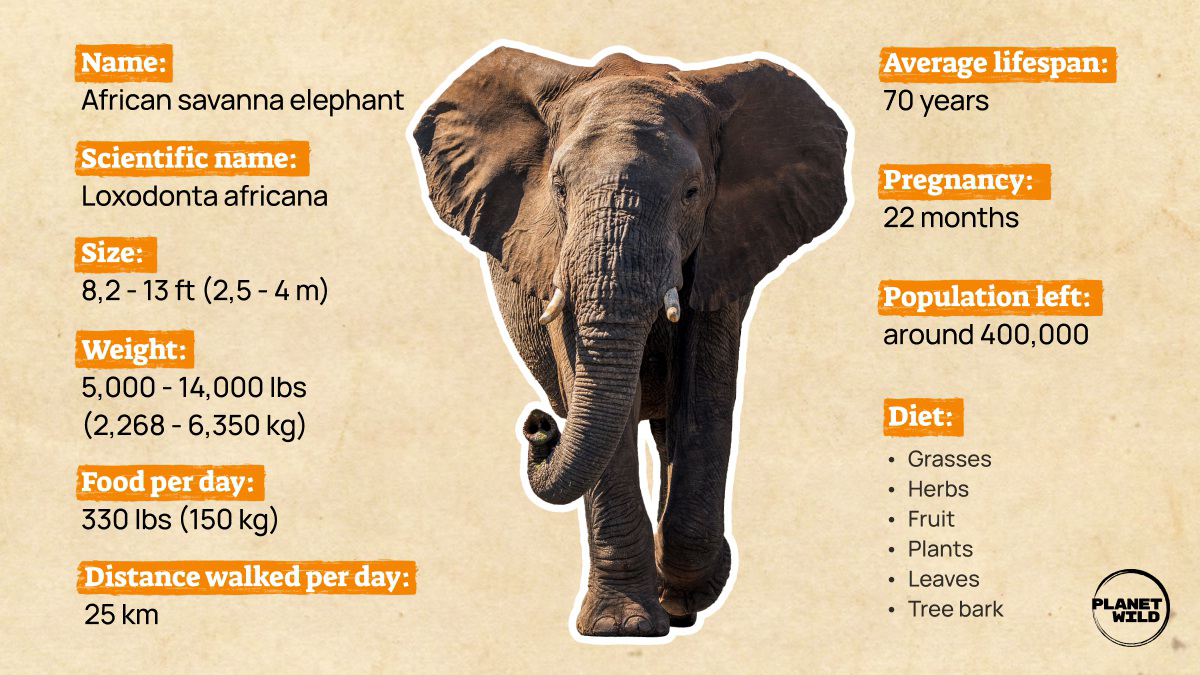
Source: https://planetwild.com/blog/african-savanna-elephant
African savannas are ecosystems where elephant population size is closely tied to biotic and abiotic limiting factors. Elephants are megaherbivores that require large amounts of vegetation and reliable access to water. Because they consume hundreds of pounds of plant matter and drink up to 50 gallons of water per day, even small changes in rainfall or vegetation growth can alter the carrying capacity - the maximum elephant population the environment can support without long-term degradation.
Rainfall is one of the most important abiotic factors controlling carrying capacity. In years with high rainfall, vegetation biomass increases. Grasses and shrubs regrow quickly, and trees produce more leaves and bark. Under these conditions, food resources are abundant, and elephant populations can grow because the environment can sustain higher densities. Mathematical data show clear positive relationships among rainfall, vegetation productivity, and elephant density.
However, during drought years, rainfall decreases sharply. Low rainfall causes vegetation to dry out, regrow slowly, or stop growing entirely. As vegetation biomass declines, elephants must travel farther for food, spend more energy, and compete more intensely with each other and with other herbivores. Severe droughts also reduce the number of available waterholes, an essential abiotic resource. When waterholes dry up, elephants experience dehydration stress, lower reproductive success, and increased mortality.
Biotic factors also play important roles. High elephant densities can lead to overgrazing and damage to trees, especially during multi-year droughts. Over time, this reduces vegetation biomass even further, lowering the carrying capacity for future elephant populations. Additionally, competition with other large herbivores - such as zebras, antelope, and buffalo - can reduce available vegetation and intensify food shortages, shifting the carrying capacity downward.
Table 1.
Annual Rainfall mm | Elephant Density per/km$^2$ | Vegetation Biomass t/ha |
|---|
300 | 0.8 | 1.5 |
450 | 1.2 | 2.4 |
600 | 1.9 | 3.6 |
750 | 2.5 | 4.8 |
900 | 2.8 | 5.5 |
Graph of Information - Figure 1.
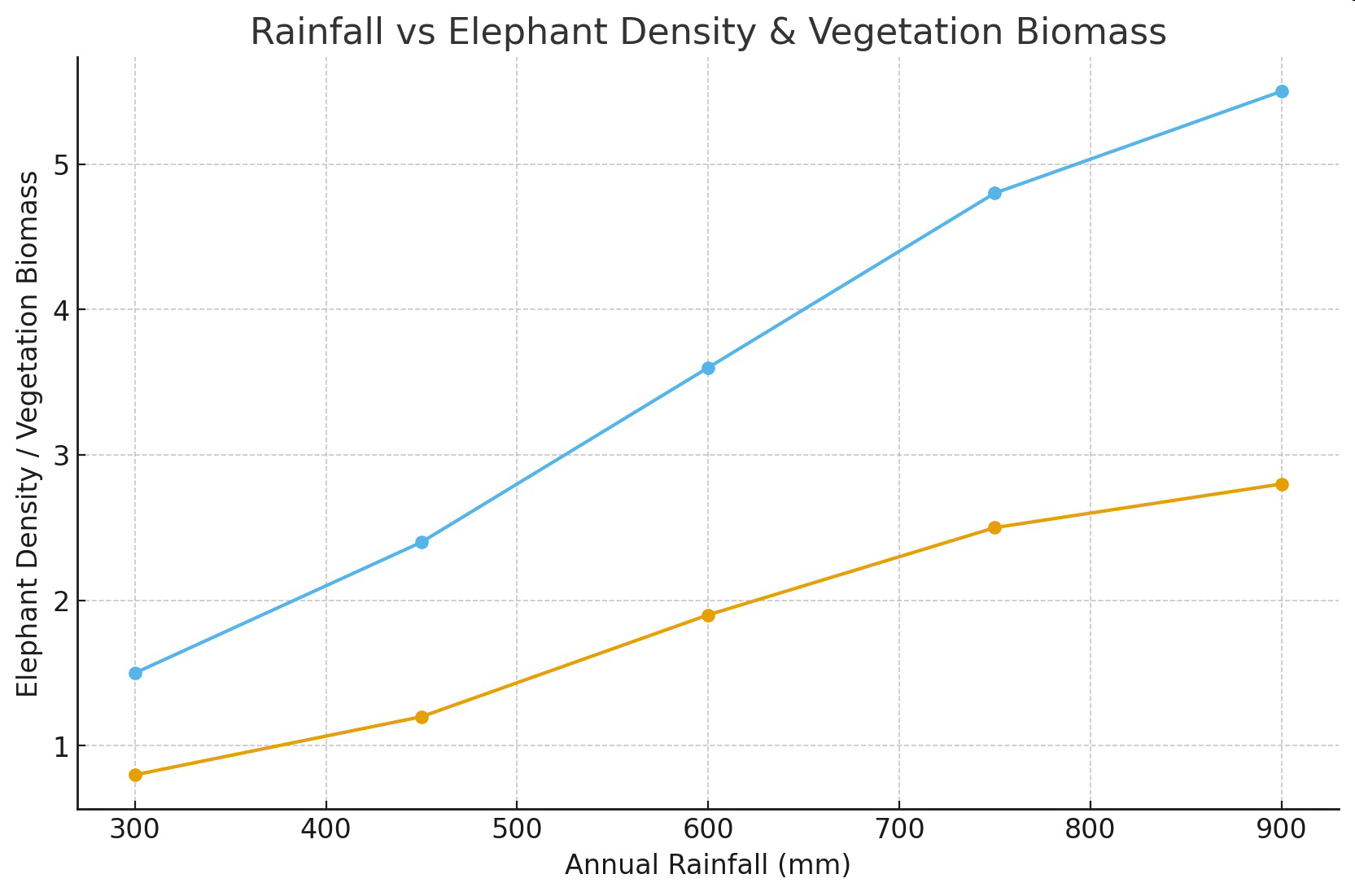
Diagram 2.
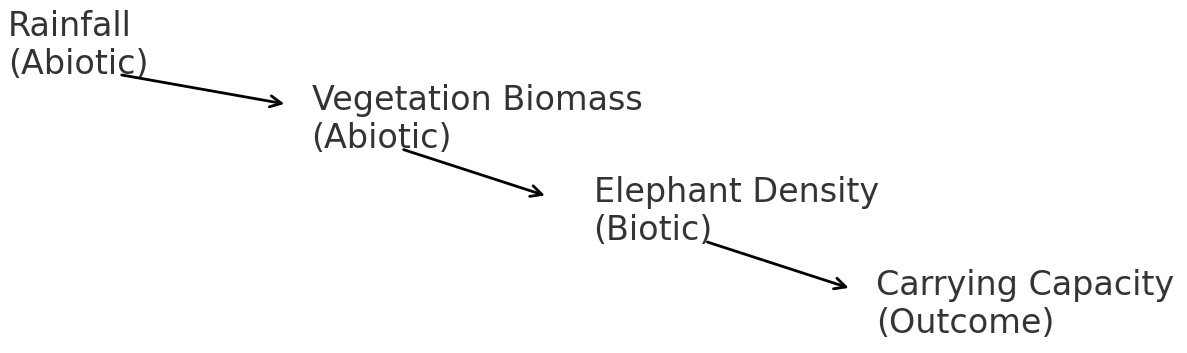
Table 2.
Year | Drought Severity Index | Elephant Mortality Rate % | Waterholes Available |
|---|
2000 | 1.2 | 4 | 34 |
2005 | 2.8 | 7 | 29 |
2010 | 3.5 | 12 | 22 |
2015 | 4.1 | 18 | 18 |
2020 | 4.8 | 25 | 14 |
Graph of Information - Figure 2.
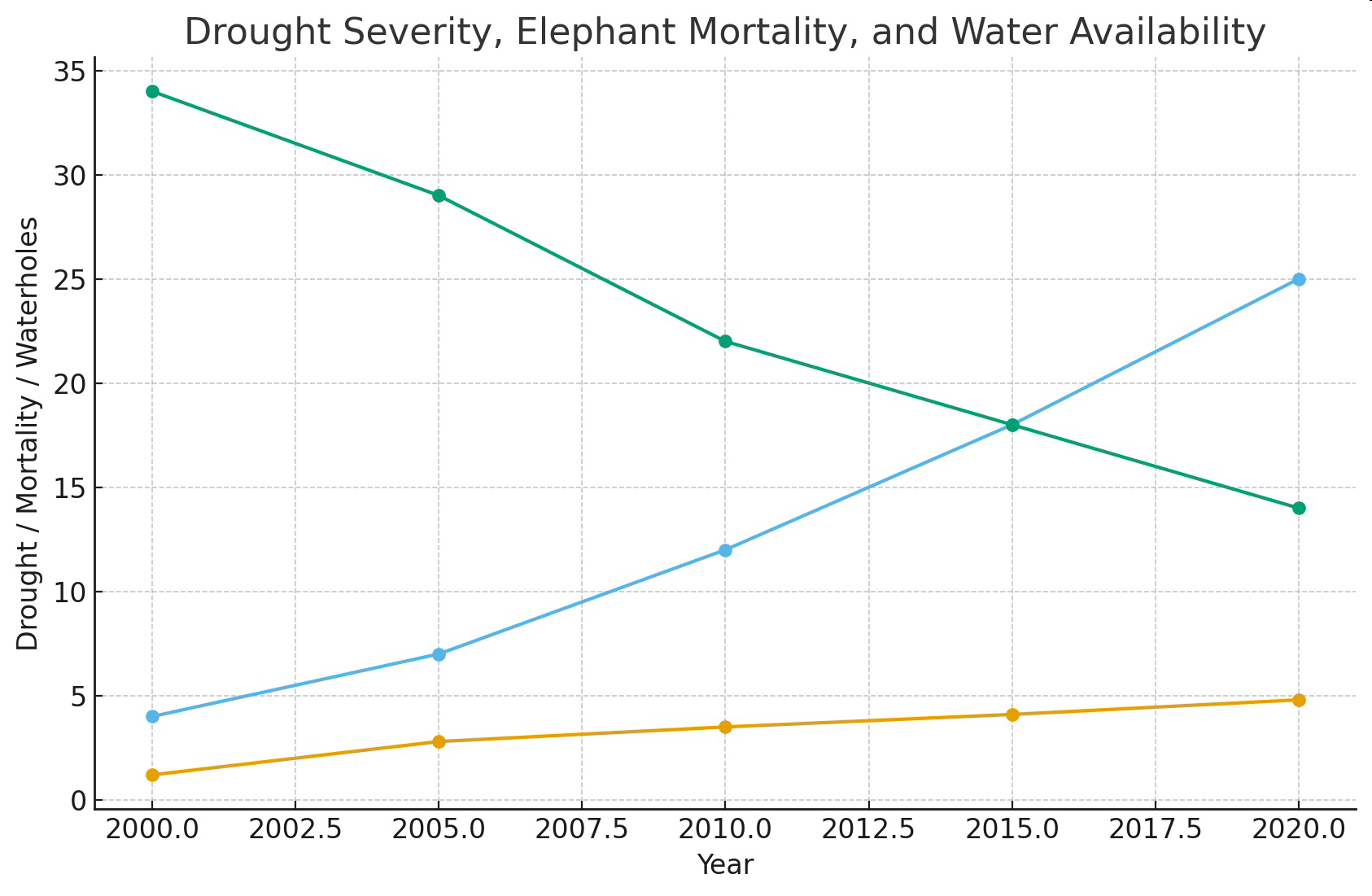
Diagram 3.