Green Infrastructure to Reduce Urban Stormwater Pollution
Urban environments contain large areas of impervious surfaces such as roads, rooftops, and parking lots. These surfaces prevent rainwater from infiltrating into soil. Instead, stormwater flows rapidly across the landscape, picking up pollutants including fertilizers, oils, metals, sediment, and trash. This polluted runoff enters storm drains and eventually empty into rivers, lakes, and coastal ecosystems, contributing to harmful algal blooms, low oxygen, and loss of aquatic biodiversity.
To reduce these impacts, many cities are implementing green infrastructure (GI) - engineered systems that mimic natural water processes by increasing infiltration, slowing flow, and removing pollutants. Common GI structures include bioswales, rain gardens, green roofs, and permeable pavements. Each design reduces the volume of runoff by capturing, filtering, or absorbing rainwater before it reaches waterways.
Green roofs use vegetation and soil layers placed on rooftops to absorb rainwater and reduce runoff. Bioswales and rain gardens use deep-rooted plants and engineered soils to capture and filter stormwater flowing from streets and sidewalks. Permeable pavements allow water to pass through the surface into a gravel layer below, reducing the need for storm drains.
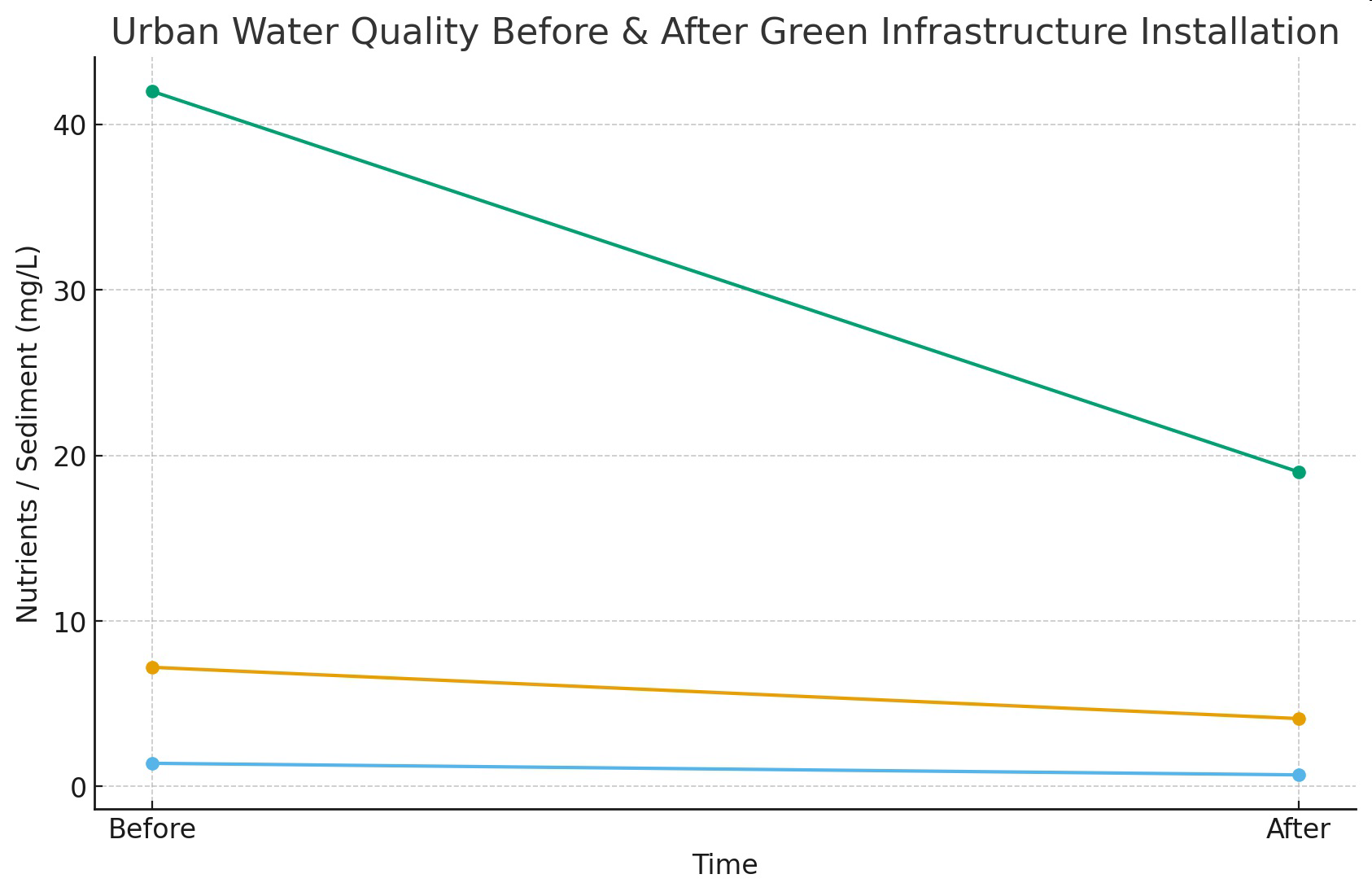
Evaluating GI effectiveness requires analyzing data on runoff reduction, pollutant removal, and changes in water quality. After GI installations, urban streams often show decreased levels of nitrogen, phosphorus, and suspended sediments. Students can compare different GI types to identify which designs provide the greatest environmental benefits.
Green infrastructure systems are designed and refined using ecological principles. They reduce human impacts on the environment by improving water quality, reducing flooding, supporting urban biodiversity, and mitigating heat-island effects. Through data analysis and modeling, students can propose improvements - such as adjusting soil depth, plant species, or system placement - to further enhance GI performance.
Diagram 1.
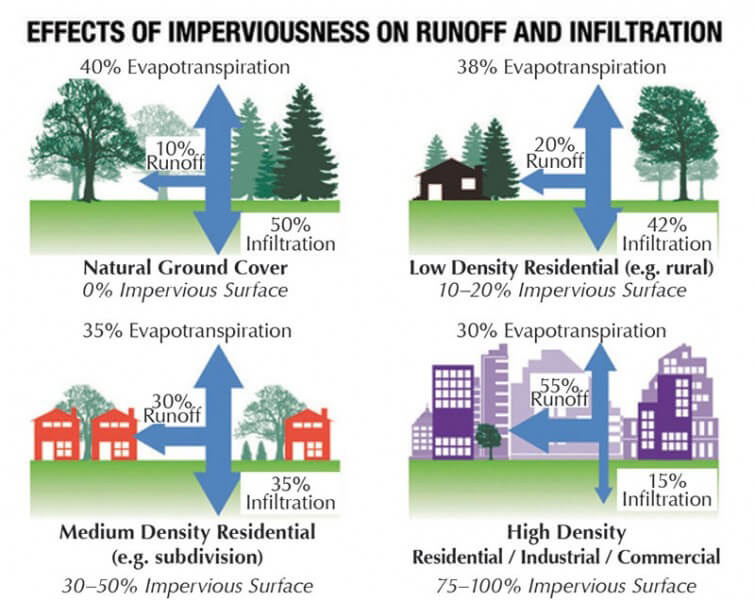 Source: https://thewatershed.org/green-infrastructure-2/
Diagram 2.
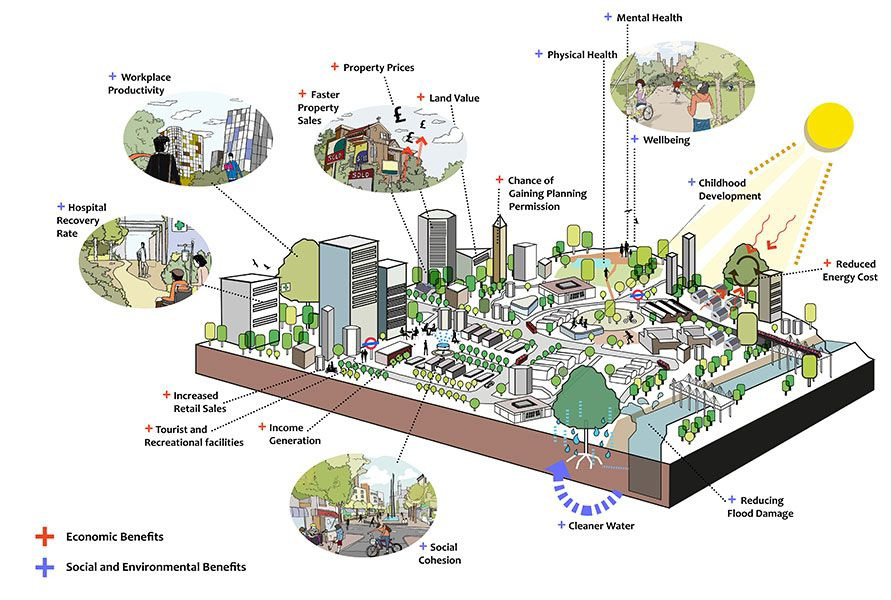 Source: https://uk.pinterest.com/pin/372250725431364332
Table 1.
Infrastructure Type | Runoff Reduction % | Pollutant Removal Efficiency % |
|---|
Green_Roof | 55 | 48 |
Bioswale | 68 | 63 |
Permeable_Pavement | 40 | 29 |
Rain_Garden | 72 | 58 |
Graph of Information - Figure 1.
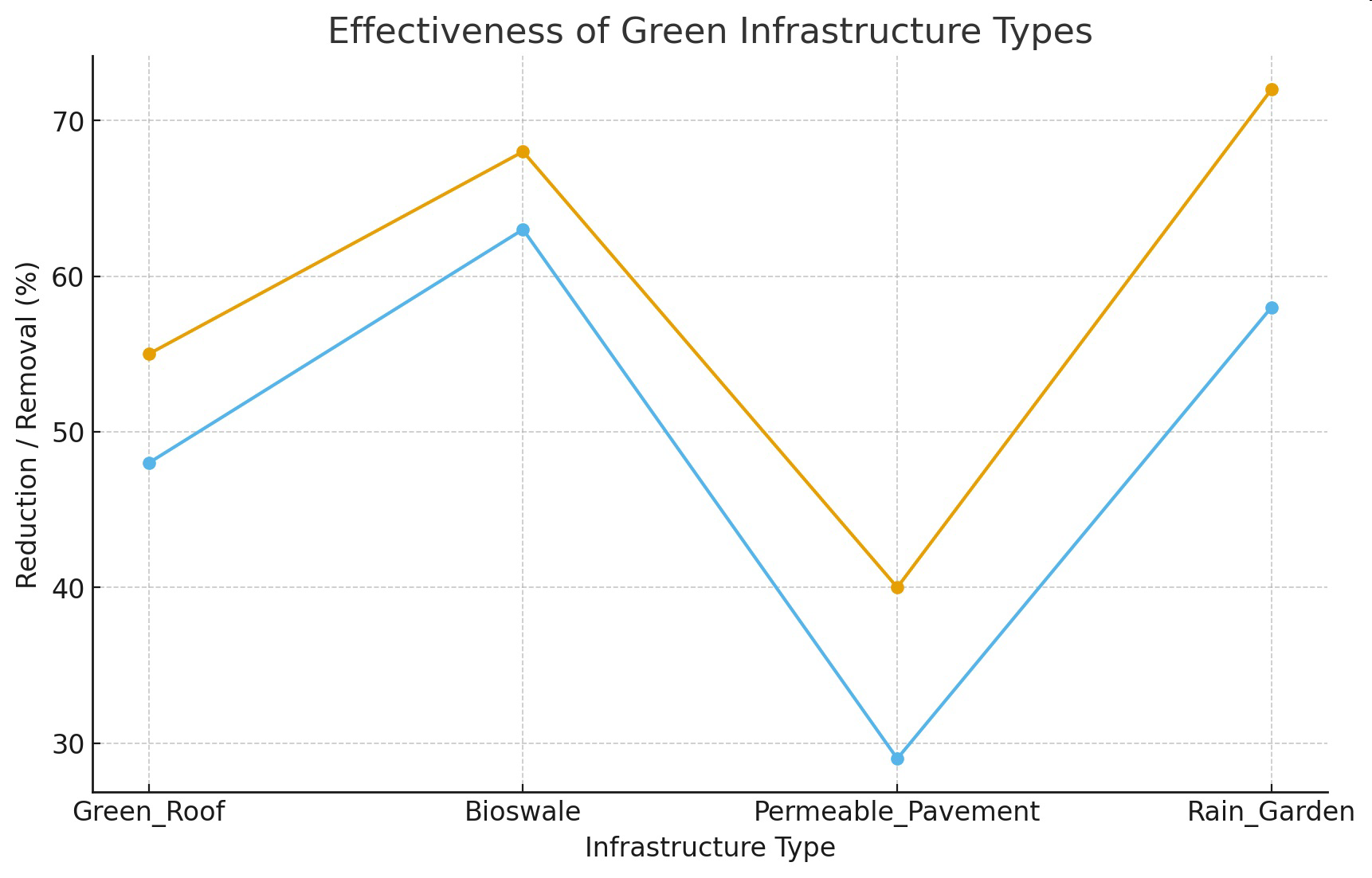
Table 2.
Time | Nitrogen mg/L | Phosphorus mg/L | TSS mg/L |
|---|
Before | 7.2 | 1.4 | 42 |
After | 4.1 | 0.7 | 19 |
Graph of Information - Figure 2.