Twa kɔ nsɛm atitiriw so
Log in
Sign up for FREE
arrow_back
Laabri

6.0 Lesson 3: Student Loans

star
star
star
star
star
Last updated about 3 hours ago
21 Nsɛmmisa
Hyɛ no nsow a efi ɔkyerɛwfo no hɔ:

Learning Objectives

Students will be able to:

  • Explain what it means to be a responsible borrower

  • Analyze different types of federal student loans

  • Compare federal and private student loans

  • Analyze hypothetical and personal scenarios involving college and career decisions that impact their ability to pay for college

National Standards for Personal Financial Education

 Managing Credit

  • 4a: Describe the different sources of funding for postsecondary education

  • 5a: Compare federal and private student loans based on interest rates, repayment rules, and other cha

Warm Up
Learning
Wrap Up
1
1
1

Learning Objectives

Students will be able to:

  • Explain what it means to be a responsible borrower

  • Analyze different types of federal student loans

  • Compare federal and private student loans

  • Analyze hypothetical and personal scenarios involving college and career decisions that impact their ability to pay for college

National Standards for Personal Financial Education

 Managing Credit

  • 4a: Describe the different sources of funding for postsecondary education

  • 5a: Compare federal and private student loans based on interest rates, repayment rules, and other cha

1
1
Asemmisa {{asɛmmisaAhyɛnsode}}
1b.

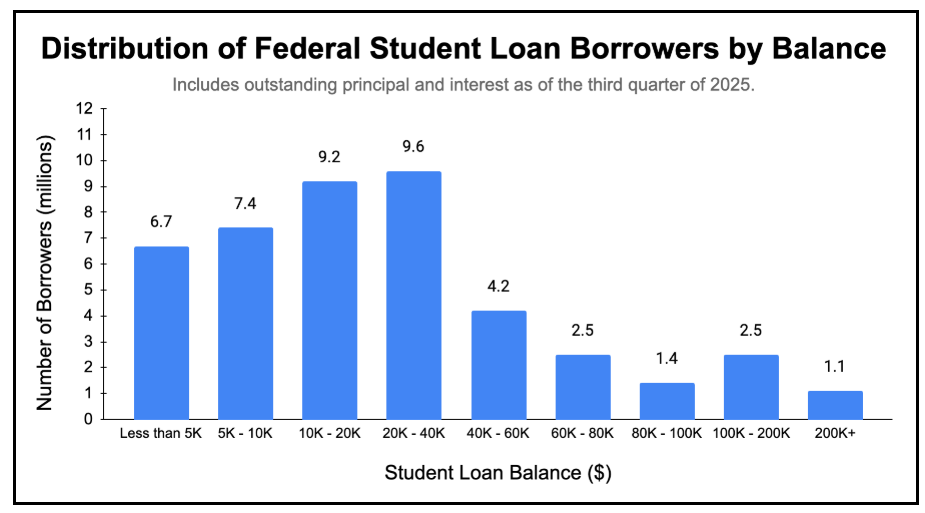
How many student loan borrowers owe more than $100,000?

1
Asemmisa {{asɛmmisaAhyɛnsode}}
1c.

The average starting salary for a college graduate is approximately $55,000. What percentage of student loan borrowers have LESS than $60,000 in debt?

1
Asemmisa {{asɛmmisaAhyɛnsode}}
1d.

Think ahead to the year 2035. Predict one way this graph might change and explain your reasoning.

1
Asemmisa {{asɛmmisaAhyɛnsode}}
1e.

A substantial fraction of borrowers owe less than $5,000. Who do you think is represented in this debt range and why might the number of borrowers in this range be so large?

1
Asemmisa {{asɛmmisaAhyɛnsode}}
2a.

Out-of-state schools are often significantly more expensive than in-state schools. Do you feel like attending school out-of-state is worth the extra expense? Explain why or why not.

1
Asemmisa {{asɛmmisaAhyɛnsode}}
2b.

How does the salary you will earn after graduating college factor into how much you should take out in student loans?

1
Asemmisa {{asɛmmisaAhyɛnsode}}
2c.

In general, do you think taking out student loans is a good thing or a bad thing? Explain your reasoning.

1
Asemmisa {{asɛmmisaAhyɛnsode}}
2d.

When taking out student loans, what do you call the signed agreement to pay them back?

Question 3
00:29
keyboard_arrow_down
1
Question 4
00:54
keyboard_arrow_down
1
Question 5
01:22
keyboard_arrow_down
1

ARTICLE: Federal Loan Limits, Interest Rates, and Fees

ARTICLE: What Are the Interest Rates for Federal Student Loans?

When planning how you’re going to pay for college, it’s important to know that there is a limit to how much you can borrow using federal student loans. Another critical piece of information to know is the interest rates associated with the types of loans you might take out. Review the sections of the articles linked here to learn about the limits and interest rates associated with federal student loans. Then, answer the questions.

1
Asemmisa {{asɛmmisaAhyɛnsode}}
6a.

Imagine you’re looking at attending a college whose tuition is $10,000 per year. Would you be able to pay your tuition only using federal student loans your first year?

1
Asemmisa {{asɛmmisaAhyɛnsode}}
6b.

Describe one downside to borrowing the maximum allowed amount of federal student loans.

1
Asemmisa {{asɛmmisaAhyɛnsode}}
6c.

Briefly describe the interest rates associated with the different types of federal student loans.

1
Asemmisa {{asɛmmisaAhyɛnsode}}
6d.

At what point are you no longer eligible to receive Direct Subsidized loans?

INFOGRAPHIC: Comparing Federal and Private Student Loans

ARTICLE: 17 Best Private Student Loans 

You’ve applied for grants and scholarships. You’ve found work study. You’ve taken out Direct Subsidized and Unsubsidized Loans. And yet…you still don’t have enough to cover the cost of college. You do have another option to cover the remainder–private student loans. However, you should be very careful when considering this option. Take a look at the infographic and skim the interest rates of different private student loans in the article to learn more. Then, answer the questions.

1
Asemmisa {{asɛmmisaAhyɛnsode}}
7a.

Think back to the interest rates for federal student loans you learned about in the previous resource. How do the interest rates for private student loans shown in the article compare?

1
Asemmisa {{asɛmmisaAhyɛnsode}}
7b.

We’ve learned that private student loans are the last type of financial aid you should utilize. What characteristics of private student loans best explain why that is?

Asemmisa {{asɛmmisaAhyɛnsode}}
8.

Which of the following actions would MOST likely increase your cost of attending college?

Asemmisa {{asɛmmisaAhyɛnsode}}
9.

Which of the following types of federal student loans can be taken out by your parents/guardian to help pay for your college education?

Asemmisa {{asɛmmisaAhyɛnsode}}
10.

All of the following statements about private student loans are true, EXCEPT…

Asemmisa {{asɛmmisaAhyɛnsode}}
1a.

Which debt range contains the MOST borrowers?

Asemmisa {{asɛmmisaAhyɛnsode}}
3.

What is the benefit of having a fixed interest rate loan?

Asemmisa {{asɛmmisaAhyɛnsode}}
4.

Select TWO statements that correctly describe a Direct Subsidized Loan and a Direct Unsubsidized Loan.

Asemmisa {{asɛmmisaAhyɛnsode}}
5.

Who qualifies for a Direct Plus Loan? (choose TWO correct answers)