Twa kɔ nsɛm atitiriw so
Log in
Sign up for FREE
arrow_back
Laabri

6.0 Lesson 5: Student Loan Repayment

star
star
star
star
star
Last updated about 3 hours ago
15 Nsɛmmisa
Hyɛ no nsow a efi ɔkyerɛwfo no hɔ:
Warm Up
1
Learn It
Main Activity
1
1
1
Exit Ticket
1
1
1

Learning Objectives

Students will be able to:

  • Discuss common mistakes made in repaying student loans

  • Explain the difference between different types of repayment plans

  • Identify sources of assistance if they need help with student loan repayment

  • Analyze different scenarios and choose the best repayment option

National Standards for Personal Financial Education

 Managing Credit

  • 4a: Describe the different sources of funding for postsecondary education

  • 5a: Compare federal and private student loans based on interest rates, repayment rules, and other characteristics

  • 5d: Predict the potential consequences of deferred payment of student loans

Learning Objectives

Students will be able to:

  • Discuss common mistakes made in repaying student loans

  • Explain the difference between different types of repayment plans

  • Identify sources of assistance if they need help with student loan repayment

  • Analyze different scenarios and choose the best repayment option

National Standards for Personal Financial Education

 Managing Credit

  • 4a: Describe the different sources of funding for postsecondary education

  • 5a: Compare federal and private student loans based on interest rates, repayment rules, and other characteristics

  • 5d: Predict the potential consequences of deferred payment of student loans

Asemmisa {{asɛmmisaAhyɛnsode}}
1.

RESEARCH: What is the average amount of student debt for college graduates?

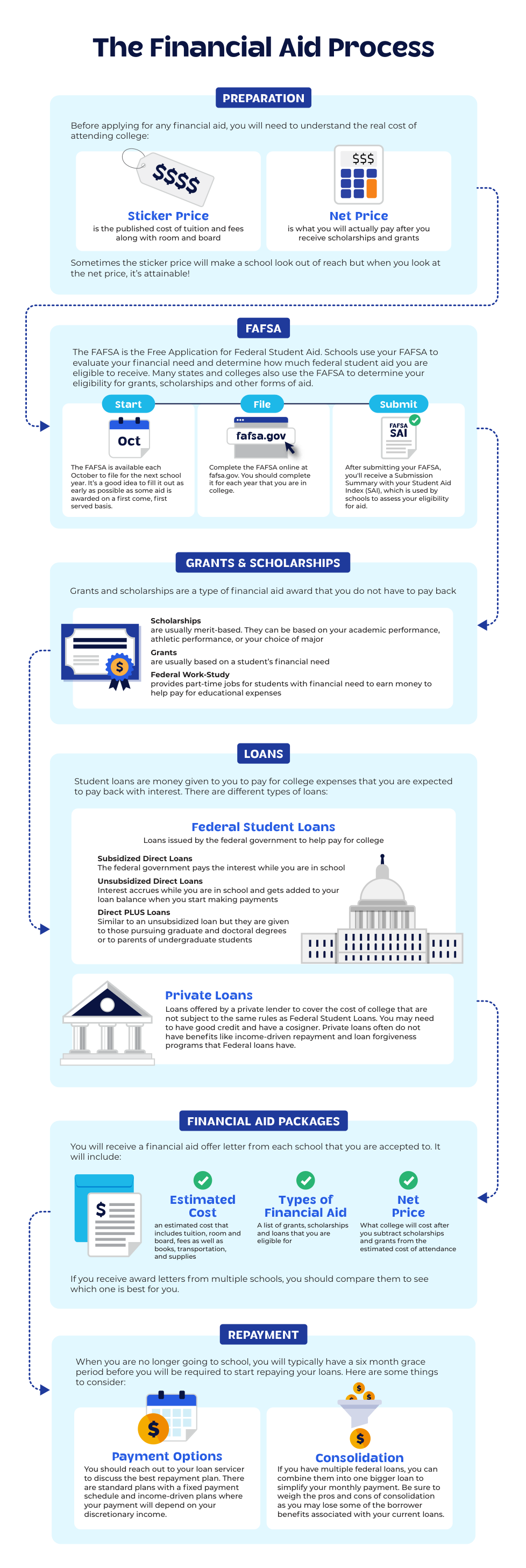
Your college graduation day has arrived! Do you have a plan to make sure your student loan repayment doesn’t put a damper on your celebration? We’ve moved to the final portion of the financial aid process roadmap. Read the box labeled “Repayment” to get an idea of where you are in the process. Then, answer the question.

1
Asemmisa {{asɛmmisaAhyɛnsode}}
2a.

What questions do you have right away about life after graduation and student loan repayment?

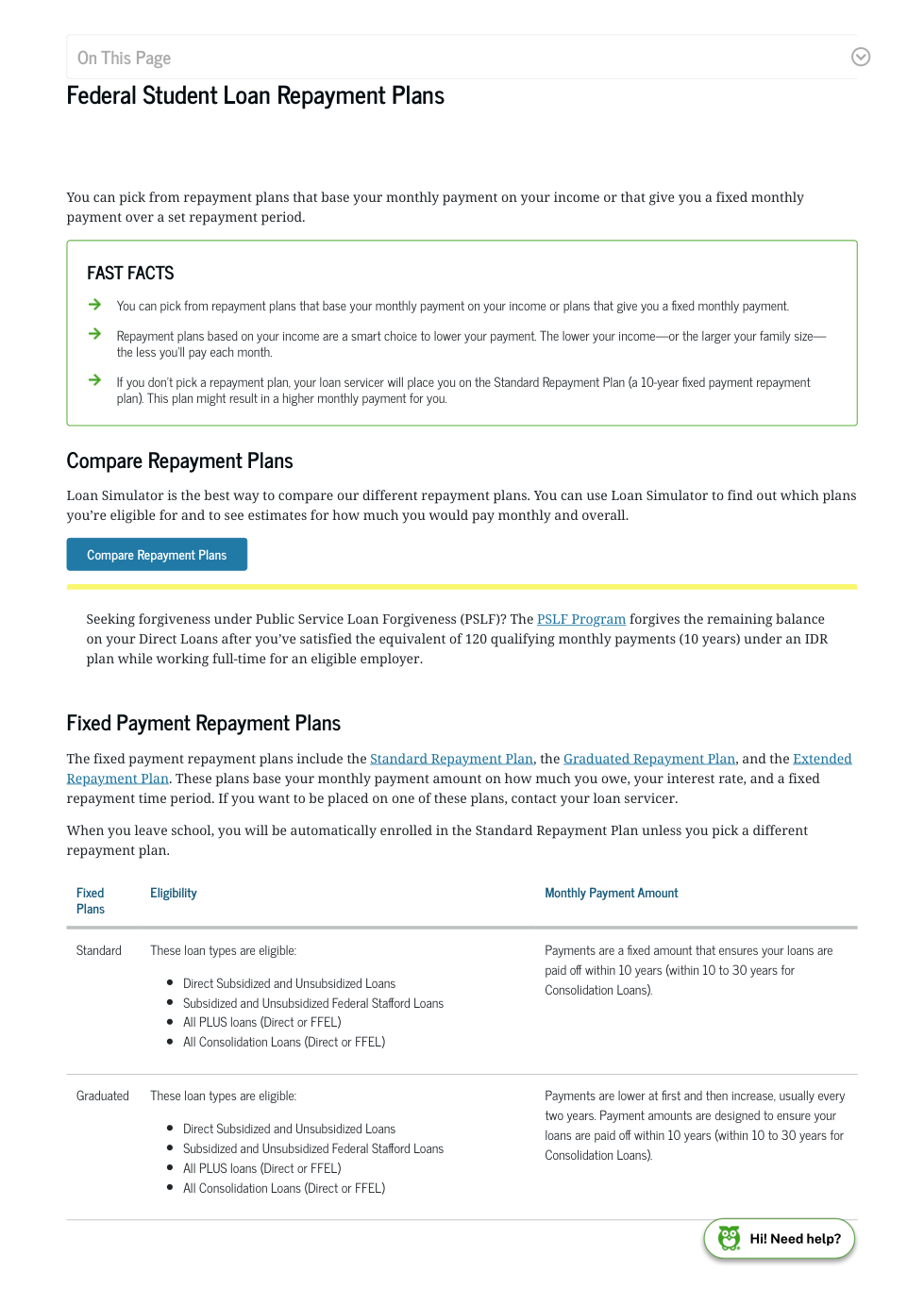
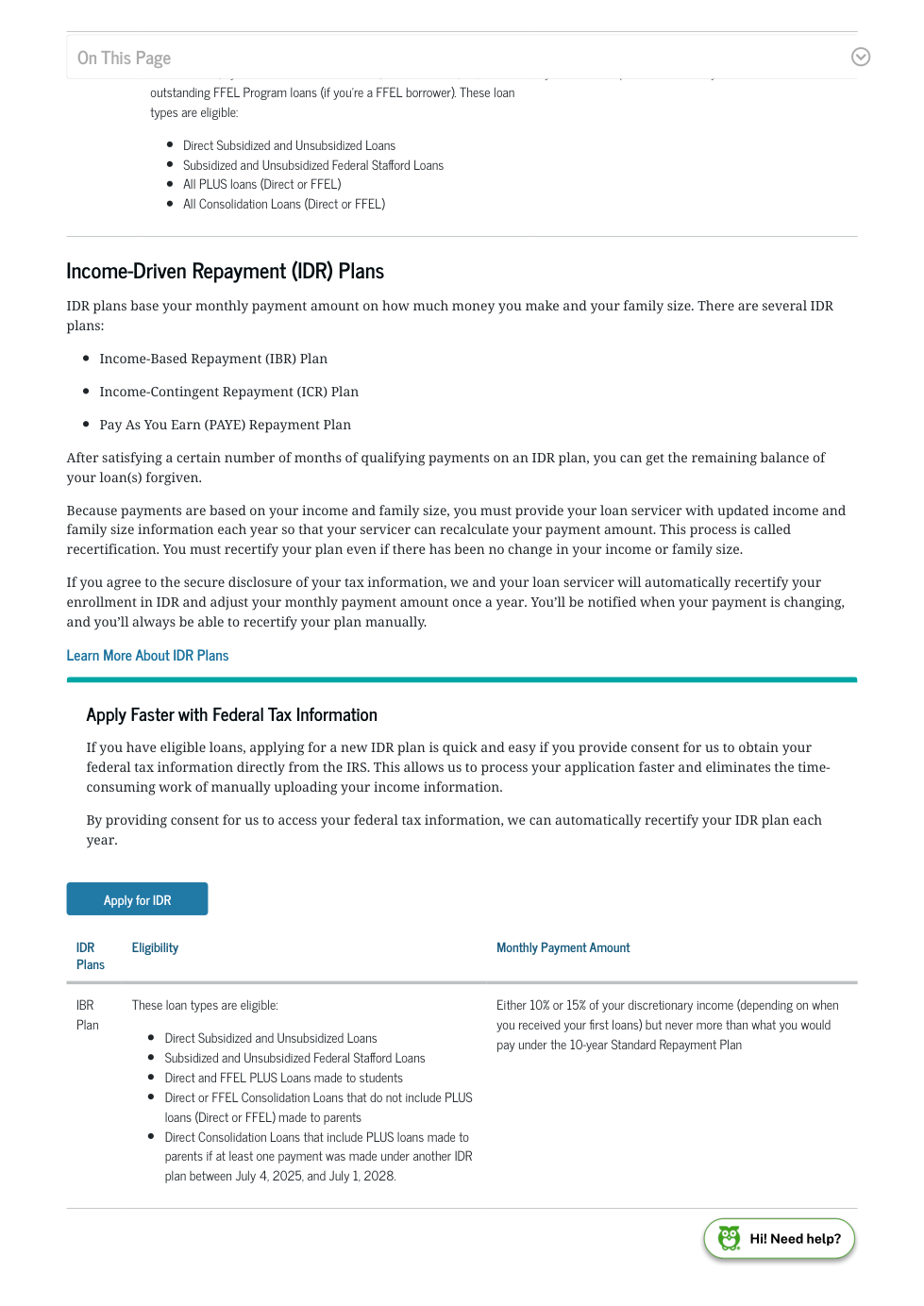
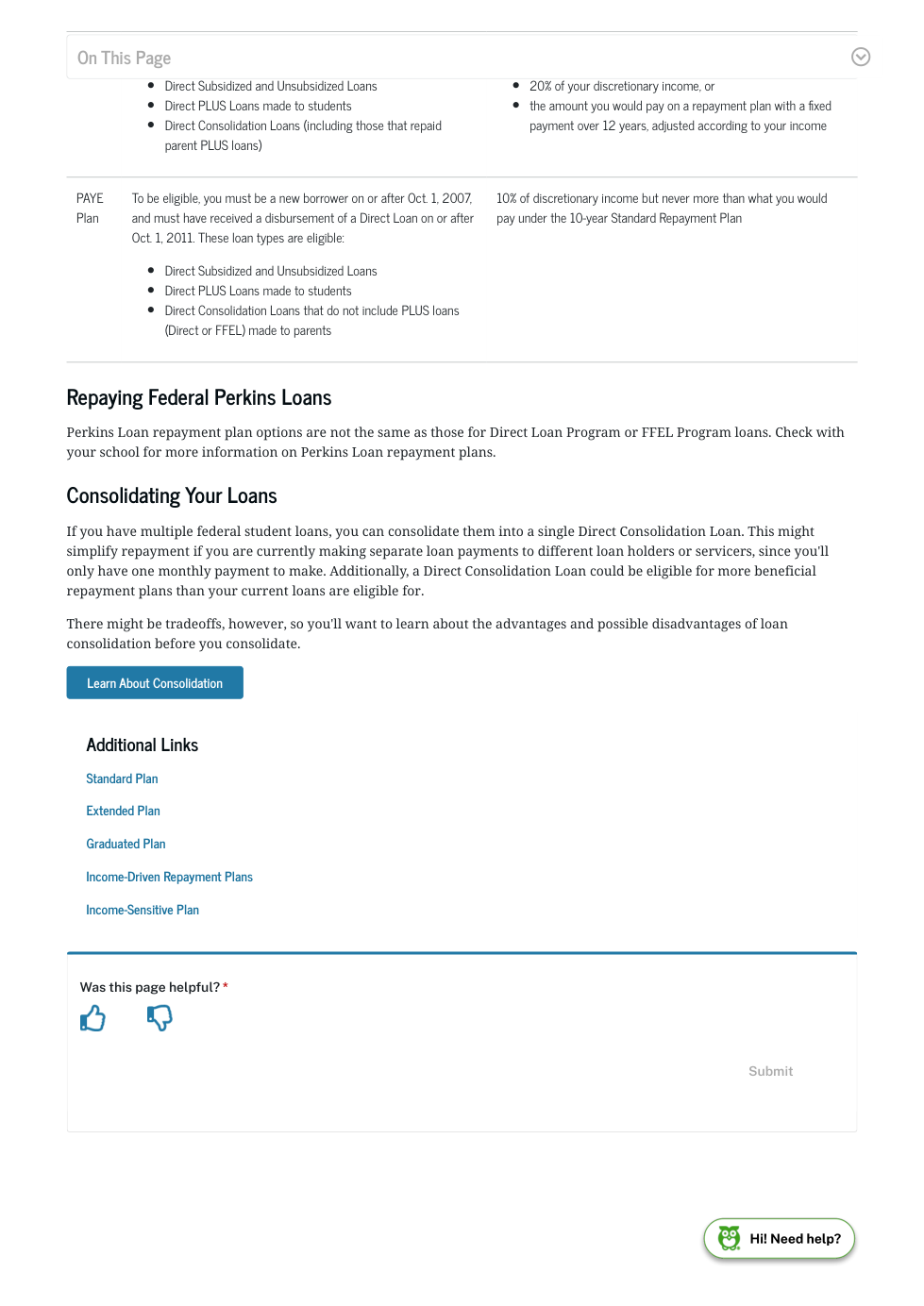
You’ve already learned about multiple types of federal student loans. To go along with those, there are also multiple types of repayment plans. Use the article to answer the first 3 questions on repayment plans. Then, watch the video to answer the last question on loan consolidation.

1
Asemmisa {{asɛmmisaAhyɛnsode}}
3a.

Identify whether the following statements describe a Fixed Payment or Income-Driven repayment plan.

  • Has a fixed or graduated monthly payment

  • Your monthly payment is based on how much money you make and your family size

  • After making a certain number of payments, the rest of your loan balances will be forgiven

  • Ensures you’ll pay off your loan (principal and interest) over a fixed period of time (10-30 years)

  • Fixed-Payment

  • Income-Driven

1
1
1

You’ve got your repayment plan ready to go…but then, something happens. Maybe you lost your job or suffered another kind of hardship that will keep you from being able to make your normal student loan payments. Watch the video to learn more about student loan deferment and forbearance. Then, answer the questions.

1
Asemmisa {{asɛmmisaAhyɛnsode}}
4a.

What function do both deferment and forbearance each serve?

1
Asemmisa {{asɛmmisaAhyɛnsode}}
4b.

What is the main difference between deferment and forbearance?

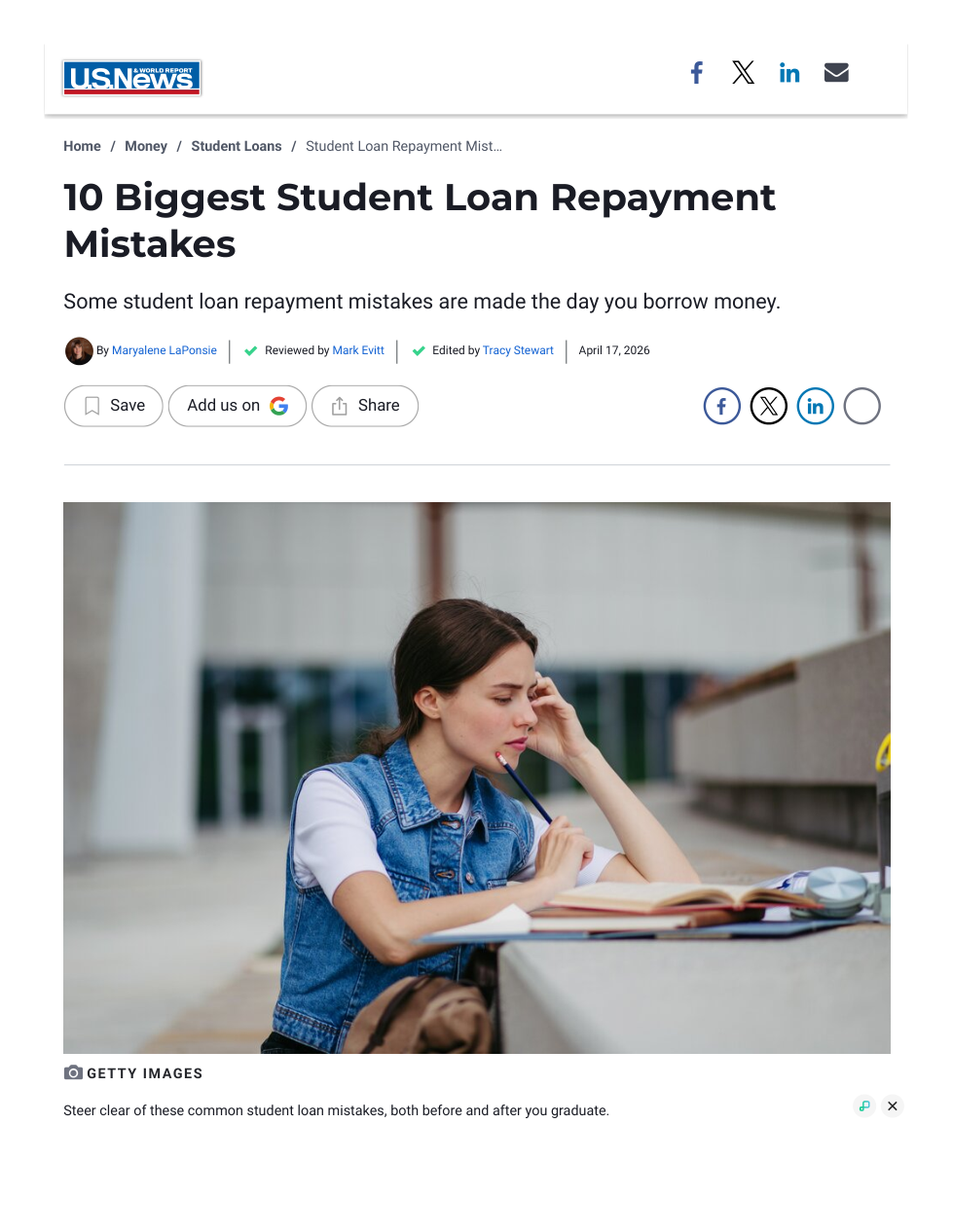
It can help to learn from the mistakes of others before you’re in a situation to make them yourself. Review the slides in this article to learn about some of the biggest mistakes student loan borrowers make. Then, answer the questions.

1
Asemmisa {{asɛmmisaAhyɛnsode}}
5a.

Choose one of the common mistakes mentioned in the article. Explain why it stood out to you and, if possible, describe how you would avoid it.

Is a standard repayment plan always the best way to go? As you’ve probably already figured out, it depends on several different factors. Let’s analyze a few different scenarios to see what kind of repayment options work for different situations. Follow the directions on the worksheet to complete this activity. 


Set Up

  1. Open the Loan Simulator.

  1. Find the first option “I Want to Find the Best Student Loan Repayment Strategy” and click “Or Start From Scratch”

  2. Click “I have a job or plan to get one soon” and “Continue”

Asemmisa {{asɛmmisaAhyɛnsode}}
6.
Asemmisa {{asɛmmisaAhyɛnsode}}
7.
Asemmisa {{asɛmmisaAhyɛnsode}}
8.
Asemmisa {{asɛmmisaAhyɛnsode}}
9.

Ideally, which repayment plan would you choose in order to pay the lowest total amount of interest?

Asemmisa {{asɛmmisaAhyɛnsode}}
10.

Consolidation __________ your monthly payment and often means you will pay __________ in interest over the life of your loan.

Asemmisa {{asɛmmisaAhyɛnsode}}
11.

Which of the following statements about forbearance is true?

Asemmisa {{asɛmmisaAhyɛnsode}}
3b.

Your friend tells you after doing all their research they’ve chosen the graduated repayment plan. What assumption are they making about their future income?

Asemmisa {{asɛmmisaAhyɛnsode}}
3c.

It might seem tempting to choose an income-driven repayment plan since the remaining balance is forgiven after 20-25 years. What are some drawbacks you can think of if you were to choose an income-driven plan when you could be making higher payments?

Asemmisa {{asɛmmisaAhyɛnsode}}
3d.

Consolidating multiple student loans into one payment can help by lowering your monthly payment. But what are the downsides?