Heat-Related Workplace Deaths
Key Points
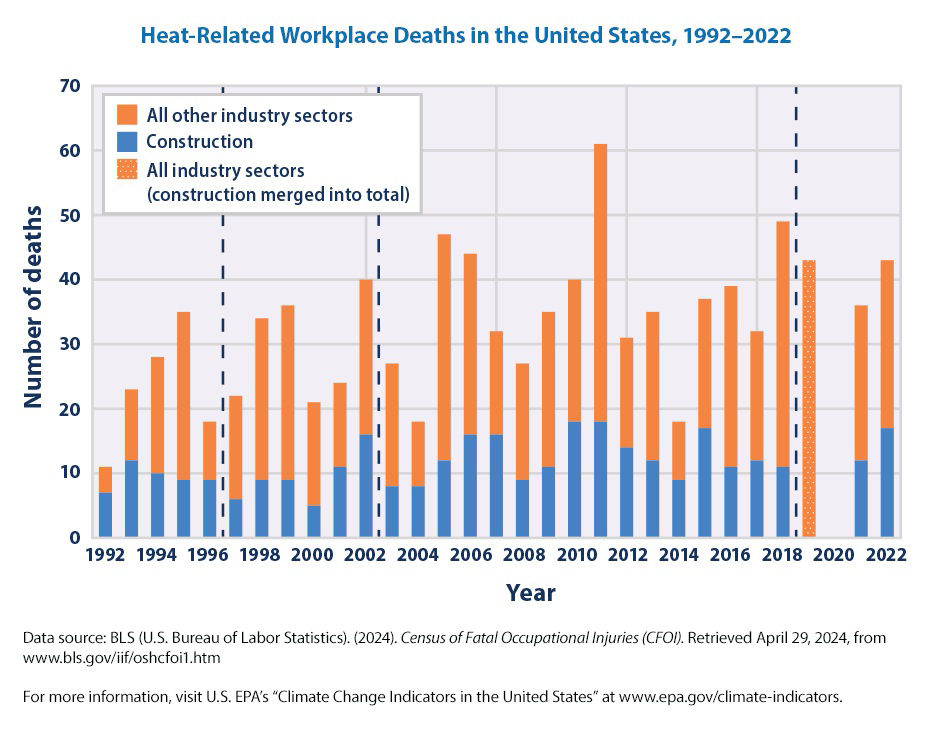
From 1992 to 2022, a total of 986 workers across all industry sectors in the United States died from exposure to heat. This represents an average of 34 deaths per year, according to reported data (Figure 1).
In the same period, 334 construction workers lost their lives to heat exposure on the job - meaning that the construction sector accounted for about 34 percent of all occupational heat-related deaths (see Figure 1).
The total number of heat-related worker deaths per year has ranged from 11 (reported in 1992) to 61 (2011). The number of heat-related deaths in the construction sector peaked at 18 deaths in 2010 and 2011 (Figure 1).
It is difficult to say for sure whether occupational heat-related deaths have increased or decreased meaningfully since 1992. This is because of high year-to-year variability and the possibility that the full extent of the problem is larger than the numbers reported here. Some deaths might not be properly categorized as heat-related, and there are reasons to believe that some work-related deaths might go unreported by employers, particularly in industries with many undocumented workers (see the “Notes” section below).
Background
Extreme heat is the leading weather-related killer in the United States . Over the last few decades, unusually hot summer days and nights have become more common across the contiguous 48 states and it is expected that extreme heat events will occur with greater frequency and intensity in the future. Thus, heat-related deaths are also expected to increase, although these increases may be tempered as people physiologically adapt to higher temperatures and as communities increase their resilience to heat.
Outdoor workers, particularly those engaging in strenuous physical activity, disproportionately face greater heat-related health threats. For example, construction workers represent only 6 percent of the total U.S. workforce, yet they account for more than one-third of all reported occupational deaths associated with heat exposure. Farmworkers also have disproportionately high rates of heat-related illnesses and deaths. Worker safety and productivity will likely be increasingly challenged as temperatures outdoors continue to rise. To reduce risks, employers can implement preventative measures such as ensuring access to water, training workers to recognize signs of heat-related illnesses, mandating frequent breaks and shade, providing heat-appropriate protective equipment, and limiting work during the hottest times of day. Several states have enacted rules to mandate these types of practices, as tracked by organizations like the National Caucus of Environmental Legislators. For more information, see the U.S. Occupational Safety and Health Administration’s (OSHA’s) worker safety website: www.osha.gov/heat and: www.heat.gov/pages/who-is-at-risk-to-extreme-heat.
Graph of Information - Figure 1.
This graph shows the number of reported occupational heat-related deaths in the United States each year. The blue portions of the bars show deaths in the construction sector and the orange portions show deaths in all other sectors of the economy. The dashed lines indicate when BLS changed how it classifies “construction” (1996/1997 and 2002/2003) or changed its thresholds for reporting individual industry totals (2018/2019). Total construction sector deaths in 2019 fell below the new threshold; for that year, BLS combined construction into a single “all-industry” total rather than reporting a sector total. BLS has indicated that data collection for 2020 fell below reporting thresholds.
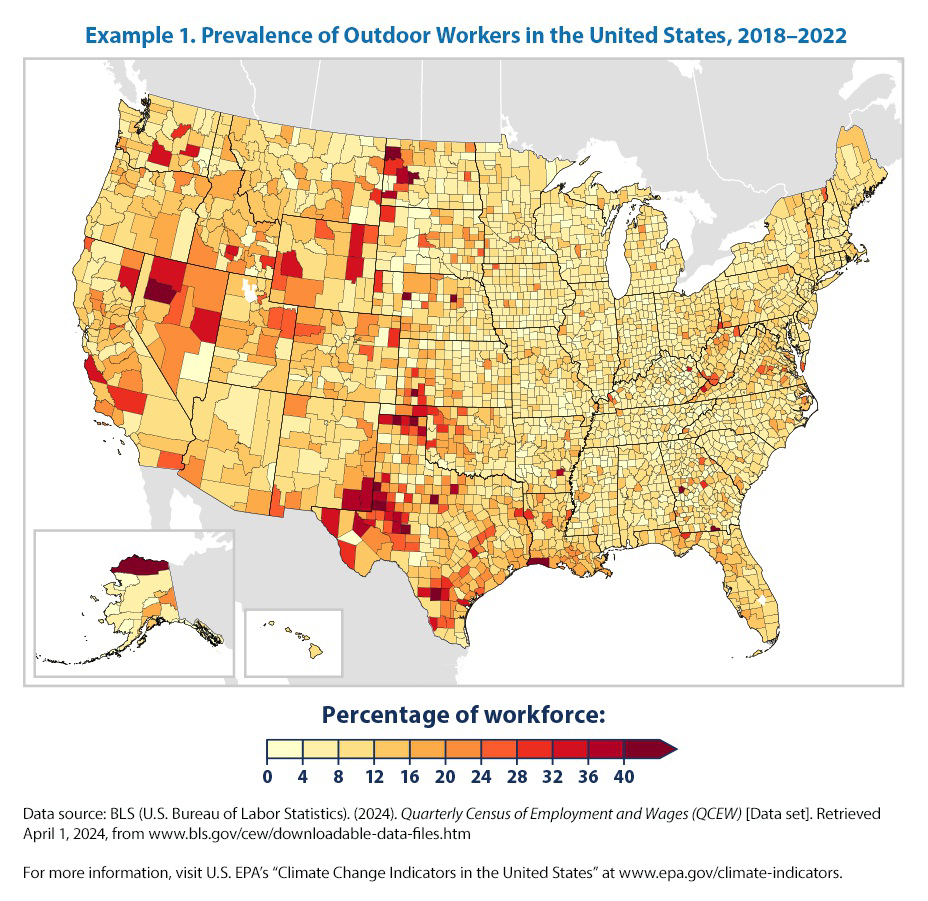
Map of Information - Figure 2.
This map shows the percentage of each county’s workforce engaged in occupations that typically involve a substantial amount of time outdoors. Job categories included in this analysis include delivery services, law enforcement and emergency services, utilities, mining/quarrying/oil and gas extraction, agriculture, fishing, forestry, and construction. The map shows a five-year average.