Kelp Forest Collapse Following Sea Urchin Outbreaks
Kelp forests are among the most productive marine ecosystems on Earth. These underwater forests provide habitat, food, and shelter for hundreds of species, including fish, invertebrates, sea otters, and seals. For decades, many Pacific kelp forests maintained stable populations through balanced predator–prey interactions, especially the key relationship among sea otters, sea urchins, and giant kelp. Sea otters feed heavily on sea urchins, preventing urchin populations from becoming large enough to overgraze kelp. This balance keeps kelp forests healthy, diverse, and resilient.
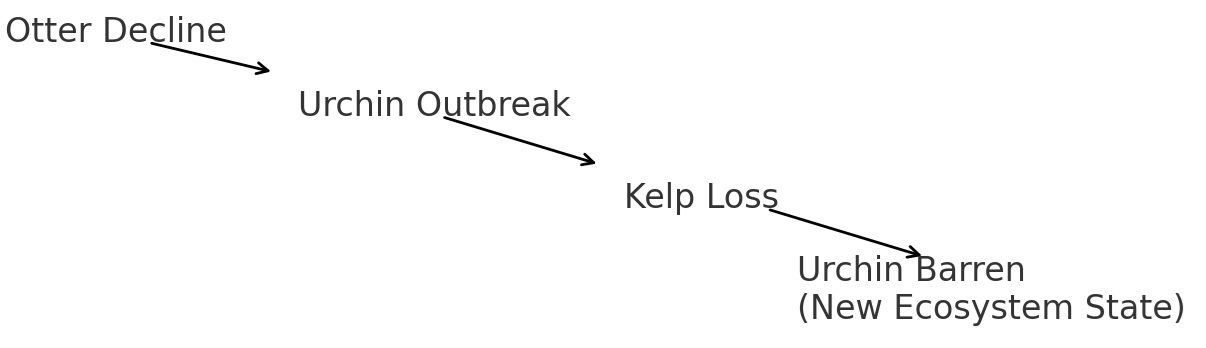
However, when the balance is disrupted, the entire ecosystem can shift dramatically. In the last decade, several regions of the Pacific coast have experienced outbreaks of sea urchins that transformed lush kelp forests into “urchin barrens.” In places where otter populations declined - due to disease, predation by orcas, or historical hunting - sea urchin densities increased rapidly. With fewer predators to control them, urchins consumed kelp holdfasts and new kelp recruits faster than the plants could grow back. As kelp cover decreased, the ecosystem lost habitat complexity and food sources for many species.
Abiotic factors also contributed to this ecological shift. Marine heatwaves weakened kelp health and slowed growth. Warmer waters also supported faster urchin metabolism, increasing grazing pressure. In some regions, disease outbreaks reduced populations of sea star predators that previously fed on urchins. These combined biotic and abiotic changes illustrate how complex interactions maintain stable ecosystems - but when conditions shift, stability can be lost.
Kelp forests and urchin barrens represent two different stable ecosystem states. A kelp forest can shift into a barren when predator control is removed, grazing pressure increases, or environmental conditions stress kelp growth. Once barrens form, they are difficult to reverse. High numbers of starving urchins can persist for years, scraping away any new kelp growth. Without intervention - such as urchin removal, restoration of predators, or cooling of ocean temperatures - kelp may not recover.
Table 1.
Urchin Density per/m2 | Kelp Biomass kg/m2 |
|---|
2 | 14 |
10 | 9 |
25 | 6 |
60 | 3 |
120 | 0.8 |
Graph of Information - Figure 1.
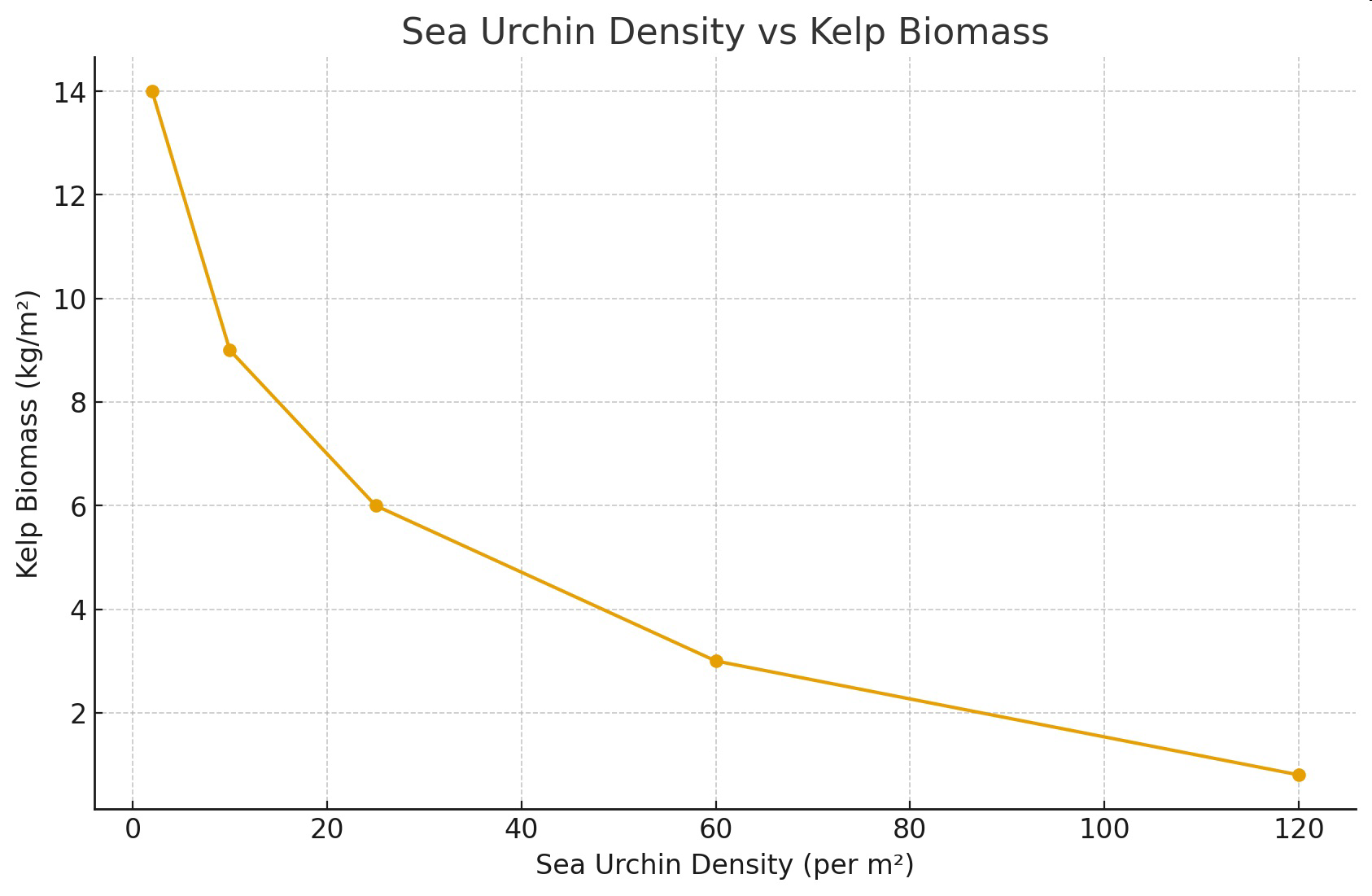
Table 2.
Year | Otter Count | Urchin Density per/m2 | Kelp Cover % |
|---|
2000 | 85 | 6 | 72 |
2005 | 70 | 12 | 58 |
2010 | 55 | 24 | 41 |
2015 | 35 | 48 | 19 |
2020 | 20 | 92 | 7 |
Graph of Information - Figure 2.
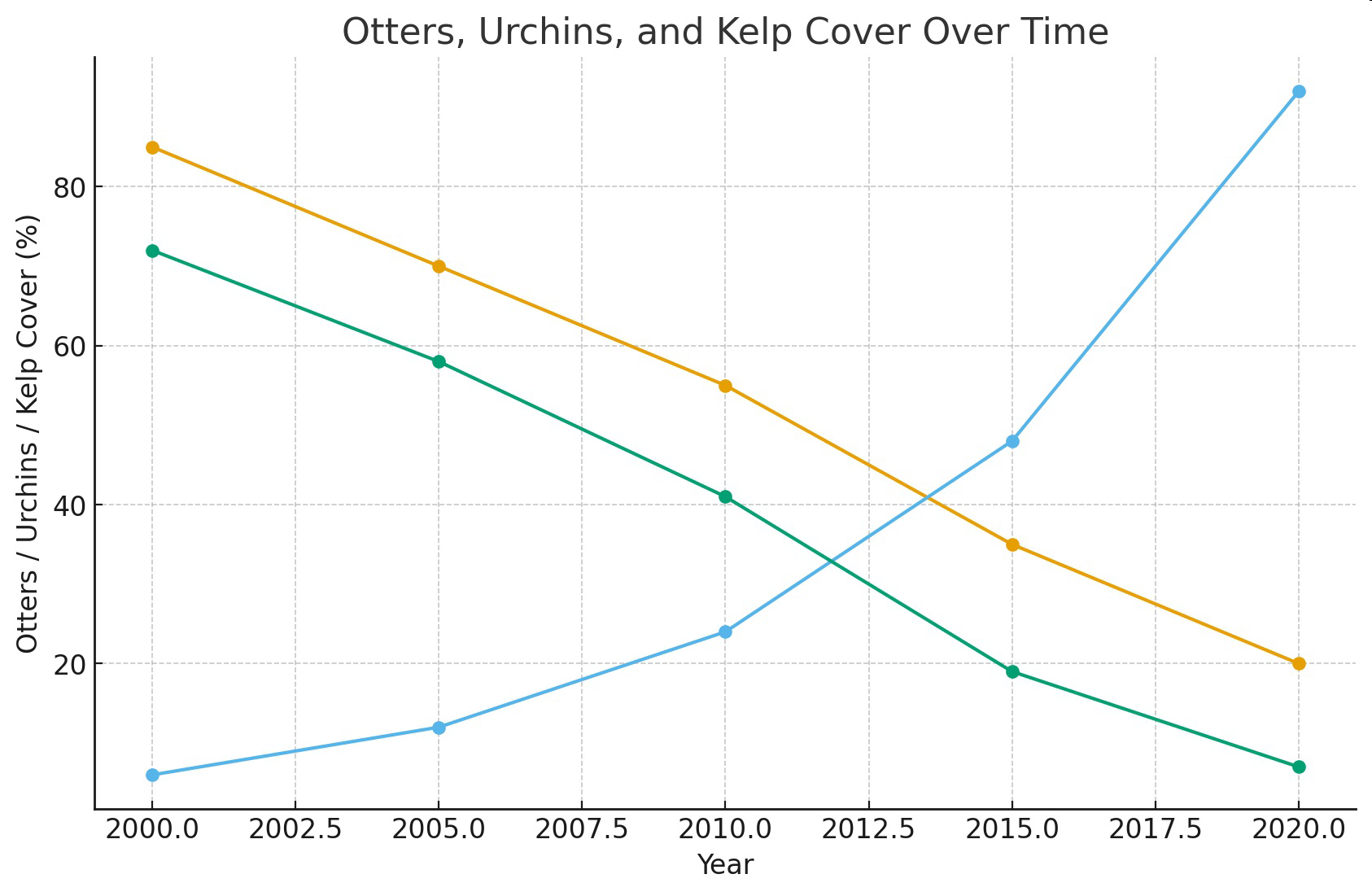
Diagram 1.
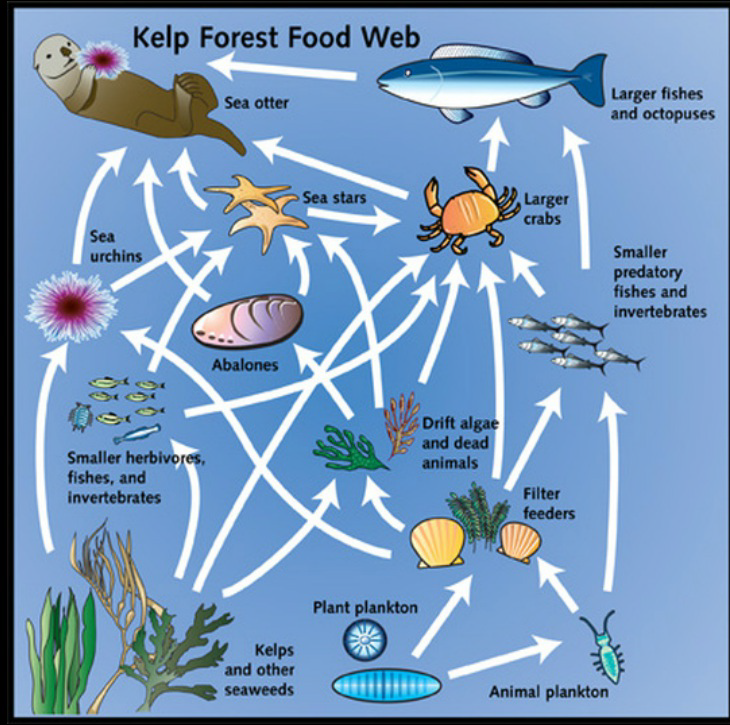 Source: https://cakelpforests.weebly.com/food-web.html
Diagram 2.
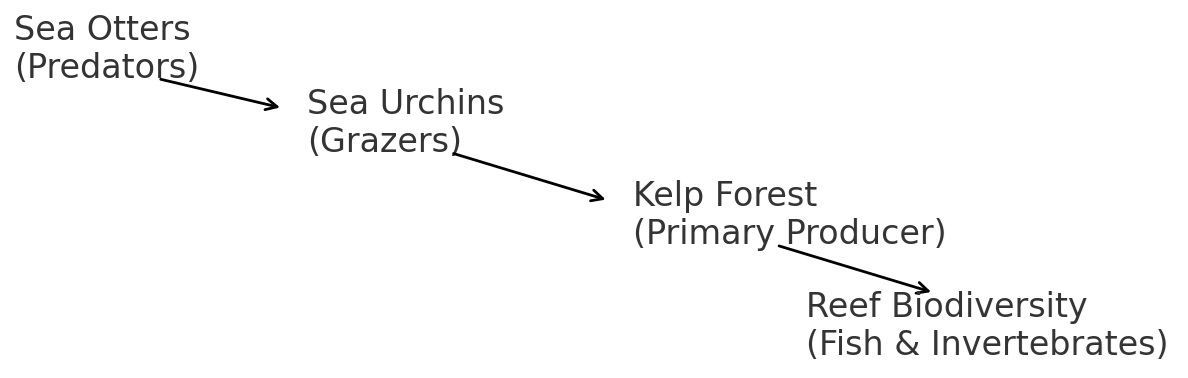
Diagram 3.