Lake Temperature
Key Points
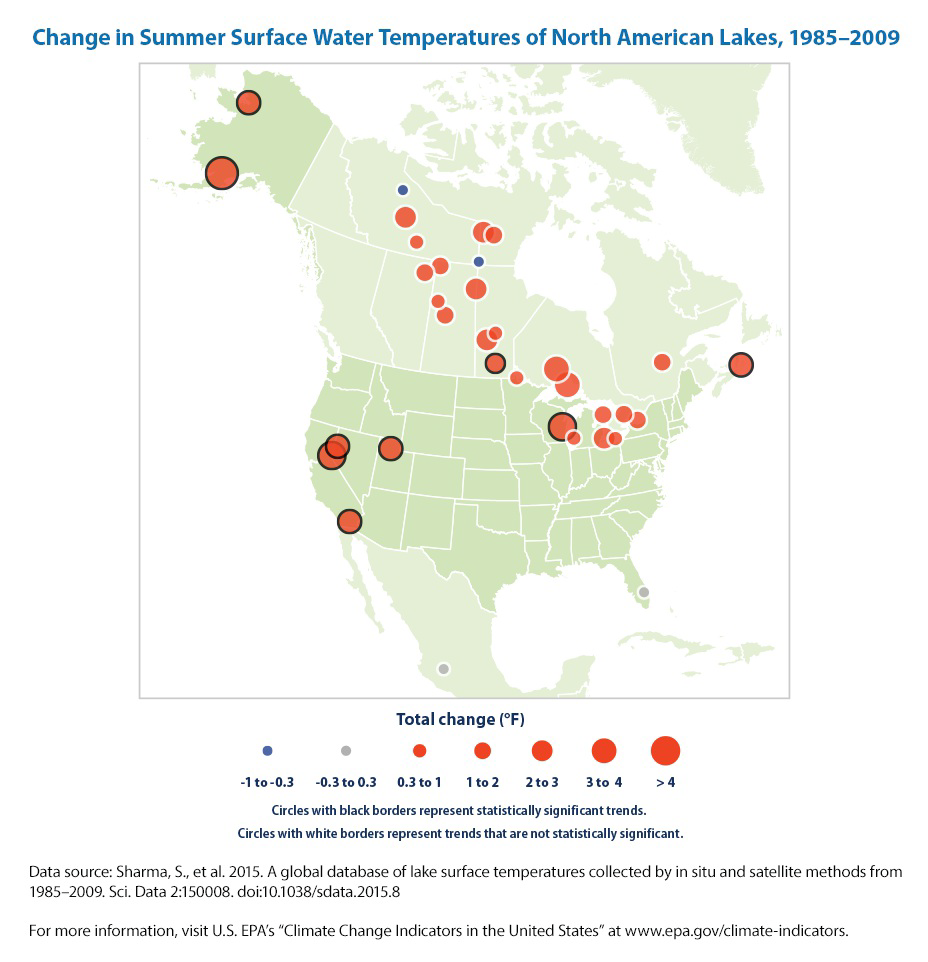
Since 1985, summer surface water temperatures have increased in 32 of the 34 lakes studied. A total of 24 lakes warmed by more than 1°F, and 15 by more than 2°F. Warming was statistically significant in nine of these lakes (see Figure 1).
Iliamna Lake in Alaska warmed the most between 1985 and 2009—more than 4°F (see Figure 1). Other lakes with sizable increases can be found in various parts of the United States and Canada. The two southernmost lakes in Figure 1, Okeechobee in Florida and Chapala in Mexico, had the smallest changes in temperature.
Increases in summer water temperature throughout North America over the last three decades are consistent with other studies, such as a detailed analysis of the entire surface of each of the Great Lakes (see the Great Lakes Water Levels and Temperatures indicator).
Background
Water temperature is an important physical property of every lake. Many plants, animals, and other organisms flourish only in a specific range of water temperatures. Temperature can also affect certain aspects of water quality. For example, higher temperatures promote the growth of algae and bacteria, but they also reduce levels of dissolved oxygen in the water, which can negatively affect the growth and productivity of other aquatic life. Water temperature also influences the circulation or mixing patterns within a lake, which affects nutrient levels.
Temperature influences how people are able to use lakes. For example, while warmer water might be more inviting for recreation, it also contributes to blooms of harmful algae and bacteria that produce toxins. These toxins can cause illnesses in recreational users and contaminate drinking water supplies. Warmer water lengthens the season when lakes are ice-free. This can benefit boaters and shippers but also increases evaporation, lowering water levels. Less lake ice reduces opportunities for winter recreation, such as ice fishing and hockey.
Water temperature is influenced by many factors, but most directly by air temperature. As rising air temperatures cause lake temperatures to rise, the geographic ranges and growth seasons of certain harmful algae and bacteria are expected to expand. Rising water temperatures are also expected to expand the ranges of and give new advantages to certain invasive species, such as the zebra mussel.
Figure 1.
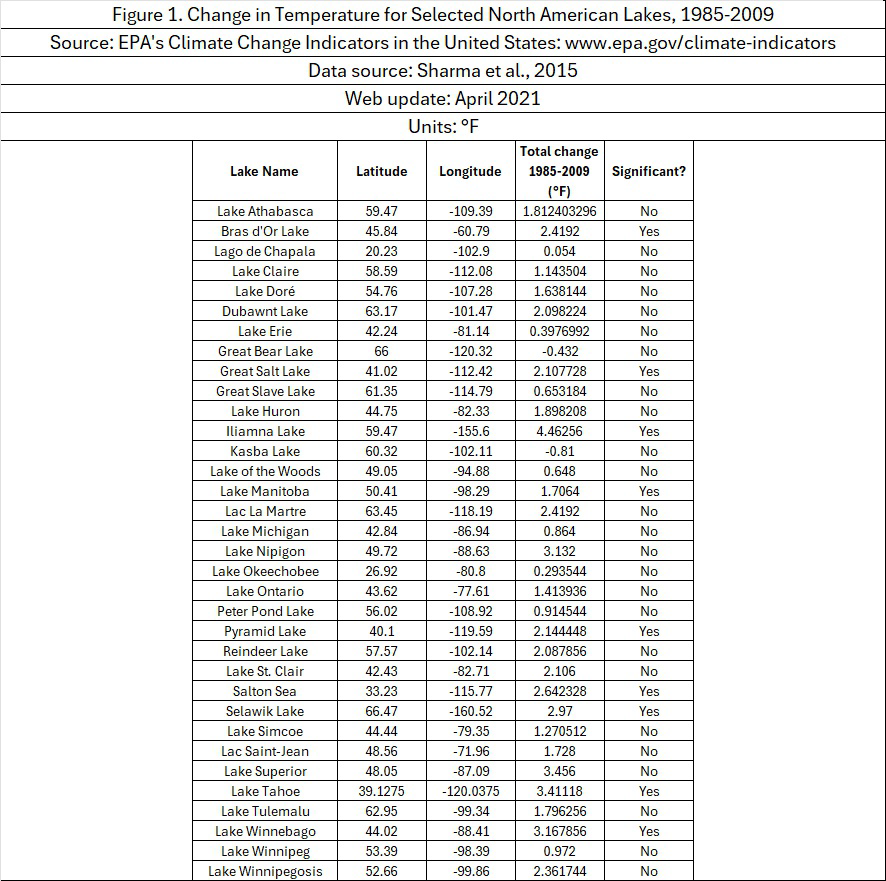
Graph of Information from Figure 1.
This map shows the total change in the average July–September surface water temperatures in 34 North American lakes from 1985 to 2009, as measured by satellites. Red circles represent warming; blue circles represent cooling. Larger circles indicate larger changes. Circles with black borders represent lakes where the
trend was statistically significant.