Meerkat Sentinel Behavior and Predator Detection
Meerkats ($Suricata suricatta$) are small mammals that live in cooperative social groups in the deserts and grasslands of southern Africa. Life in these habitats is challenging: predators such as martial eagles, hawks, jackals, and snakes pose constant threats. To survive, meerkats rely on a highly coordinated system of group vigilance, where individuals take turns acting as sentinels. A sentinel stands upright on a mound or bush, scanning the environment while the rest of the group forages.
This group behavior significantly increases the survival of individual meerkats. When a sentinel detects a predator, it emits a loud alarm call. In response, the group instantly takes cover in nearby burrows or vegetation. Studies show that meerkat groups with consistent sentinel behavior experience fewer successful predator attacks compared to groups that rely primarily on individual vigilance. The increased detection distance provided by a sentinel gives foraging individuals enough time to react, reducing mortality risk.
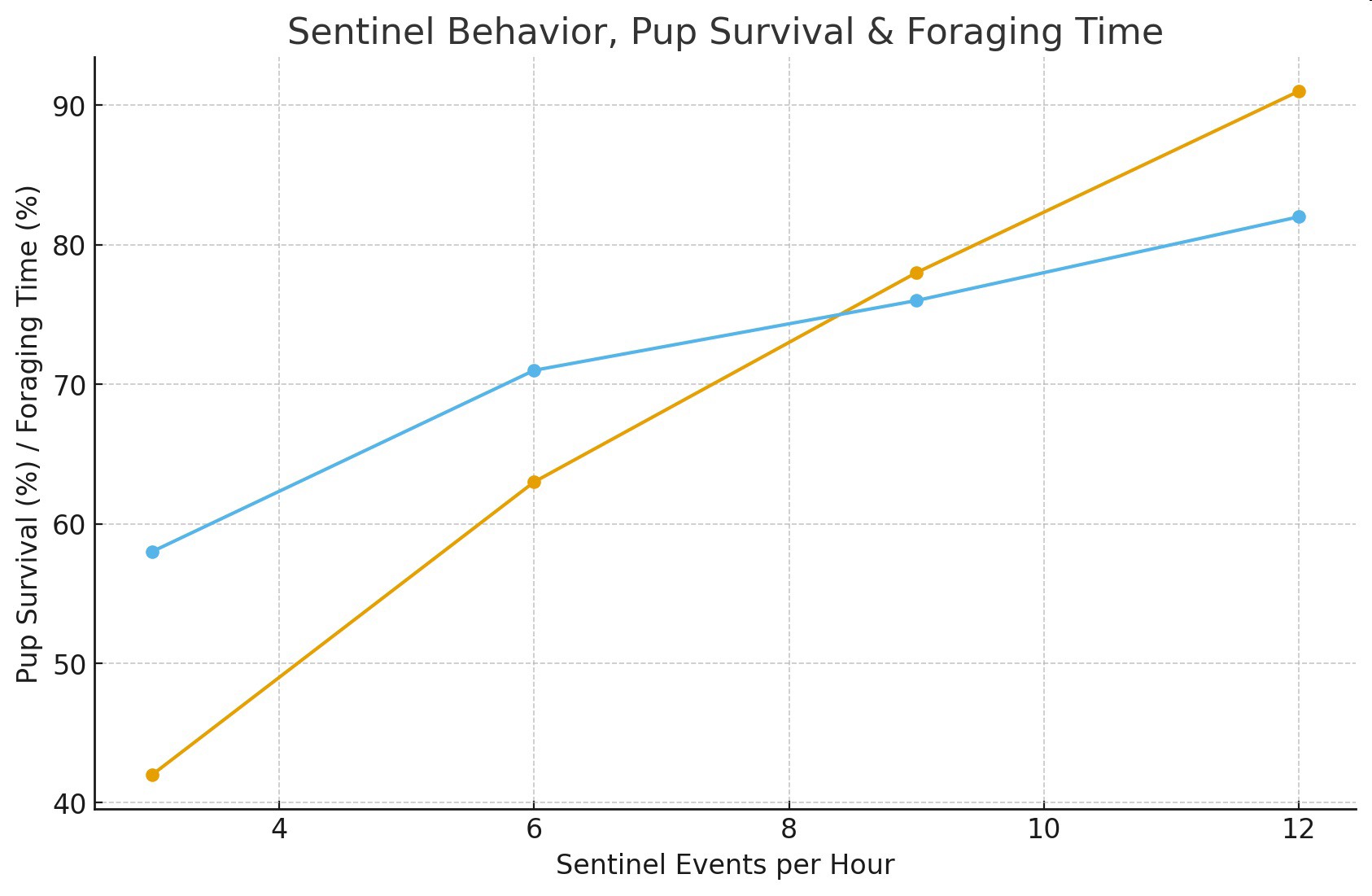
Sentinel behavior also influences reproductive success. Meerkats raise pups cooperatively, with several individuals helping to feed, guard, and teach young. When adults spend less time scanning for predators and more time feeding, overall body condition improves, which enhances breeding opportunities. Likewise, pups in groups with more sentinels have higher survival rates because adults can devote more energy to provisioning rather than constantly monitoring for danger.
Mathematically, researchers measure the relationship between sentinel frequency and survival using metrics such as predator attack rates, time spent foraging, distance from cover, and pup survival percentages. Data consistently show a positive correlation between higher sentinel activity and increased individual survival as well as greater reproductive success. When predator density rises, meerkats often increase sentinel rotation frequency, demonstrating adaptive refinement of group behavior.
This example illustrates HS-LS2-8 because it shows how group behavior improves chances of survival and reproduction at both the individual and species level. Without coordinated vigilance, meerkats would have to forage more cautiously, reducing feeding efficiency and pup care. Group behavior creates an evolutionary advantage that enhances overall population stability, making sentinel systems a key social adaptation.
Diagram 1.
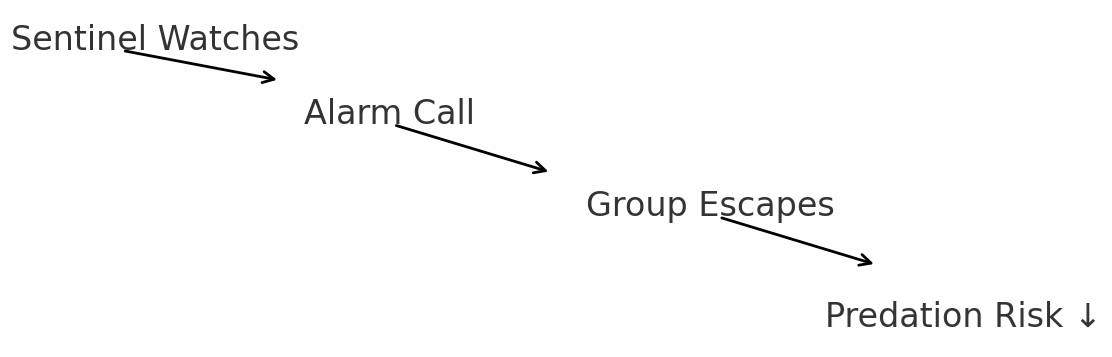
Table 1.
Sentinel Events per Hour | Predator Attacks Observed | Successful Attacks |
|---|
2 | 14 | 6 |
5 | 13 | 3 |
8 | 12 | 1 |
11 | 10 | 0 |
Graph of Information - Figure 1.
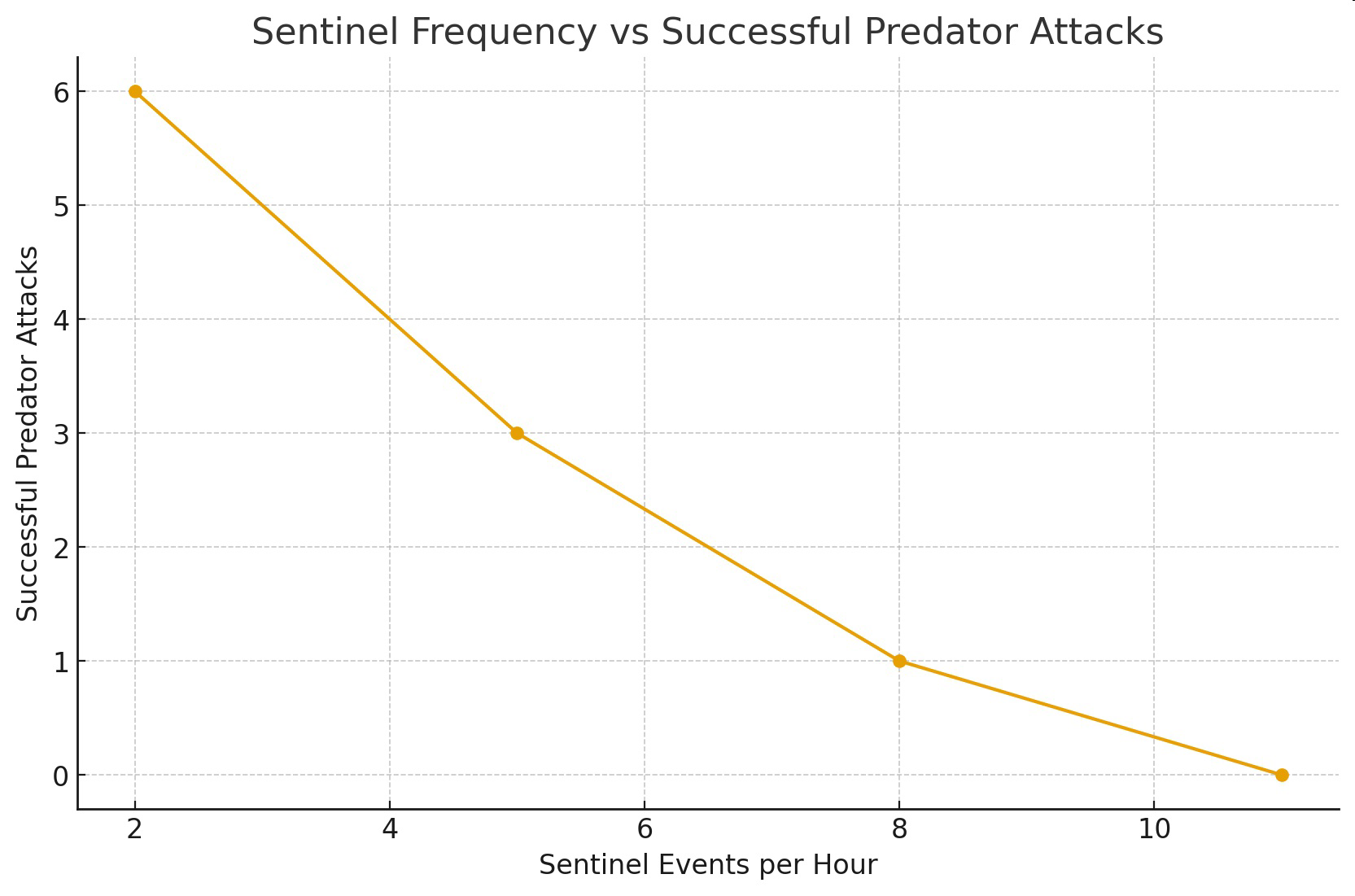
Diagram 2.
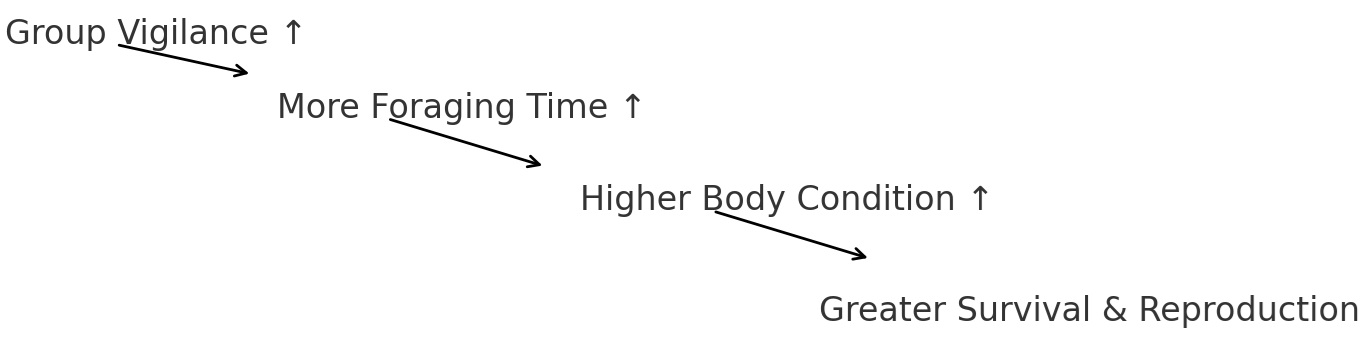
Table 2.
Group ID | Avg Sentinel Events per Hour | Pup Survival % | Adult Foraging Time % |
|---|
A | 3 | 42 | 58 |
B | 6 | 63 | 71 |
C | 9 | 78 | 76 |
D | 12 | 91 | 82 |
Graph of Information - Figure 2.