Pacific Salmon and Carrying Capacity
Diagram 1.
Source:
https://www.mdpi.com/2073-4441/15/4/725
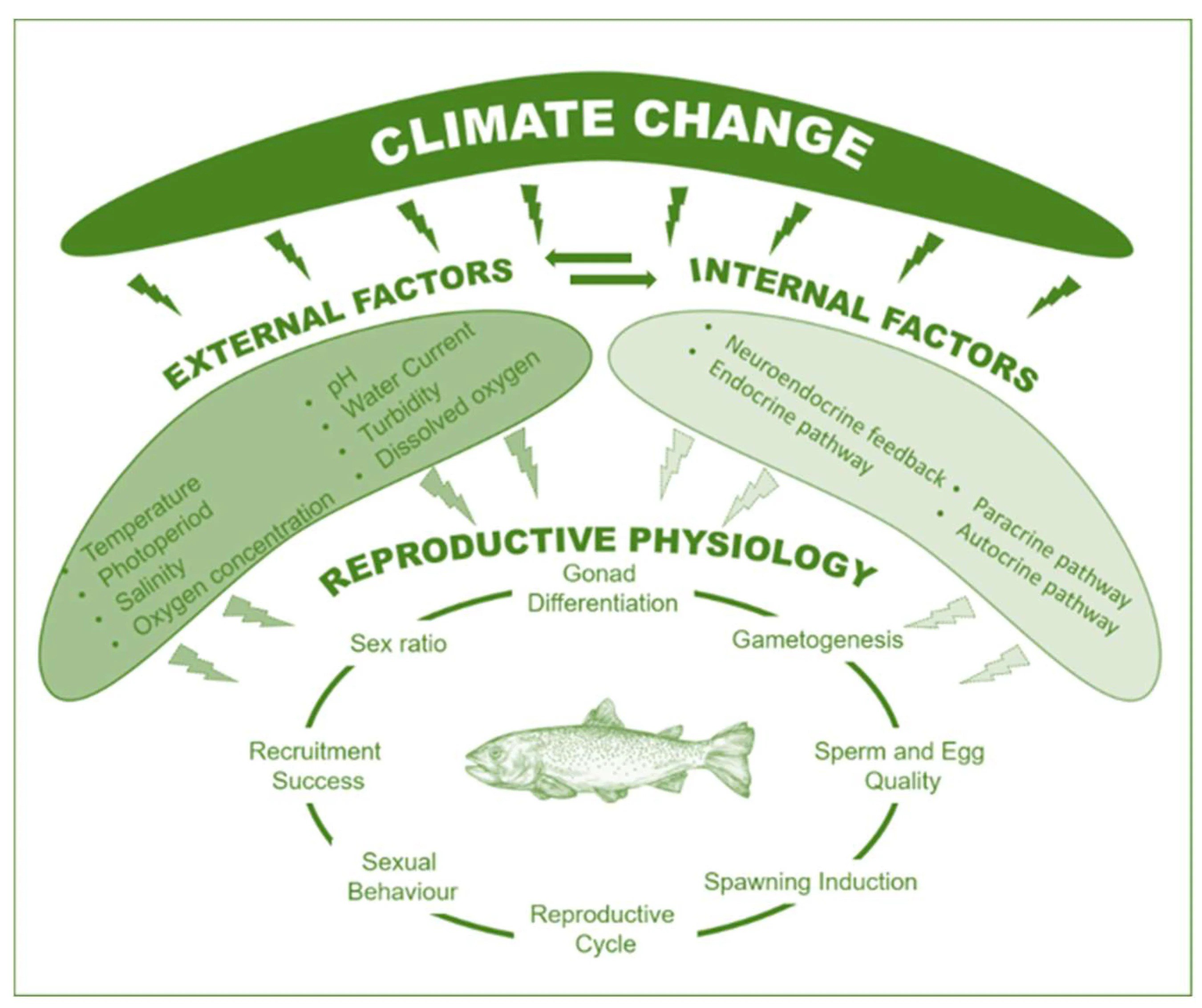
Pacific salmon depend on very specific abiotic conditions for survival, growth, and reproduction. Because they migrate between freshwater rivers and the ocean, their carrying capacity in streams is especially sensitive to changes in temperature, dissolved oxygen, water flow rate, and spawning habitat availability. These factors determine how many juvenile and adult salmon an ecosystem can sustain, making salmon an ideal real-world example.
Water temperature is one of the strongest abiotic limiting factors for salmon. Cold water holds more dissolved oxygen, which salmon need for respiration. As stream temperatures rise - due to climate change, reduced snowmelt, or shallower summer flows - oxygen levels decline. Low oxygen causes stress, reduces juvenile salmon survival, and decreases overall carrying capacity. Mathematical data show a clear pattern: as temperatures increase from $8^\circ C$ to $18^\circ C$, oxygen levels drop by nearly half, and juvenile survival plummets.
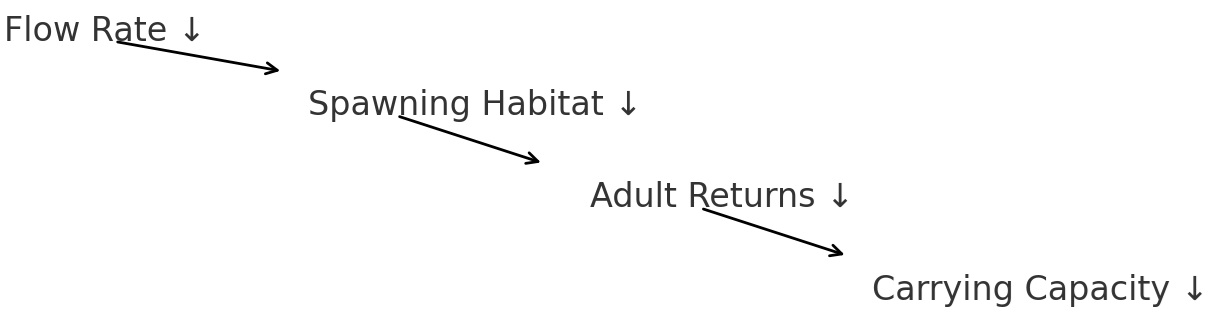
Stream flow rate is another critical abiotic factor. Higher flows create deep, cool pools and maintain access to gravel spawning beds. Lower flows reduce habitat size, raise water temperatures, and increase predation risk. Long-term monitoring shows a decline in flow rates over the past two decades, resulting in shrinking spawning habitat. As spawning area decreases, fewer adult salmon successfully reproduce, causing population declines.
Biotic factors also influence salmon carrying capacity. When juvenile survival rates decrease, fewer fish reach adulthood, reducing the number of returning spawners. Additionally, competition for limited spawning beds intensifies when habitat shrinks, and density-dependent factors further suppress reproductive success.
Mathematical patterns reveal strong connections among these variables. Stream temperature and oxygen form a clear inverse relationship, and survival declines steadily with warming. Flow rate, spawning habitat, and adult returns follow a multivariate trend where reductions in flow drive habitat loss and lower returning populations.
Together, these abiotic and biotic components determine the carrying capacity of salmon-bearing streams. Declining flow rates and rising temperatures - driven by climate and watershed changes - are reducing the number of salmon ecosystems can support. These mathematical relationships illustrate how carrying capacity is dynamic, measurable, and responsive to environmental change.
Table 1.
Stream Temp $^\circ C$ | Dissolved Oxygen mg/L | Juvenile Survival % |
|---|
8 | 11.2 | 92 |
10 | 10.4 | 88 |
12 | 9.5 | 80 |
14 | 8.3 | 65 |
16 | 7.1 | 45 |
18 | 6 | 25 |
Graph of Information - Figure 1.
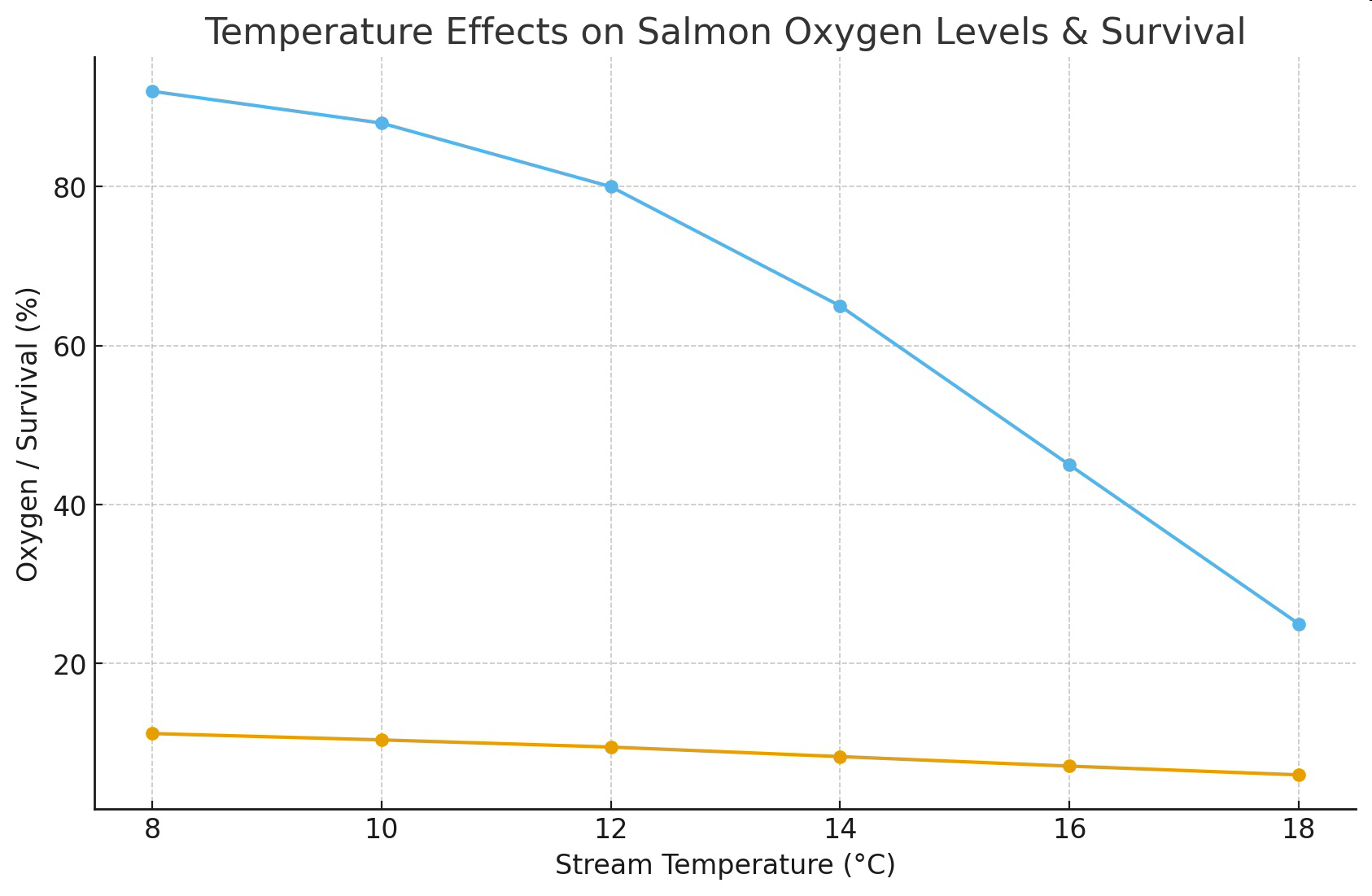
Diagram 2.
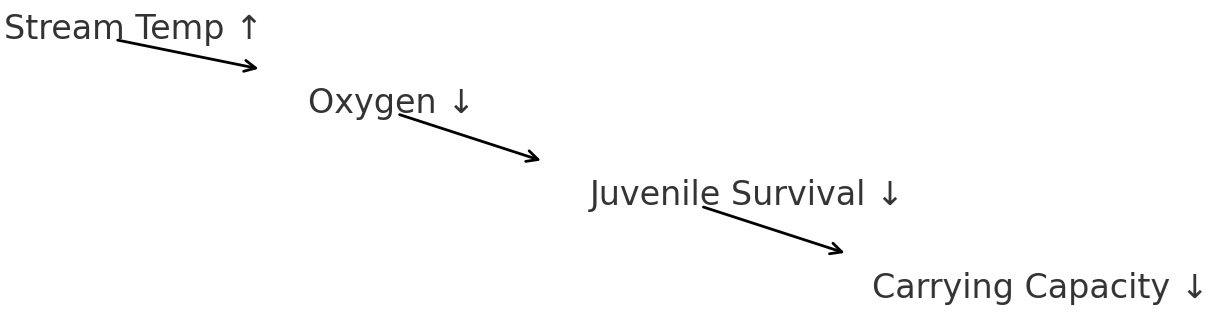
Table 2.
Year | Flow Rate m$^3$/s | Spawning Area km$^2$ | Adult Returns |
|---|
2000 | 140 | 42 | 88000 |
2005 | 132 | 39 | 76000 |
2010 | 118 | 33 | 59000 |
2015 | 105 | 28 | 41000 |
2020 | 96 | 24 | 25000 |
Graph of Information - Figure 2.
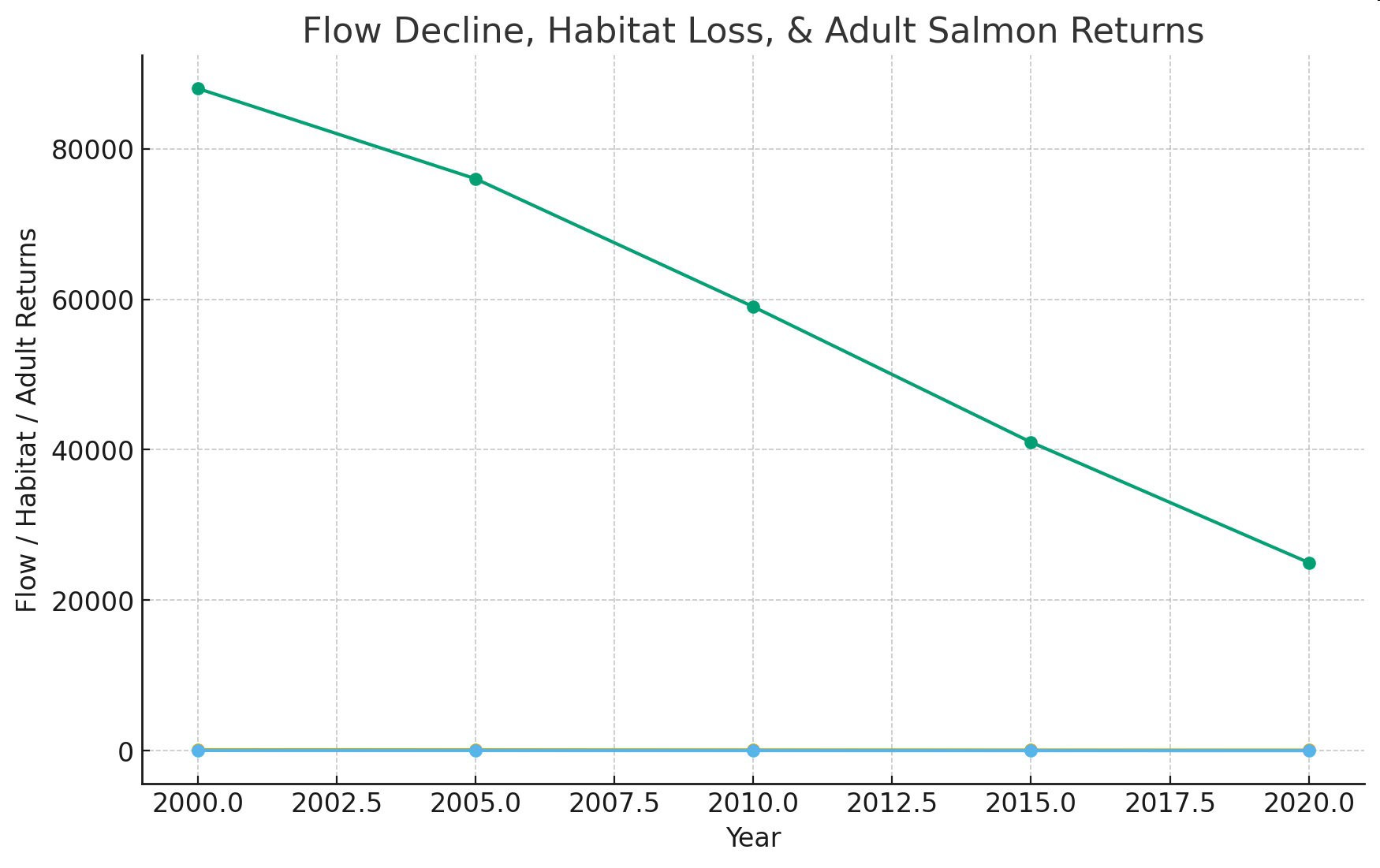
Diagram 3.