Penguin Huddling and Thermoregulation in Extreme Cold
Emperor penguins live in one of the harshest environments on Earth: the Antarctic winter, where temperatures can fall below -40°C and winds exceed 100 km/h. To survive these conditions, penguins rely on one of the most remarkable examples of group behavior in the animal kingdom - huddling. When temperatures drop or winds rise, hundreds of penguins gather tightly together, pressing their bodies against one another to reduce individual heat loss.
Huddling dramatically improves individual survival by reducing the energy penguins must expend to maintain their body temperature. Even a single penguin standing alone loses heat rapidly to the environment, but as huddle density increases, the collective warmth of the group significantly reduces heat loss. Scientists measuring thermoregulation in penguins have found that individuals located in high-density huddles lose only a fraction of the heat lost by isolated birds.
A key feature of penguin huddling is its rotational movement. Penguins on the cold, windy outer edge gradually shift inward, while penguins in the warm interior move outward to replace them. This slow but constant wave-like motion ensures that no individual remains exposed to the harsh outer conditions for too long. The rotation equalizes energy expenditure, improves individual survival, and helps conserve body fat needed for breeding and incubating eggs.
Penguin huddling also impacts reproductive success. During the Antarctic winter, male emperor penguins incubate their single egg for about 65 days without feeding. The ability to conserve energy through huddling allows males to survive this fasting period. Groups with stronger huddling behavior have higher overwinter survival rates and greater chick-rearing success.
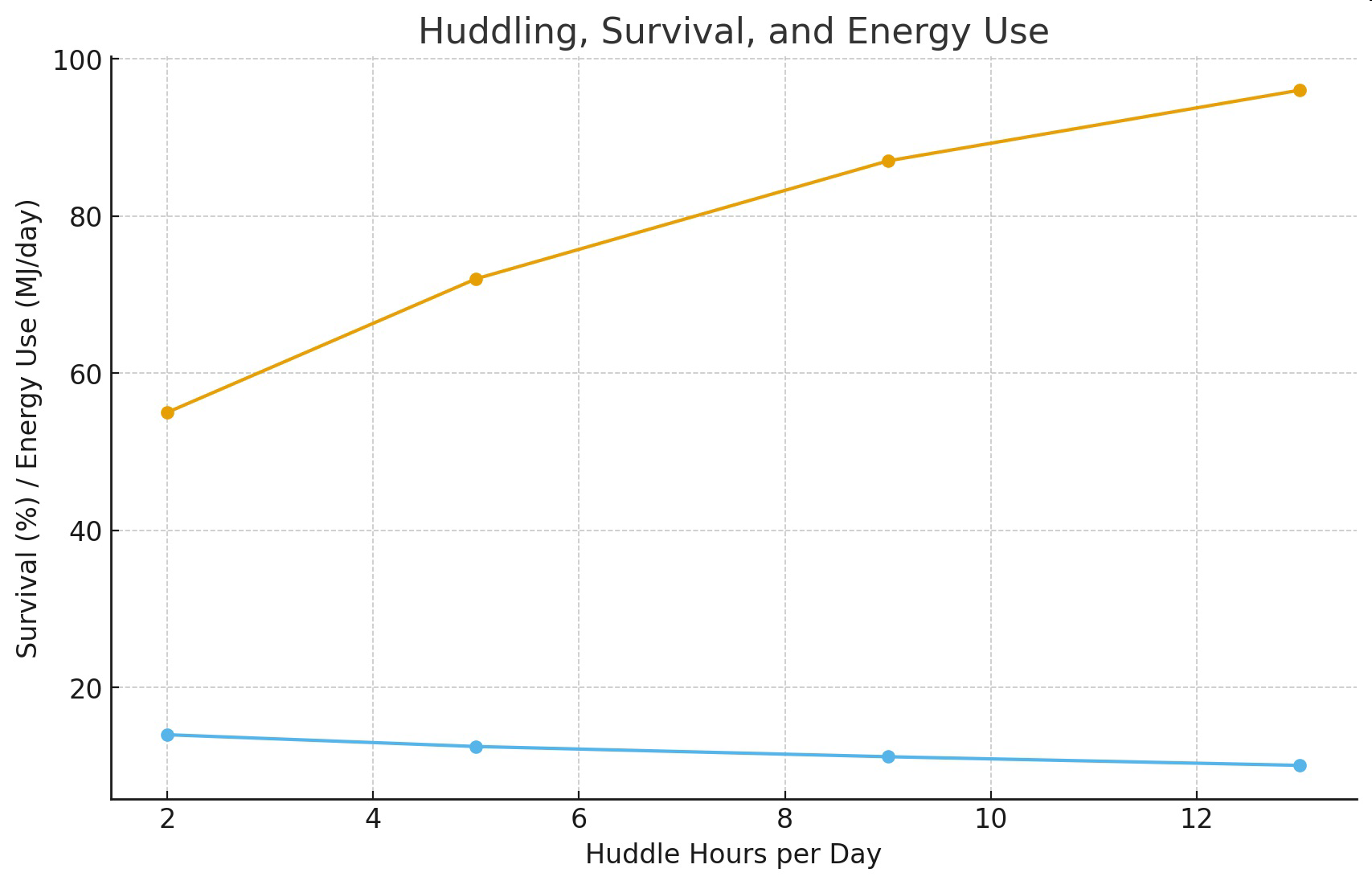
Researchers evaluate huddling effectiveness using measurements such as huddle density, individual heat loss, huddle duration, survival percentages, and energy expenditure. Mathematical data show clear trends: as huddle density increases, heat loss decreases steeply; and as huddle participation increases, both overwinter survival and energy conservation improve.
By cooperating to reduce heat loss and share energetic costs, penguins increase their chances of surviving the Antarctic winter and successfully raising chicks. This complex social behavior is essential not only for individual fitness but also for population persistence in extreme environments.
Diagram 1.
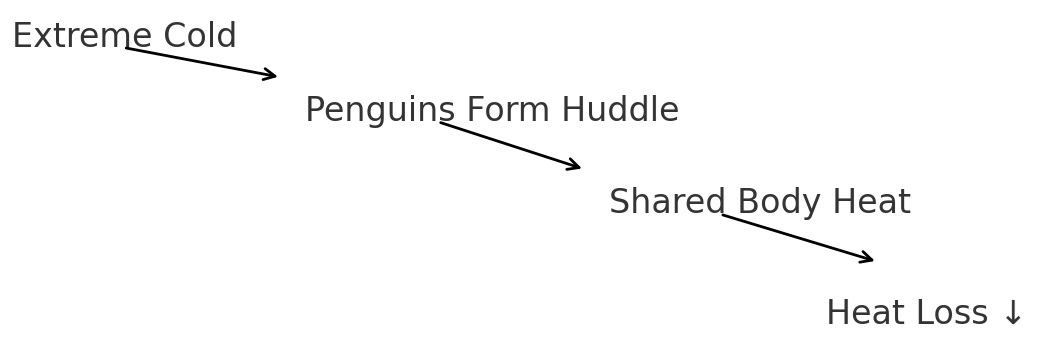
Table 1.
Huddle Density % | Heat Loss Watts |
|---|
20 | 42 |
40 | 33 |
60 | 24 |
80 | 16 |
95 | 9 |
Graph of Information - Figure 1.
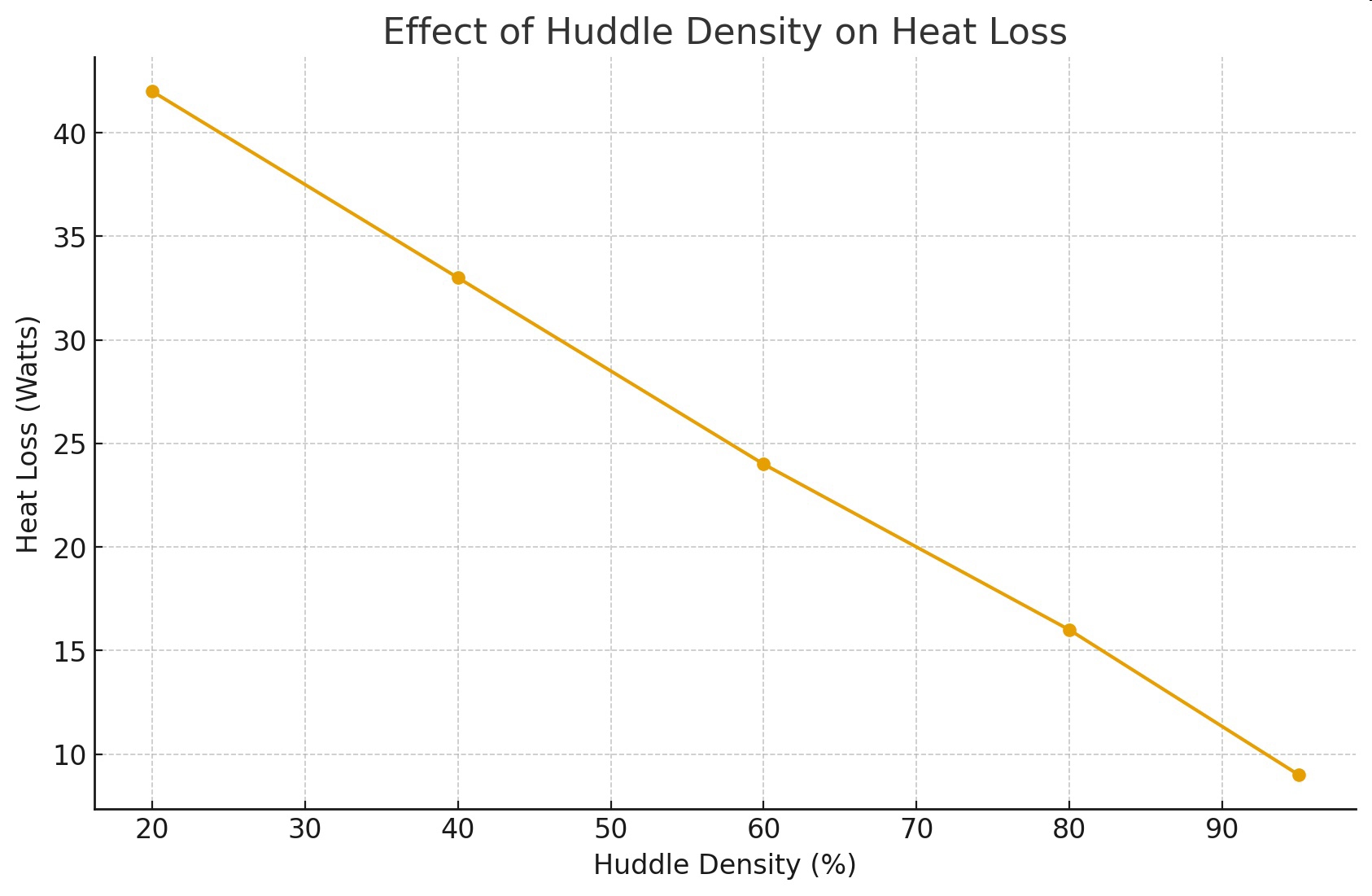
Diagram 2.
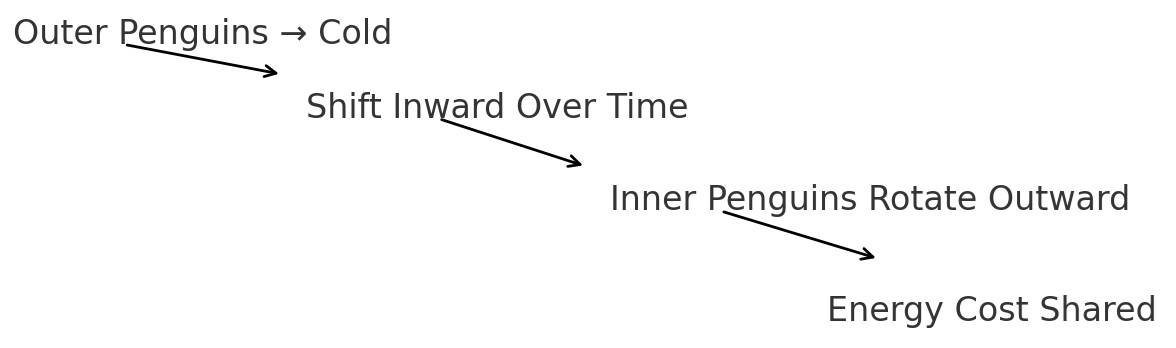
Table 2.
Penguin ID | Huddle Hours per Day | Overwinter Survival % | Energy Use MJ/Day |
|---|
A | 2 | 55 | 14 |
B | 5 | 72 | 12.5 |
C | 9 | 87 | 11.2 |
D | 13 | 96 | 10.1 |
Graph of Information - Figure 2.