Pollinator Decline in Agricultural Landscapes
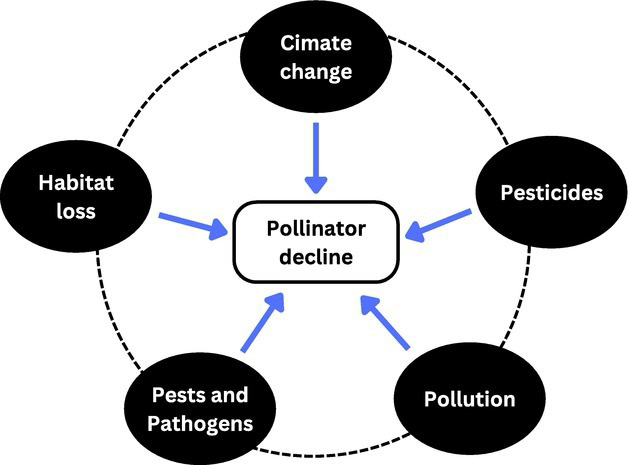
Pollinators - including bees, butterflies, beetles, and flies - play a critical role in both natural and agricultural ecosystems. In many regions, however, pollinator biodiversity is declining due to changes in land use, pesticide exposure, habitat loss, and the simplification of agricultural landscapes. These declines provide a real-world example of how biotic and abiotic factors influence biodiversity and how mathematical representations can support explanations.
One of the most important drivers of pollinator abundance and diversity is the availability of floral resources. Many modern farms rely on monocultures, which provide only limited flowering periods and very little habitat diversity. Without wildflower strips, hedgerows, or uncultivated field margins, pollinators experience long periods with little or no nectar and pollen. Mathematical relationships show strong positive correlations between floral area and species richness - as floral habitat increases, both richness and total abundance rise.
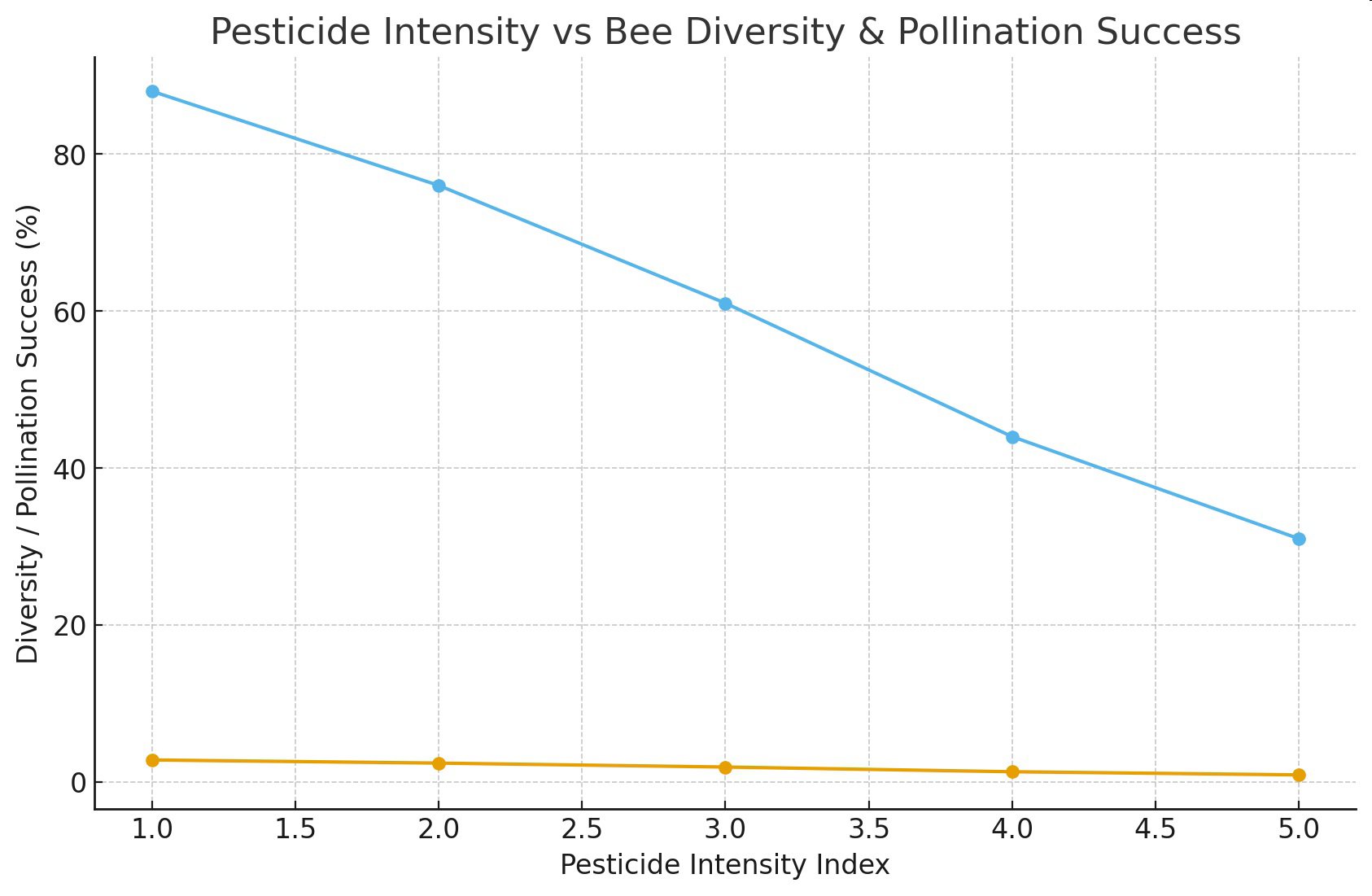
Pesticide exposure, especially neonicotinoids and broad-spectrum insecticides, is another major abiotic factor affecting pollinators. Higher pesticide intensity reduces bee diversity and increases mortality. Over time, these declines reduce pollination success in crops such as fruits, nuts, and vegetables. Long-term datasets often show that areas with the greatest pesticide use have the steepest declines in both wild bee abundance and crop pollination performance.
Pollinator decline also has ripple effects across ecosystems. Because many plants depend on pollinators for reproduction, fewer pollinators lead to lower seed production and reduced plant diversity. This, in turn, affects herbivores and the species that depend on them, creating complex feedback loops. Reduced pollination also directly affects agricultural yields, making pollinator conservation critical for food security.
Mathematical patterns reveal strong links among floral resource availability, bee diversity, pesticide intensity, and pollination success. As floral area increases from small to large, species richness and abundance rise sharply. As pesticide intensity increases, diversity and pollination success decline. These datasets provide quantitative evidence for the mechanisms driving biodiversity changes and help students build or revise explanations based on measurable trends.
Diagram 1.
 Source: https://www.cabidigitallibrary.org/doi/10.1079/cabireviews.2024.0016
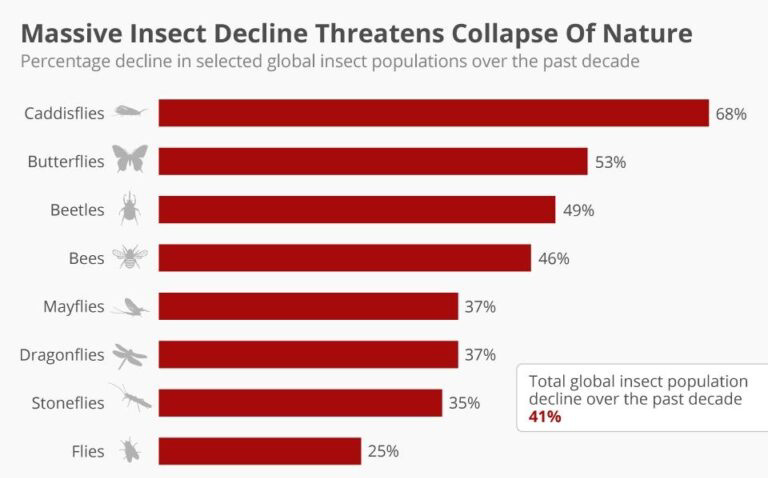
Diagram 2.
 Source: https://pollination.education/are-dragonflies-pollinator/
Table 1.
Floral Area m | Pollinator Species Richness | Pollinator Abundance |
|---|
50 | 4 | 120 |
150 | 9 | 310 |
300 | 15 | 620 |
600 | 22 | 1150 |
900 | 27 | 1600 |
Graph of Information - Figure 1.
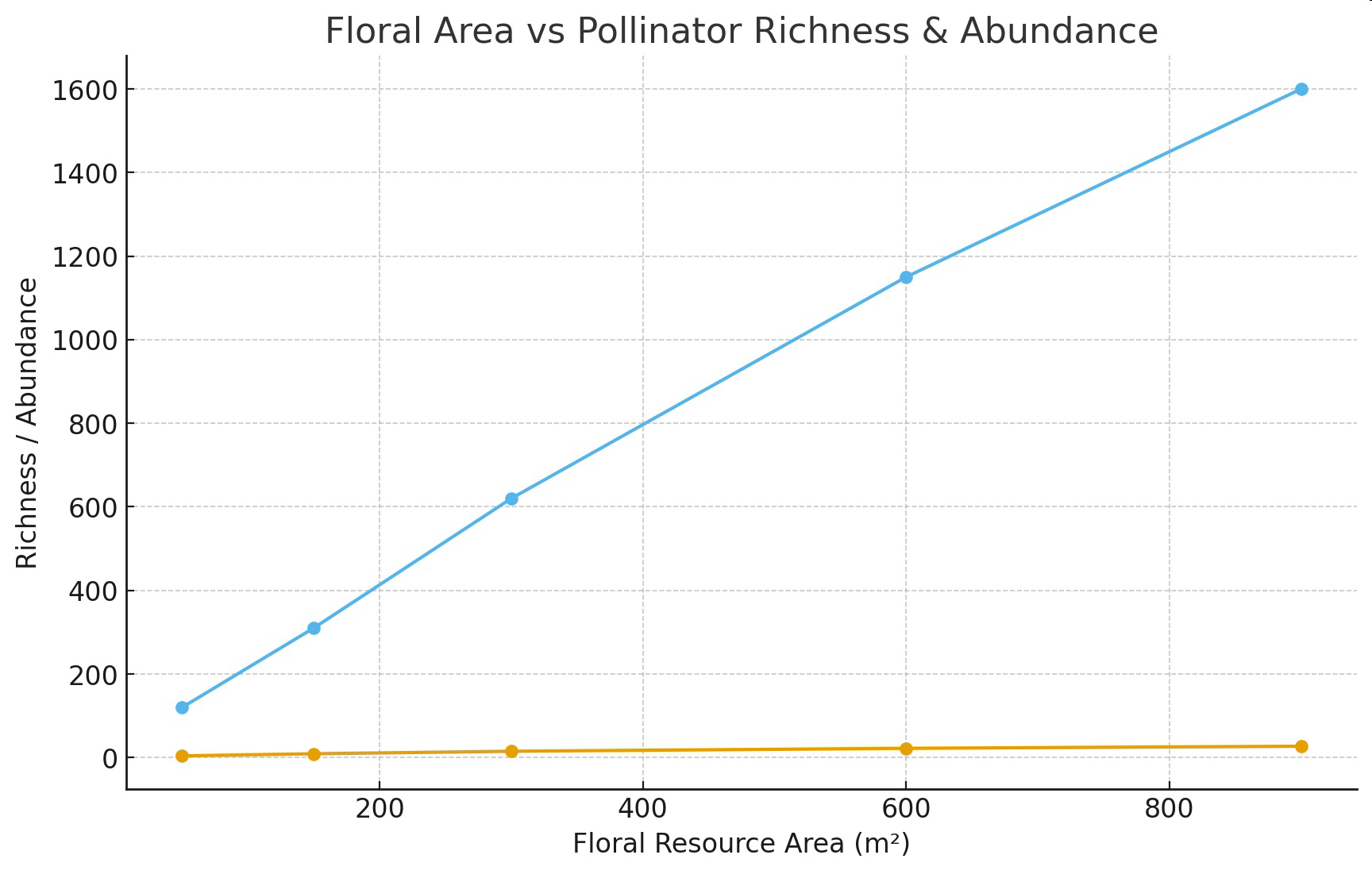
Table 2.
Pesticide Intensity Index | Bee Diversity Shannon | Pollination Success % |
|---|
1 | 2.8 | 88 |
2 | 2.4 | 76 |
3 | 1.9 | 61 |
4 | 1.3 | 44 |
5 | 0.9 | 31 |
Graph of Information - Figure 2.