Prairie/Grassland Fragmentation and Decline of Grassland Birds
Diagram 1.
 Source: https://www.slideserve.com/tyra/biodiversity-loss-and-species-extinction
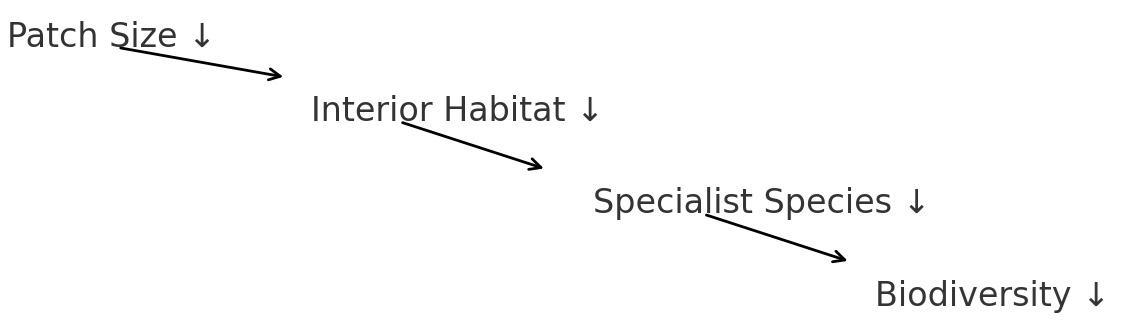
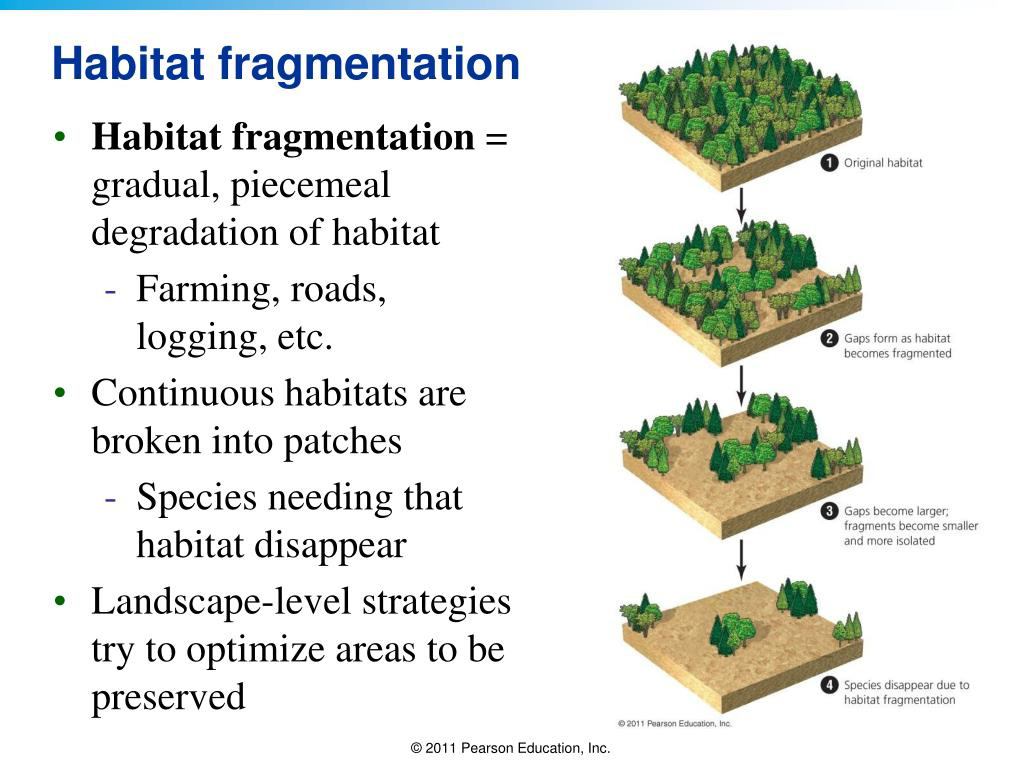
Grassland ecosystems once covered vast areas of North America, supporting a wide range of specialized bird species such as meadowlarks, grasshopper sparrows, upland sandpipers, and bobolinks. These birds rely on large, continuous expanses of native prairie for nesting, feeding, and protection from predators. In the last century, however, most prairies have been converted into agricultural land or fragmented by roads, housing developments, and infrastructure. This fragmentation has become one of the strongest drivers of biodiversity loss in grassland ecosystems.
Fragmentation decreases patch size - the total area of continuous habitat available - and increases the proportion of “edge habitat,” the transition zone between prairie and non-prairie land. Many grassland birds are interior specialists that require large, open spaces with minimal disturbance. Smaller patches contain less interior habitat and more edges, which expose nests to predators such as raccoons, skunks, foxes, and cowbirds. Cowbirds, in particular, are brood parasites that lay eggs in the nests of grassland birds, reducing reproductive success.
Math data show clear patterns: As patch size increases, species richness and nest success both rise. Smaller patches, especially those under 20 hectares, support only a few generalist species and show very low nest success rates. Larger patches exceeding 100 hectares maintain substantially higher diversity and productivity.
Fragmentation also intensifies predation rates. As edges expand, predators have easier access to nests. Long-term datasets show predation increasing across decades as the landscape becomes more fragmented. At the same time, specialist bird abundance has declined steadily. These declines reflect not only nesting failures but also reduced habitat quality, fewer food resources, and increased competition from generalist species that thrive near edges.
These trends occur at multiple scales. At the patch scale, individual fields with more interior prairie have higher bird diversity. At the landscape scale, regions with many small, isolated patches support fewer specialists compared to regions with a few large blocks of prairie. Mathematical relationships such as species-area curves, edge-to-interior ratios, and nest success data make these patterns clear and quantifiable.
Grassland fragmentation demonstrates how biotic (predation, competition) and abiotic (land cover configuration, patch area) factors combine to influence biodiversity. The mathematical patterns strongly support explanations for why many grassland bird species are declining and how habitat restoration or reconnection could improve ecosystem resilience.
Table 1.
Patch Area ha | Grassland Species Richness | Nest Success % |
|---|
5 | 4 | 22 |
15 | 9 | 35 |
30 | 14 | 48 |
60 | 19 | 61 |
120 | 23 | 70 |
Graph of Information - Figure 1.
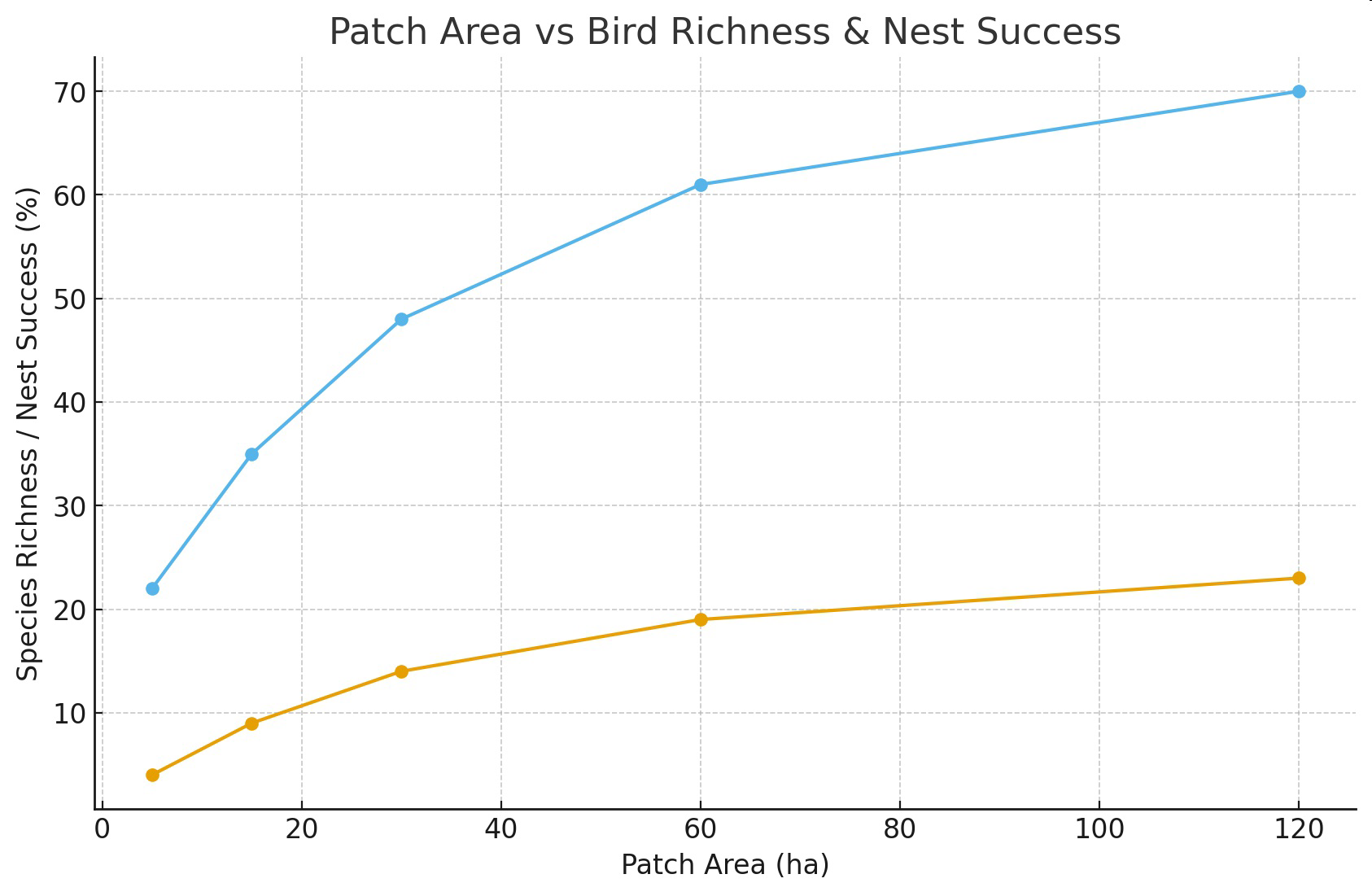
Diagram 2.
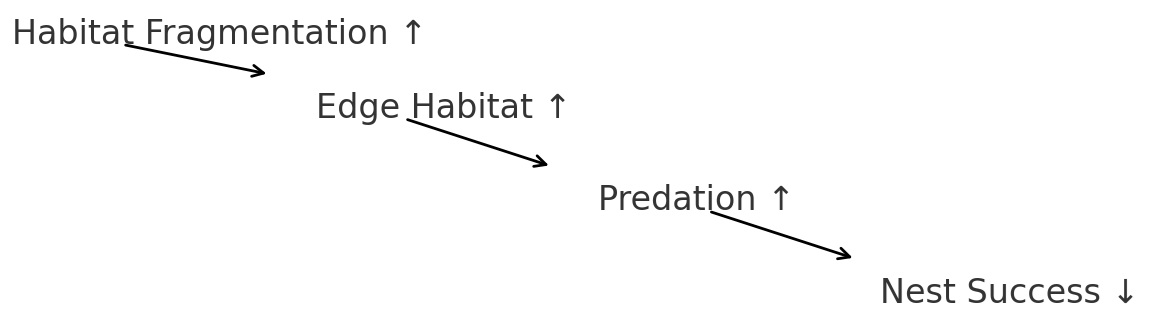
Table 2.
Year | Edge to Interior Ratio | Predation Rate % | Specialist Bird Abundance |
|---|
2000 | 3.8 | 18 | 520 |
2005 | 4.5 | 23 | 440 |
2010 | 5.2 | 29 | 360 |
2015 | 5.9 | 35 | 270 |
2020 | 6.7 | 41 | 180 |
Graph of Information - Figure 2.
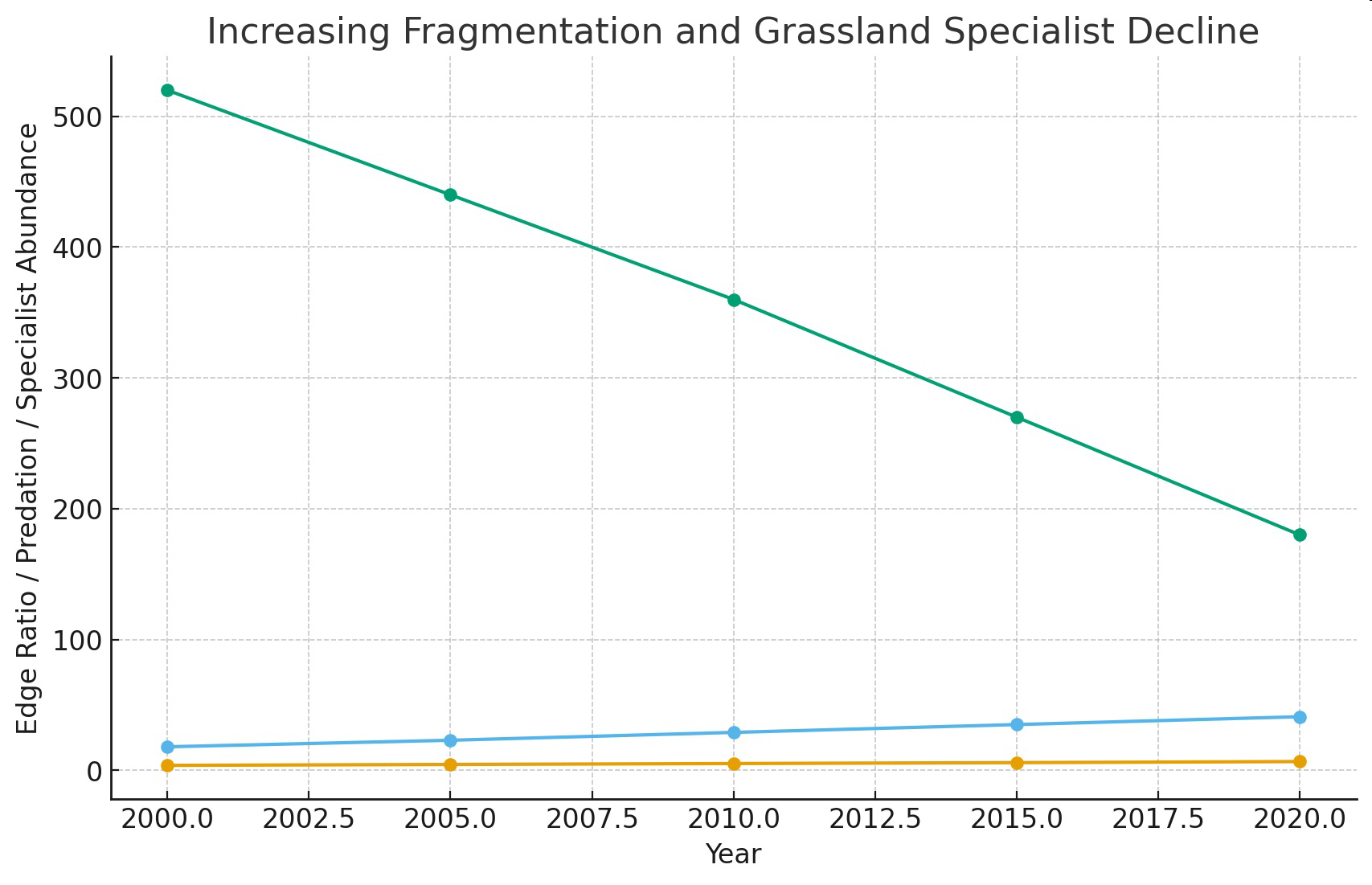
Diagram 3.