Ragweed Pollen Season
Key Points
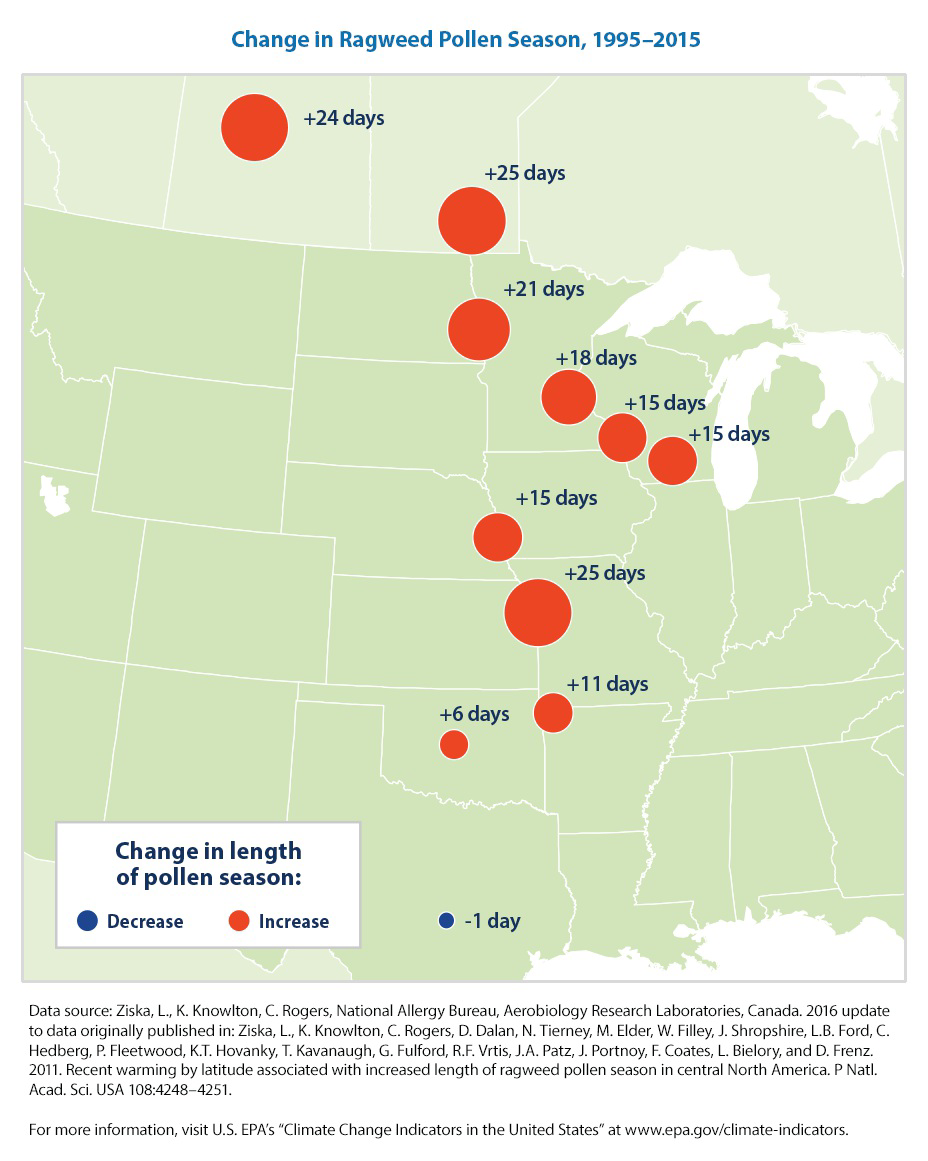
Since 1995, ragweed pollen season has grown longer at 10 of the 11 locations studied (see Figure 1).
The increase in ragweed season length generally becomes more pronounced from south to north. Ragweed season increased by 25 days in Winnipeg, Manitoba; 24 days in Saskatoon, Saskatchewan; 21 days in Fargo, North Dakota; and 18 days in Minneapolis, Minnesota (see Figure 1). This trend is consistent with many other observations showing that climate is changing more rapidly at higher latitudes.
The trends in Figure 1 are strongly related to changes in the length of the frost-free season and the timing of the first fall frost. Northern areas have seen fall frosts happening later than they used to, with the delay in first frost closely matching the increase in pollen season. Meanwhile, some southern stations have experienced only a modest change in frost-free season length since 1995.
Background
Allergies are a major public health concern, with hay fever (congestion, runny nose, itchy eyes) accounting for more than 13 million visits to physicians’ offices and other medical facilities every year. One of the most common environmental allergens is ragweed, which can cause hay fever and trigger asthma attacks, especially in children and the elderly. An estimated 15.5 percent of all Americans are sensitive to ragweed.
Ragweed plants mature in mid-summer and produce small flowers that generate pollen. Ragweed pollen season usually peaks in late summer and early fall, but these plants often continue to produce pollen until the first frost. A single ragweed plant can produce up to a billion pollen grains in one season, and these grains can be carried long distances by the wind.
Climate change can affect pollen allergies in several ways. Warmer spring temperatures cause some plants to start producing pollen earlier (see the Leaf and Bloom Dates indicator), while warmer fall temperatures extend the growing season for other plants, such as ragweed (see the Length of Growing Season indicator). Warmer temperatures and increased carbon dioxide concentrations also lead ragweed and other plants to produce more pollen, and the pollen they produce is more allergenic. This means that many locations could experience longer allergy seasons and higher pollen counts as a result of climate change.
Figure 1.
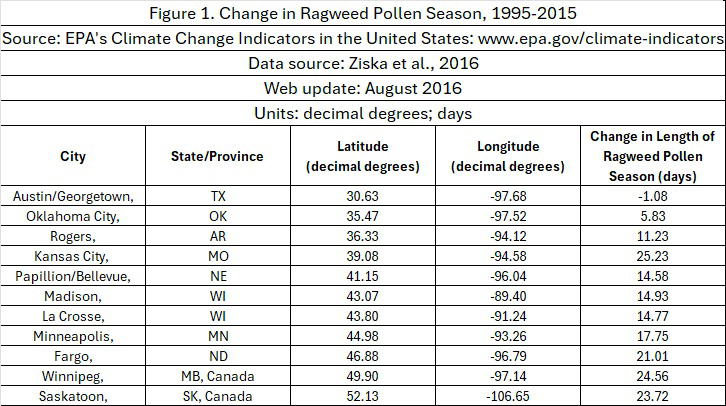
Graph of Information from Figure 1.
This figure shows how the length of ragweed pollen season changed at 11 locations in the central United States and Canada between 1995 and 2015. Red circles represent a longer pollen season; the blue circle represents a shorter season. Larger circles indicate larger changes.