Residential Energy Use
Key Points
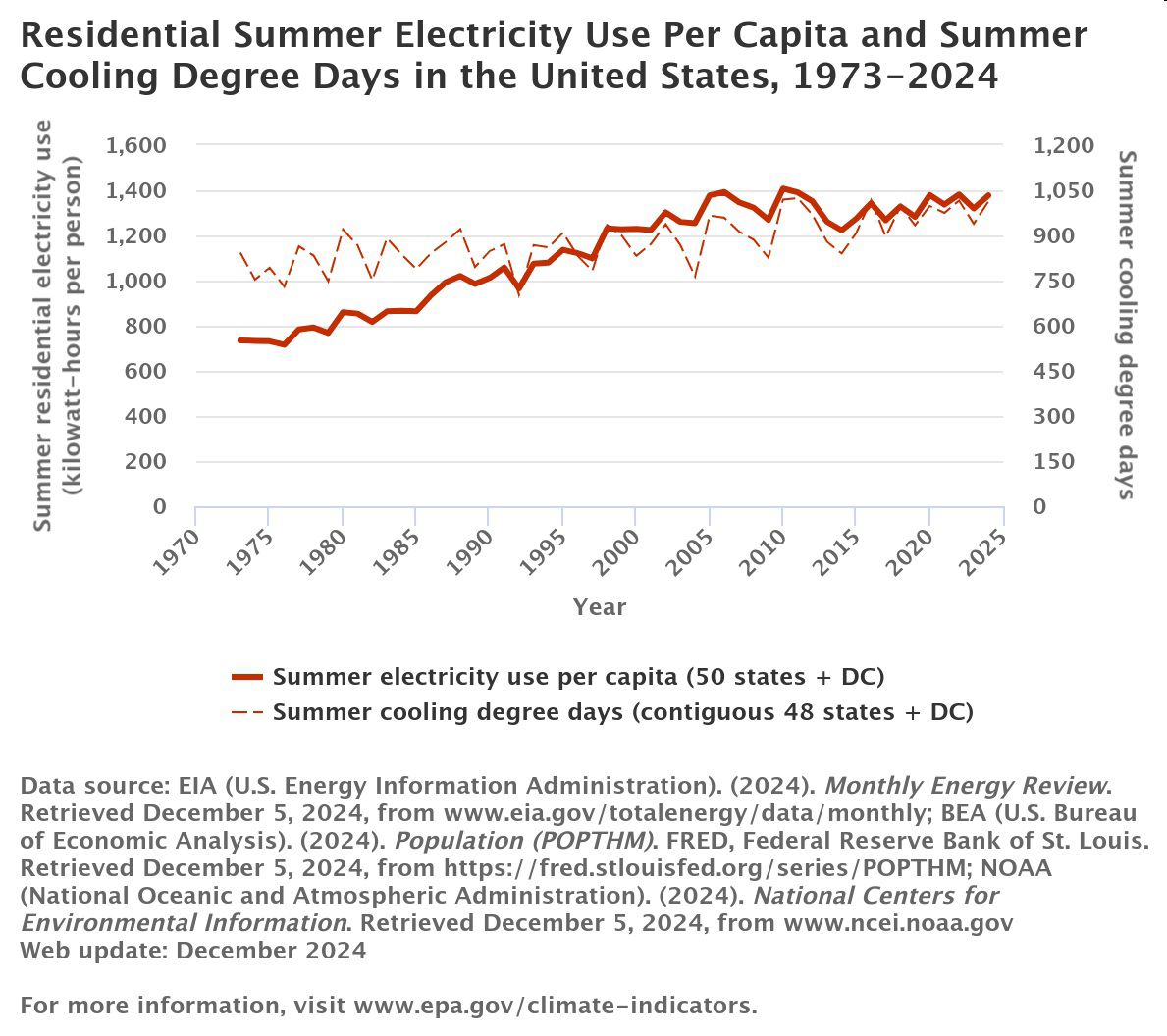
The amount of electricity used by the average American at home during the summer has nearly doubled since 1973, but it appears to have leveled off somewhat in recent years (see Figure 1).
Year-to-year fluctuations in electricity use generally follow changes in cooling degree days (see Figure 1). Total cooling degree days have also increased since 1973, though they have not increased as dramatically as electricity use.
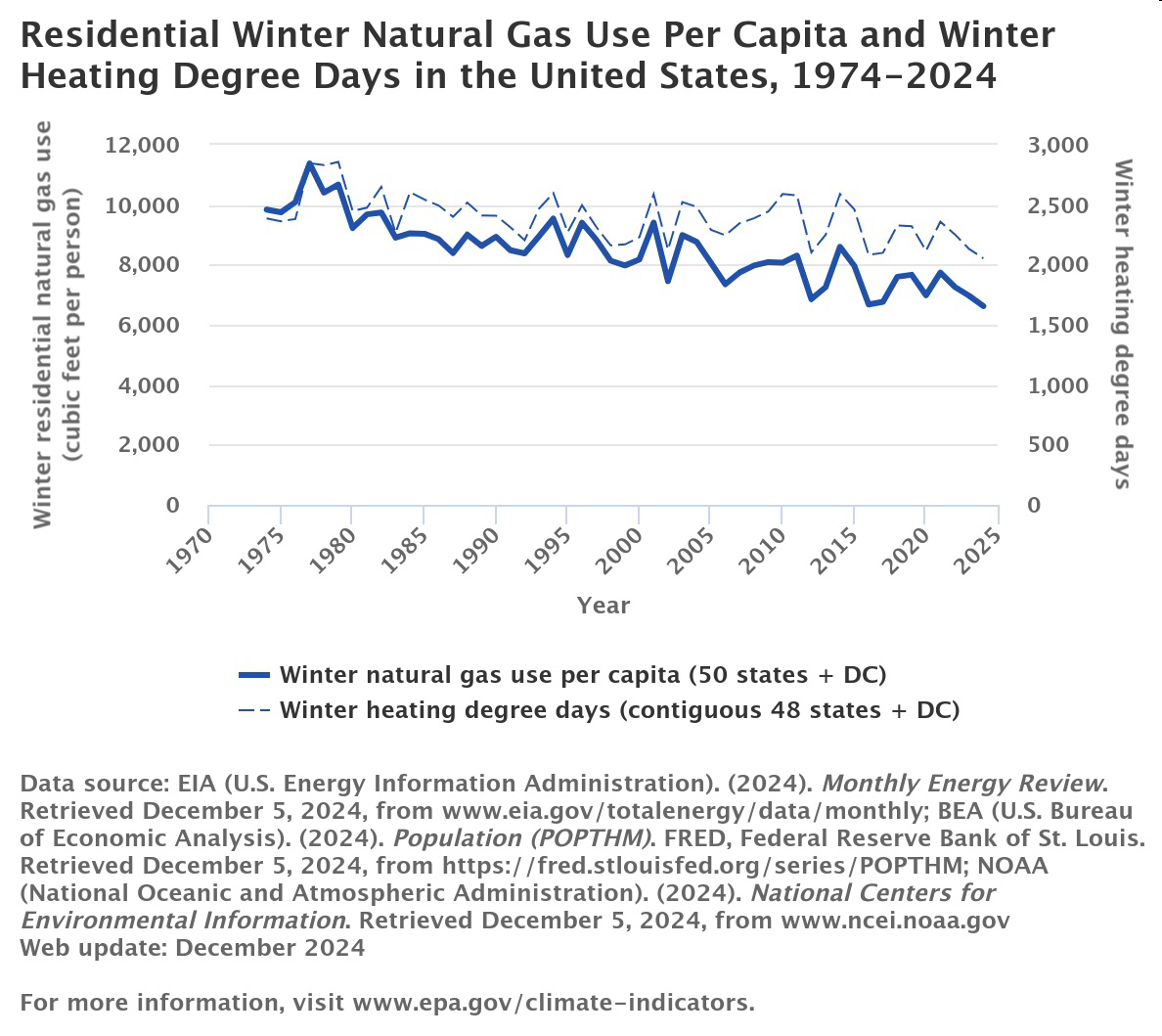
The amount of natural gas used by the average American at home during the winter has decreased since 1974 (see Figure 2).
Year-to-year fluctuations in natural gas use appear to mirror changes in heating degree days (see Figure 2). Total heating degree days have also decreased since 1974, though they have not decreased as dramatically as natural gas use.
Background
Hot weather can be uncomfortable, and in extreme cases dangerous. One way people respond to hot weather is by using air conditioning. Air conditioning is the primary way to cool a home and has become more widely used over time; as of 2020, it accounted for 19 percent of the electricity that the average American household uses every year. Conversely, cold weather requires people to use energy to heat their homes, using electricity and fuels such as natural gas, propane, and oil.
As climate change contributes to an increase in average temperatures and unusually hot days, Americans are expected to use more energy - mostly electricity for air conditioning. As a result, people will likely have to spend more money on electricity for cooling. Increased use of air conditioning could also lead to more greenhouse gas emissions and further climate change, because more electricity must be generated to meet this increased demand. As of 2023, about three-fifths of the electricity in the United States was generated by burning fossil fuels such as coal or natural gas. Burning fossil fuels for electricity is one of the largest sources of heat-trapping greenhouse gas emissions in the United States.
The opposite effect could take place with winter heating. As temperatures rise, Americans are expected to use less fuel energy for heating their homes. Overall, though, summer increases in energy use are expected to outweigh any reduction due to lower heating needs in the winter. Improvements in energy efficiency, particularly for electricity-based heating and cooling, can influence residential consumption and demand for energy over time.
Graph of Information - Figure 1.
This graph shows the amount of electricity used by the average American during the summer months (June, July, and August) of each year from 1973 to 2024. The solid line shows average summer electricity use per
capita, and it represents all 50 states plus D.C. For reference, the dashed line shows the average number of cooling degree days for the same months across the contiguous 48 states plus D.C.
Graph of Information - Figure 2.
This graph shows the amount of natural gas used by the average American during the winter months (December, January, and February) of each year from 1974 to 2024 (winter “1974” covers December 1973 through February 1974, and so on). The solid line shows average winter natural gas use per capita, and it represents all 50 states plus D.C. For reference, the dashed line shows the average number of heating degree days for the same months across the contiguous 48 states plus D.C.