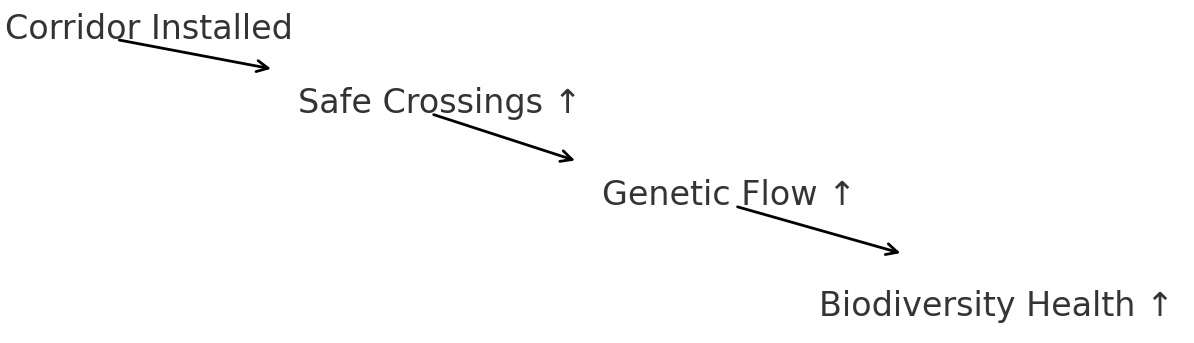
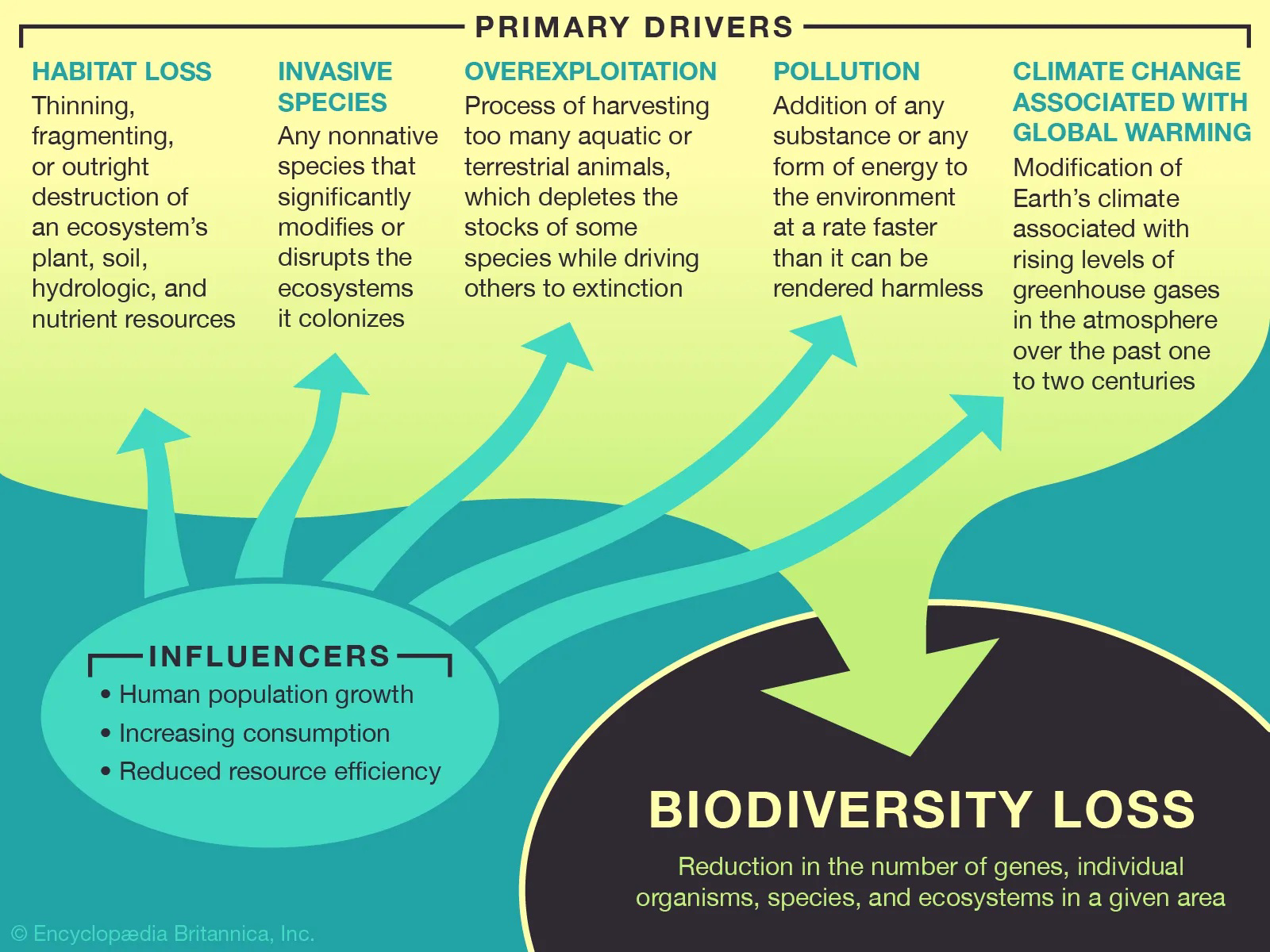
Habitat fragmentation is one of the leading causes of biodiversity loss worldwide. As human development expands, forests, grasslands, and migration routes become divided by roads, housing, and agricultural fields. Many large mammals - such as elk, deer, wolves, bears, mountain lions, and even smaller species like bobcats - depend on the ability to move across large areas for food, breeding, and seasonal migration. When habitats are fragmented, animals face greater risks of vehicle collisions, reduced access to resources, and genetic isolation.
To address these challenges, many regions have implemented wildlife corridors, which are engineered structures that help animals safely cross human-made barriers. Two of the most effective designs are wildlife overpasses (vegetated bridges across highways) and underpasses (tunnels or culverts that allow animals to pass beneath roads). When combined with directional fencing that funnels animals toward these crossings, these structures significantly reduce mortality and increase habitat connectivity.
Long-term ecological monitoring shows that wildlife corridors dramatically improve conservation outcomes. Motion-activated cameras and sensor tracking reveal that many large mammals regularly use these crossings. Mathematical data consistently show two major benefits: reduced roadkill and increased genetic flow. For example, before corridors were constructed, populations separated by highways often showed low genetic diversity due to limited movement. After corridors were installed, genetic diversity increased, demonstrating renewed mixing between groups.
Road ecology scientists evaluate corridor effectiveness using metrics such as crossing frequency, mortality reduction percentage, genetic diversity indices, and changes in population movement patterns. Overpasses tend to be used by a wider variety of species, while underpasses are often preferred by predators or nocturnal animals. Fence-only systems reduce roadkill somewhat but do not improve habitat connectivity.
Designing and refining wildlife corridors requires understanding animal behavior, habitat needs, landscape structure, and engineering constraints. Placement, width, vegetation type, fencing design, and structural noise levels all influence success. Students can analyze data from different corridor types and evaluate which design features most effectively reduce human impacts on wildlife.
Table 1.
Corridor Type | Crossings per Month | Roadkill Reduction % |
|---|
Overpass | 340 | 92 |
Underpass | 215 | 76 |
Fence_Only | 40 | 18 |
Graph of Information - Figure 1.
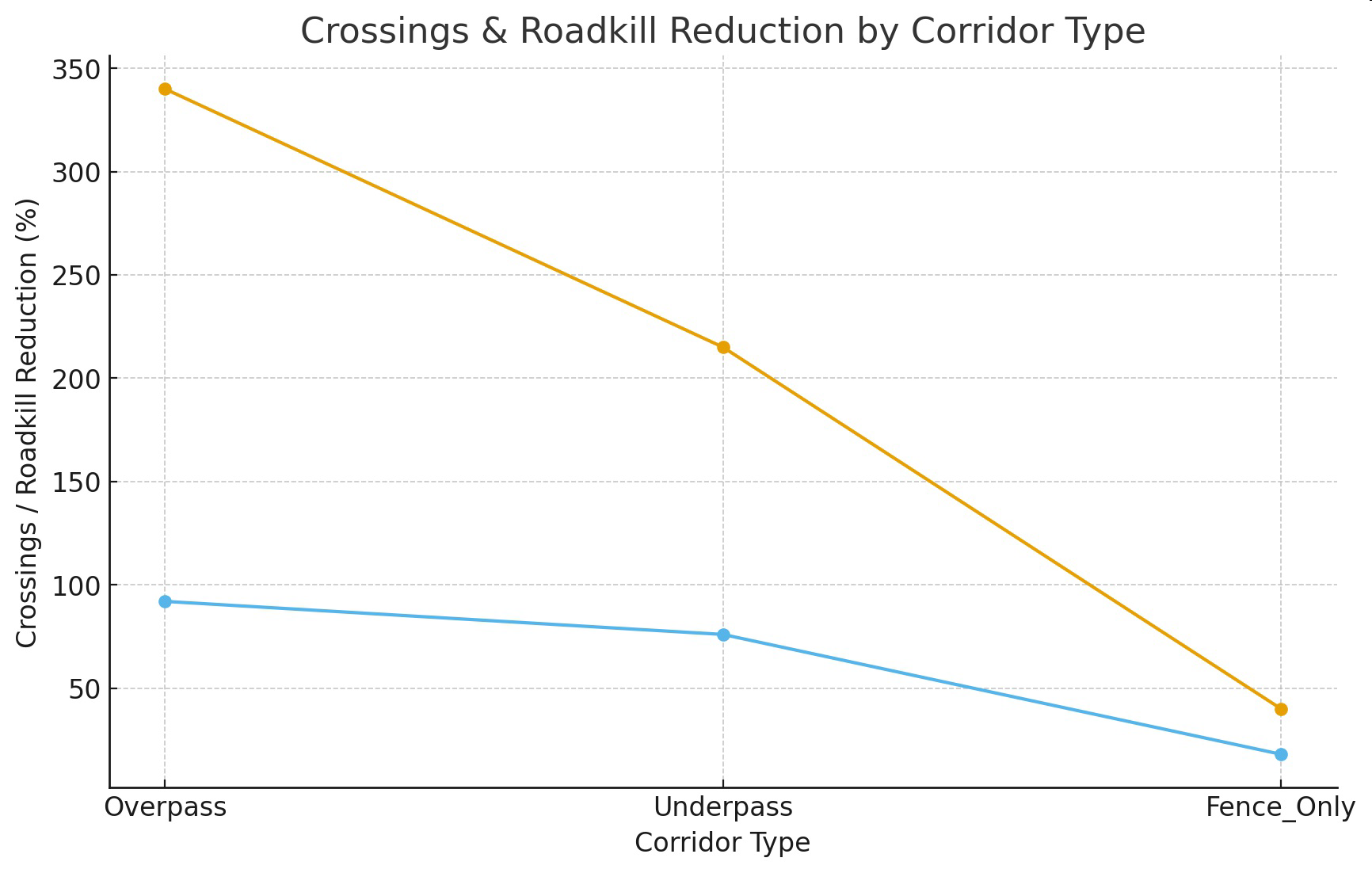
Diagram 2.
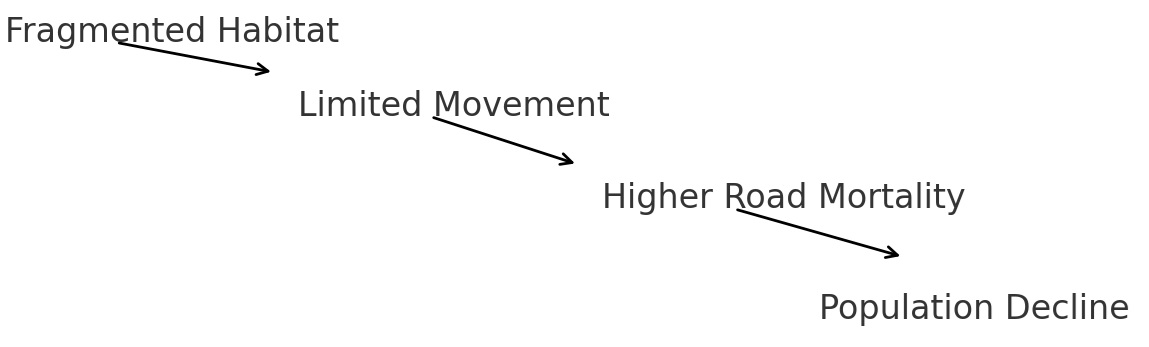
Table 2.
Time | Genetic Diversity Index | Avg Movement km/Month |
|---|
Before | 0.62 | 4.3 |
After | 0.79 | 9.1 |
Graph of Information - Figure 2.
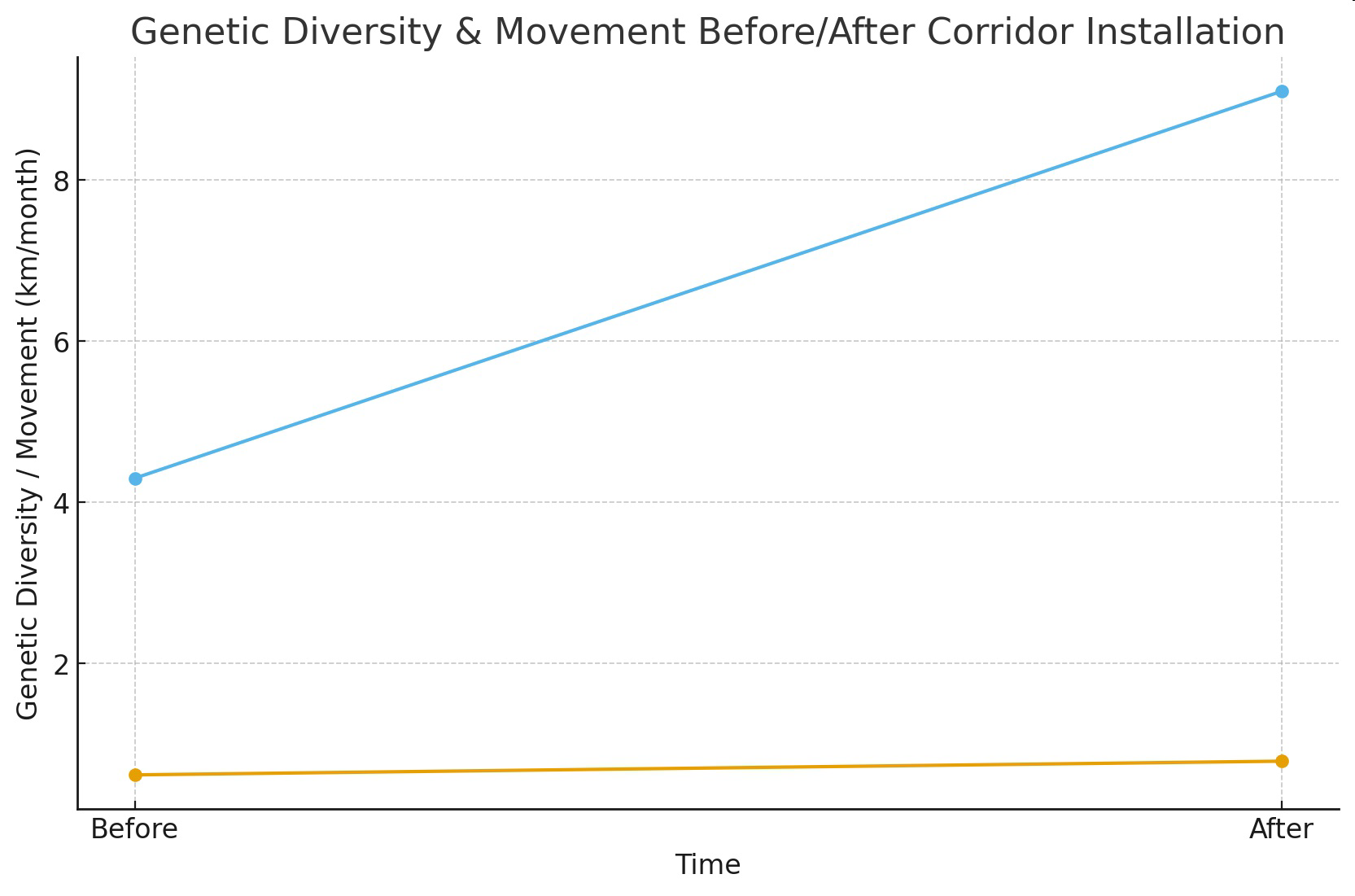
Diagram 3.