Women in the Renaissance
star
star
star
star
star
Last updated 5 months ago
24 Nsɛmmisa

1
MWH.1.CE
1
MWH.1.CE
1
MWH.1.CE
MWH.1.E
1
MWH.1.CE
MWH.1.E

1
MWH.1.CE
1
MWH.1.CE
2
MWH.1.CE
MWH.1.E
1
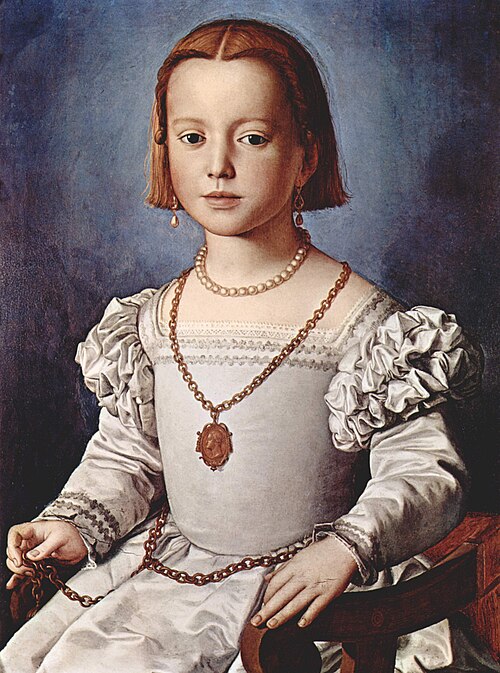
What type of clothing is commonly worn by children in Renaissance portraits?
Document 2 0- Excerpt from Christine de Pizan, The Book of the City of Ladies, 1450
"If it were customary to send daughters to school like sons, and if they were then taught the natural sciences, they would learn as thoroughly and understand the subtleties of all the arts and sciences as well as sons. For although, as women, they have more delicate bodies than men, they do not have lesser minds. Their understanding is as free and capable as that of any man. It is not nature, but the lack of education that keeps them from such heights."
What is suggested about women's education in the passage?
Document 3 - Natalie Zemon Davis, Society and Culture in Early Modern France, Stanford University Press, 1975.
"The woman’s role was defined by her place in the family and her relation to the men who headed it, yet she often found ways to exert her own agency within those boundaries. In the artisanal classes, a wife was not merely a domestic figure but a vital partner in the workshop, often managing accounts or overseeing apprentices when her husband was away. Her identity was a complex layering of daughter, wife, mother, and worker, each role carrying its own set of legal and social constraints. Even when the law limited her voice, the 'disorderly' woman could use public festivals or protests to challenge the status quo. By examining these moments of friction, we see that women were never passive recipients of culture. They were active participants who reshaped their world through both subtle negotiation and overt resistance."
What was the primary role of women in the Renaissance?
The picture above is Laura Cereta.
Where was she from? (just name the country)
Why was she considered important for the time period?
Find and copy a quote from one of her works. Make sure to give the title of the work that the quote comes from.
Explain what the quote from Laura Cereta means in your own words. If you need to use and example to explain it that is ok.
The picture above is Vittoria Colonna.
Where was she from? (just name the country)
Why was she considered important for the time period?
Find and copy a quote from one of her works. Make sure to give the title of the work that the quote comes from.
What does this quote mean in your own words?
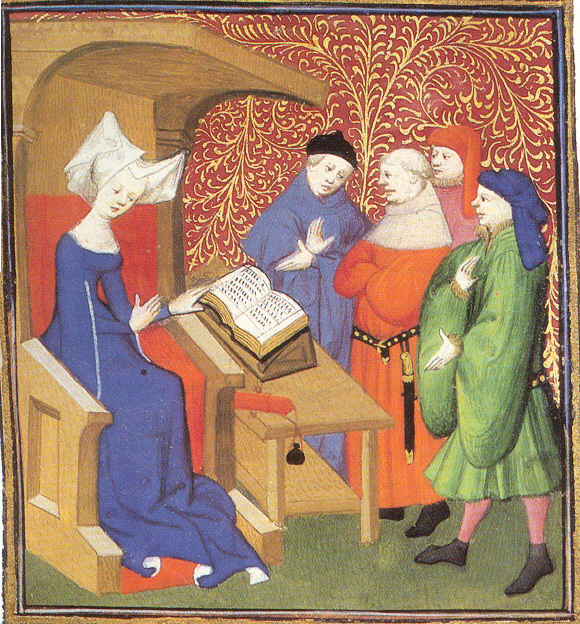
Who is likely the central figure in this image?
Why did wealthy families dress their children in fine clothes?
What did jewelry represent in Renaissance artworks?
Who painted many portraits during the Renaissance?
Why do women not reach the same educational heights as men?
What subjects are women encouraged to learn in the passage?
How does the passage describe women's minds?
What role did wives often play in artisanal workshops?
What could women do to challenge their social constraints?
How were women's identities described in the passage?
Which task might women have undertaken during this period?
What does the book in front of the woman represent?
Does this image demonstrate humanism? Justify your answer.