Many fish populations around the world have experienced severe declines due to overfishing. Human activities - including industrial harvesting, bycatch, destructive gear types, and unregulated fishing - can remove fish faster than populations can reproduce. When a fish stock drops below a critical threshold, recovery becomes extremely difficult, leading to long-term ecological and economic consequences. Sustainable fisheries management offers engineered, ecological, and policy-based solutions to reduce the impacts of human activity and maintain biodiversity.
A key strategy is establishing catch limits based on scientific stock assessments. These assessments use population models that incorporate spawning biomass, recruitment rates, age structure, and fishing pressure. When harvest levels are aligned with biological limits, fish populations can stabilize or recover. Another widely used solution is the creation of marine protected areas (MPAs), where fishing is restricted or prohibited. MPAs allow fish to grow larger, reproduce more often, and replenish surrounding areas through larval dispersal.
Gear modifications also reduce ecological impacts. For example, turtle excluder devices in shrimp trawls, circle hooks for longline fisheries, and bycatch-reduction nets help decrease the unintended capture of non-target species. Seasonal closures protect fish during key reproductive periods, and size limits prevent harvest of juveniles that have not yet spawned.
Evaluating these strategies requires mathematical data on population trends, bycatch rates, biomass, and biodiversity indicators. In many regions, fish populations show strong recovery after implementation of MPAs and catch limits. For example, studies demonstrate that biomass within no-take zones can increase several-fold within a decade. Similarly, gear improvements have reduced bycatch mortality for sea turtles, dolphins, and seabirds.
Designing and refining fisheries management requires balancing ecological and human needs. While harvest limits protect biodiversity, they must also be economically realistic for fishing communities. Students can analyze data comparing recovery rates in protected versus unprotected areas, examine biomass changes following catch-limit implementation, and consider trade-offs between management strategies.
Diagram 3.
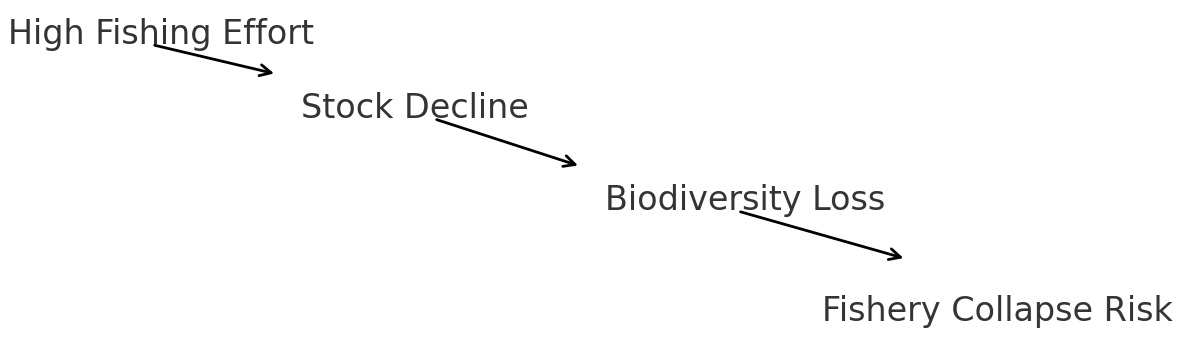
Table 1.
Location | Biomass Before tons/km | Biomass After tons/km | Percent Increase % |
|---|
MPA NoTake | 18 | 52 | 189 |
Partial Protection | 22 | 38 | 73 |
Open Fishing Area | 20 | 24 | 20 |
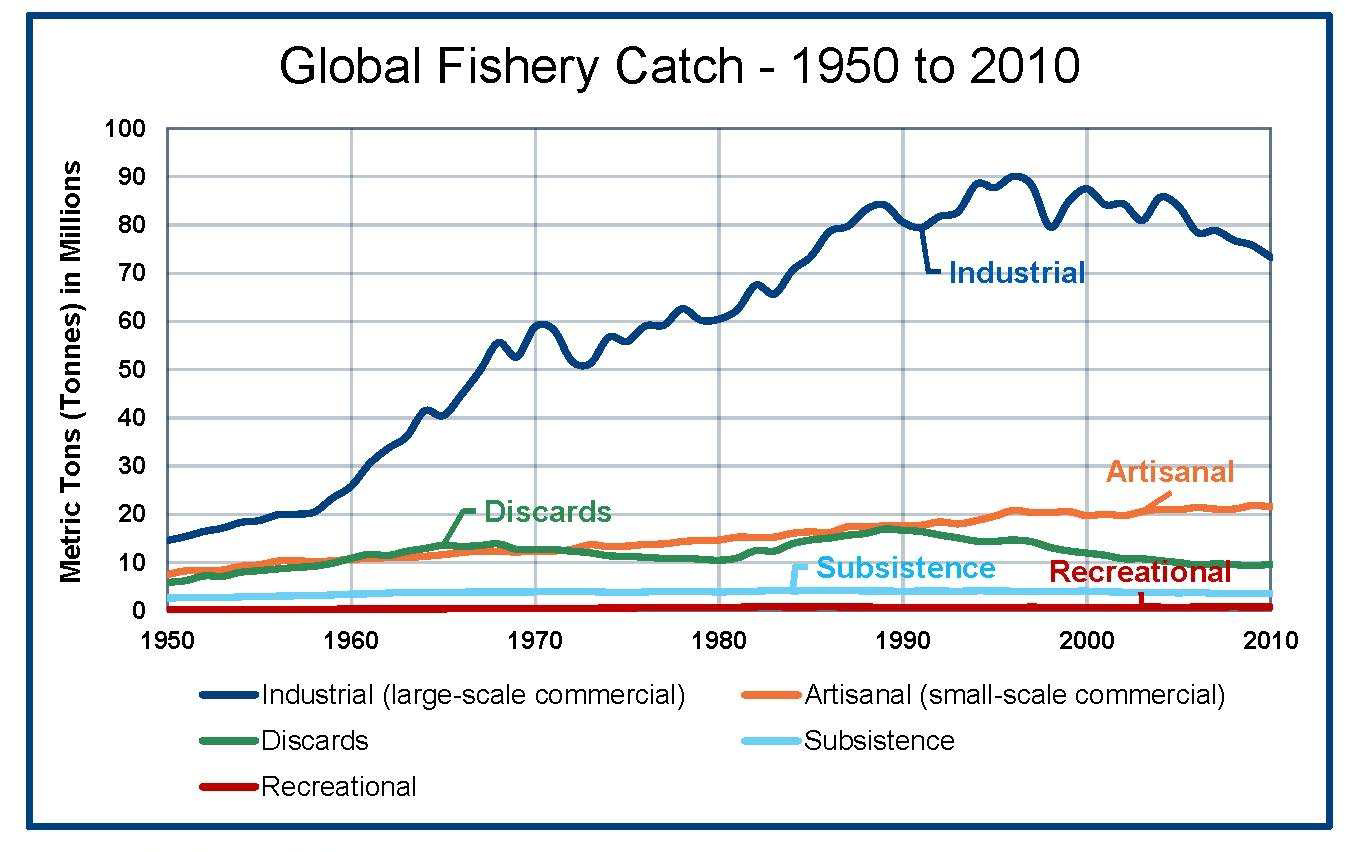
Graph of Information - Figure 1.
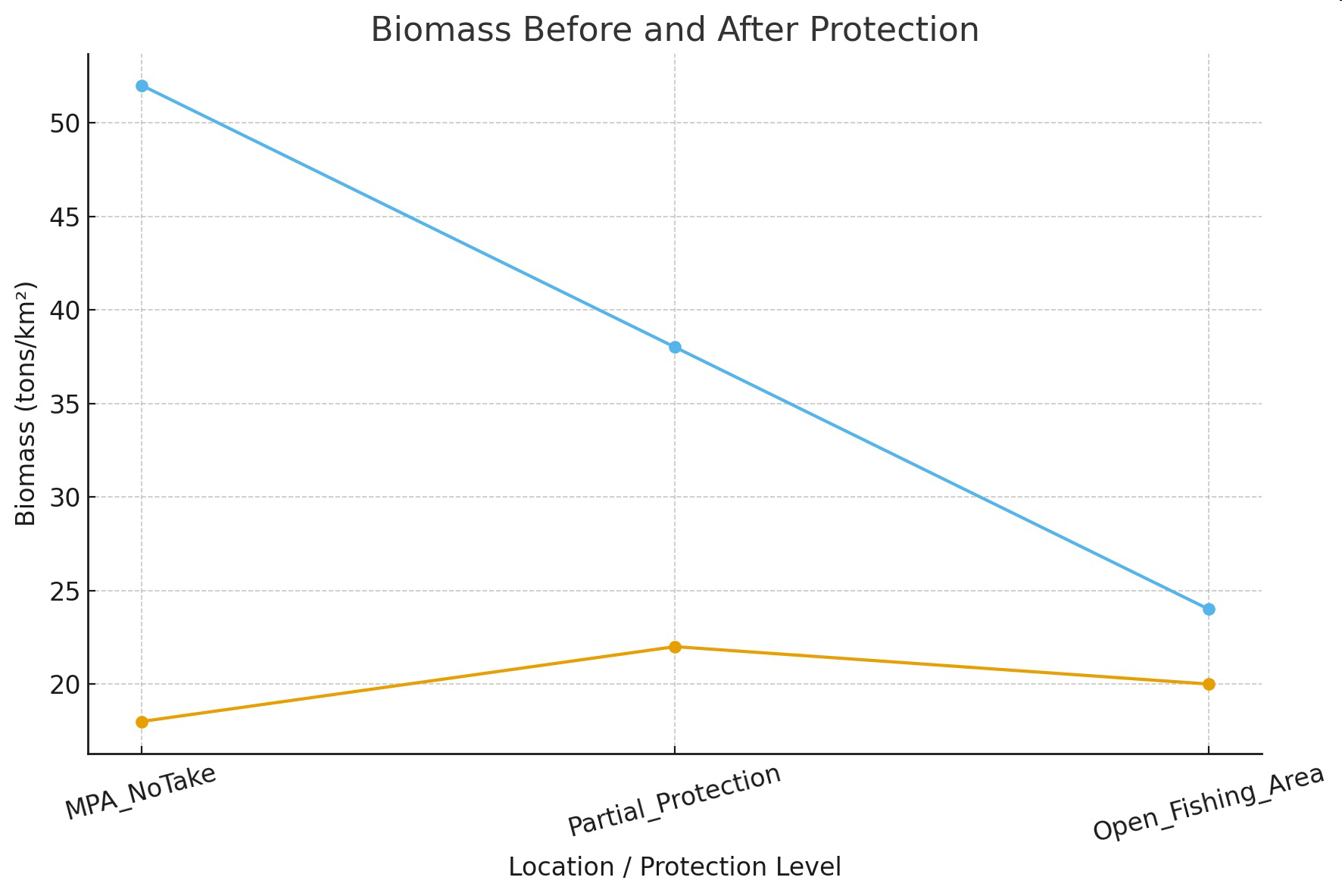
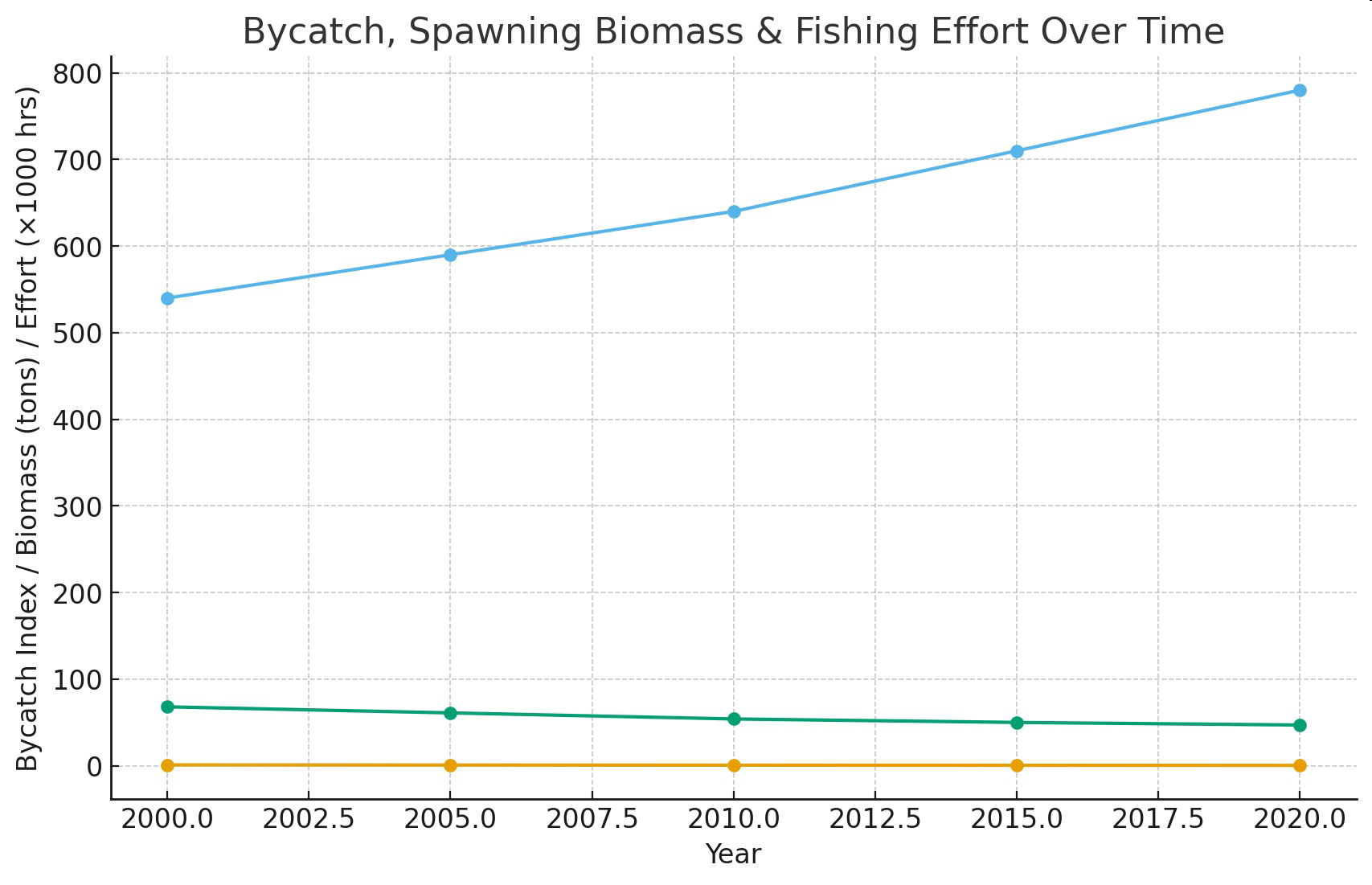
Table 2.
Year | Bycatch Mortality Index | Spawning Biomass tons | Fishing Effort hours x1000 |
|---|
2000 | 1 | 540 | 68 |
2005 | 0.82 | 590 | 61 |
2010 | 0.63 | 640 | 54 |
2015 | 0.52 | 710 | 50 |
2020 | 0.41 | 780 | 47 |
Graph of Information - Figure 2.
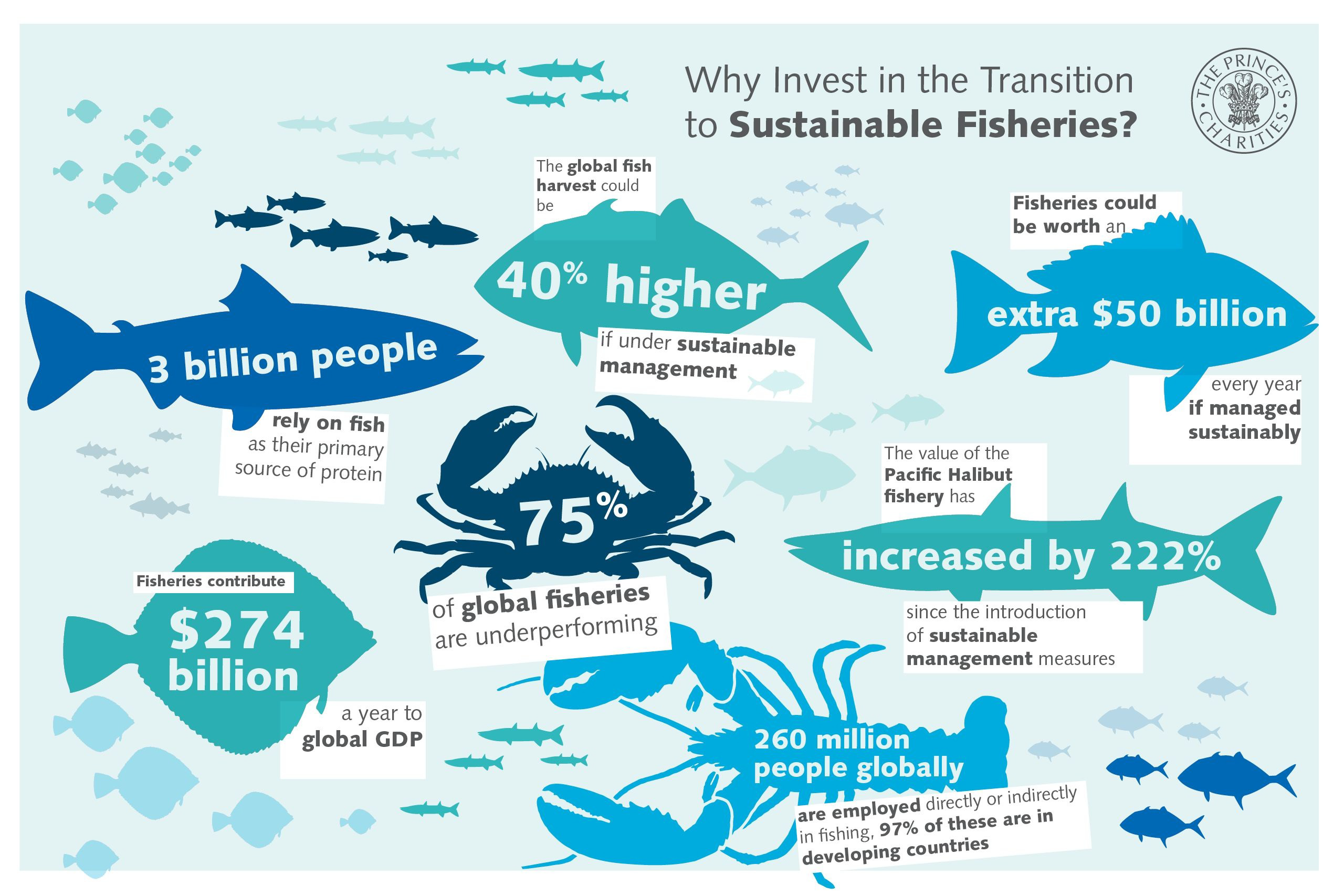 Source:
 Source: