Which surface will have the highest albedo?
Which surface will have the highest albedo?
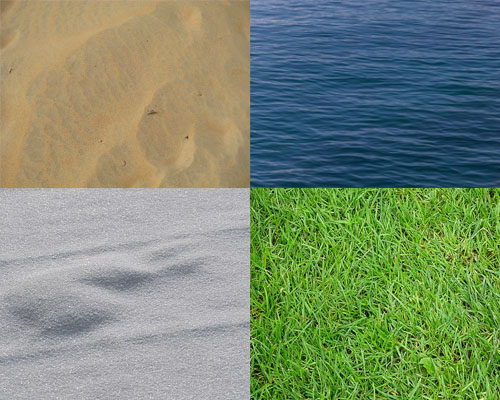
Which surface will have the highest albedo?
Why will the surface you selected in the previous question have the highest albedo?
Which surface will have the lowest albedo?
Why will the surface you selected in the previous question have the lowest albedo?
Which of the following best explains why carbon dioxide and methane are considered "greenhouse gases" but nitrogen and oxygen are not?
Categorize each statement as either "Greenhouse Gas" or "Not a Greenhouse Gas."
Greenhouse Gas | Not a Greenhouse Gas | |
|---|---|---|
Absorbs infrared radiation and re-emits energy back to Earth | ||
Allows all infrared radiation to pass through the atmosphere | ||
Comprises ~78% of Earth's atmosphere but does not absorb infrared radiation | ||
Includes CO₂, CH₄, and H₂O |
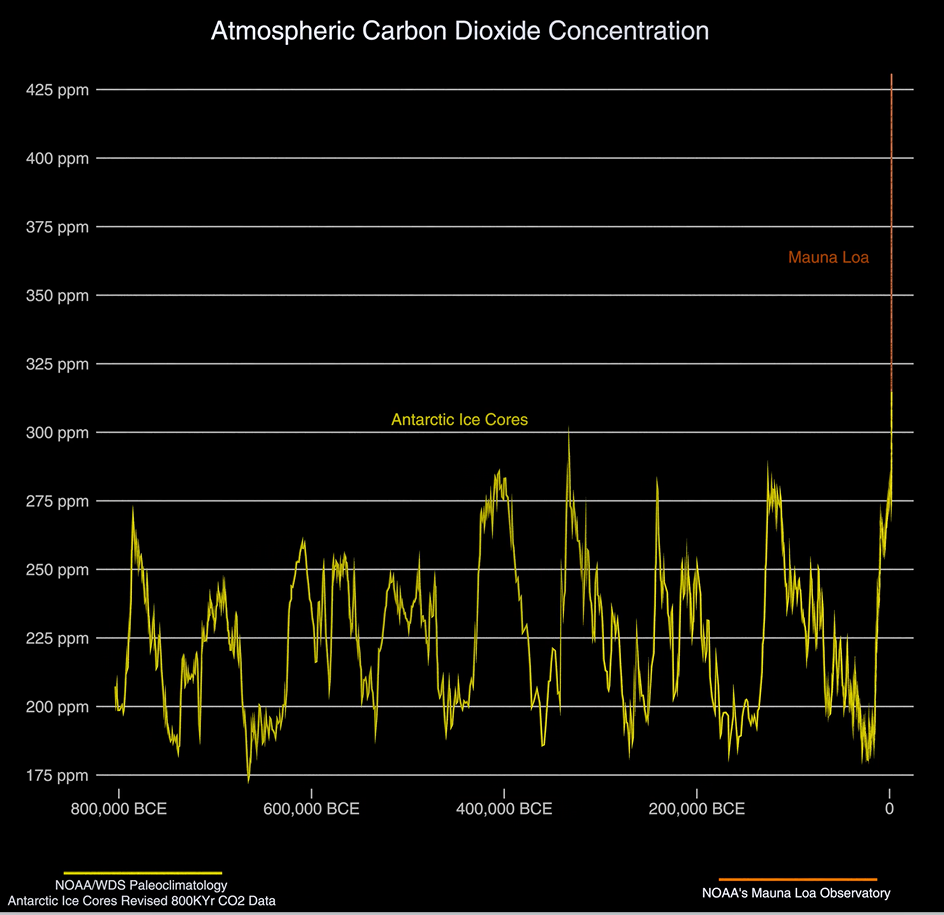
From 1960 to 2020, carbon dioxide concentration in the atmosphere showed which overall trend?
From approximately 800,000 BCE to 1960, carbon dioxide concentration in the atmosphere showed which overall trend?
Categorize these examples as weather or climate.
Typical snowfall amounts expected in January
Tomorrow's forecast high temperature
Wind and precipitation observed today
Average rainfall over the past 30 years
Weather
Climate
What is the primary source of energy driving Earth's weather and climate systems?
Which area melting would cause the most significant rise in sea level?
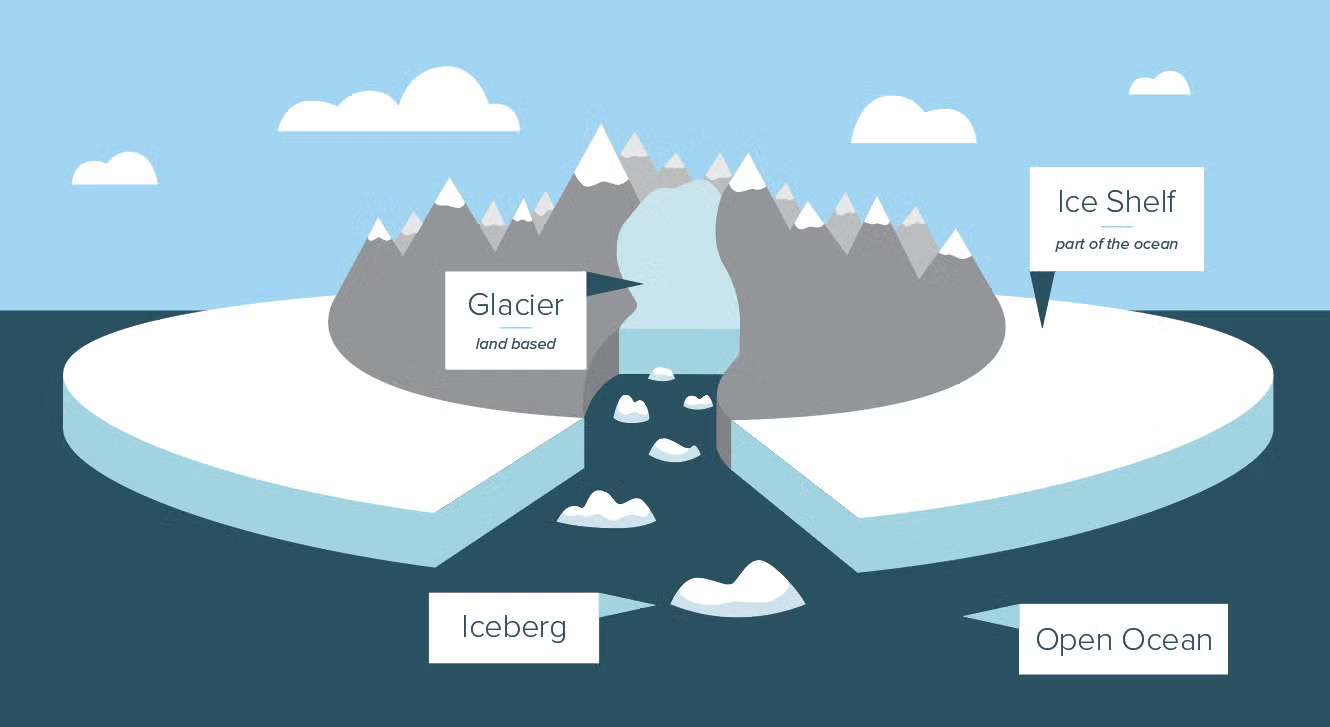
Which of the following best explains why the melting of certain ice areas has a greater effect on sea level rise than others?
 Arrange these events in the correct order to describe the Arctic feedback loop depicted in the images above:
Most ice is gone. Dark ocean absorbs sunlight, warming rapidly and melting remaining ice faster.
Ice reflects most sunlight back to space, keeping the ocean temperature stable.
Ice melts, exposing dark ocean that absorbs more heat than white ice reflects.
The feedback loop in the previous question would be considered feedback because it the cycle.
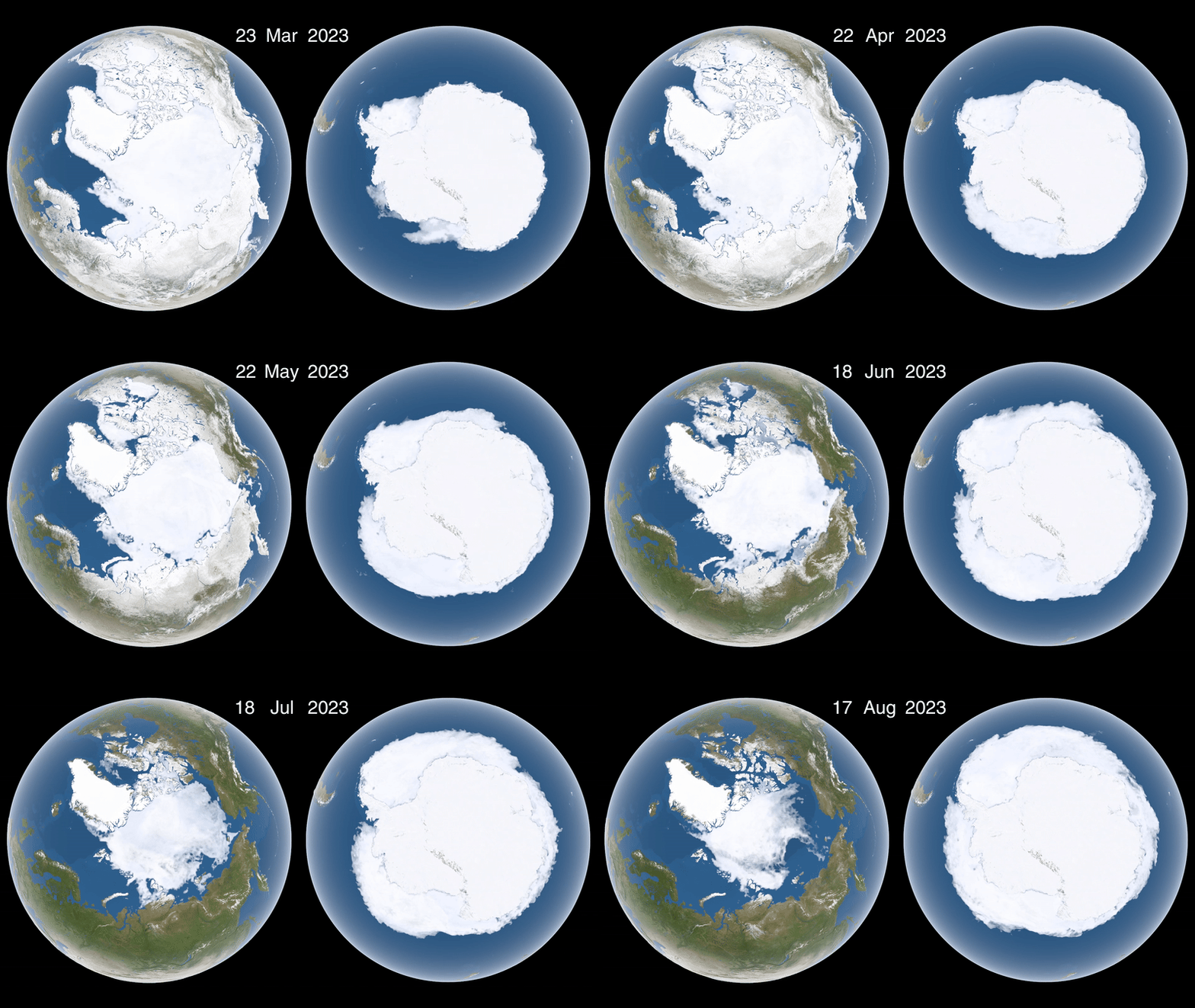
When Arctic sea ice reaches its maximum, Antarctic sea ice is at its . When Antarctic sea ice reaches its maximum, Arctic sea ice is at its .
Based on sea ice extent data, which statement is most strongly supported by evidence?
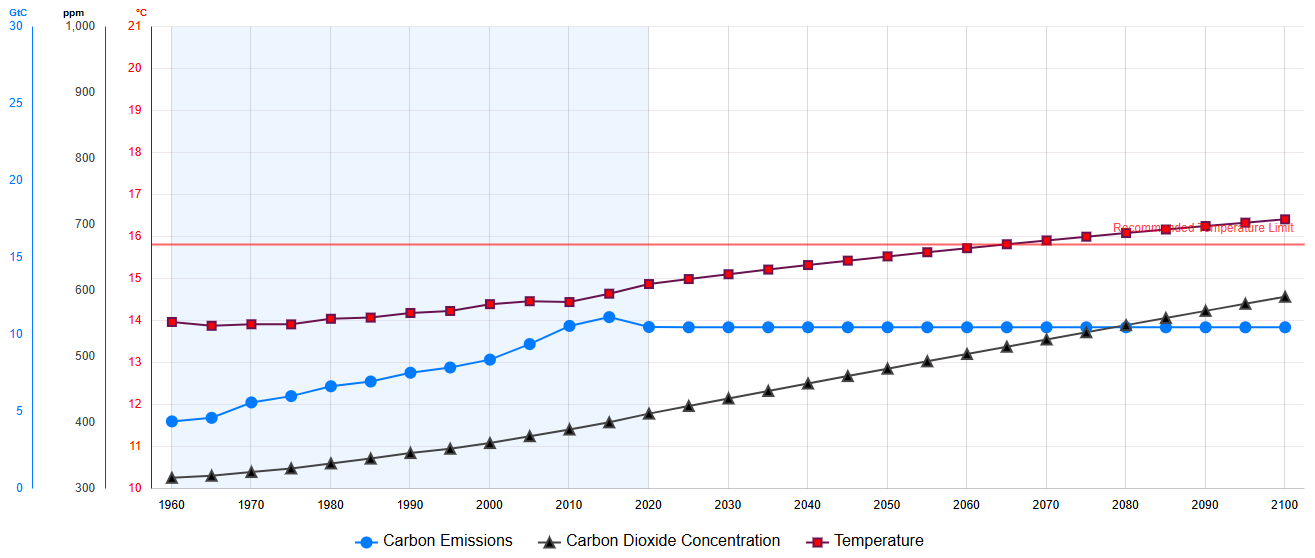 From 1960 to 2020, the global average temperature due to the of greenhouse gas concentrations.
Even if carbon emissions were completely eliminated tomorrow, we would still experience climate-related problems for centuries.
Which of the following best explains why?
Which of the following best explains why a single unusually cold winter does NOT disprove the existence of global climate change?
Which mitigation strategy directly addresses the root cause of human-caused climate change?
What will be the most effective for reducing global temperature increase by 2100?
Which communities often face the worst effects of climate change?
Why is the community you selected in the previous question more affected by climate change than others?
Why do climate scientists say we should try to limit global temperature increase to 2 degrees Celsius?
By 2100, Washington state is expected to have days below 32°F and days above 95°F.
Which of the following methods do scientists use to measure past climate conditions?
How has decreased snowpack and increased temperatures affected Pacific Northwest salmon populations?
What is a potential consequence of bears waking up from hibernation too early due to climate change?
Match each climate action to its primary benefit in reducing emissions:
| Draggable item | arrow_right_alt | Corresponding Item |
|---|---|---|
Carbon Sequestration | arrow_right_alt | Replace fossil fuel power generation |
Renewable Energy | arrow_right_alt | Makes pollution financially costly and incentives reduction |
Forest Protection | arrow_right_alt | Removes carbon dioxide already in the atmosphere |
Carbon Pricing | arrow_right_alt | Preserves natural carbon sinks |
What parts of this unit did you enjoy?
What parts of this unit could be improved?