How Yeast Use Sugars and Nitrogen to Build Amino Acids and New Biomolecules
Yeast cells provide a powerful real-world example of how living systems assemble complex carbon-based molecules from simple inputs. During fermentation or growth, yeast consume sugars such as glucose not only for energy, but also as carbon backbones for constructing amino acids, proteins, nucleotides, and cell membranes. These processes illustrate the core idea of atoms from sugars (carbon, hydrogen, and oxygen) recombining with nitrogen, sulfur, and phosphorus to form the molecules required for life.
When yeast metabolize glucose, enzymes break the sugar into smaller carbon-based intermediates such as pyruvate and acetyl-CoA. These molecules serve as skeletons onto which nitrogen and sulfur can be added to form amino acids. For example, glutamate and alanine are formed directly from pyruvate and other glycolysis intermediates, once nitrogen from ammonium or amino groups is attached. Amino acids such as methionine and cysteine require sulfur, while phosphorus plays key roles in ATP (the cell’s energy currency) and in regulating metabolic pathways involved in protein synthesis.
When nitrogen is abundant, yeast rapidly produce amino acids, allowing fast protein synthesis and cell division. This is why yeast biomass increases dramatically in nitrogen-rich environments such as brewing wort or nutrient-enriched media. Conversely, when nitrogen is limited, yeast cannot attach amino groups to carbon skeletons, causing amino acid and protein synthesis to slow. As a result, the cells accumulate sugars but cannot convert them into the proteins needed for growth and replication.
The relationship between glucose availability and nitrogen supply is especially important for industrial fermentation, baking, and biofuel production. In these contexts, carbon (from sugars) and nitrogen (often from ammonium salts or amino acids) must be carefully balanced to support efficient yeast growth. If sugar levels are high but nitrogen is low, fermentation slows, biomass accumulation decreases, and yeast become stressed.
Because yeast are single-celled organisms with rapid growth rates, they offer an ideal system for modeling how carbon, hydrogen, oxygen, nitrogen, sulfur, and phosphorus combine to form the molecules essential for life. Their metabolism clearly demonstrates that sugars alone cannot build amino acids—nitrogen and other elements must also be available.
Table 1.
Glucose Concentration (%) | Amino Acid Synthesis (µmol/g/hr) | Biomass Growth (g/L) |
|---|
0 | 4.2 | 0.3 |
1 | 12.5 | 1.1 |
2 | 18.9 | 2 |
4 | 23.4 | 3.4 |
6 | 24.1 | 3.6 |
Graph of Information - Figure 1.
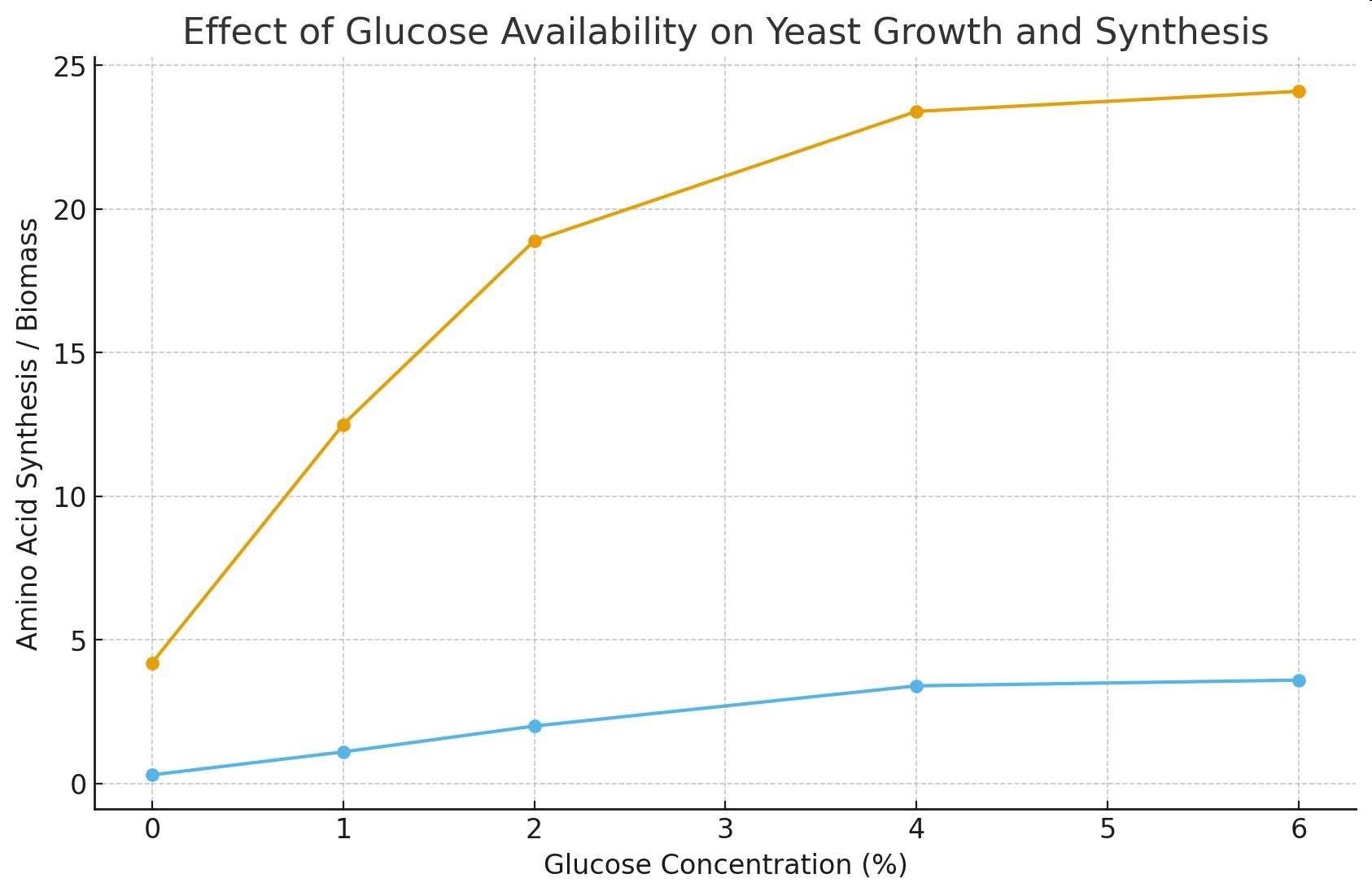
Table 2.
Nitrogen Level (mg/L) | Protein Synthesis Rate (mg/g/hr) | Yeast Cell Density (cells/mL x10^6) |
|---|
0 | 2.1 | 1.2 |
50 | 6.4 | 4.8 |
100 | 12.7 | 9.5 |
200 | 18.2 | 14 |
300 | 19 | 14.5 |
Graph of Information - Figure 2.
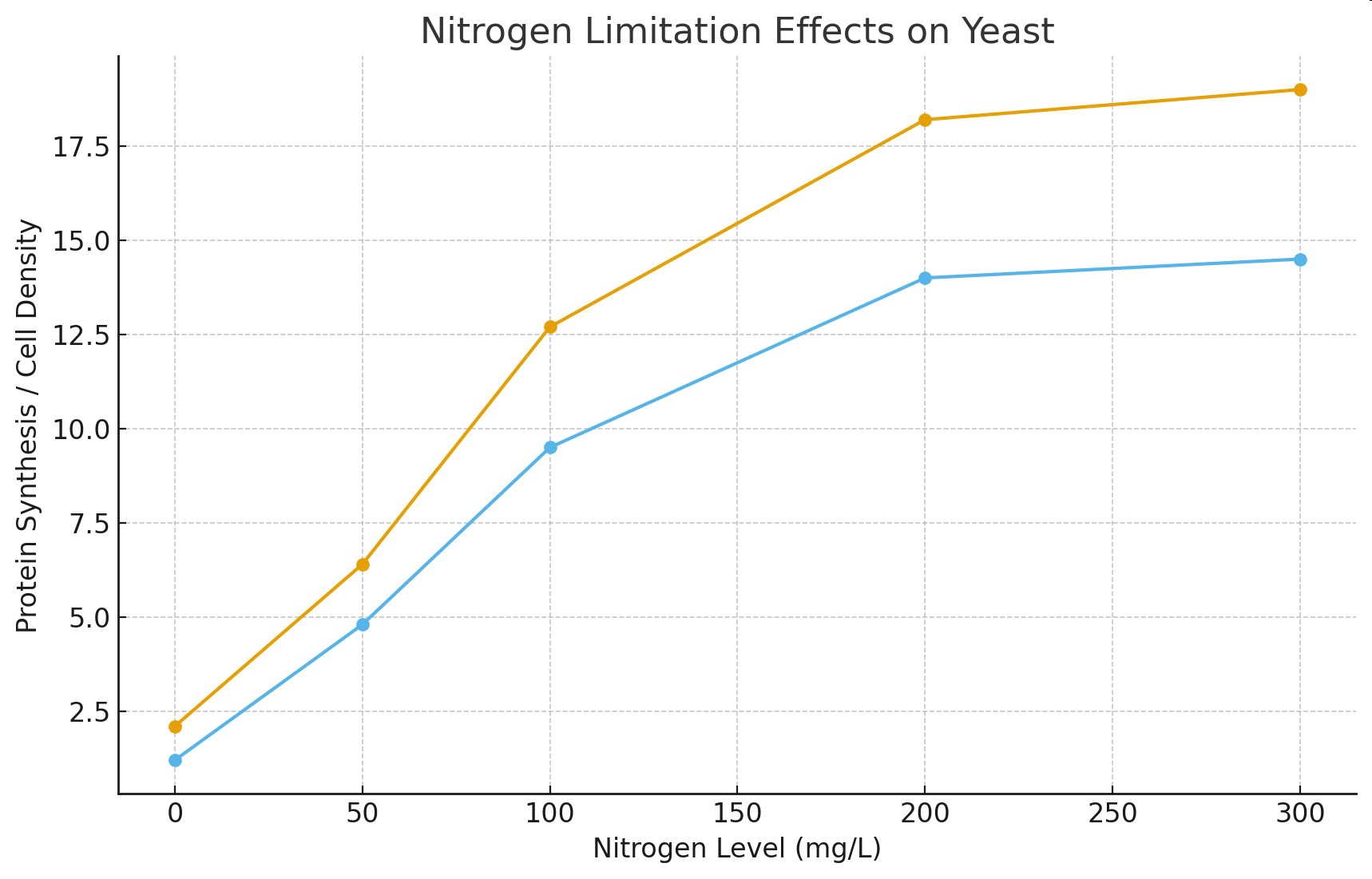
Figure 3.
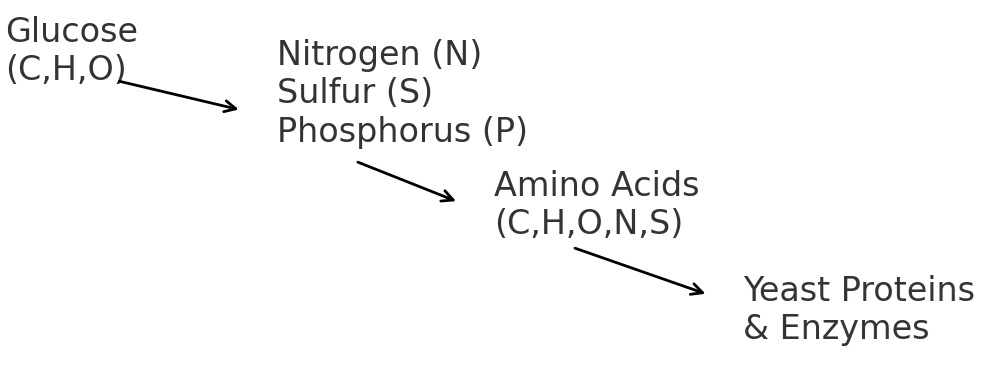
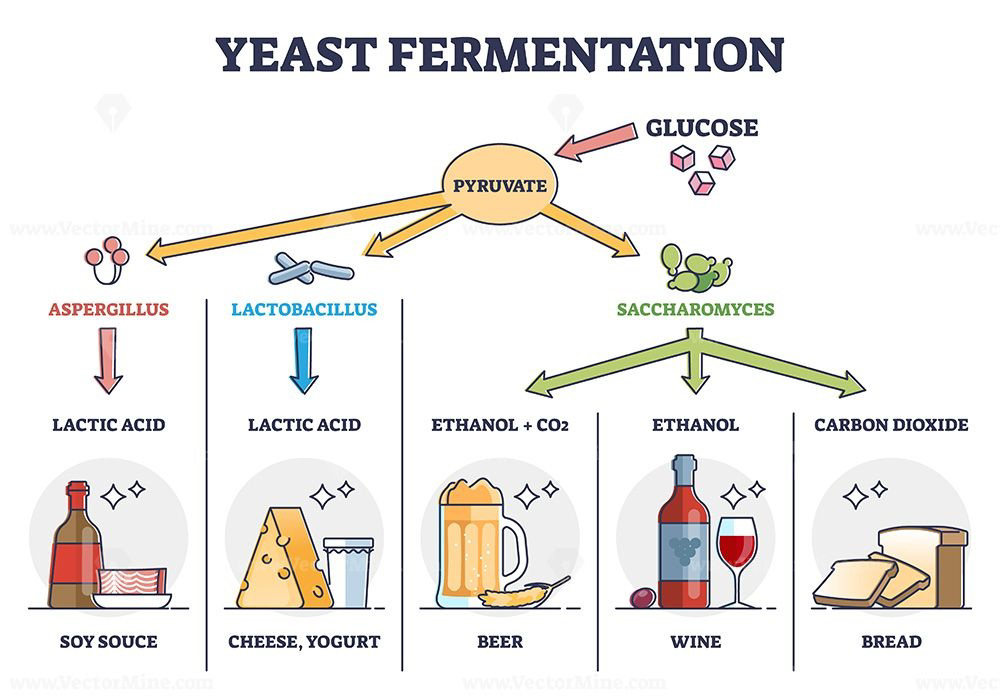
Figure 4.
 Source: https://kr.pinterest.com/pin/602356518938379083/