Algal Photosynthesis in Aquatic Ecosystems
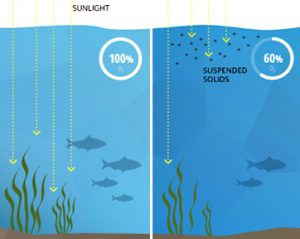
Photosynthesis in aquatic ecosystems operates on the same basic principles as photosynthesis on land: organisms convert light energy into stored chemical energy, primarily in the form of glucose. However, unlike terrestrial plants, algae depend on light that must pass through water – a medium that absorbs and scatters sunlight. This creates strong vertical light gradients. The deeper the water – and the cloudier it is – the less light reaches photosynthetic organisms.
At the cellular level, algae use chloroplasts packed with chlorophyll to absorb light. Light energy powers the formation of ATP and NADPH in the light reactions. These energy-carrying molecules then fuel the Calvin cycle, producing glucose. This glucose serves as stored chemical energy that algae use for growth, reproduction, and supporting aquatic food webs.
Near the surface, algae are exposed to bright sunlight. As a result, their photosynthetic rate is high. More ATP and NADPH are produced, allowing the cells to convert more CO$_2$ into sugars. However, even modest increases in water depth can dramatically reduce light intensity. Water absorbs red wavelengths quickly, and suspended particles block additional light. At depths of only a few meters, light can drop to less than 10% of surface levels – slowing photosynthesis significantly.
Turbidity, caused by sediment, algal blooms, or pollution, further limits light penetration. When turbidity increases, algae at deeper levels receive too little energy to produce enough glucose to survive. Chlorophyll content may decrease as algae struggle to maintain photosynthesis. Low oxygen production in these areas reflects the reduced rate of energy conversion.
This interaction between light, water clarity, and photosynthesis provides an excellent model. It clearly demonstrates that photosynthesis depends on light energy, and the amount of light directly influences how much chemical energy algae can store. Aquatic ecosystems experience strong, measurable gradients that reveal how energy transformation changes with environmental conditions. The resulting changes in oxygen production, chlorophyll levels, and sugar output illustrate the ecological consequences of light-dependent energy transformation.
Table 1.
Depth (m) | Light Intensity (% of surface) | Photosynthesis Rate (mg O /L/hr) |
|---|
0 | 100 | 12.5 |
1 | 60 | 9.8 |
2 | 35 | 6.2 |
3 | 18 | 3.1 |
4 | 9 | 1.5 |
Graph of Information - Figure 1.
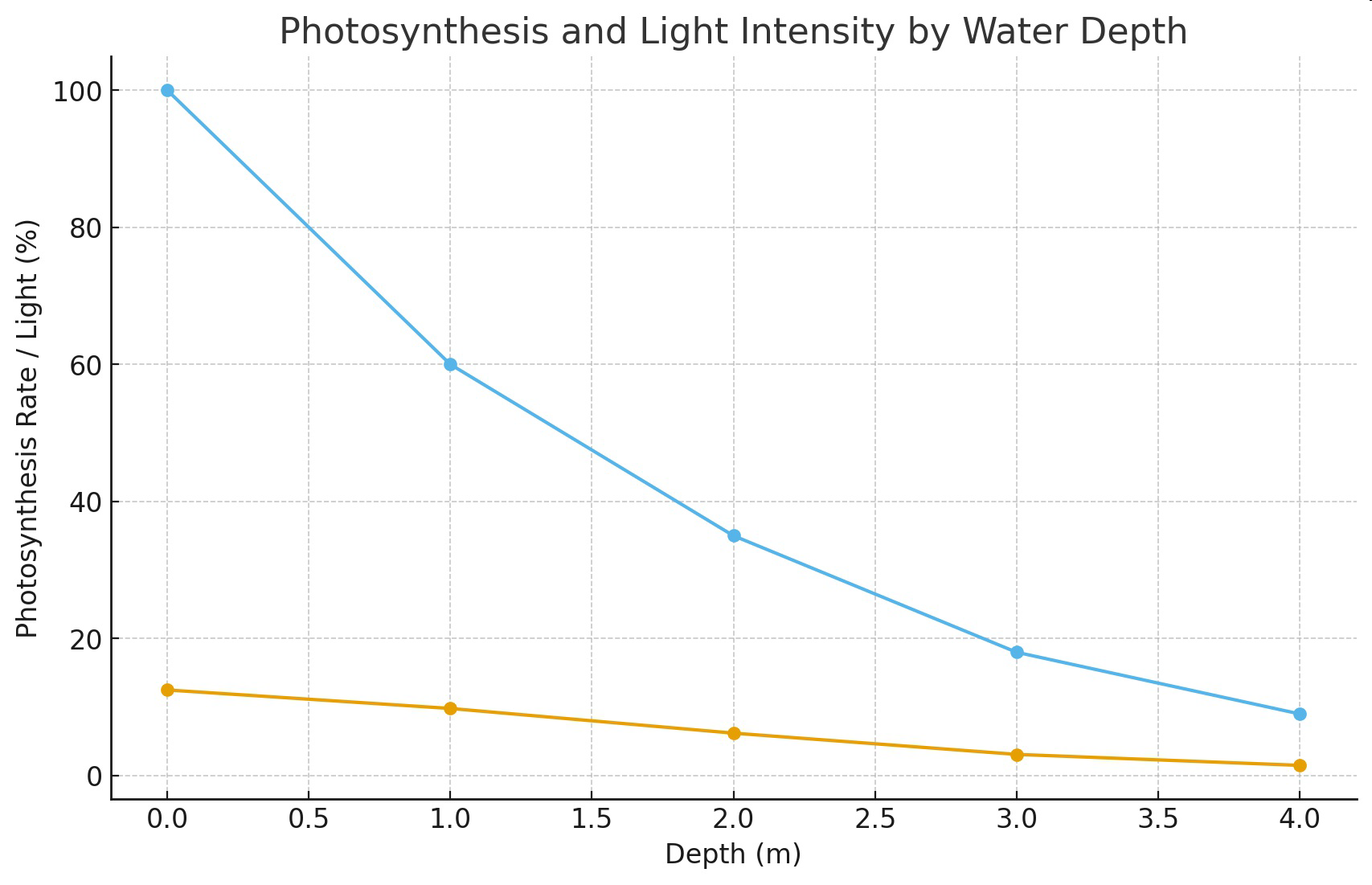
Table 2.
Turbidity (NTU) | Chlorophyll a (µg/L) | Oxygen Production (mg O /L/hr) |
|---|
0 | 22 | 13 |
10 | 20 | 11.4 |
20 | 17 | 8.9 |
40 | 11 | 5.2 |
80 | 7 | 2.8 |
Graph of Information - Figure 2.
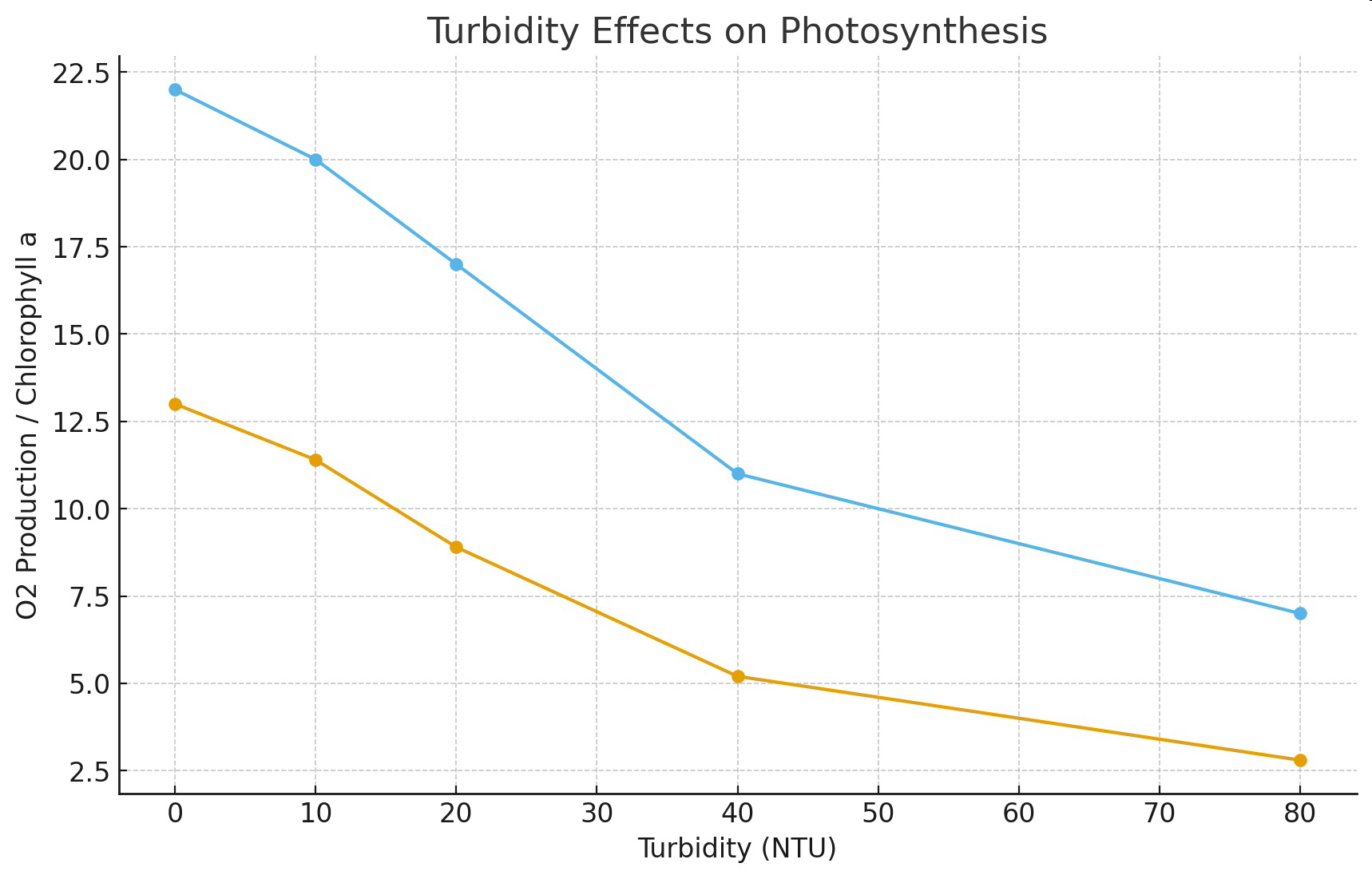
Figure 3.
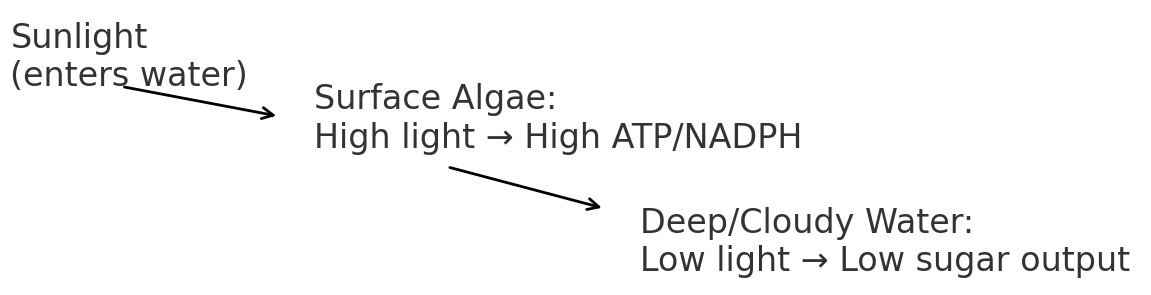
Figure 4.