Arctic Food Web Decline
The Arctic marine ecosystem depends heavily on a thin, often overlooked layer of algae that grows on the underside of sea ice. These “sea-ice algae” begin photosynthesizing early in the spring, before open-water phytoplankton blooms begin. The energy stored in these algae fuels the entire Arctic food web. As sea ice forms later, melts earlier, and becomes thinner due to climate change, ice-algae productivity has declined dramatically. These changes show mathematical patterns that reveal how energy flow and matter cycling are shifting across the ecosystem.
Sea-ice algae convert sunlight, carbon dioxide, nitrogen, and other nutrients into carbon-based biomass. This material becomes food for zooplankton such as copepods and krill. In turn, fish such as Arctic cod feed on zooplankton, and seals rely on fish as a critical energy source. Polar bears depend on seals to accumulate enough fat to survive long fasting periods. Each trophic transfer follows predictable decreases in available energy - a relationship that becomes even more pronounced as total energy entering the system declines.
Mathematical monitoring shows that in regions where ice-algae production has dropped by 40–60%, zooplankton biomass also drops proportionally. Because zooplankton provide up to 60% of annual energy intake for Arctic cod, reductions at the producer level ripple upward. Long-term population data reveal that cod abundance declines in years following low algal production. Seals, which rely heavily on lipid-rich cod, show reduced body mass and lower reproductive success. Polar bear body-condition indices also track closely with these patterns, often lagging by about one year.
While matter continues to cycle - nutrients move from algae to zooplankton to fish and back to the environment through respiration and decomposition - the total amount of matter cycling decreases when producer biomass declines. Energy, however, shows the clearest mathematical signature: less producer energy leads to less consumer energy, with sharp proportional declines at each trophic step.
Mathematical representations of productivity curves, trophic-level ratios, biomass declines, and energy pyramids support the claim that reductions in primary productivity constrain the entire energy flow of the ecosystem, while matter cycles through smaller amounts of biomass.
Diagram 1.
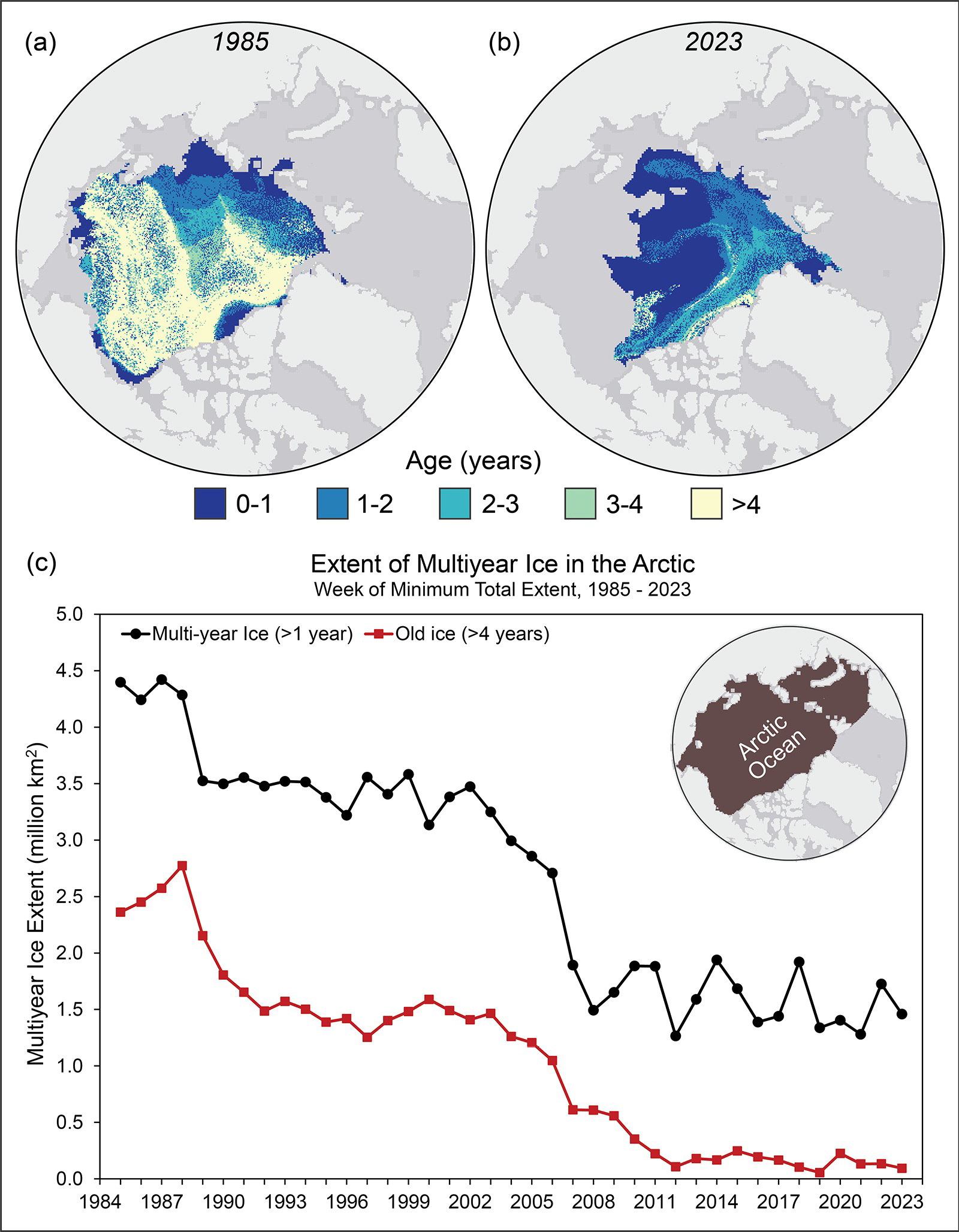 Source:
https://arctic.noaa.gov/report-card/report-card-2023/sea-ice-2023/
Table 1.
Algae Productivity Level | Algae Energy kJ/m2/day | Zooplankton Energy kJ/m2/day | Arctic Cod Energy kJ/m2/day |
|---|
High | 1200 | 260 | 42 |
Moderate | 900 | 190 | 31 |
Low | 600 | 130 | 21 |
Graph of Information - Figure 1.
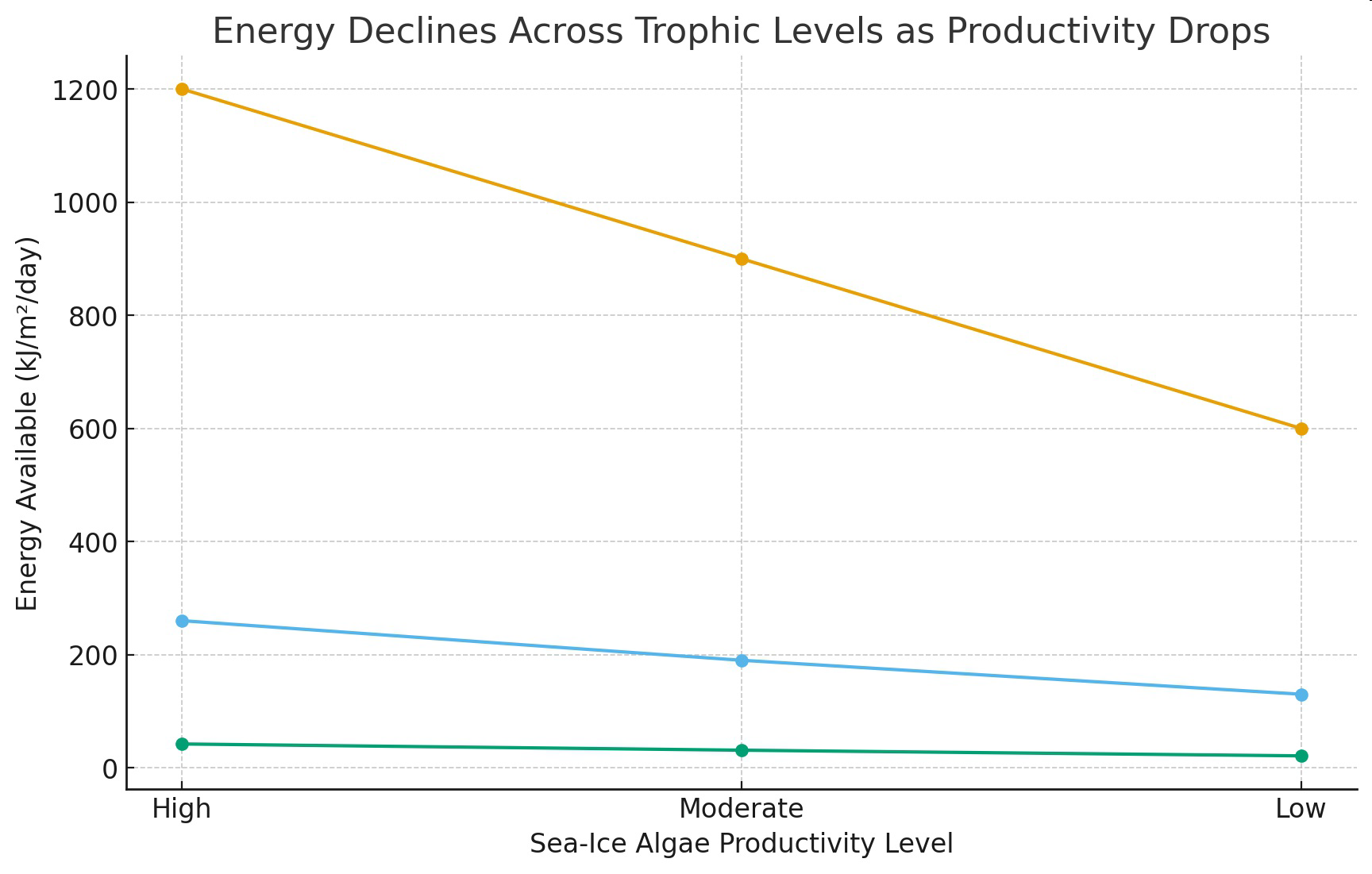
Diagram 2.
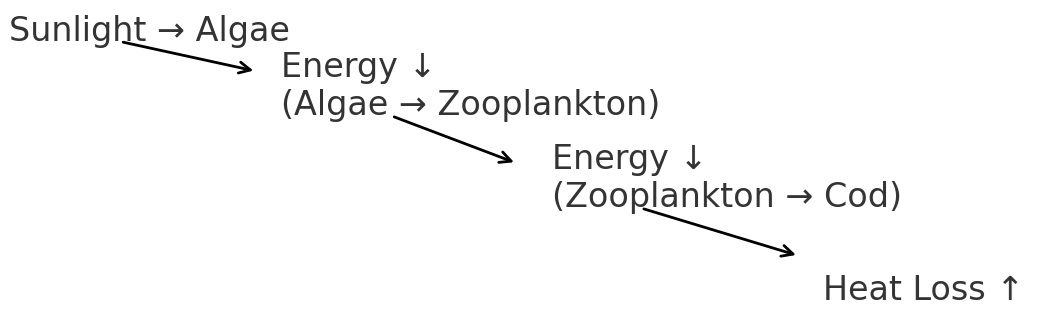
Table 2.
Year | Zooplankton Biomass
kg/m | Arctic Cod Population
(millions) | Seal Population
(thousands) |
|---|
2000 | 2.4 | 7.2 | 520 |
2005 | 2.1 | 6.5 | 495 |
2010 | 1.8 | 5.4 | 455 |
2015 | 1.6 | 4.8 | 430 |
2020 | 1.4 | 4.1 | 405 |
Graph of Information - Figure 2.
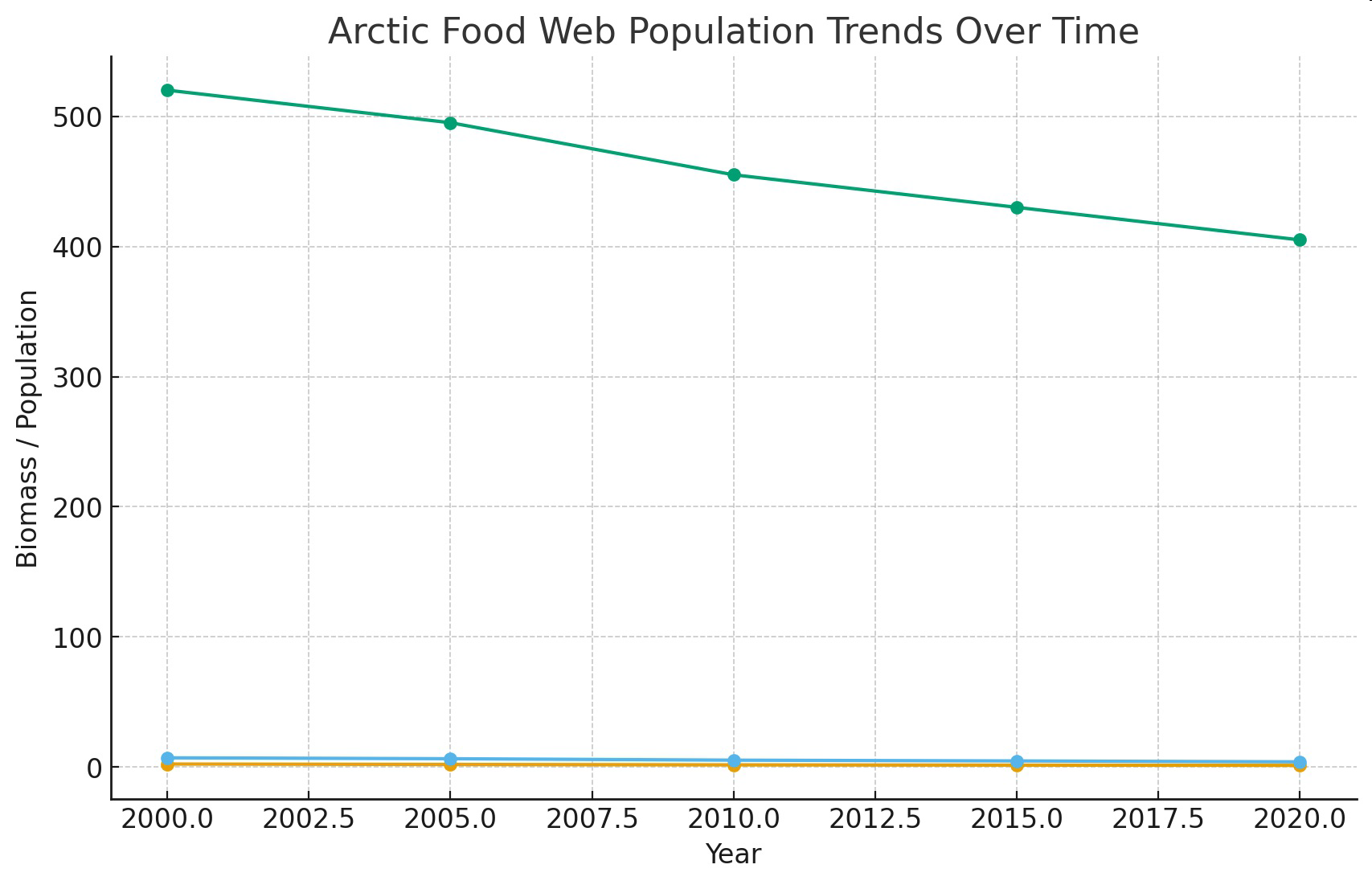
Diagram 3.
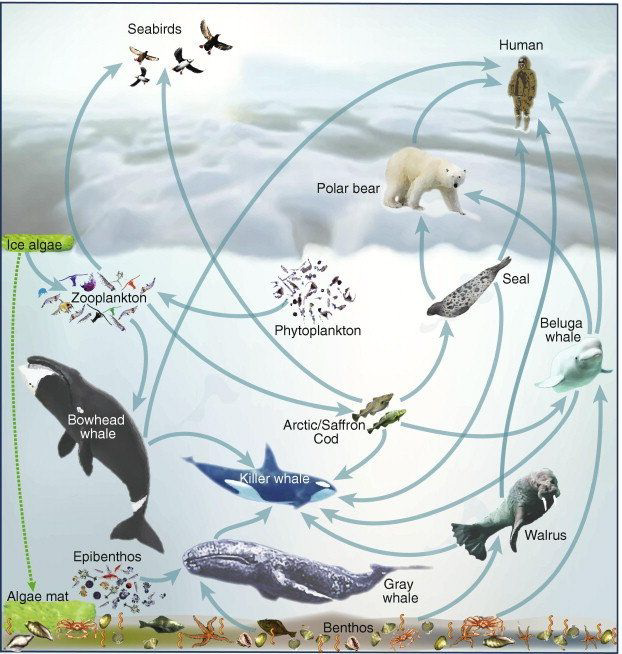
Diagram 4.
