Carbon Cycling Impacts of Tropical Deforestation
Tropical forests store enormous amounts of carbon in trees, understory vegetation, and soils. When these forests are cleared or burned, carbon that has been stored for decades or centuries is rapidly released into the atmosphere as carbon dioxide ($CO_2$). This process changes the balance of carbon among the biosphere, atmosphere, hydrosphere, and geosphere.
In intact tropical forests, photosynthesis draws $CO_2$ from the atmosphere and stores it in plant biomass. Tropical trees in particular accumulate large amounts of carbon because they grow rapidly and live for long periods. They also contribute organic matter to the soil through leaf litter and root turnover, increasing long-term soil carbon storage. These processes keep carbon cycling between the atmosphere and the biosphere in a relatively stable pattern.
When deforestation occurs, this balance is disrupted. Trees are cut or burned, instantly transferring carbon from the biosphere to the atmosphere. Burning releases $CO_2$ directly, while the decomposition of leftover vegetation continues to emit carbon for years. Soil carbon also declines as soils are disturbed, eroded, or exposed to oxygen, accelerating microbial breakdown of organic matter. Once carbon leaves the soil, it can be transported by runoff into rivers, eventually reaching the hydrosphere as dissolved or particulate organic carbon.
Deforestation affects the geosphere as well. Forest soils often contain deep layers of organic-rich material, which decompose more rapidly when exposed to warm temperatures and oxygen. Without trees to stabilize the soil, erosion rates increase, sending carbon-rich sediments into waterways and reducing long-term carbon storage in the geosphere.
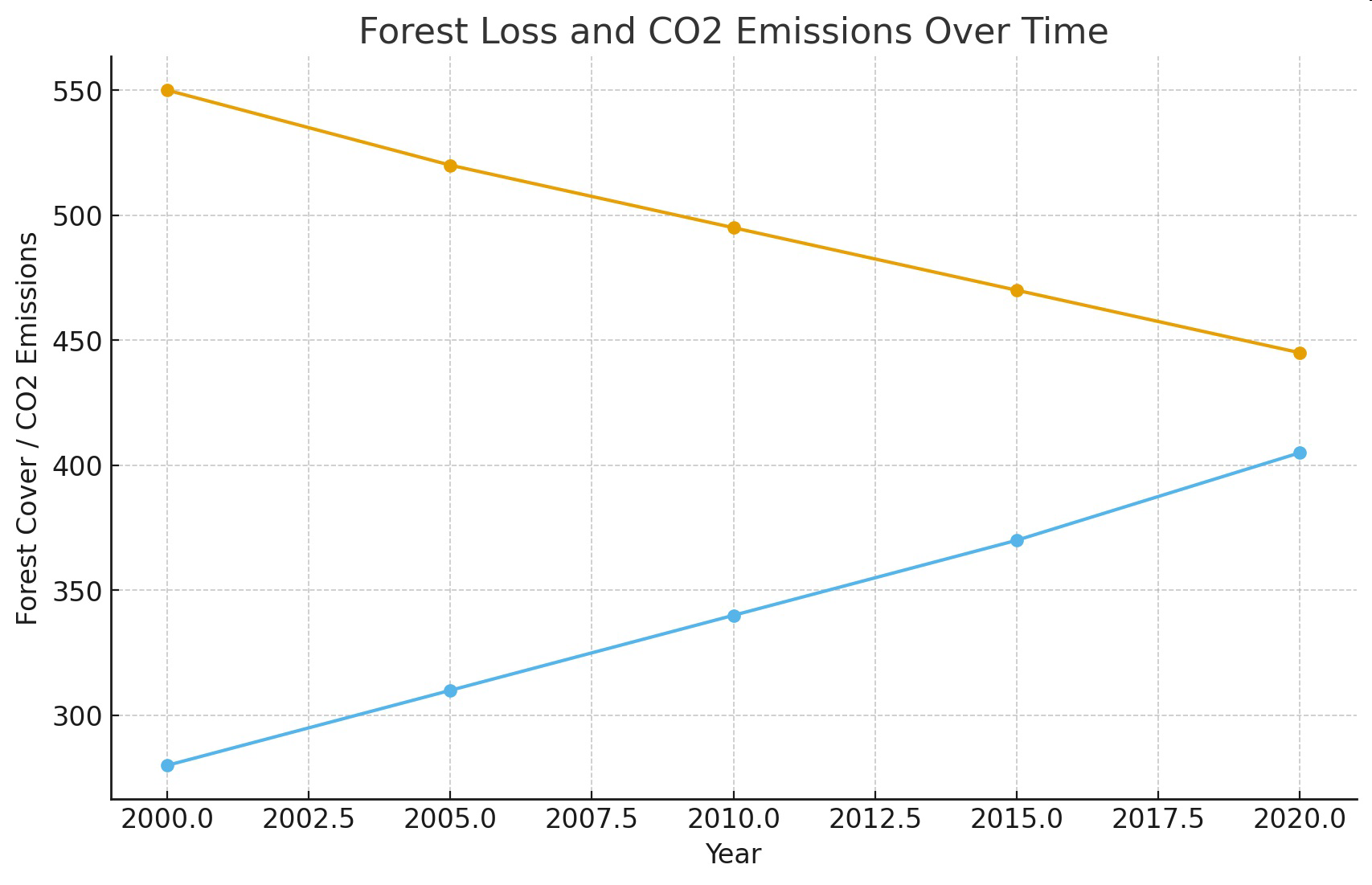
Mathematical data show measurable changes: atmospheric $CO_2$ increases steadily as forest cover declines, and soil carbon pools shrink as land is cleared. At the same time, carbon entering rivers and oceans increases due to enhanced runoff. These patterns demonstrate the interconnectedness of Earth's reservoirs and reveal how carbon moves among them in quantifiable ways.
Diagram 1.
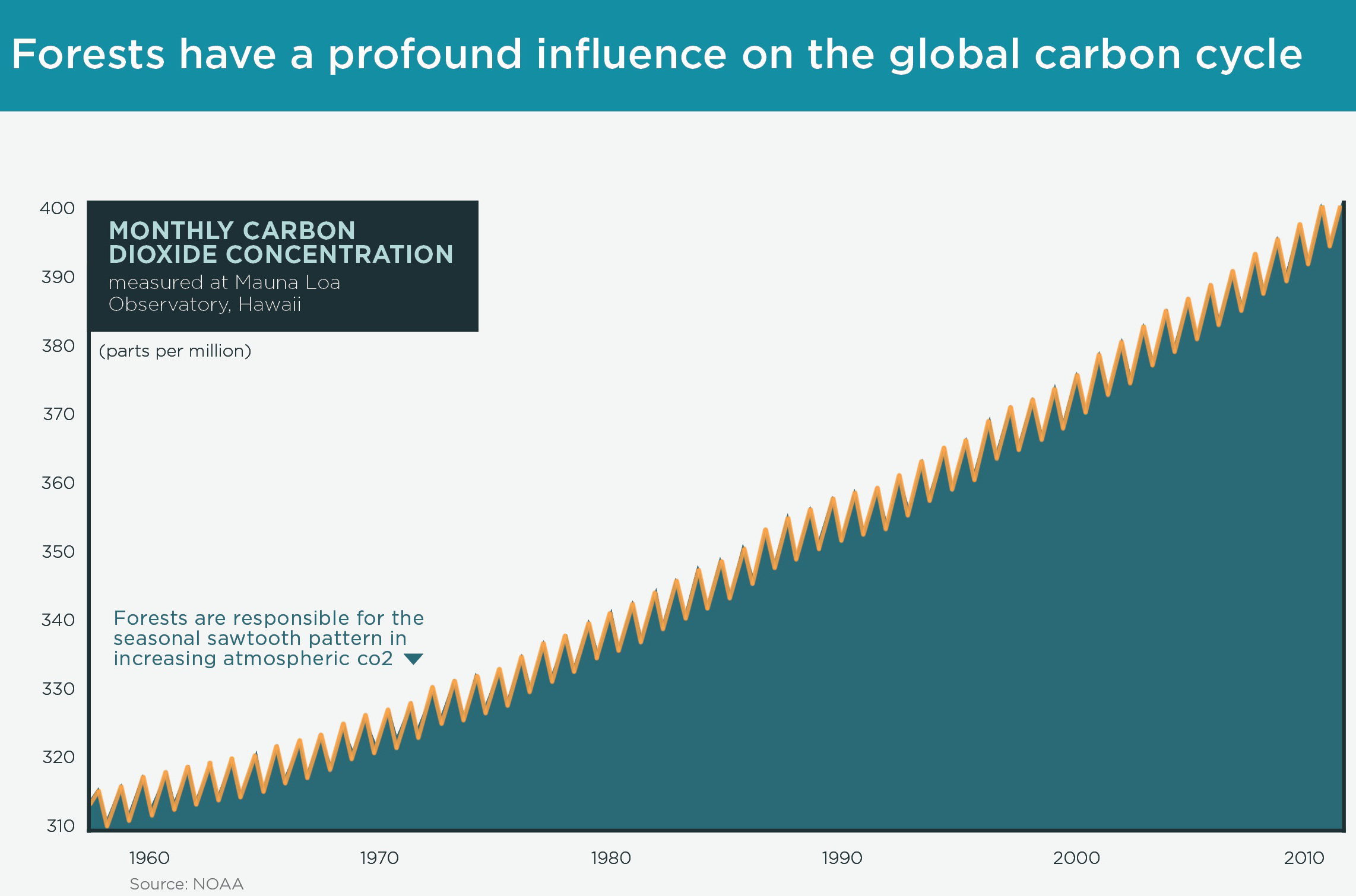 Source:
https://www.cgdev.org/publication/ft/why-forests-why-now-preview-science-economics-politics-tropical-forests-climate-change
Diagram 2.
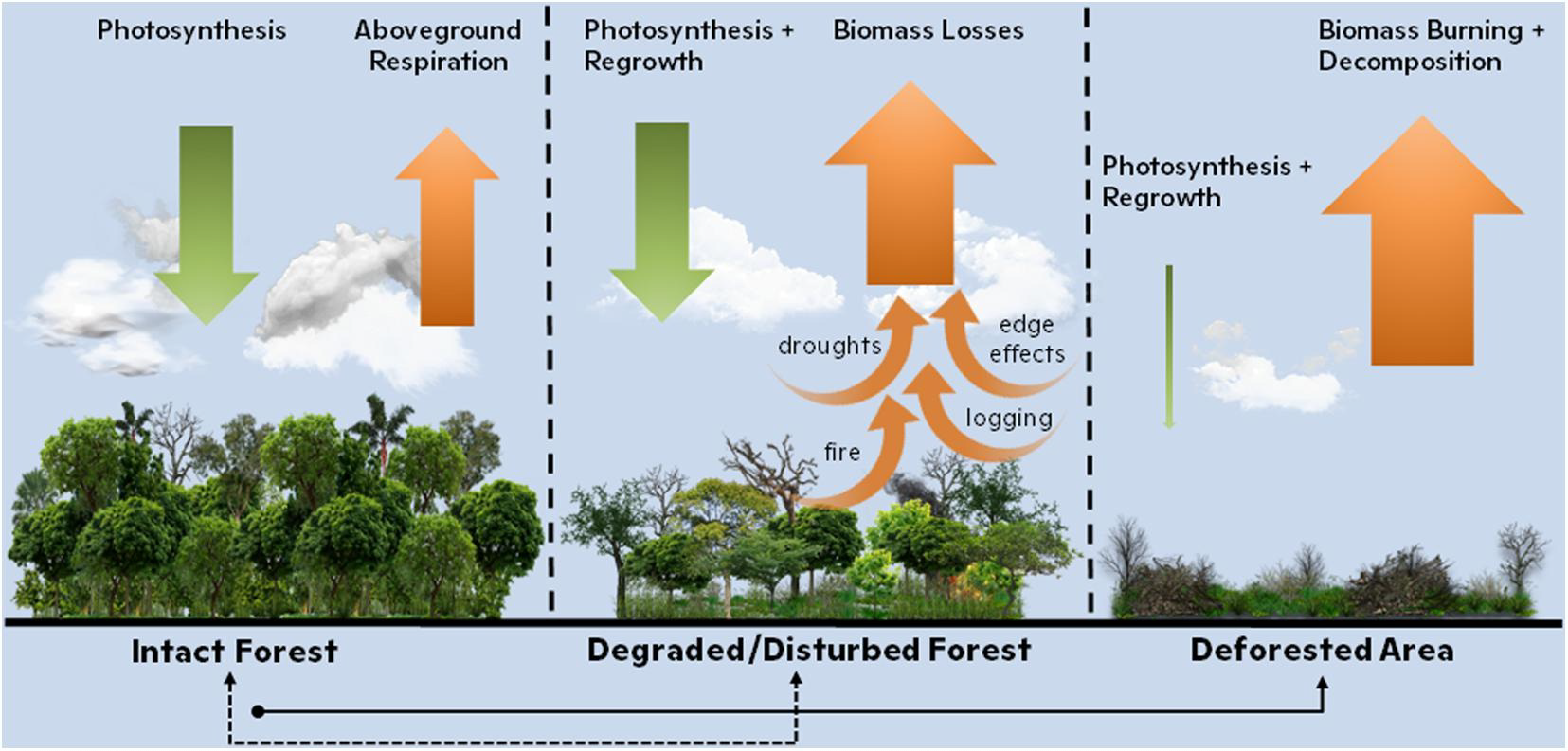 Source: https://www.frontiersin.org/journals/forests-and-global-change/articles/10.3389/ffgc.2021.645282/full
Table 1.
Reservoir | Carbon Before Deforestation | Carbon After Deforestation |
|---|
Forest Biomass | 180 | 60 |
Soil Carbon | 95 | 70 |
Atmospheric CO2 | 400 | 460 |
Graph of Information - Figure 1.
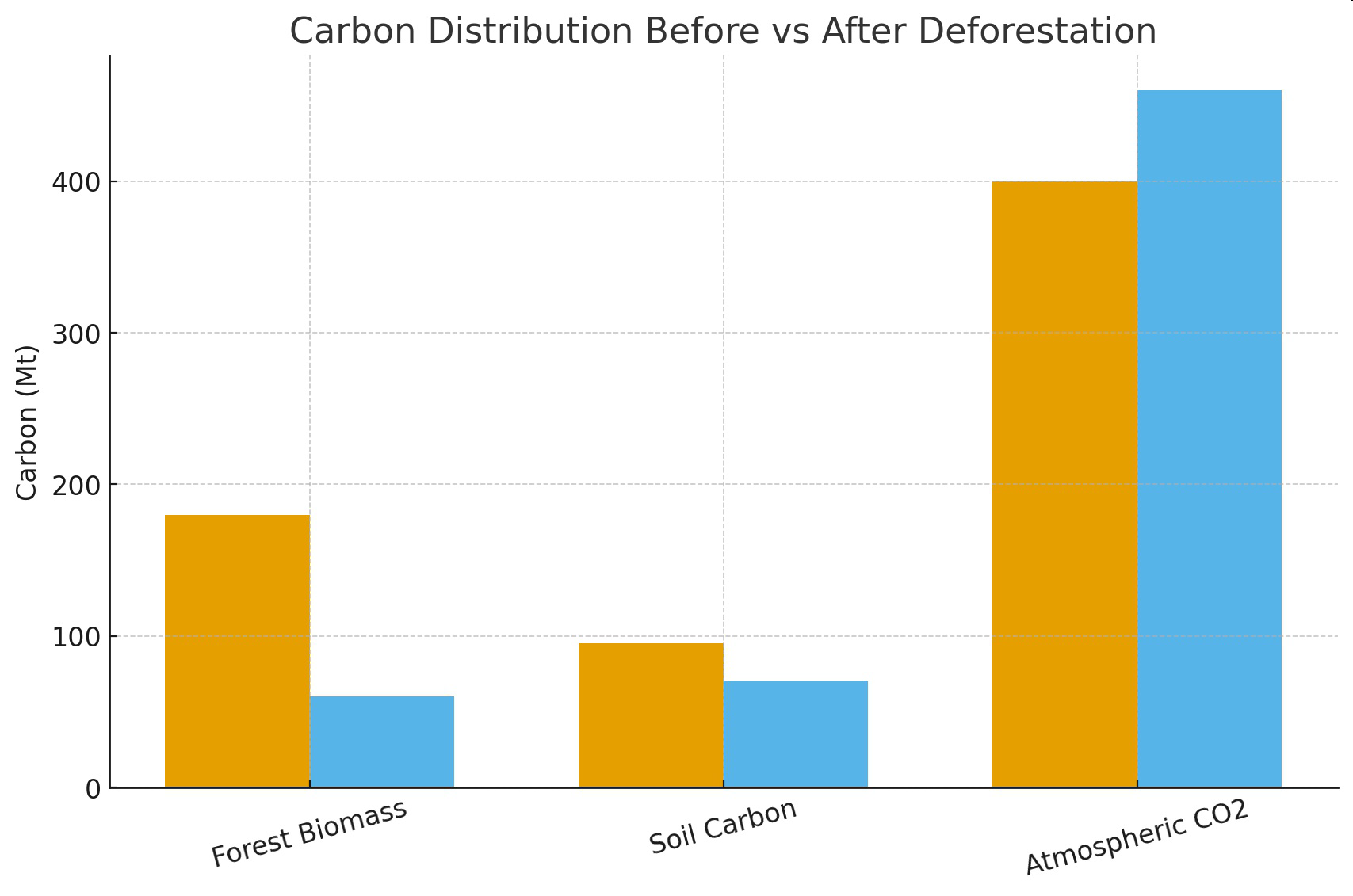
Table 2.
Year | Forest Cover million/ha | CO Emissions Mt per year |
|---|
2000 | 550 | 280 |
2005 | 520 | 310 |
2010 | 495 | 340 |
2015 | 470 | 370 |
2020 | 445 | 405 |
Graph of Information - Figure 2.